
Auditing Amazon Seller Central for Growth Opportunities
Learn how to audit an Amazon Seller Central account to uncover growth opportunities in promotions, account health, inventory management, and global expansion.
This guide demonstrates how to audit an Amazon Seller Central account to uncover optimization and revenue growth opportunities. By completing this audit, you will identify areas for improvement across promotions, listing health, inventory management, and international expansion.
This workflow is intended for e-commerce strategists and Amazon account managers. It is most useful during initial account audits or periodic business reviews to build an actionable growth roadmap.
When conducting a comprehensive audit of an Amazon Seller Central account, you should evaluate several key areas to ensure the brand is maximizing its potential. Use the table below to understand the different areas you can investigate before diving into the steps.
Audit Area | Purpose | Location in Seller Central |
|---|---|---|
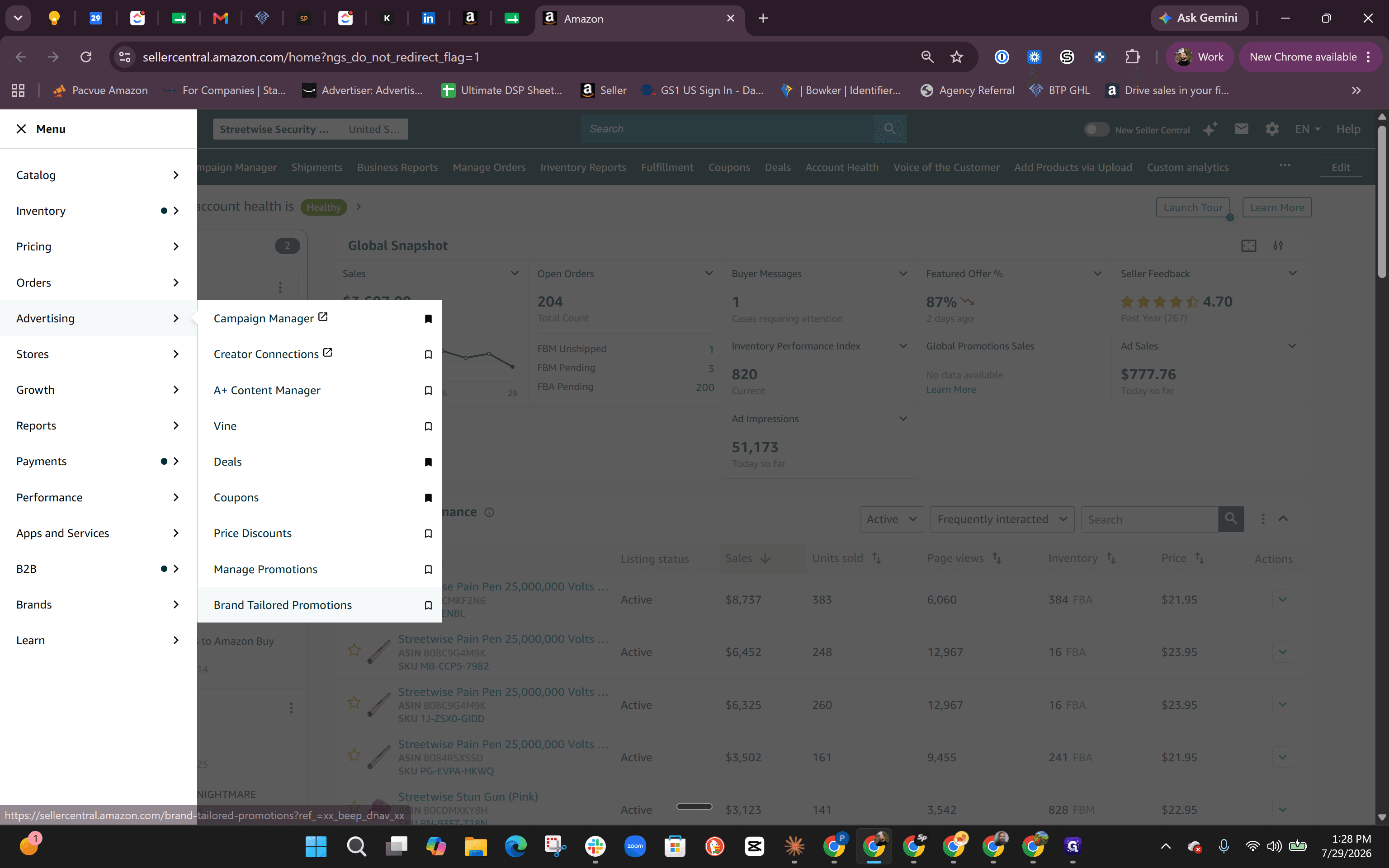
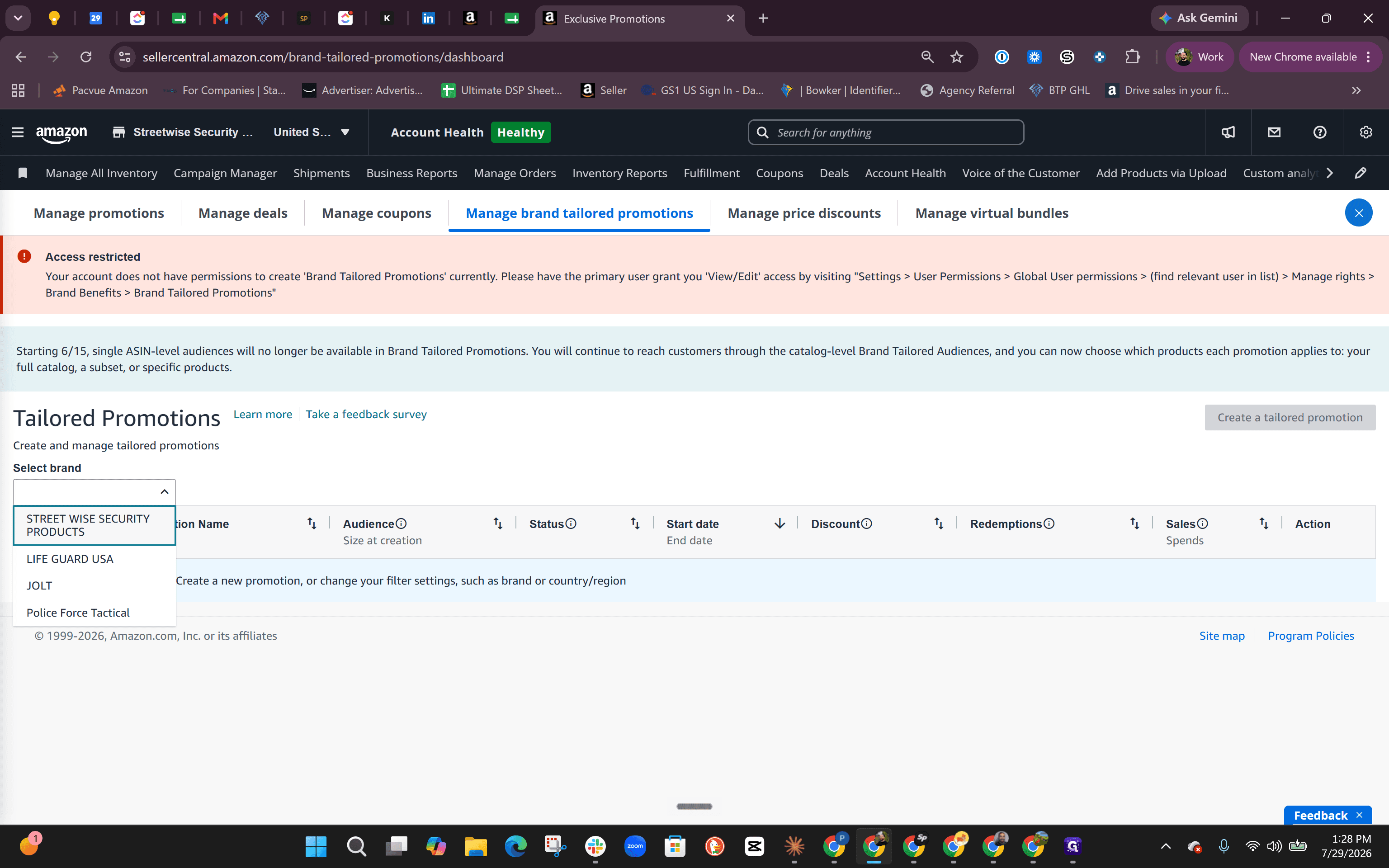
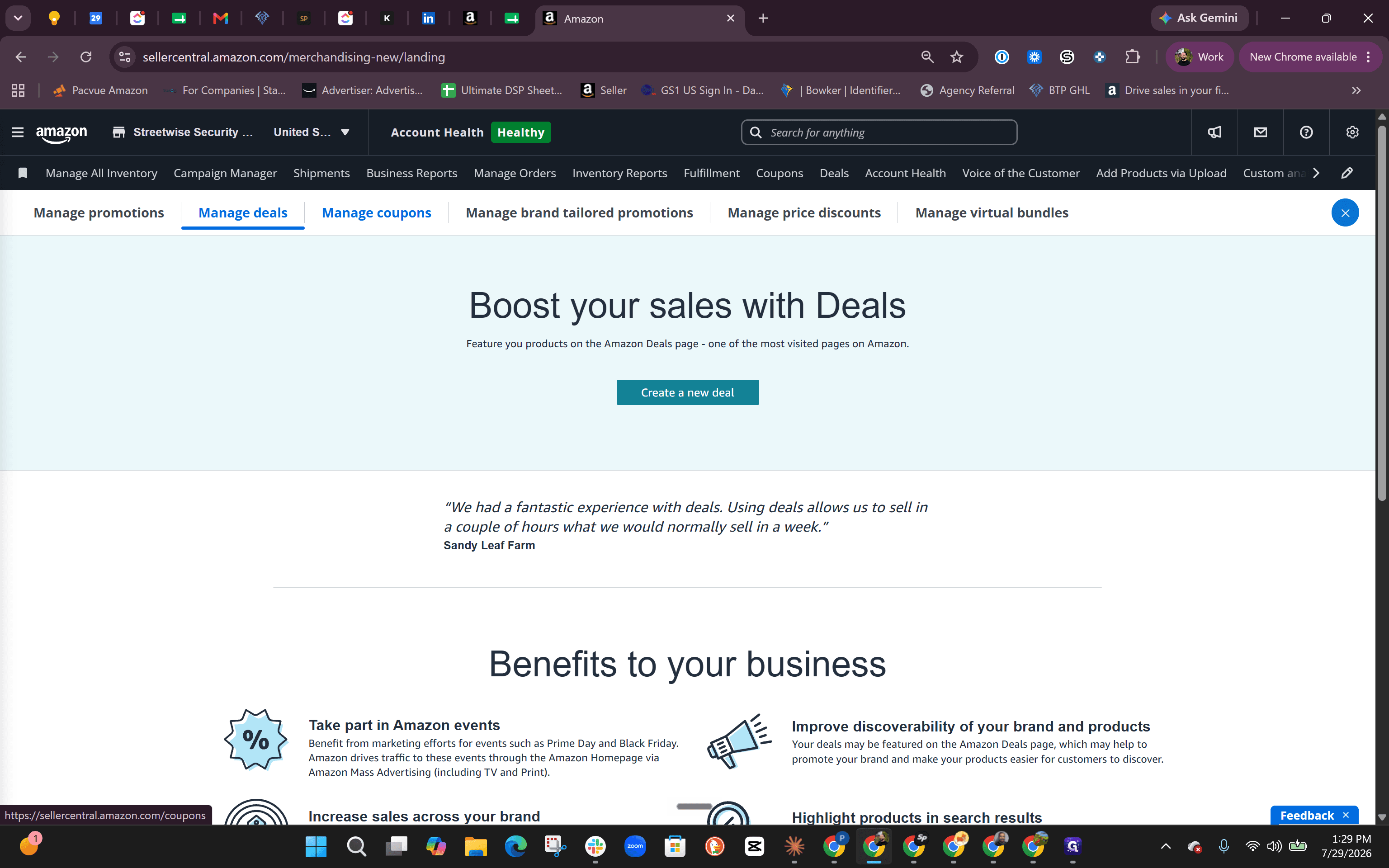
Promotions | Identify missed opportunities for deals, coupons, and brand-tailored discounts. | Advertising > Brand Tailored Promotions / Deals |
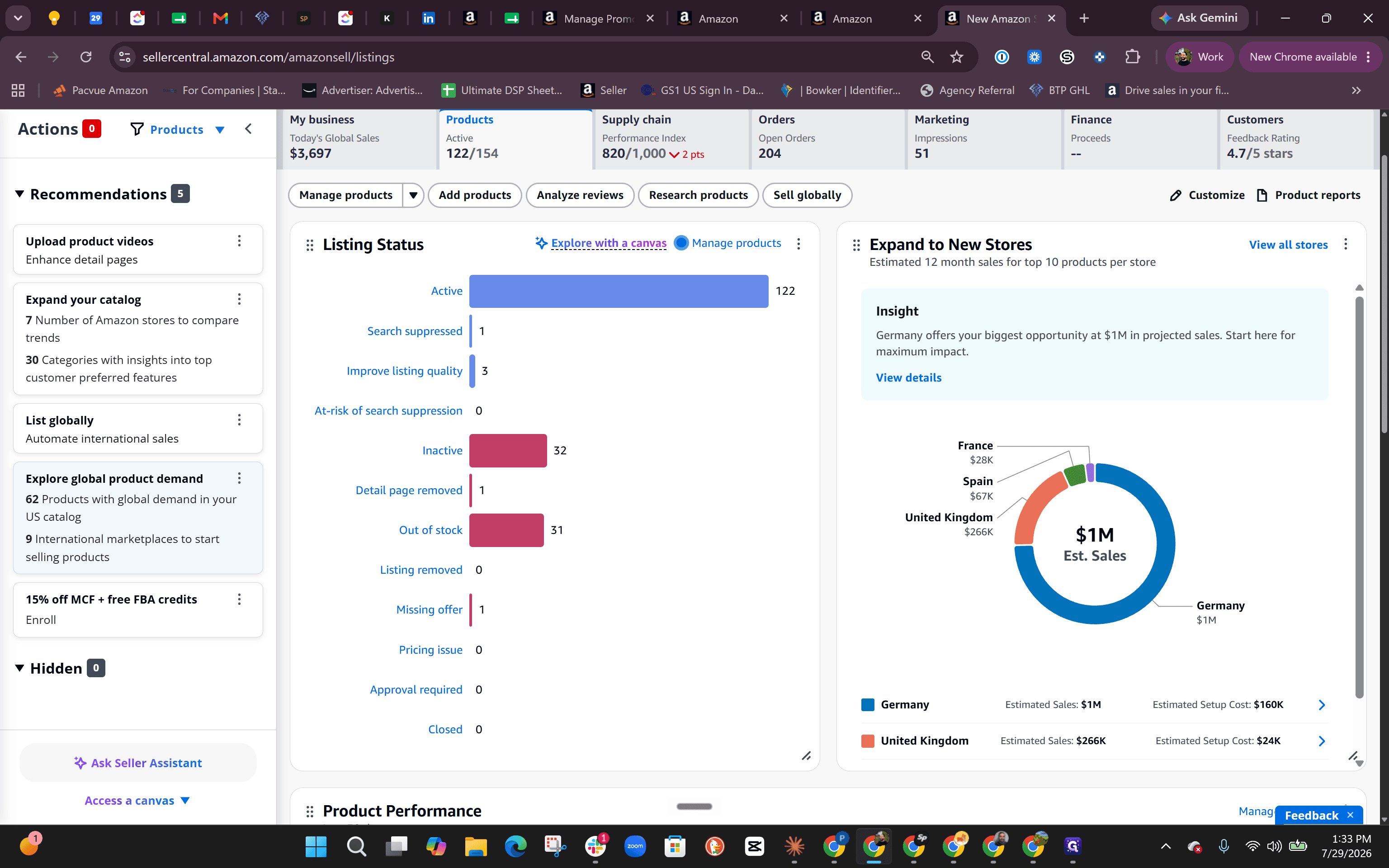
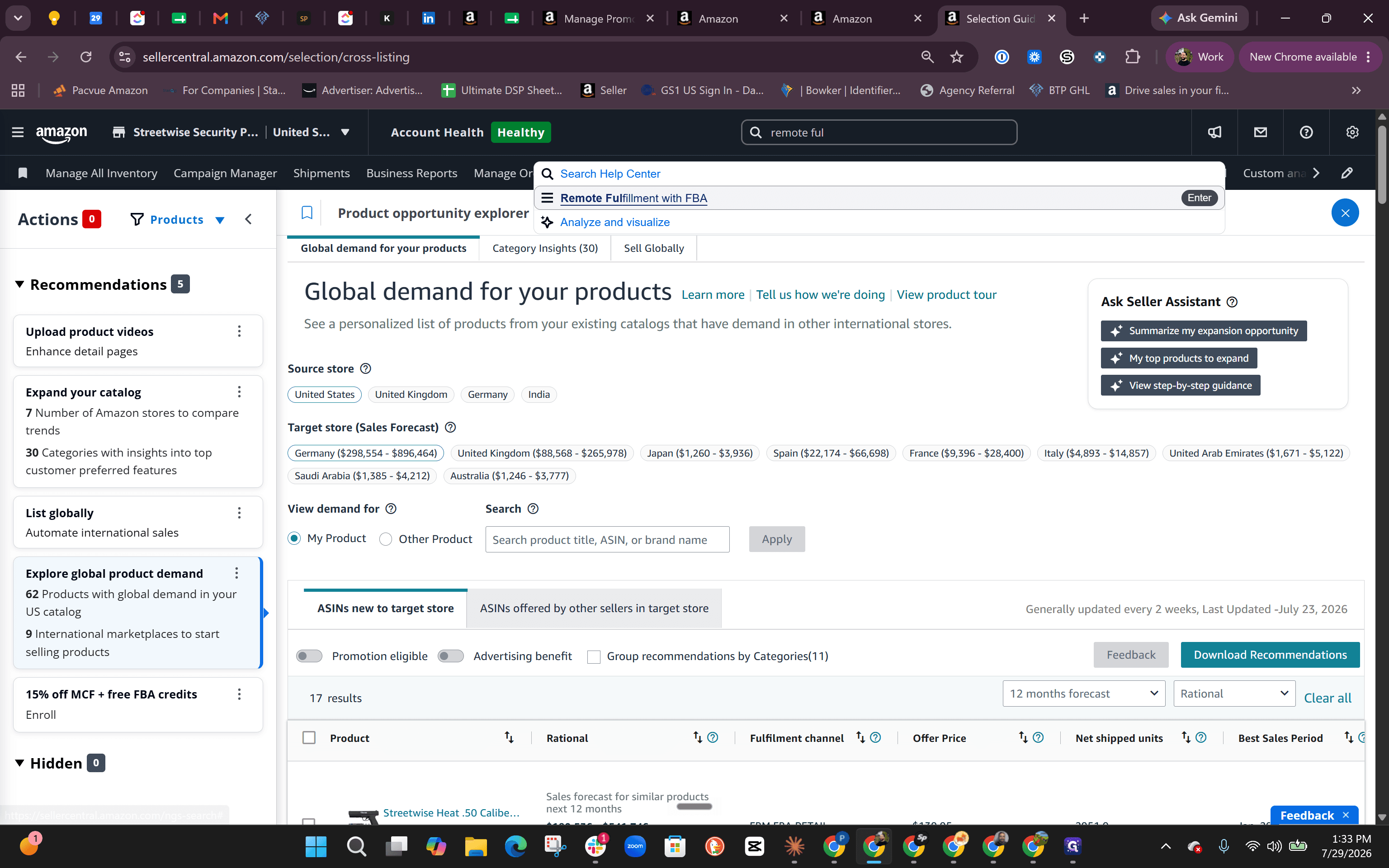
Growth & Expansion | Discover B2B discounts, global product demand, and cross-border fulfillment options. | Growth > Growth Opportunities / Cross Border Selling |
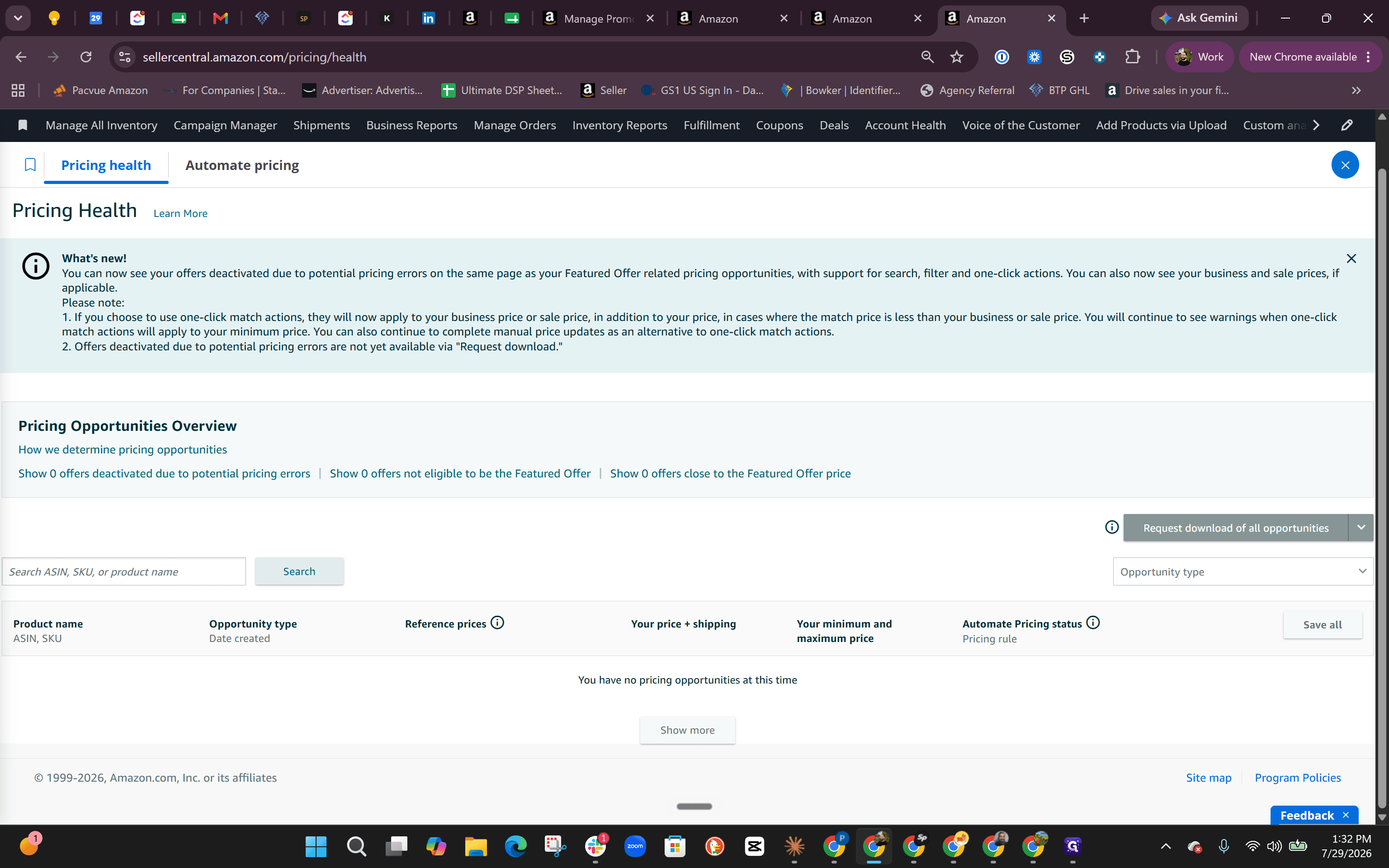
Account Health | Address poor customer experiences and Buy Box suppressions to maintain sales rank. | Performance > Voice of the Customer / Pricing Health |
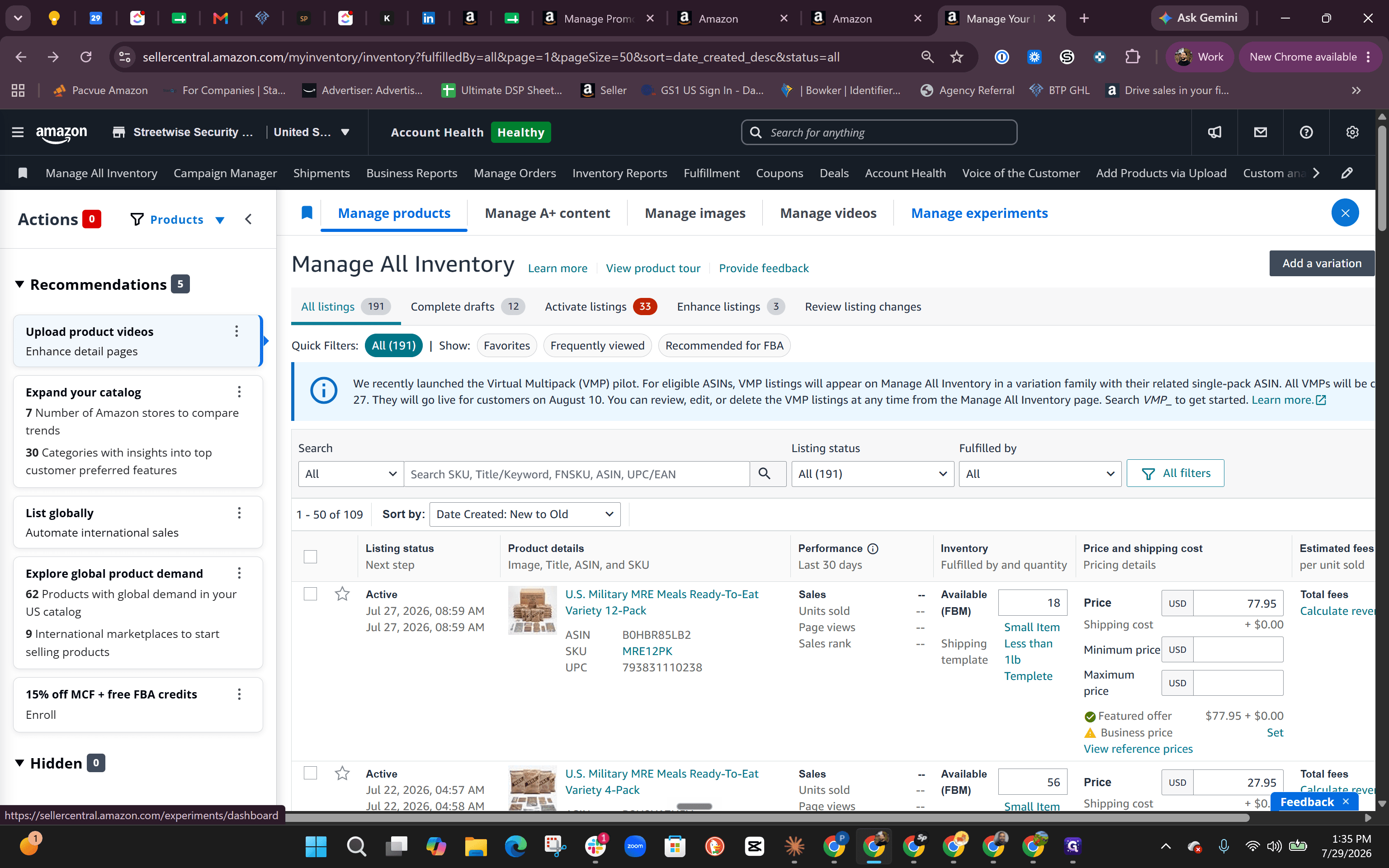
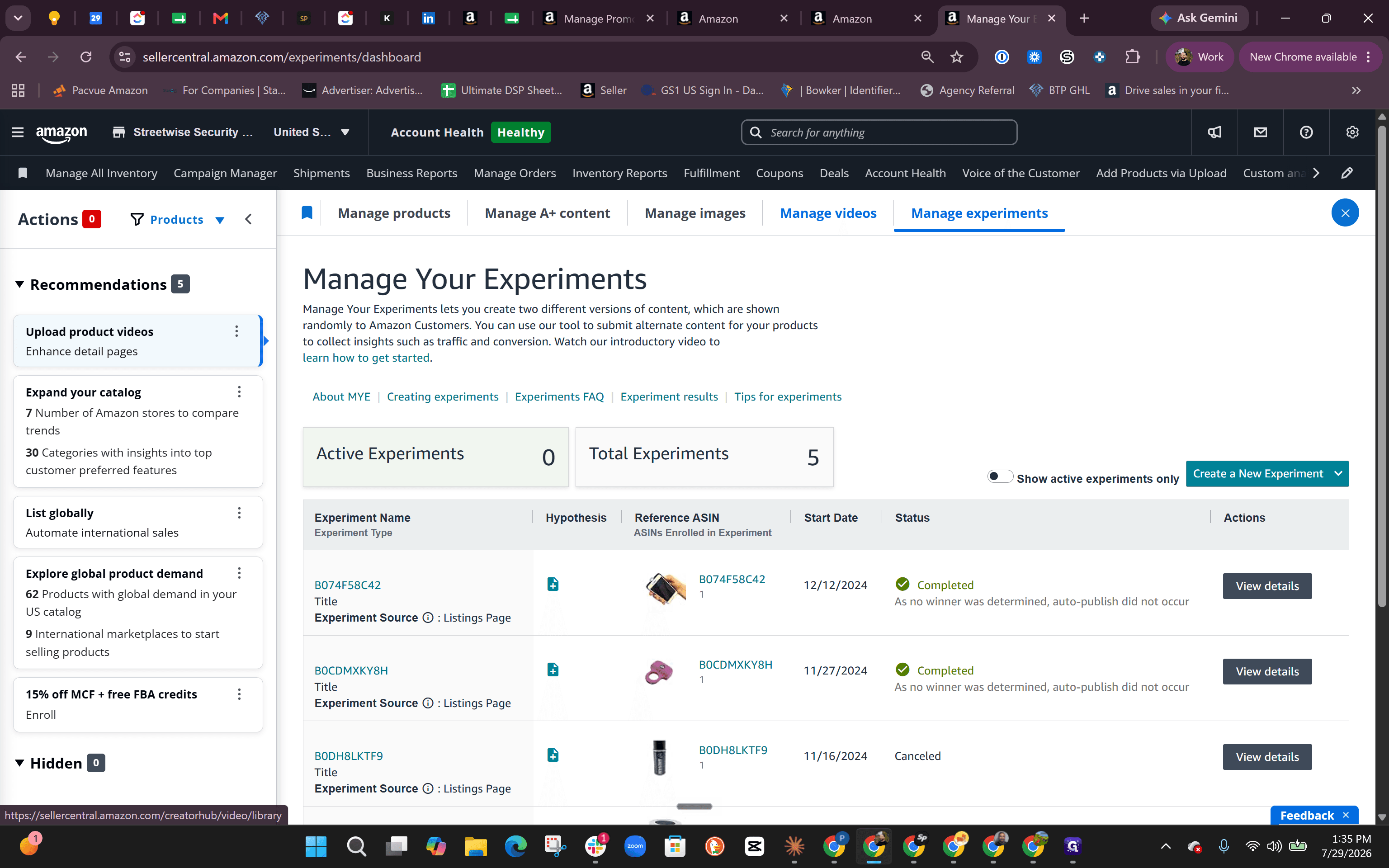
Inventory & Listings | Optimize stock levels, ensure videos are uploaded, and check for active A/B testing. | Inventory > Manage Inventory / Manage Experiments |
Advertising and Promotions
Check if the account is leveraging available promotional tools and discounts to drive conversions.
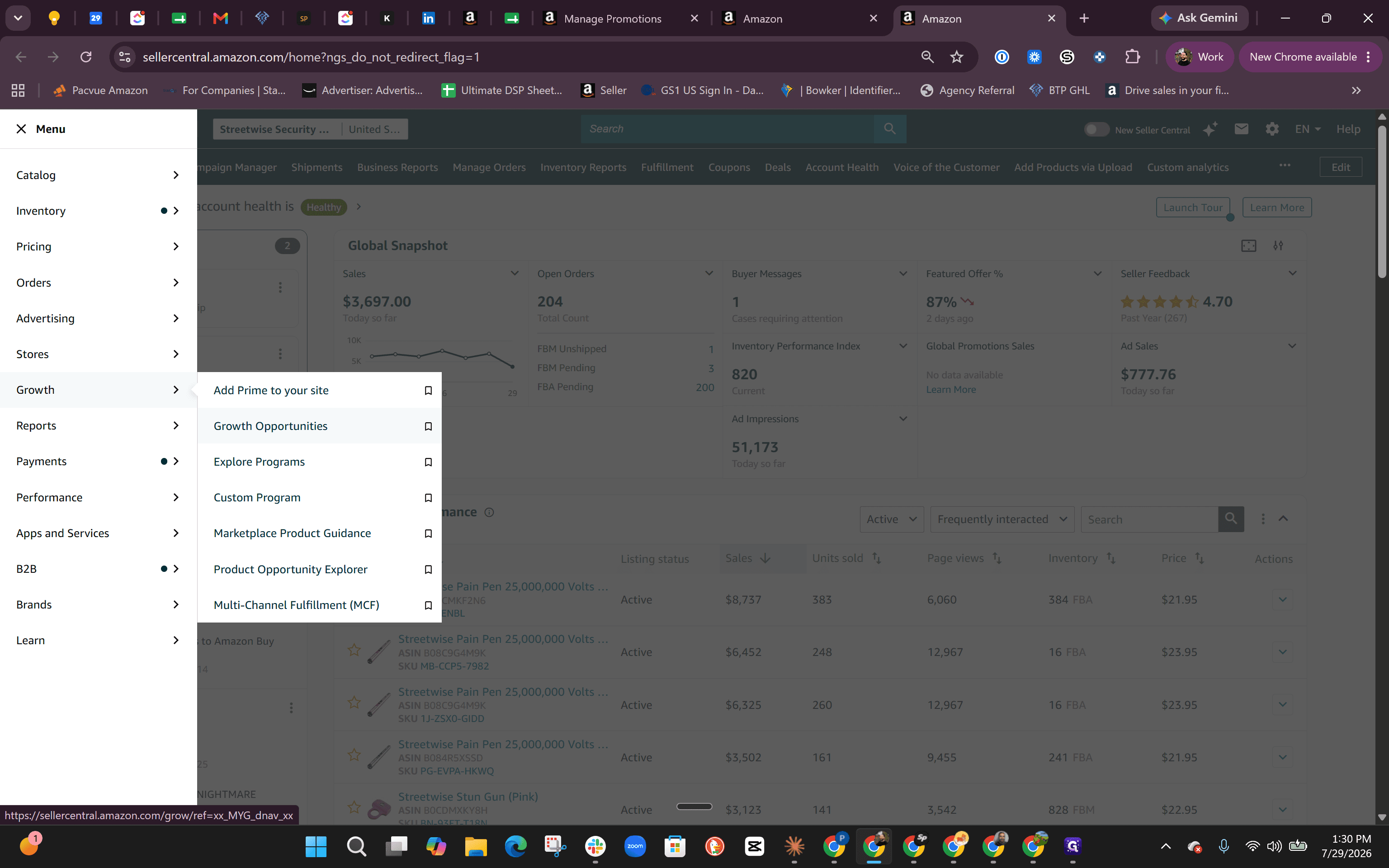
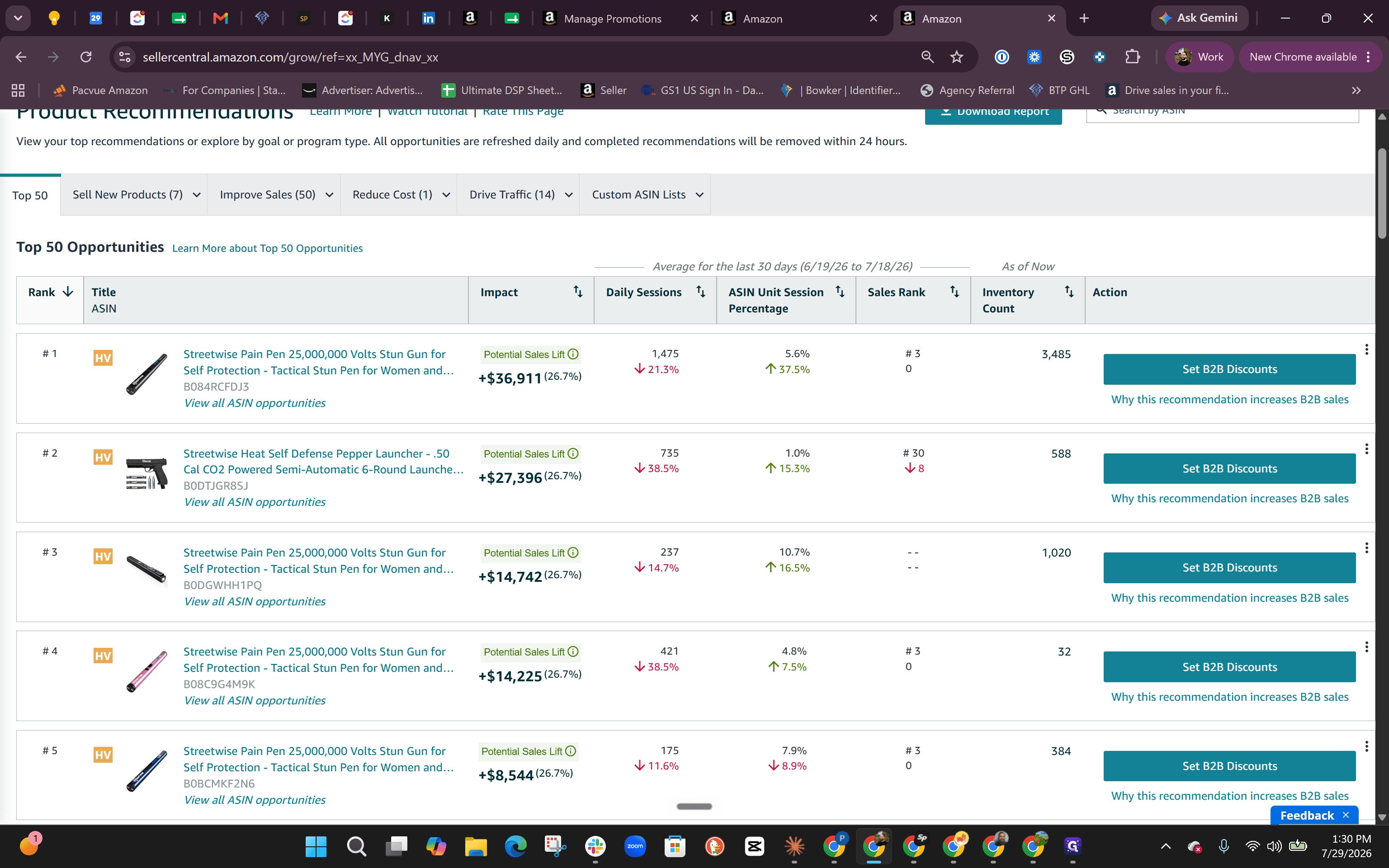
Growth Opportunities
Review automated recommendations provided by Amazon to expand your reach.
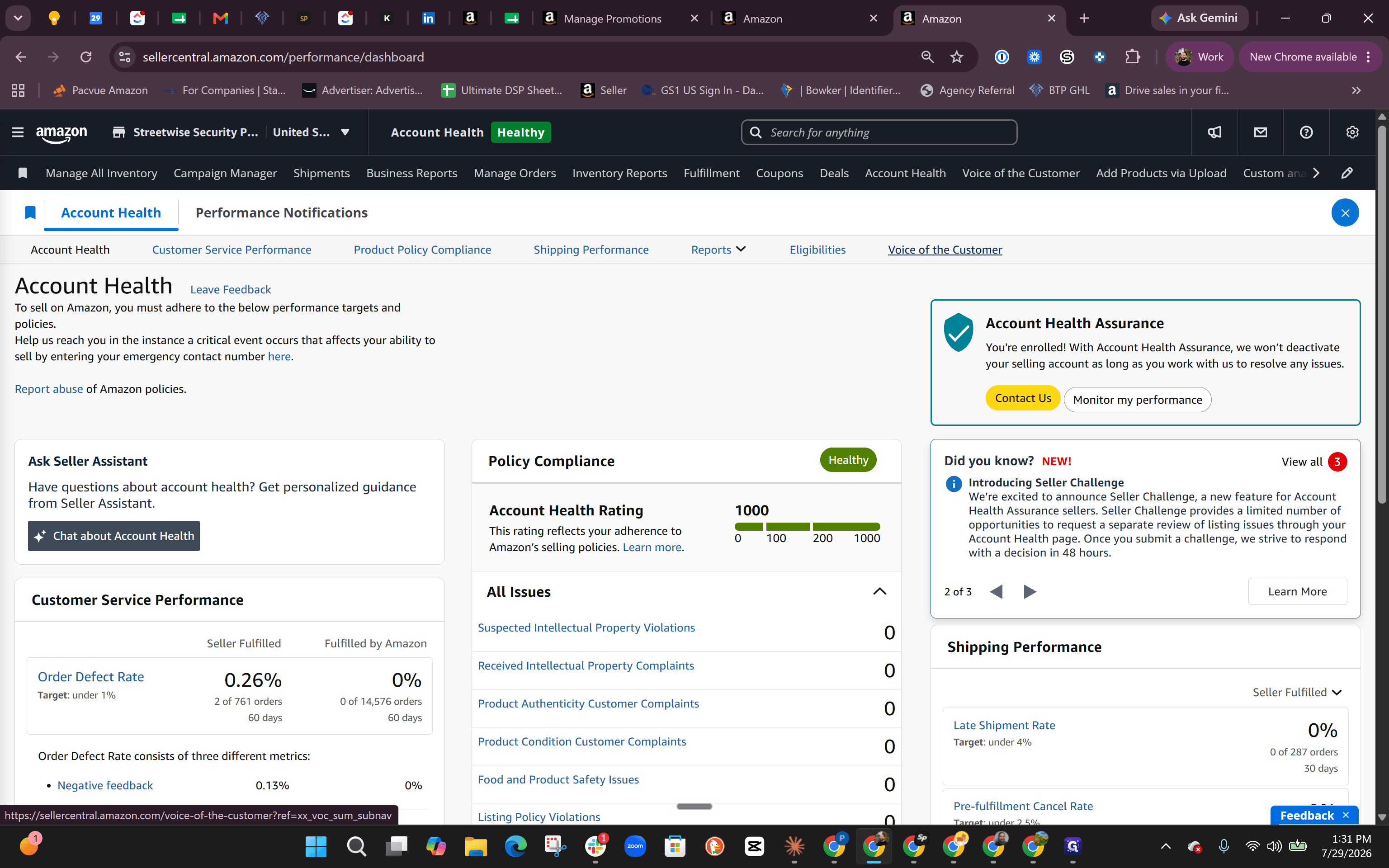
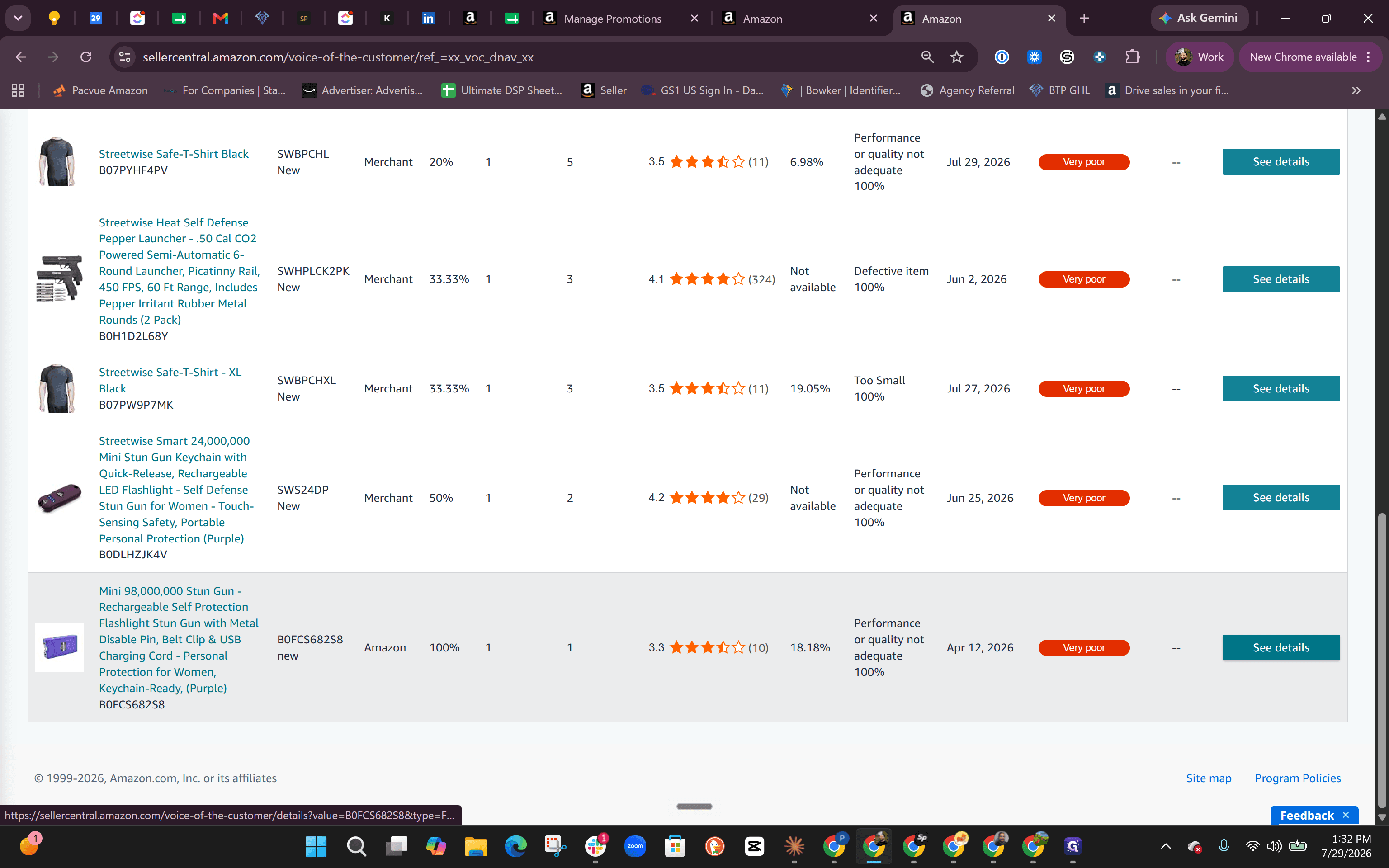
Account Health and Customer Feedback
Analyze customer sentiment and listing health to resolve potential issues that could hurt sales.
International Expansion and FBA
Look into expanding globally or optimizing fulfillment methods to reach new markets.
Inventory and Listing Optimization
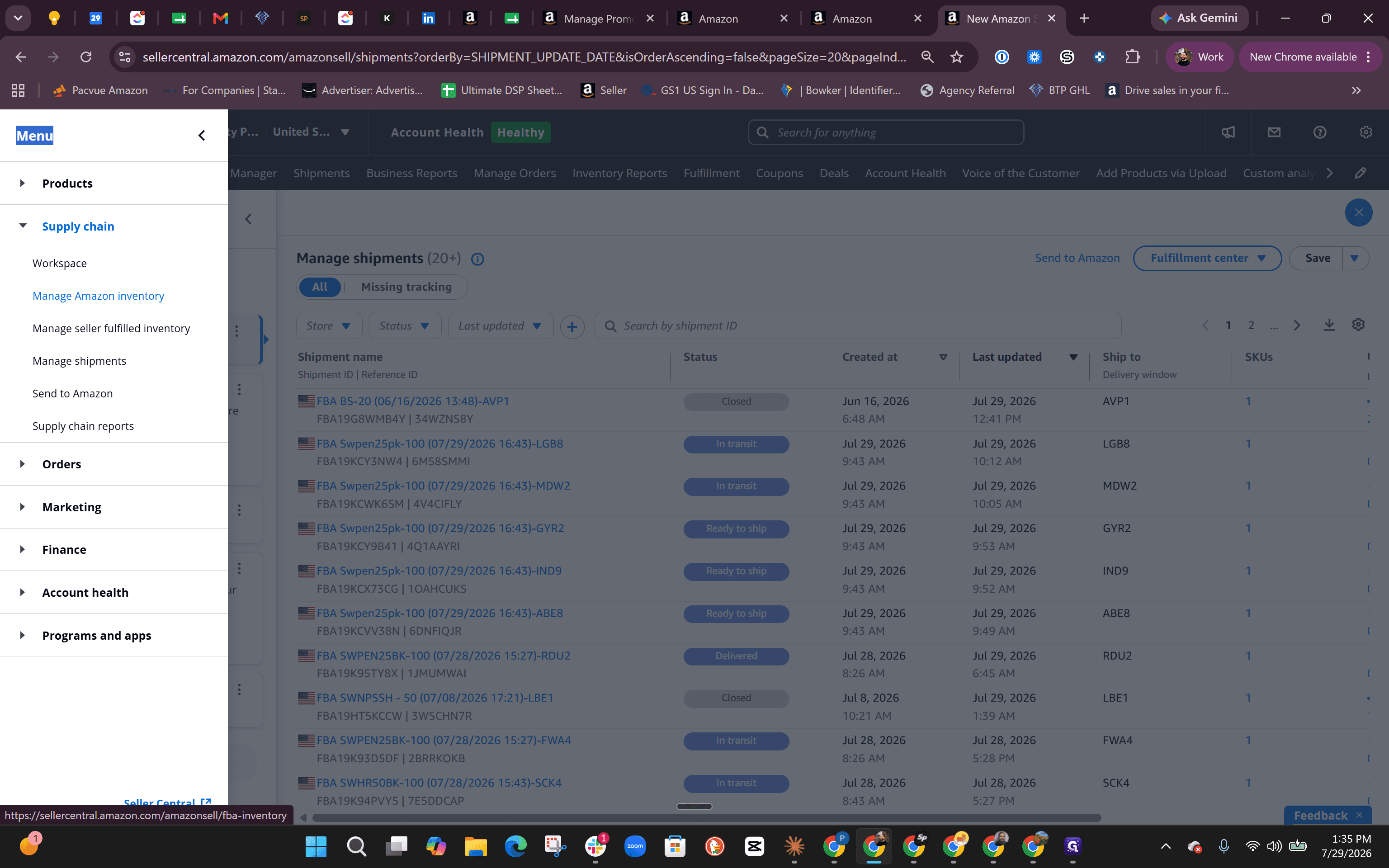
Review FBA inventory levels and listing media to reduce storage costs and boost conversion rates.
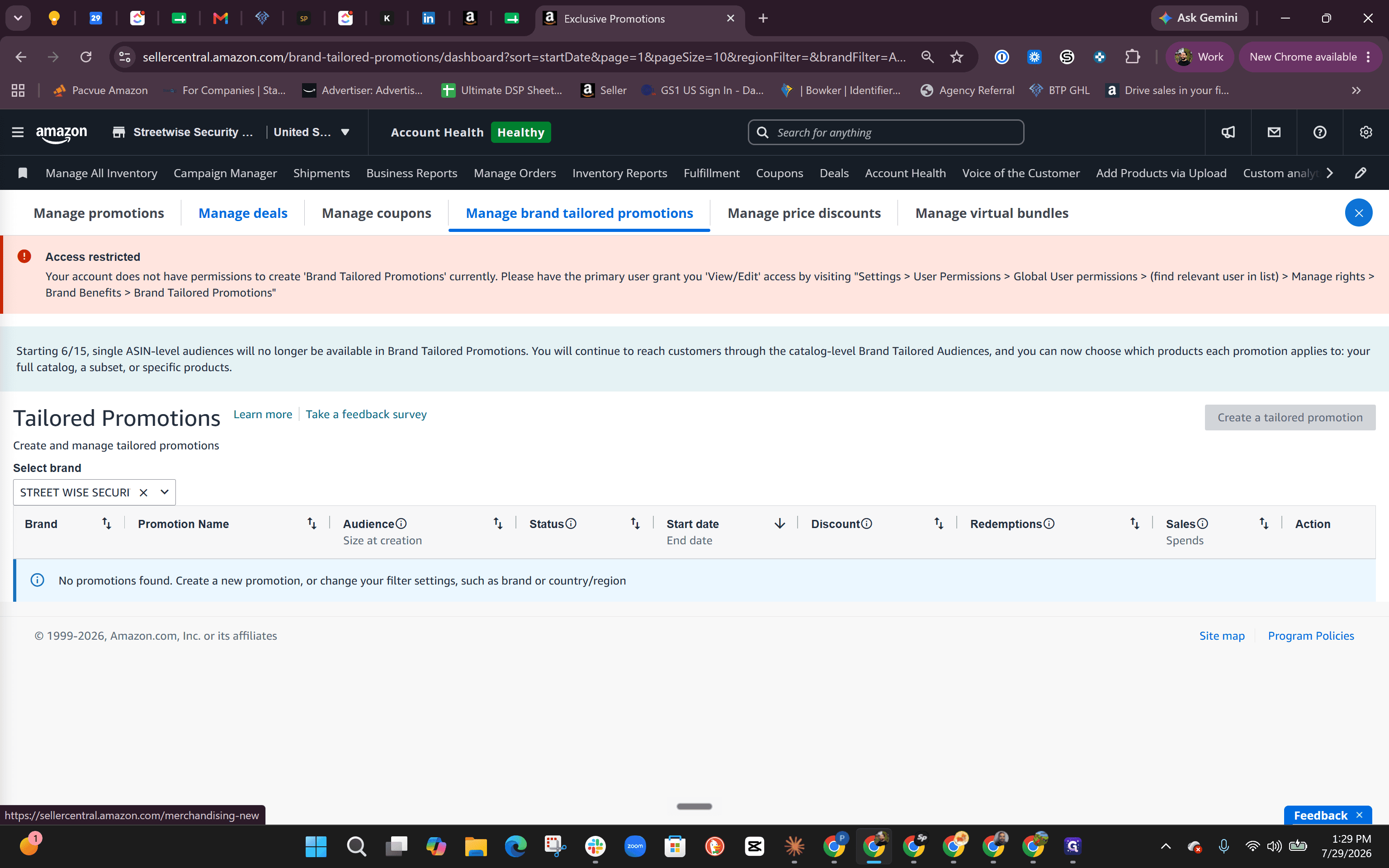
Q: Why can't I create Brand Tailored Promotions?
A: You may lack the necessary user permissions. Ensure your account has the correct access levels granted by the primary account administrator.
Q: Should I implement all Growth Opportunity recommendations?
A: Not necessarily. Take automated recommendations with a grain of salt and ensure they align with your business strategy before applying them.
Q: Is the Voice of the Customer data always accurate?
A: Not always. While it provides valuable insights into potential listing issues, customers may sometimes inaccurately report return reasons, such as claiming an item was damaged to receive a free return.
Q: Can all products be enrolled in Remote Fulfillment with FBA?
A: No. Certain categories, such as weapons or restricted products, are generally ineligible for remote cross-border fulfillment.
Term | Definition |
|---|---|
Brand Tailored Promotions | Exclusive discounts offered to specific customer audiences who have interacted with your brand on Amazon. |
Voice of the Customer | A dashboard that highlights customer experience metrics and return feedback for your product listings. |
Buy Box Suppression | When Amazon removes the "Add to Cart" button from a listing due to uncompetitive pricing or poor seller metrics. |
Remote Fulfillment with FBA | A program that allows sellers to offer products in international marketplaces using inventory stored in their domestic fulfillment centers. |
A/B Testing (Manage Experiments) | A feature that lets sellers run split tests on listing content like titles, images, and A+ Content to determine which version performs better. |
B2B Discounts | Special pricing tiers offered exclusively to Amazon Business customers purchasing in bulk or for commercial use. |
Excess Inventory | Stock stored in Amazon fulfillment centers that exceeds projected demand, often incurring costly long-term storage fees. |