Icon

How to Upload and Link a Role Charter in the Job Architecture

Learn how to upload a new role charter to SharePoint and link it directly into the job architecture spreadsheet to maintain a single source of truth.

By Simon Hoyle

This guide explains how to update the job architecture spreadsheet with a newly created role charter and link the document for global access. Completing this process ensures the business maintains a single source of truth for all current role expectations and recruitment standards.

This workflow is intended for People & Culture (P&C) teams and Talent Acquisition partners when finalizing a new or updated role charter during workforce planning or recruitment exercises.

Review the Job Architecture

Start by reviewing the current state of the role in the centralized spreadsheet.
1
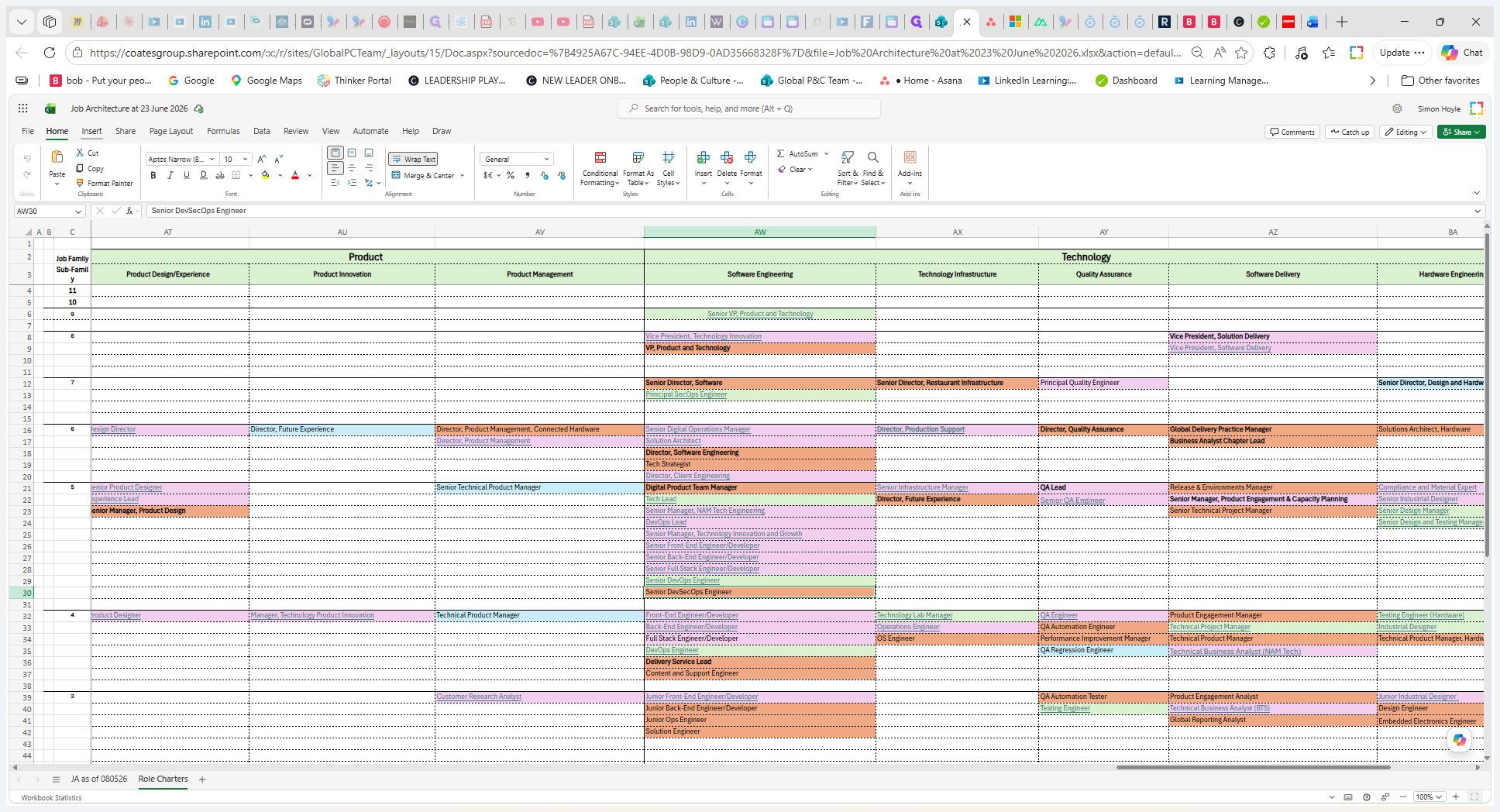
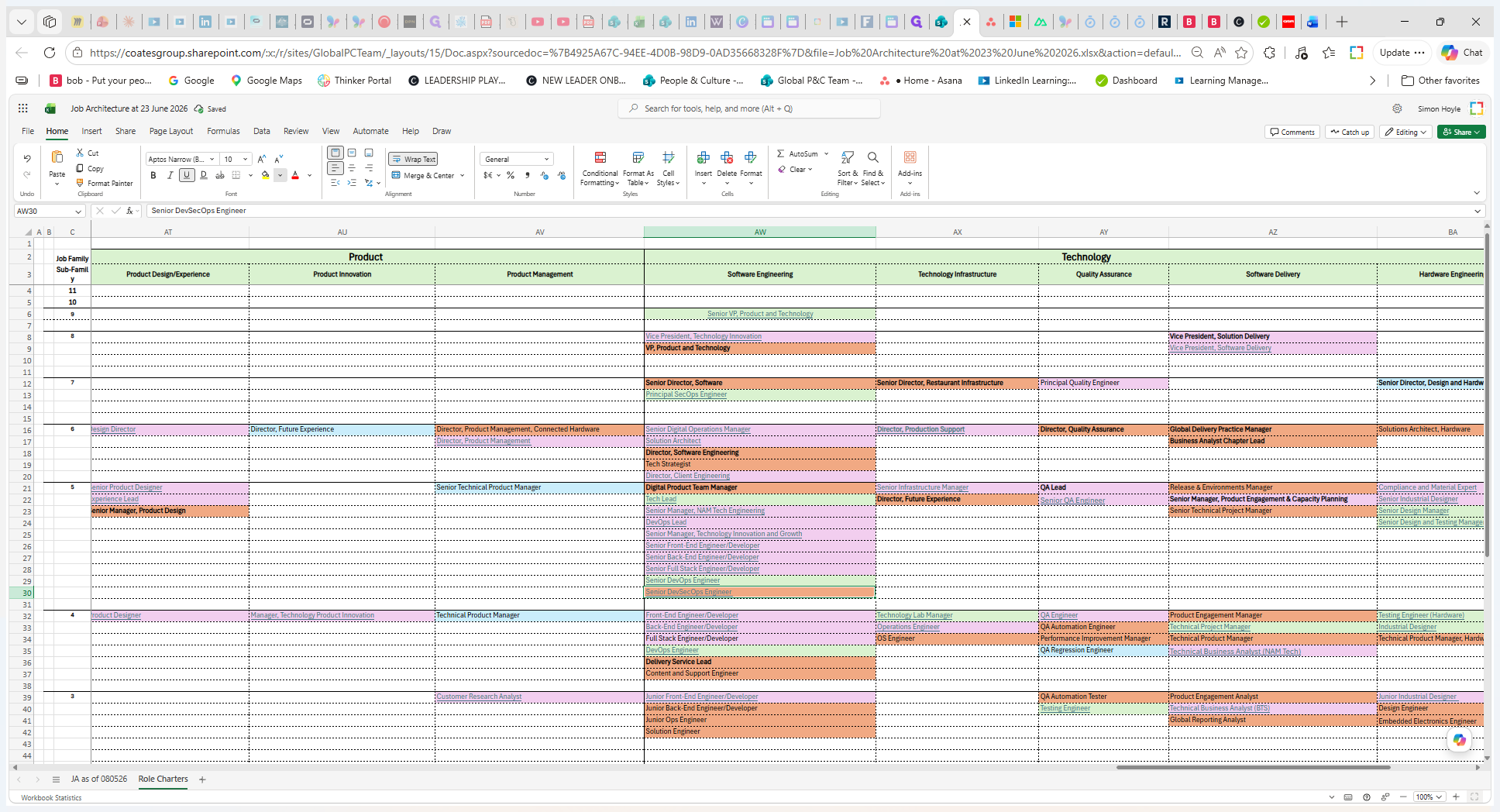
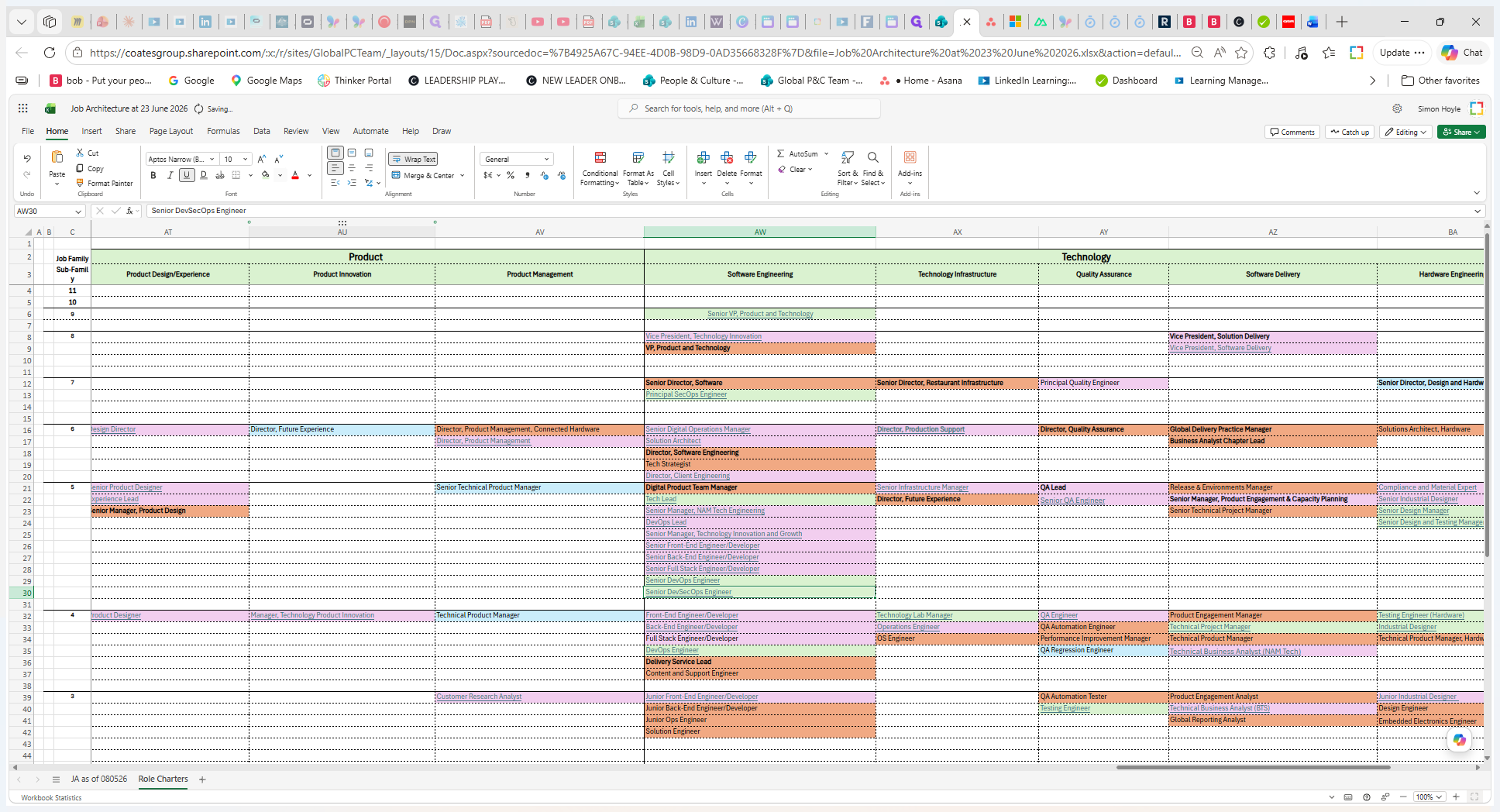
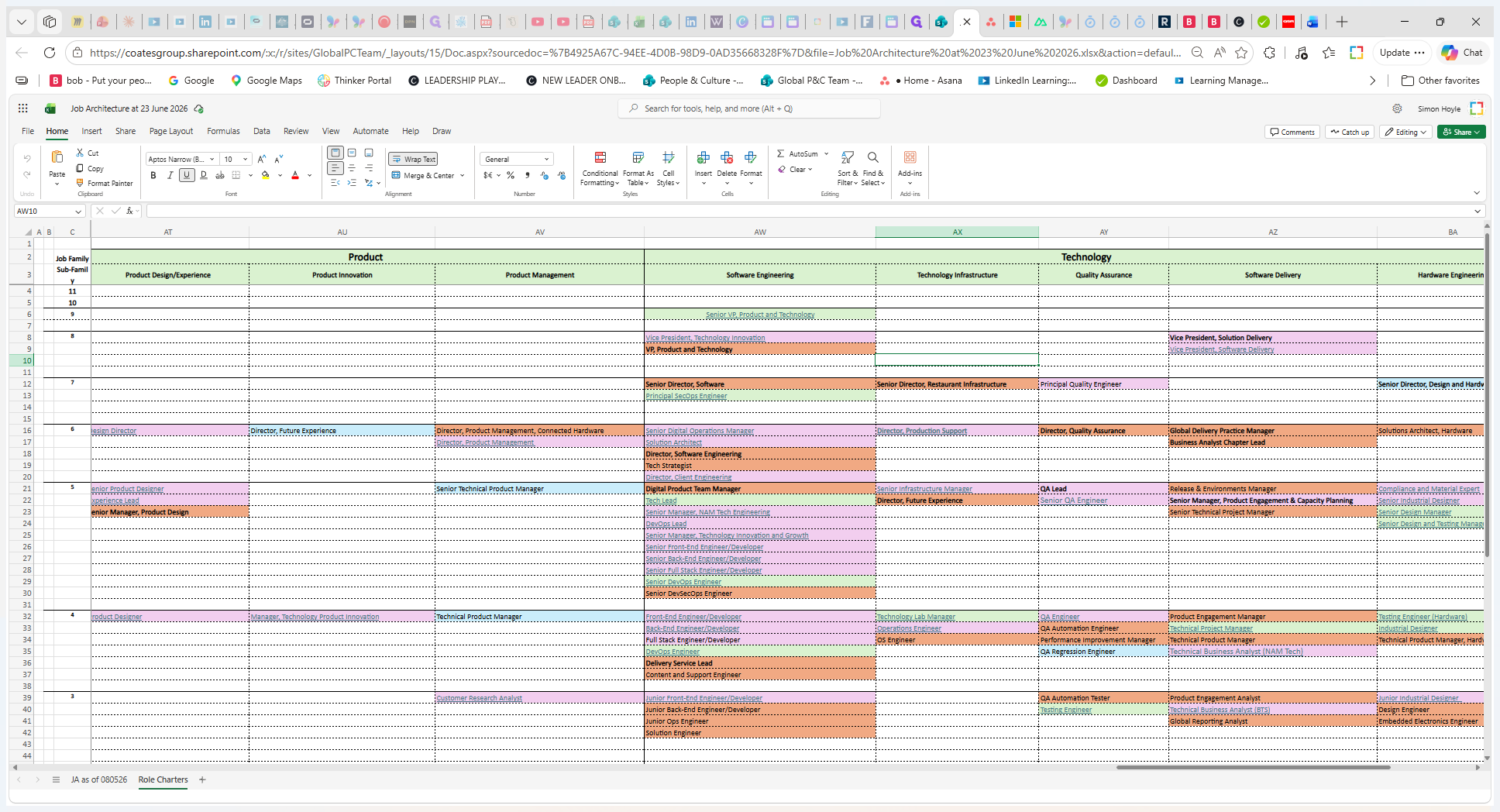
Open the Job Architecture spreadsheet to locate the role.
Step #1: Open the Job Architecture spreadsheet to locate the role.

Review the color-coded cell for the role title to determine the current status of its charter:

Color Code

Charter Status

Required Action

Green

Up-to-date role charter exists.

None. The charter is ready for recruitment.

Pink

Outdated role charter exists.

Update the charter to reflect current success metrics and accountabilities.

Red

No role charter exists on file.

Work with the business to create a new role charter from scratch.

Upload the New Role Charter

Once a new or updated role charter is finalized, upload it to the central SharePoint repository.
2
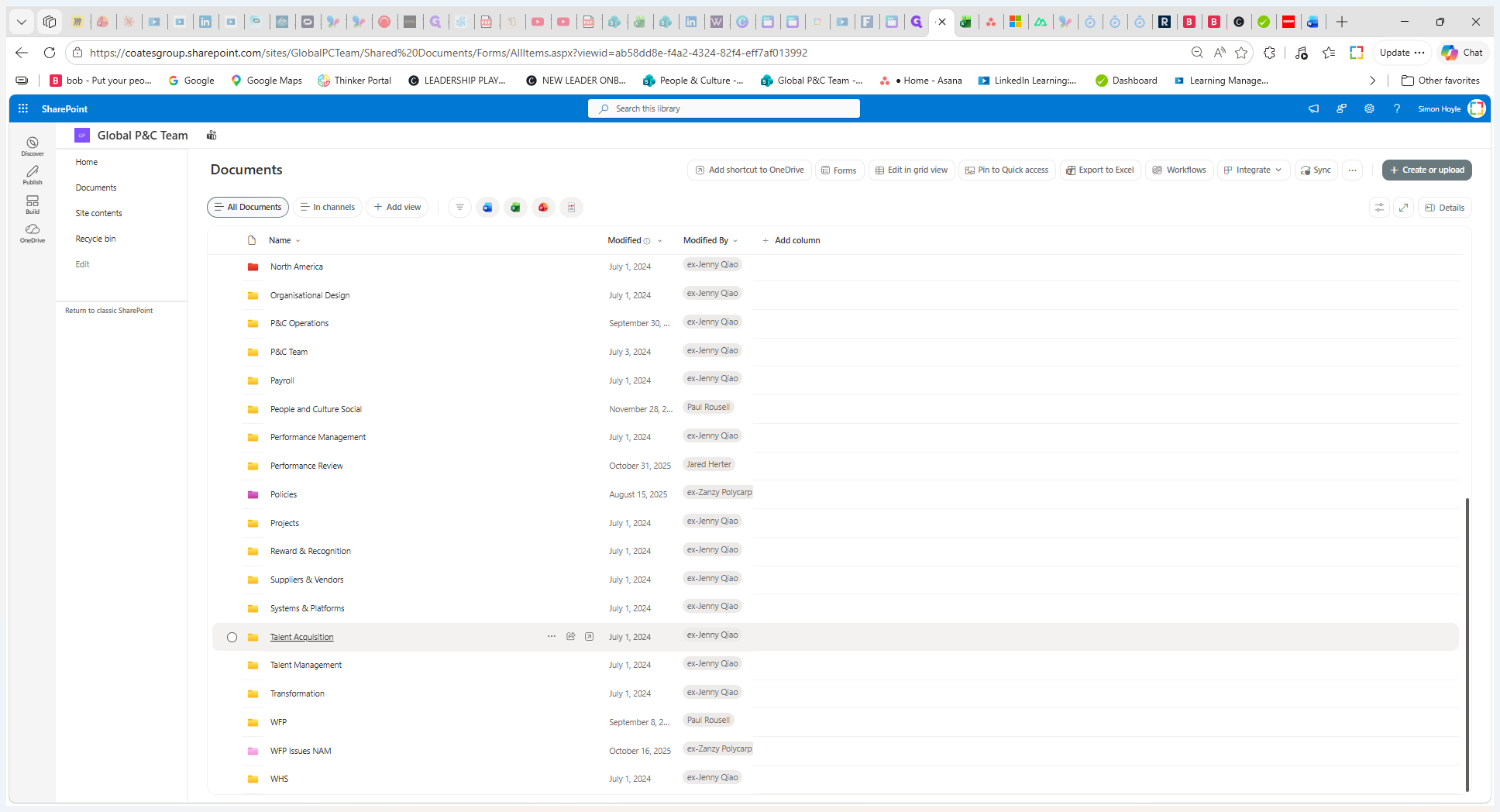
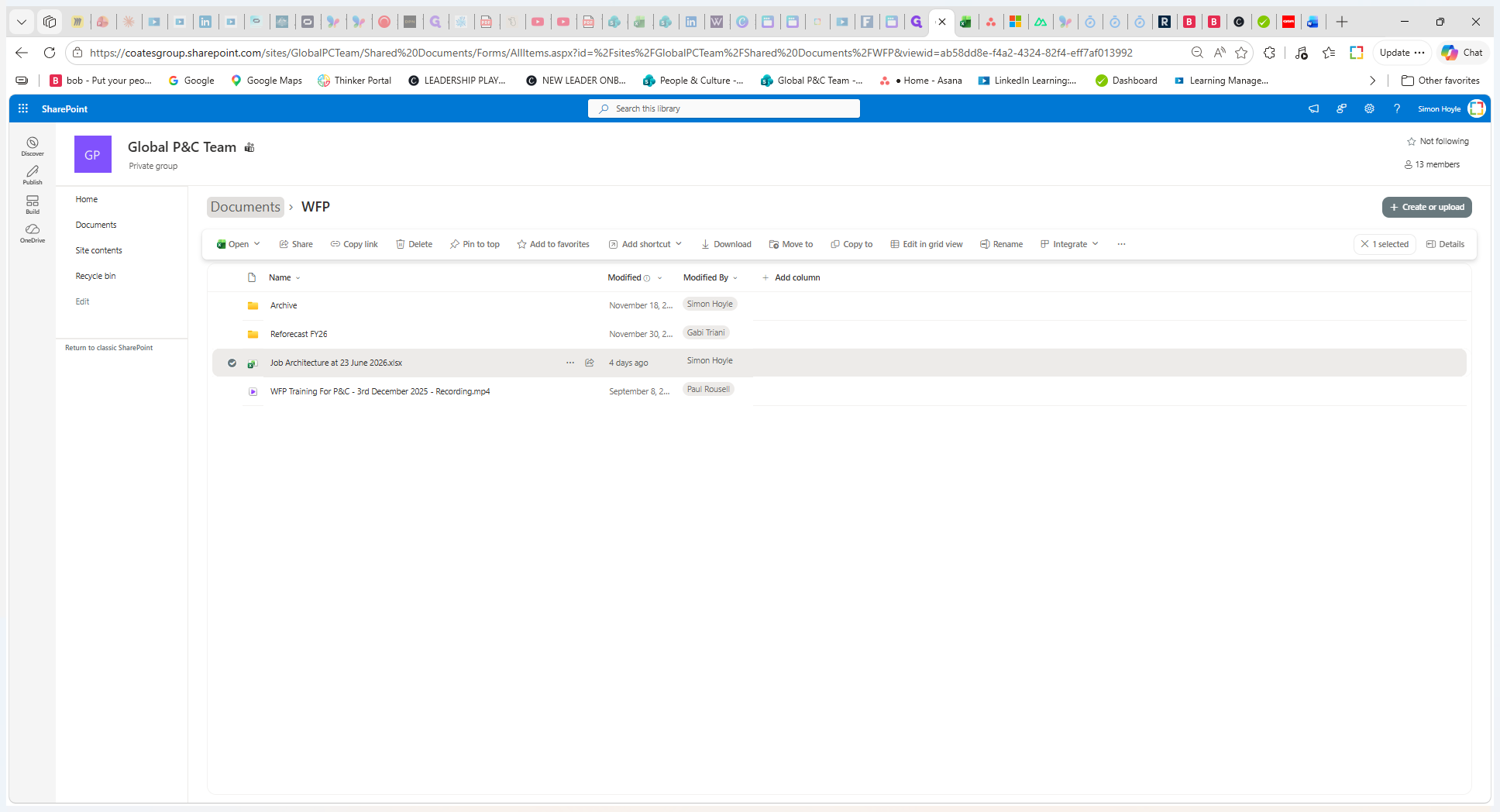
Navigate to Documents in the Global P&C Team SharePoint site.
Step #2: Navigate to Documents in the Global P&C Team SharePoint site.
3
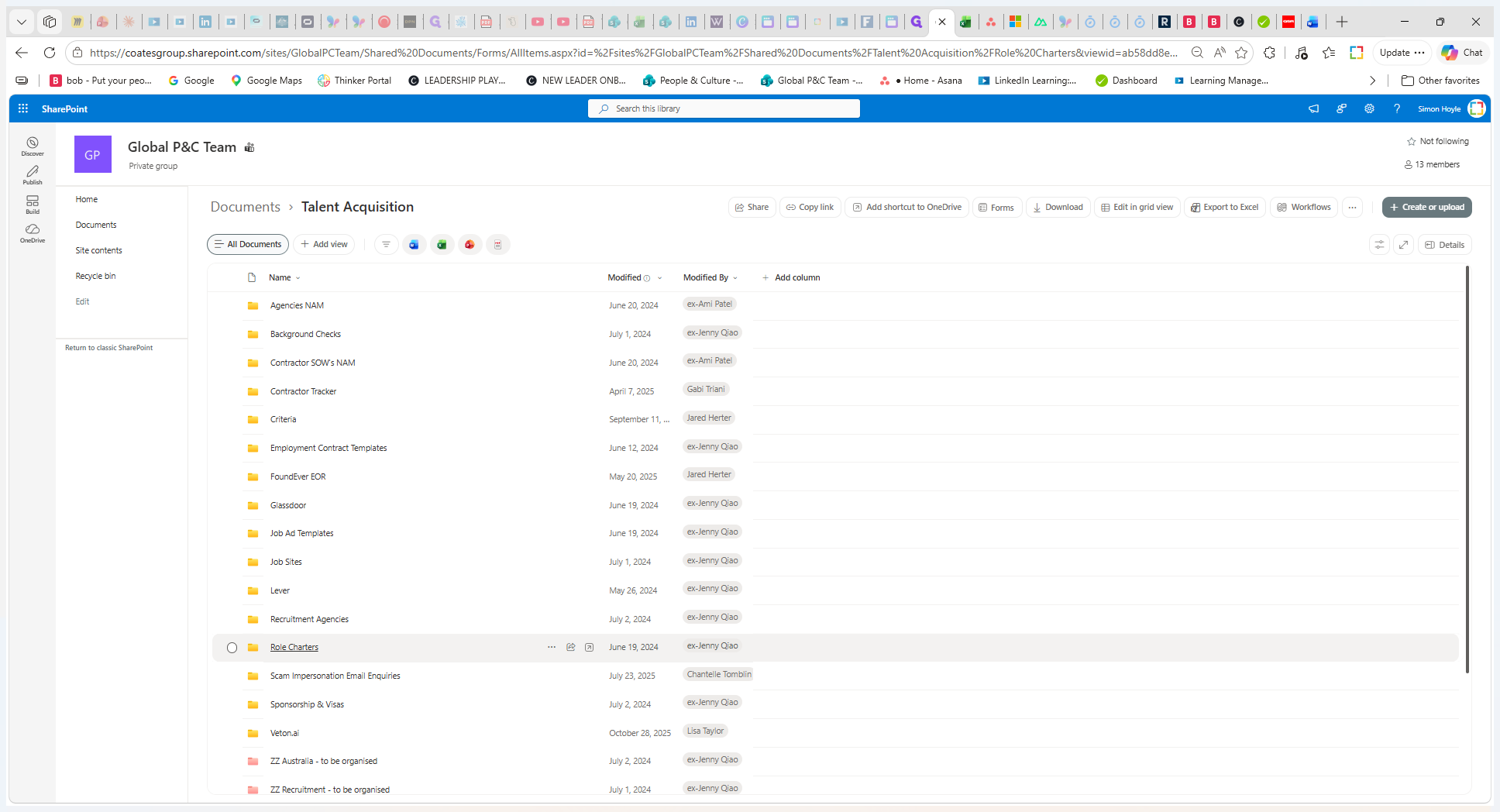
Click the Talent Acquisition folder.
Step #3: Click the Talent Acquisition folder.
4
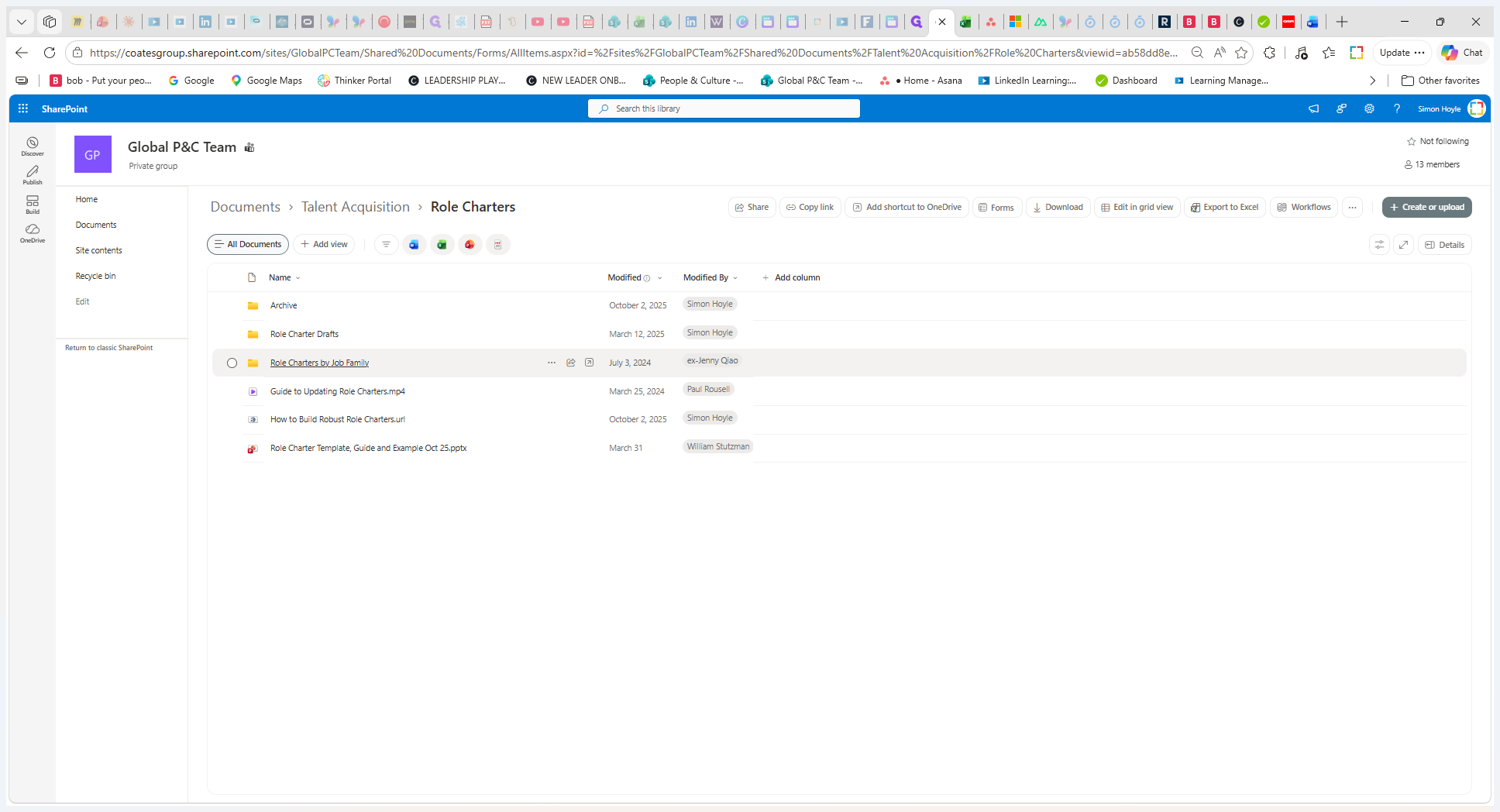
Open the Role Charters folder.
Step #4: Open the Role Charters folder.
5
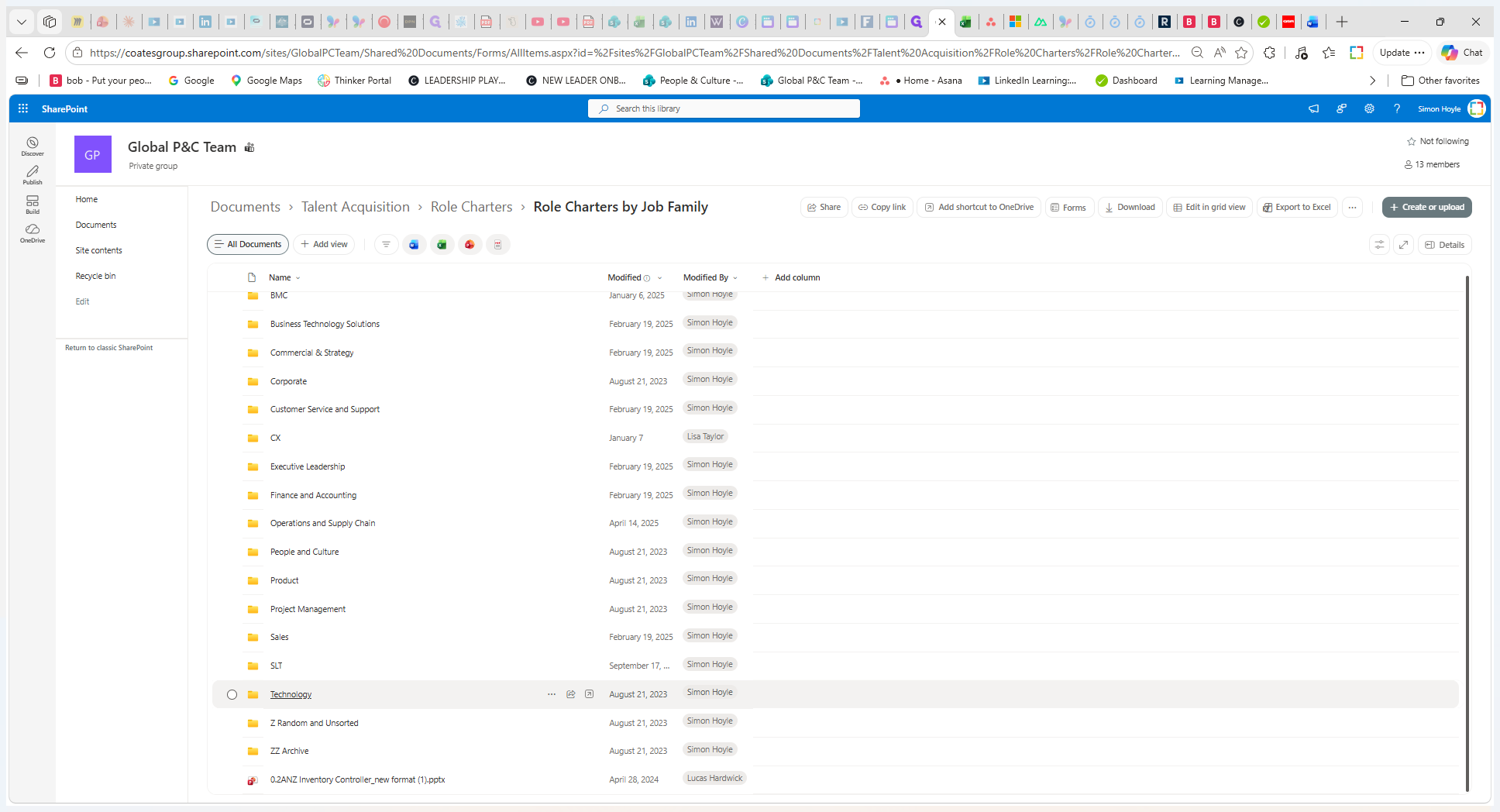
Select Role Charters by Job Family.
Step #5: Select Role Charters by Job Family.
6
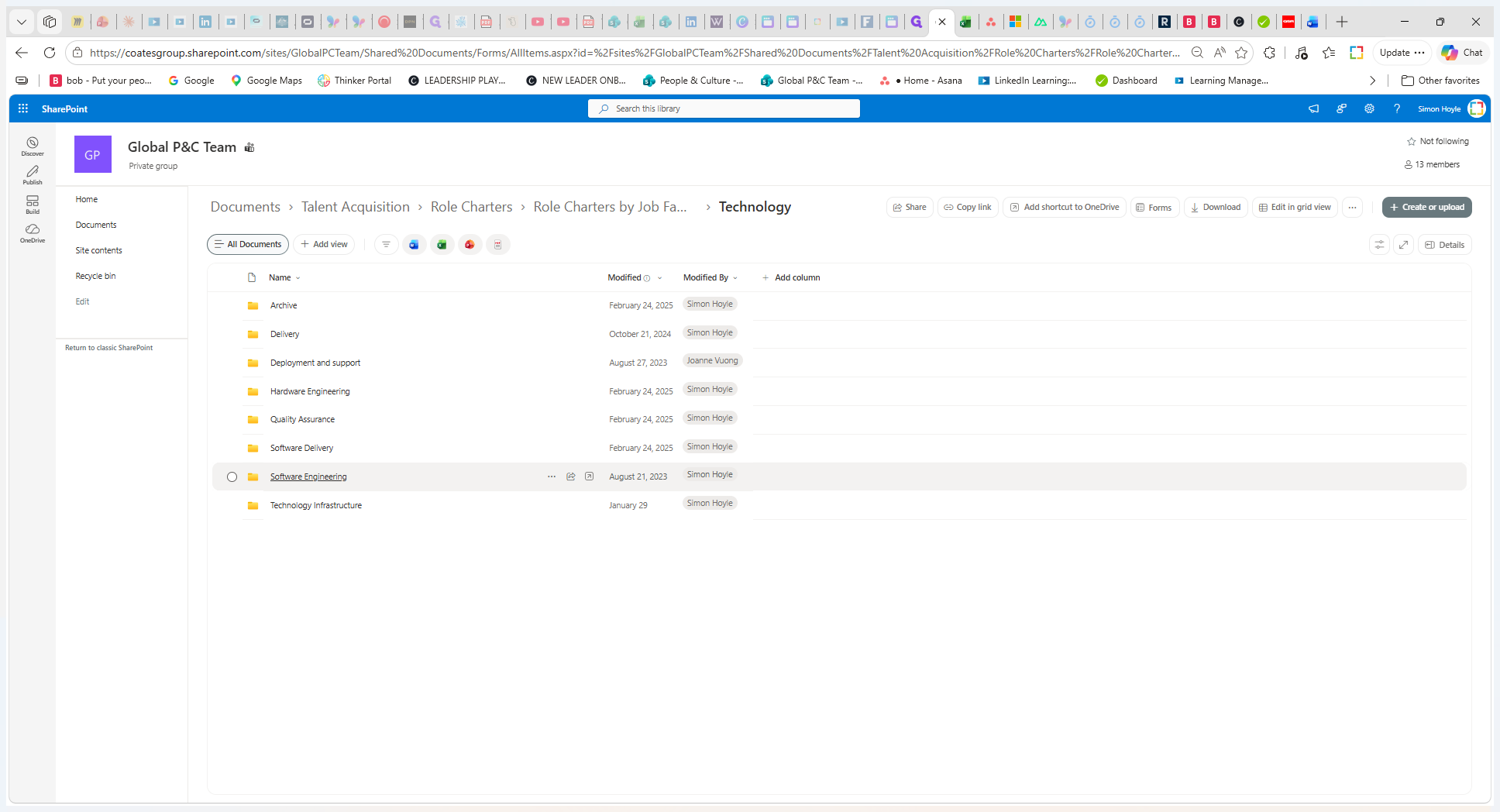
Open the relevant department folder, such as Technology.
Step #6: Open the relevant department folder, such as Technology.
7
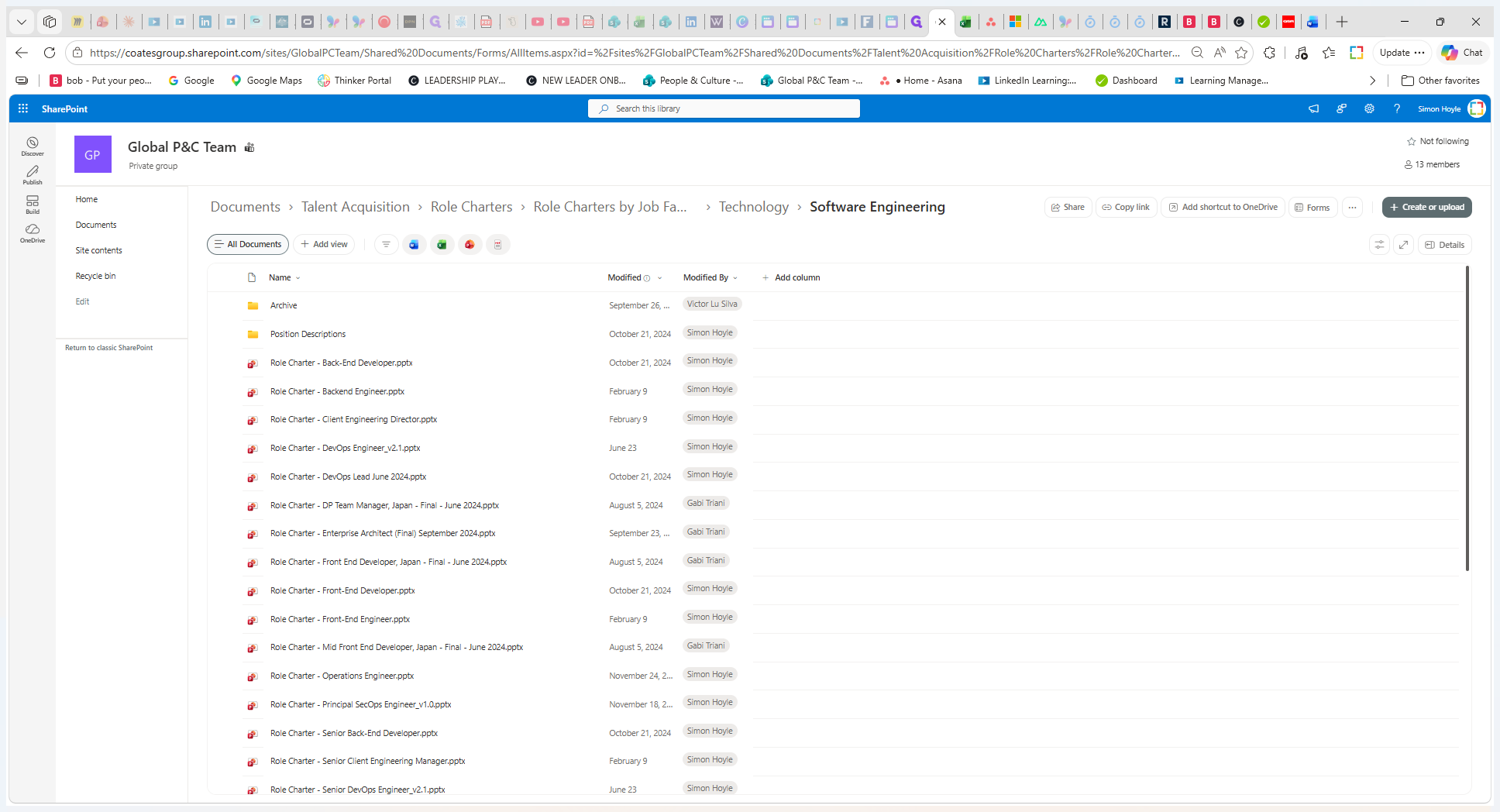
Select the appropriate sub-family folder, such as Software Engineering.
Step #7: Select the appropriate sub-family folder, such as Software Engineering.
8
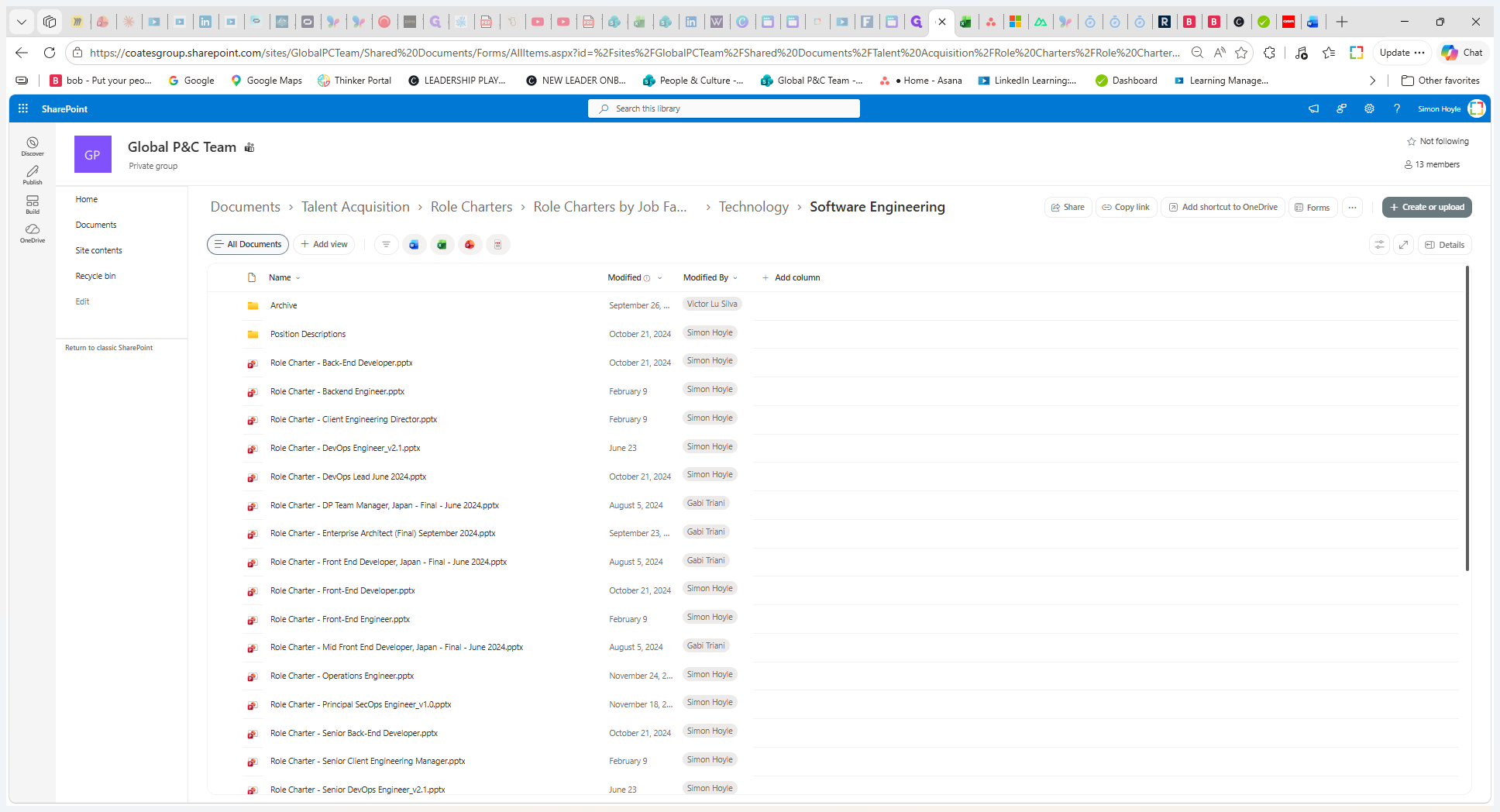
Click + Create or upload.
Step #8: Click + Create or upload.
9
Select File Upload and choose the finalized role charter from your local drive.
Step #9: Select File Upload and choose the finalized role charter from your local drive.
10
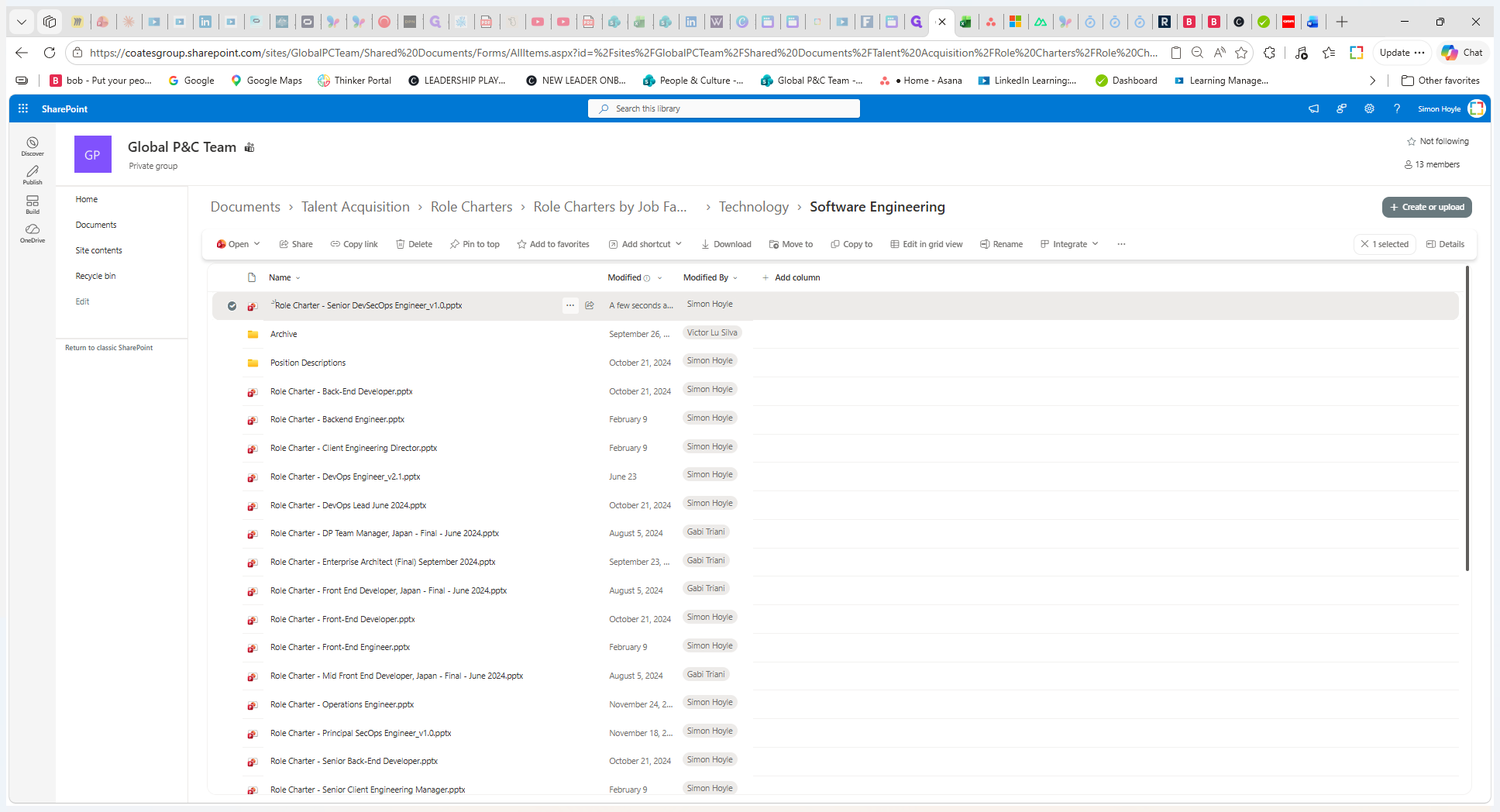
Once the upload completes, select the file and copy a view-only link to it.
Step #10: Once the upload completes, select the file and copy a view-only link to it.

Link the Charter to the Job Architecture

Update the central spreadsheet so anyone recruiting for the role can easily access the charter.
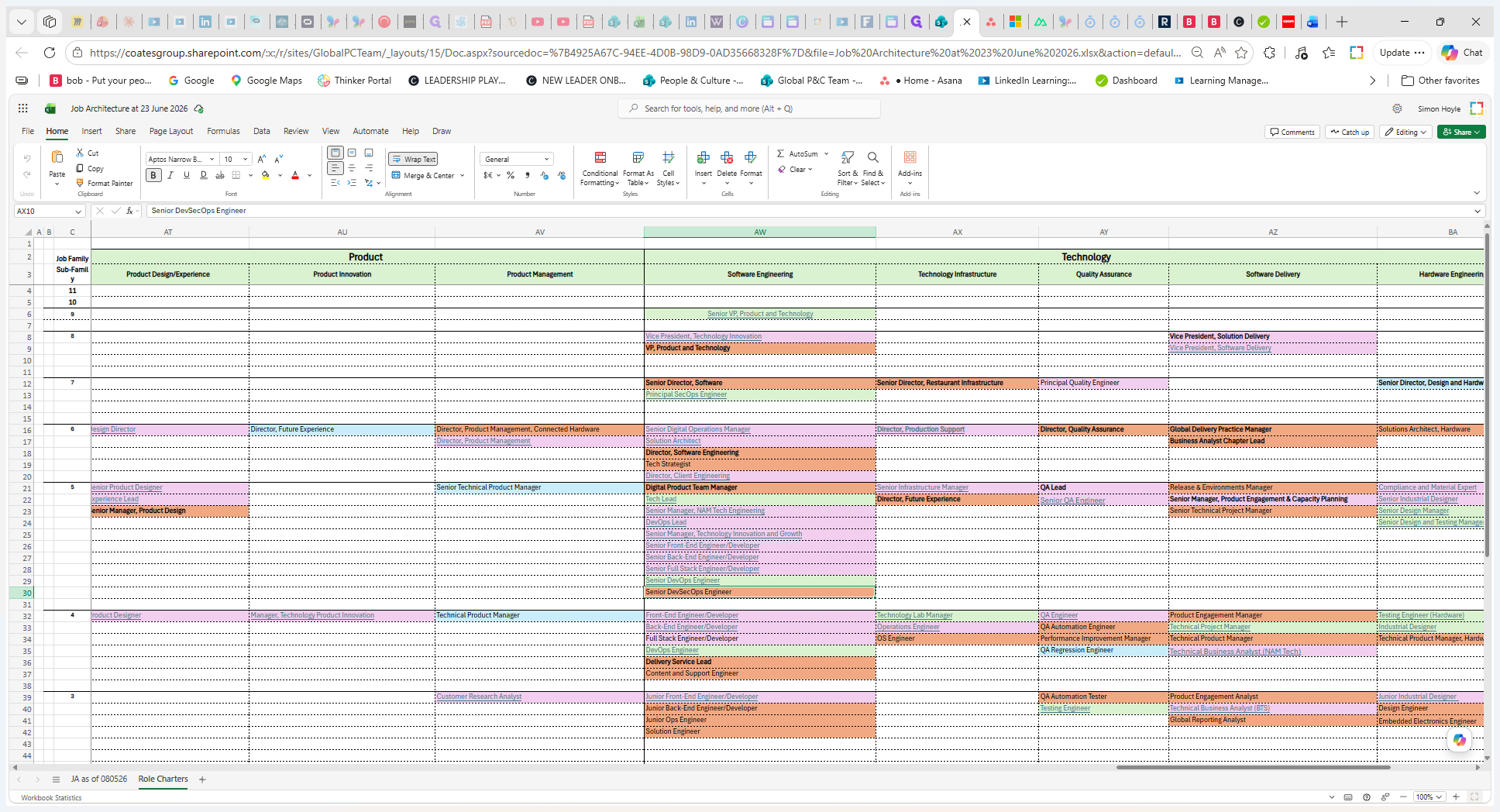
11
Return to the Job Architecture spreadsheet and click the cell corresponding to the role title.
Step #11: Return to the Job Architecture spreadsheet and click the cell corresponding to the role title.
12
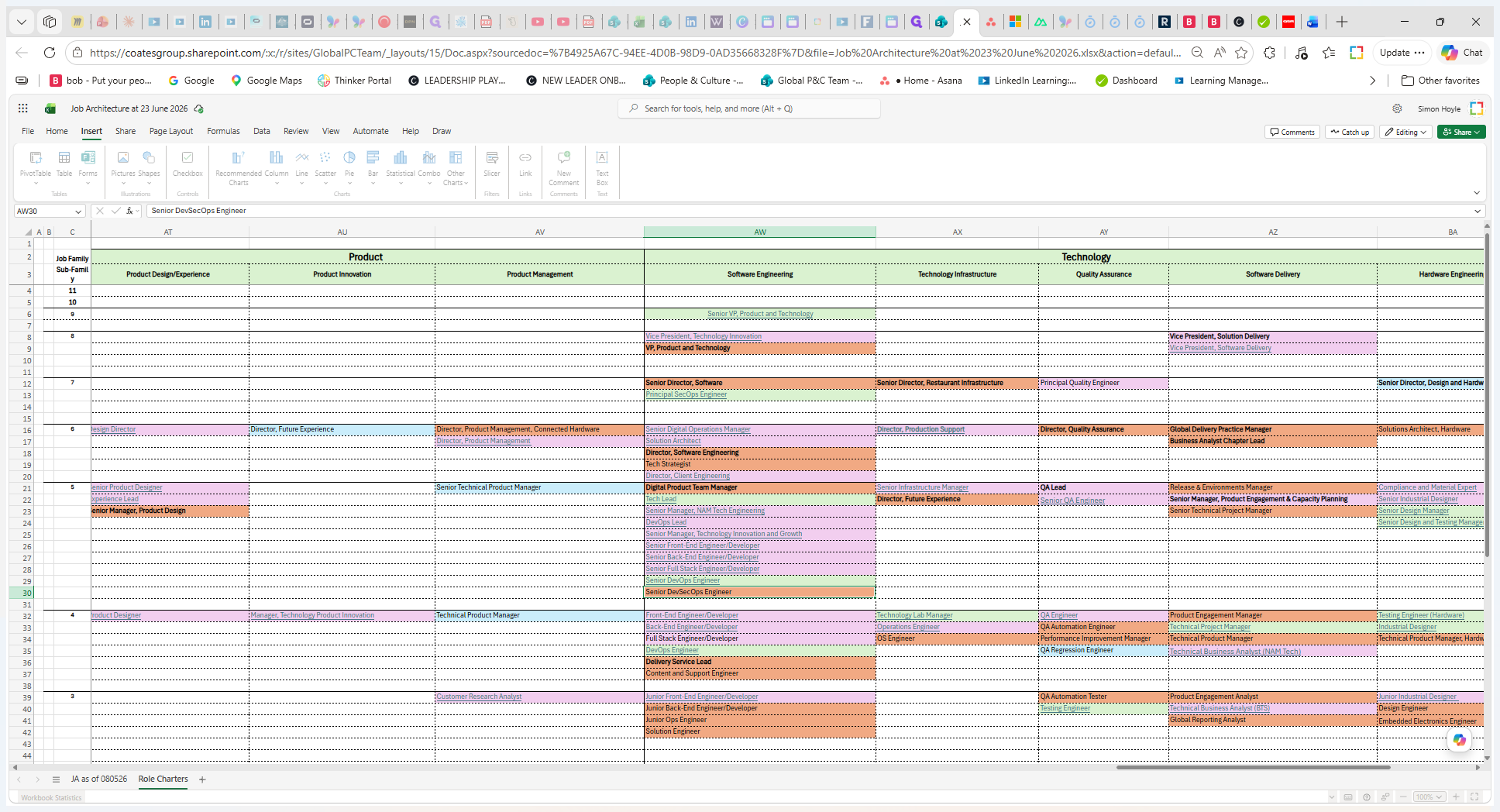
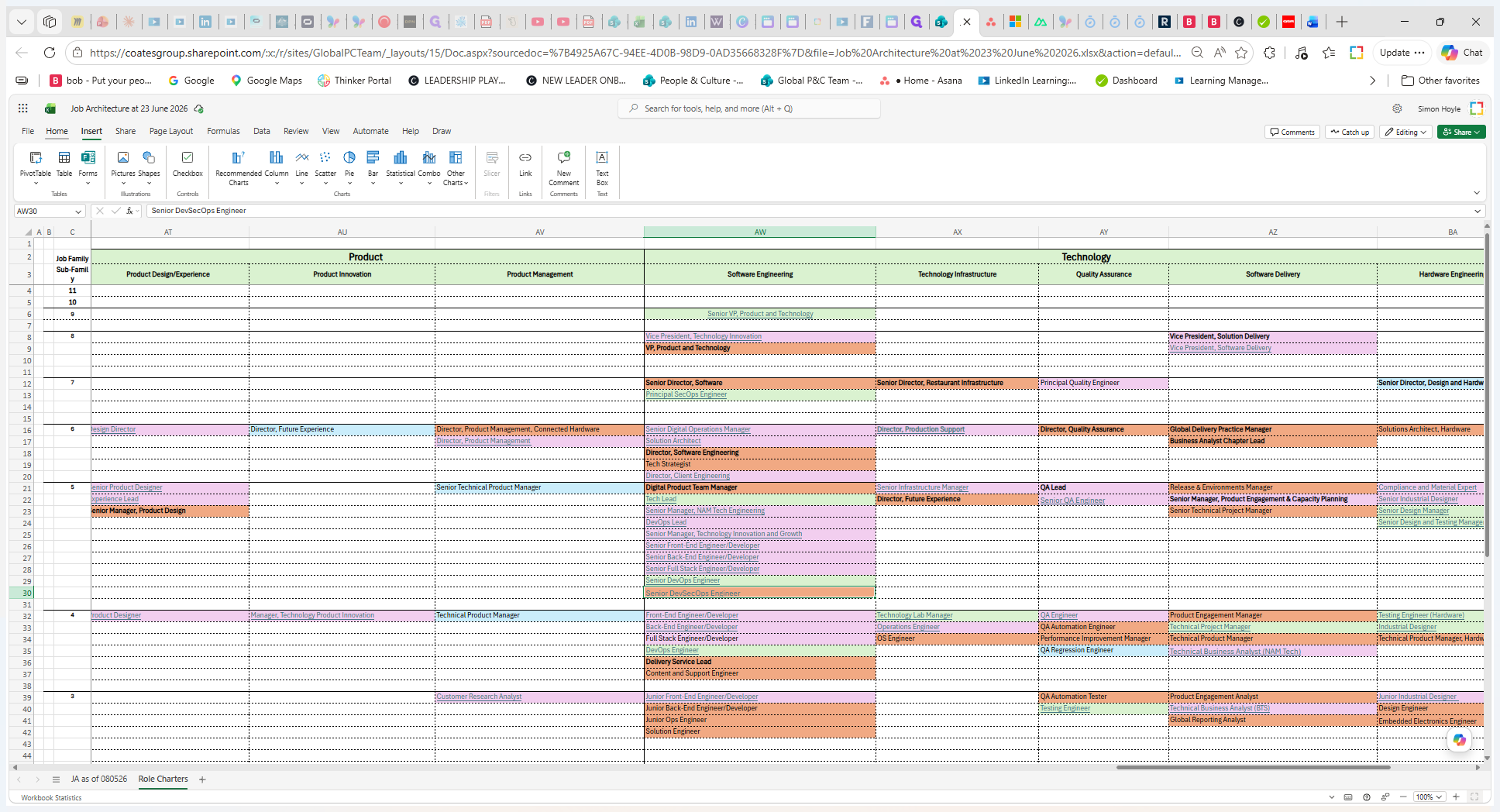
Navigate to the Insert tab in the top ribbon and click Link.
Step #12: Navigate to the Insert tab in the top ribbon and click Link.
13
Paste the view-only link into the address field and click OK.
Step #13: Paste the view-only link into the address field and click OK.
14
Navigate to the Home tab.
Step #14: Navigate to the Home tab.
15
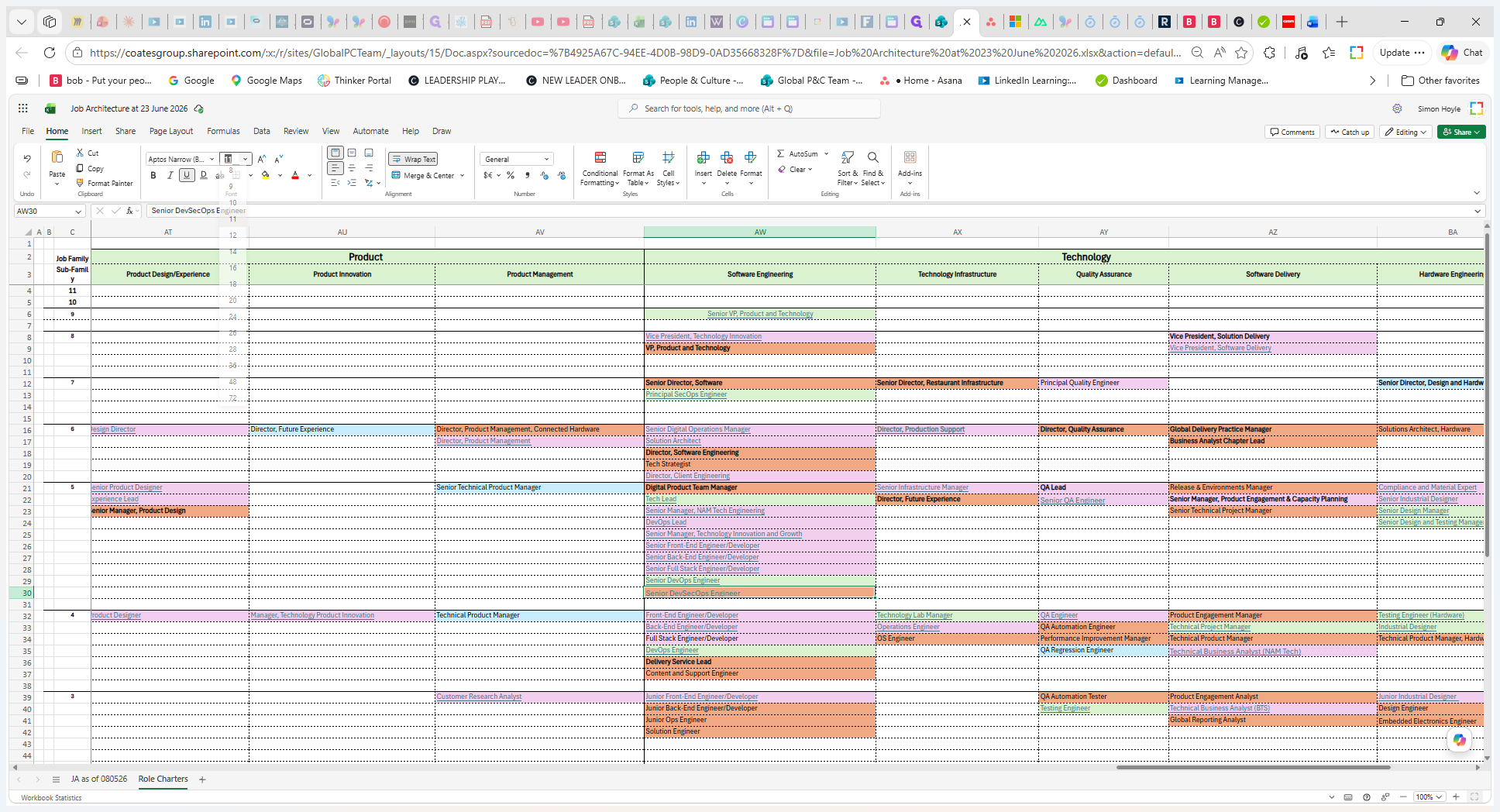
Check the font size and revert it to 10 if inserting the link automatically changed it.
Step #15: Check the font size and revert it to 10 if inserting the link automatically changed it.
16
Click the Fill Color dropdown icon in the formatting ribbon.
Step #16: Click the Fill Color dropdown icon in the formatting ribbon.
17
Select green to indicate the role now has a finalized, up-to-date charter.
Step #17: Select green to indicate the role now has a finalized, up-to-date charter.

Term

Definition

Job Architecture

A framework that organizes all roles within the business into a structured hierarchy of job families and sub-families.

Role Charter

A document outlining the accountabilities, success metrics, and required skills and experience for a specific role.

Job Family

A grouping of related roles that share similar functions, required skills, and career paths within the organization.