
Read summarized version with
What Are Best Practices?
Best practices are proven methods that consistently produce better results and can be repeated across teams and organizations. They’re the way of doing something that a field has tested, compared, and settled on, grounded in evidence rather than opinion. A single best practice is one such method. Put a bunch of them together and you get the playbook a field leans on to hit quality standards, without anyone being forced into mandatory regulations. Think of them as shortcuts that have already earned their keep.
Two things have to be true for something to count. It needs to produce good results, and those results need to repeat. Getting lucky once doesn’t qualify. That’s also what separates best practices from strict guidelines: the evidence is there, not just a general recommendation. They tend to emerge slowly, as people compare different approaches over time and one keeps coming out ahead.
You’ll run into best practices in almost every industry, from project management and healthcare to software development and construction. They’re really just the distilled version of what works, learned the hard way through years of trial and error.
Key Characteristics of Best Practices
- Proven Effectiveness: They’ve been tested in the real world and shown to beat the alternatives. Actual results, not theory.
- Repeatability: Different teams can follow the same approach and land similar outcomes. If it only works once, that’s luck, not a best practice.
- Evidence-Based: They come from comparing approaches and tracking what works, not from gut feelings or “we’ve always done it this way.”
- Adaptable: They point you in a clear direction while leaving room to fit your own situation. Guides, not scripts.
- Evolving: What counts as a best practice today may not tomorrow. As technology shifts and better methods turn up, the bar moves with them.
Best Practices Examples
Example 1: Accounting Standards
Accounting gives you one of the clearest examples out there: Generally Accepted Accounting Principles (GAAP), maintained by the Financial Accounting Standards Board. Every accountant learns these. They’re a fairly strict set of guidelines that keep financial reporting consistent from one company to the next. So when you read a balance sheet, you can trust it plays by the same rules as anyone else’s, because everyone uses GAAP.
Example 2: Lean Manufacturing
Lean Manufacturing goes the other way. Rather than telling you exactly what to do, it hands you a structured framework for cutting waste and working more efficiently. A car plant and a bakery might both run on lean principles, yet apply them very differently depending on what’s coming off the line. It’s a good reminder that best practices can be flexible guidelines, not rigid instructions.
Example 3: Cybersecurity Frameworks
The NIST Cybersecurity Framework is widely used for protecting digital assets. Companies pick and choose the pieces that fit, based on their risk level and what they actually need to protect. A small e-commerce site will implement it differently than a bank, but both start from the same framework. Across all three examples, the pattern holds: best practices anchor process standardization without forcing every team into an identical mold.
Best Practice vs Guidelines
Best practices and guidelines overlap, and people use the words interchangeably, but they aren’t the same thing. Here’s how they differ:
| Aspect | Best Practice | Guidelines |
|---|---|---|
| Authority | Backed by research and proven track records | Based on experience or expert opinion |
| Flexibility | Adaptable, but rooted in validated methods | Broader suggestions open to interpretation |
| Validation | Evidence shows it works better than alternatives | Might not have formal testing behind it |
| When to use | When you want proven methods that deliver results | When you need general direction without strict requirements |
How to Implement Best Practices
Adopting best practices is something you work at, not a one-time decision. A dependable approach looks like this:
- Research what works. Study industry benchmarks, standards bodies, and high-performing peers to find methods with a proven track record.
- Document the process clearly. Write down the exact steps so anyone can follow them. This is the point where best practices become repeatable instead of tribal knowledge.
- Train your team. Roll the approach out through onboarding and knowledge sharing so the whole org pulls in the same direction.
- Measure and refine. Track results, then fold the practice into continuous improvement and update it as technology and conditions shift.
Do this well and the cycle turns scattered habits into operational excellence and durable process improvement across the organization.
How Glitter AI Helps with Best Practices
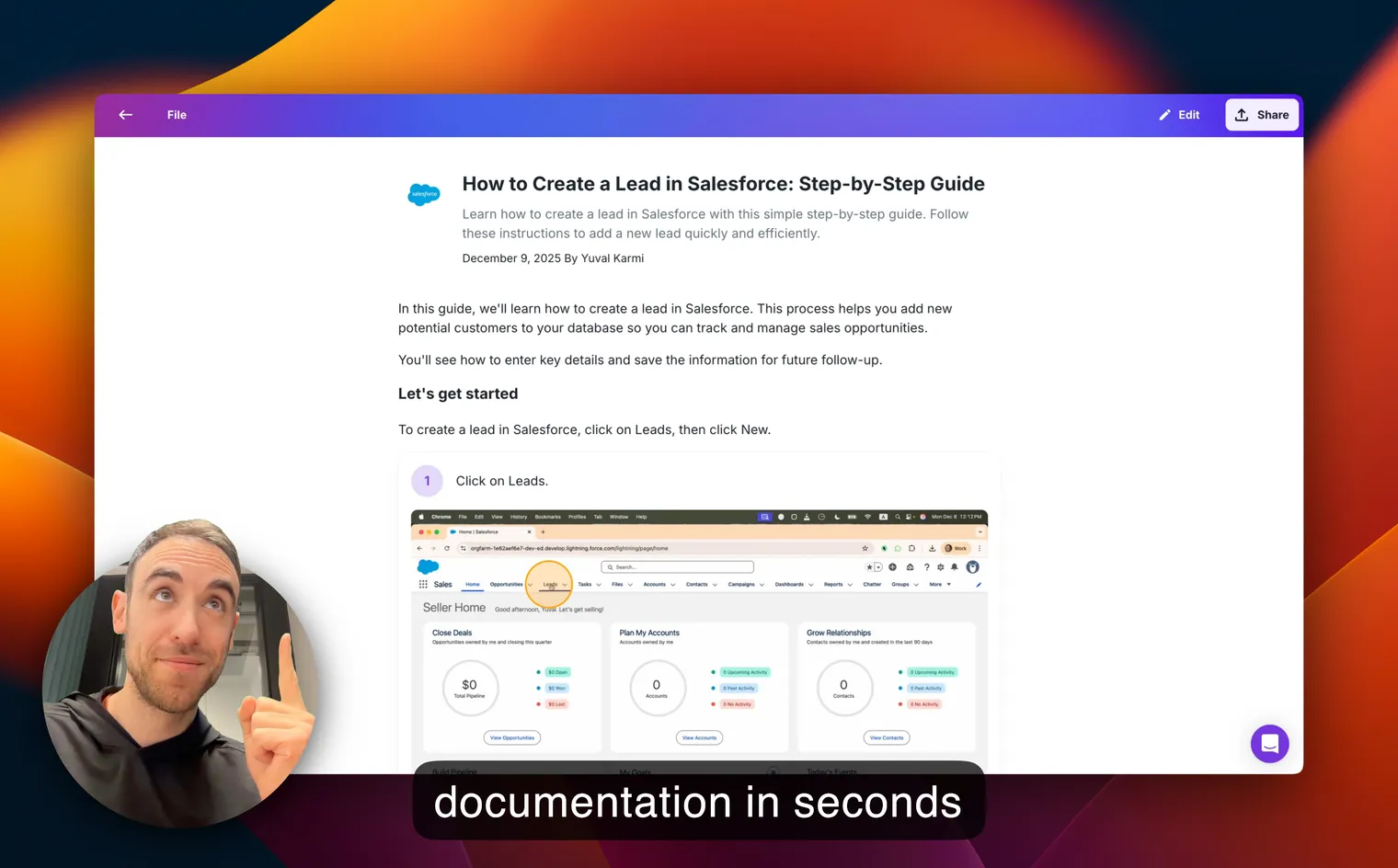
Glitter AI makes capturing and sharing best practices simple. Your subject matter experts just record their screen while they do the work, and Glitter turns that into clear, visual documentation anyone can follow. No more institutional knowledge trapped in one person’s head.
Once you’ve got step-by-step visual guides of how things should be done, the whole team can follow the same approach. That’s the foundation of any best practice library, a repeatable framework, and real knowledge sharing across the org. It works for accounting procedures, manufacturing workflows, customer service protocols, or any operating procedure you need written down, and it pairs well with solid SOP adoption habits and a thoughtful approach to sharing knowledge across teams. Best of all, when your best practices change, updating the docs is quick.
Teach your co-workers or customers how to get stuff done – in seconds.

Frequently Asked Questions
What does best practice mean?
A best practice is a method that's widely accepted as better than the alternatives because it consistently produces good results. The key is that it works across different teams and situations, not just in one specific case.
What is an example of a best practice?
Lean Manufacturing is a good example. It gives organizations a framework for reducing waste and working more efficiently. GAAP in accounting is another one. It standardizes how companies report their finances so everyone follows the same rules.
Why are best practices important?
They save you from reinventing the wheel. Instead of figuring everything out through trial and error, you can follow methods that have already been tested and refined by others. This reduces mistakes, saves time, and gives you a solid starting point for improvement.
How do you implement best practices?
Start by researching what works in your industry. Document the processes clearly so everyone understands them. Train your team on the approach, then track results to make sure it's actually working. Update your practices as things change.
What is the difference between best practices and standards?
Best practices are recommended but optional. You follow them because they work, not because you have to. Standards are mandatory requirements that must be met. Think of best practices as 'here's how to do it well' versus standards as 'here's the minimum you must do.'