
Read summarized version with
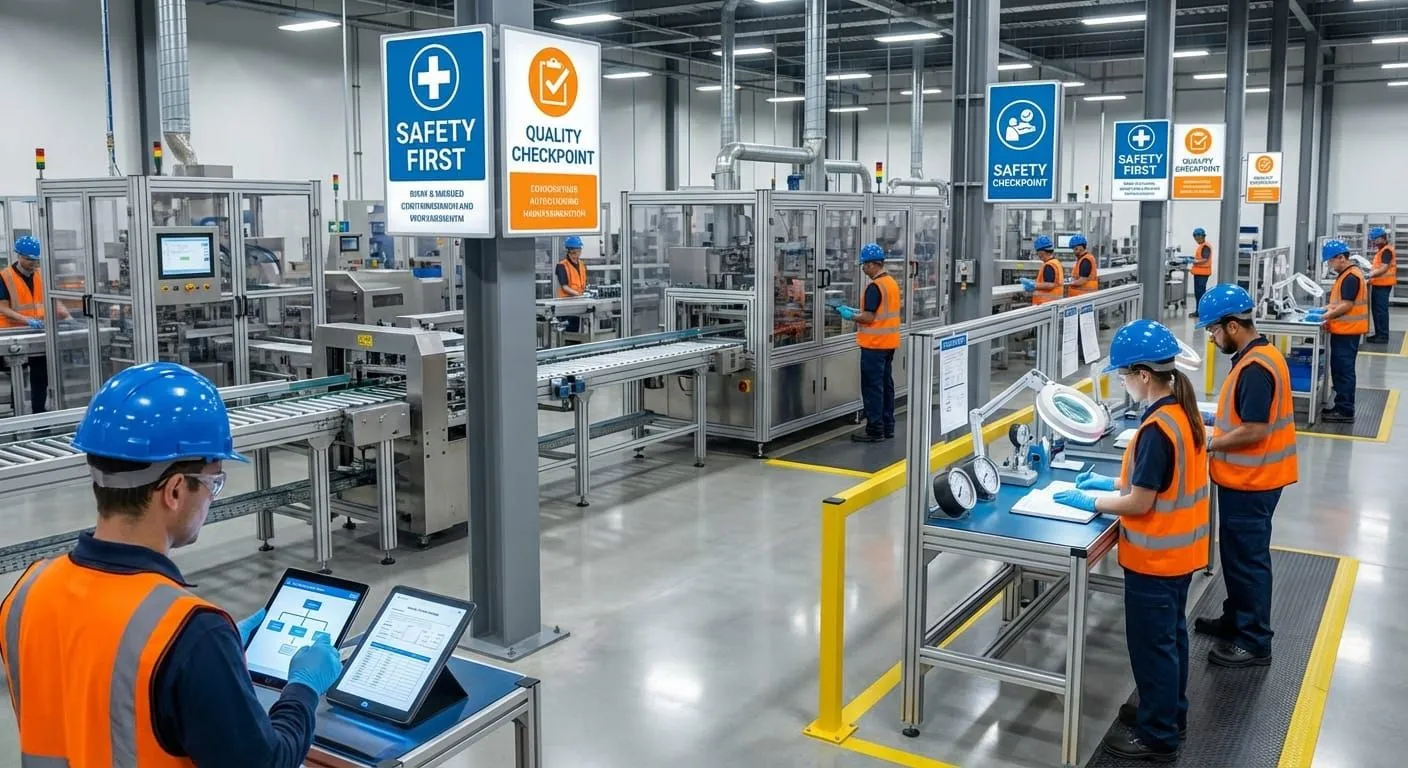
Here’s something that kept me up at night when I was helping manufacturing clients at Simpo: a poorly documented procedure isn’t just inefficient - it can literally get someone hurt.
I watched a manufacturing plant struggle with this firsthand. They had safety procedures. They had quality control processes spelled out in a production SOP. They had equipment operation manuals. All documented, all “technically compliant.”
But when I walked the floor, I saw workers doing things completely differently. Not because they were careless. But because the SOPs were impossible to follow in the real world.
The documentation existed in three-ring binders that nobody opened. Written in dense technical language that required a PhD to understand. Full of steps that didn’t match the actual equipment on the floor.
I’m Yuval, founder and CEO of Glitter AI. I’ve spent years helping organizations create documentation that people actually use. And nowhere is this more critical than manufacturing, where bad documentation doesn’t just slow things down - it can lead to injuries, quality issues, and regulatory problems.
Let me show you how to create manufacturing SOPs that keep your workers safe and your production running smoothly. If you want the fundamentals first, start with what a manufacturing SOP actually is. From there, work through a full guide to writing manufacturing procedures, then dig into a library of examples and templates covering quality, assembly, and safety.
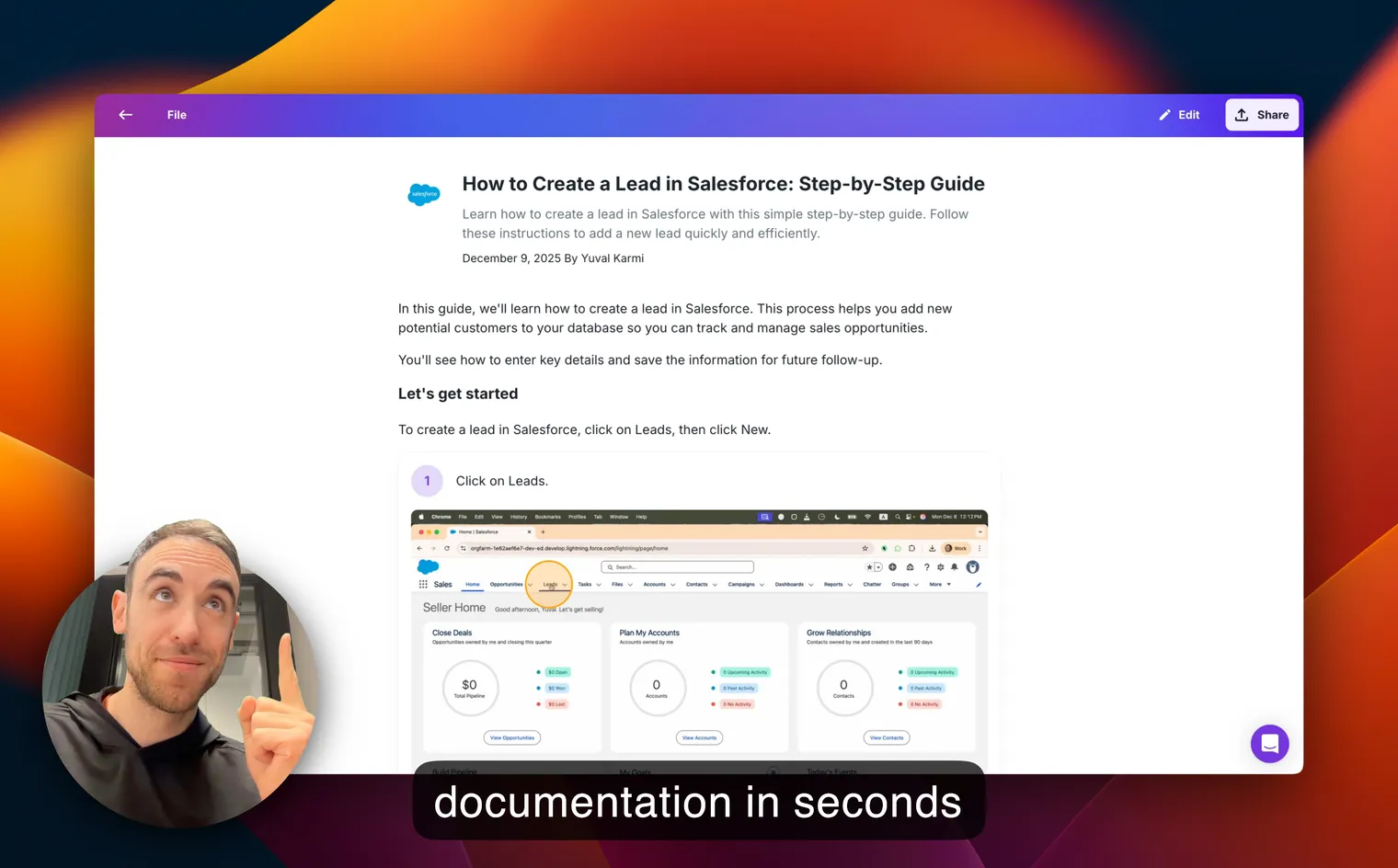
Teach your co-workers or customers how to get stuff done – in seconds.

Why Manufacturing SOPs Fail (And How to Fix It)
Before we get into the how-to, let’s talk about why most manufacturing SOPs end up collecting dust instead of preventing accidents.
They’re Written at a Desk, Not on the Floor
I can’t tell you how many times I’ve seen SOPs written by someone who hasn’t actually performed the procedure in years. Or ever.
They sit in an office, think through the steps logically, write them down, and call it done.
The problem? Reality on the manufacturing floor is messy. There are unexpected situations, equipment quirks, environmental factors, and workflow dependencies that only become obvious when you’re actually doing the work.
The fix: Write your SOPs with the people who do the work every day. Not for them - with them.
They Ignore How People Actually Learn
Here’s what doesn’t work: pages of dense text explaining complex procedures.
Here’s what does work: visual, step-by-step instructions with photos showing exactly what to do.
I learned this watching a new hire try to follow a machine operation SOP. The written instructions said “align the component with the fixture.” The component had three possible orientations. The fixture had four adjustment points. The text gave no indication which orientation or which settings to use.
A single photo would have made everything clear. But there was no photo.
They Don’t Account for Safety-Critical Steps
Not all steps are created equal. Some steps are preferences. Some are efficiency improvements. And some steps - if skipped or done wrong - can cause serious injury or equipment damage.
But most SOPs treat every step the same way. Same formatting, same emphasis, same presentation.
Workers need to know which steps are safety-critical. And those steps need to stand out visually and include the specific hazards being prevented.
They Become Instantly Outdated
Manufacturing environments change constantly. New equipment. Process improvements. Regulatory updates. Product changes.
Most SOPs can’t keep up. Updating them requires finding the document, making edits, getting approvals, printing new versions, and replacing the old ones in binders across the facility.
By the time the update is complete, something else has changed.
The best manufacturing operations build documentation updates into their change management SOP. When you change a process, updating the SOP isn’t optional - it’s part of the change.
Record your procedures once and generate visual SOPs automatically with AI.
Creating Effective Safety Procedure SOPs
Let’s start with the most critical category: safety procedures. These need to be absolutely bulletproof.
Start With the Hazard
Every safety procedure should begin with a clear statement of the hazard being prevented.
Not this: “Personal protective equipment must be worn when operating the press brake.”
This: “WARNING: Press brake can generate 200 tons of force capable of crushing hands and fingers. Always wear cut-resistant gloves and safety glasses. Never place hands near the point of operation.”
See the difference? The second version tells you why the procedure matters. And people are far more likely to follow procedures when they understand the consequences.
Use Visual Hazard Indicators
Safety-critical steps should look different from regular steps. I use a few techniques:
Warning boxes for hazardous steps that stand out visually.
Red text or highlighting for the most critical safety information.
Hazard symbols next to dangerous steps (crushing hazards, chemical hazards, electrical hazards, etc.).
The goal is that someone skimming the procedure can instantly identify the steps where extra caution is required.
Include Photos of Both Right and Wrong
This completely changed how effective our safety SOPs were: show what NOT to do, not just what to do.
A photo labeled “CORRECT: Guard in place before operation” next to a photo labeled “INCORRECT: Never operate with guard removed” is incredibly powerful.
People learn from seeing the contrast. And seeing the wrong way helps them recognize unsafe conditions before they occur.
Build in Verification Steps
For critical safety procedures, include verification steps where workers confirm the safety measures are in place before proceeding.
Example for lockout/tagout:
- De-energize equipment at main disconnect
- Apply lockout device
- VERIFY: Attempt to start equipment to confirm de-energization
- Test for stored energy
- Apply tag indicating who locked out the equipment and why
- VERIFY: Second person confirms lockout is properly applied
Those verification steps catch mistakes before they become accidents.
Make Them Accessible at Point of Use
Safety procedures don’t help if they’re in a binder in the supervisor’s office.
The best manufacturing facilities put laminated safety SOPs right at the equipment. QR codes that link to digital versions. Posters on the wall showing the key steps.
When someone needs to reference the procedure, it should be within arm’s reach.
I’ve started helping clients create process documentation that’s accessible on tablets mounted near workstations. Workers can pull up the SOP with photos and videos right where they need it.
Quality Control SOP Best Practices
Quality procedures are different from safety procedures. They’re not about preventing immediate harm - they’re about ensuring consistent output.
Define Accept/Reject Criteria With Photos
“Inspect for defects” is useless as an instruction.
What constitutes a defect? How big? Where? What type?
The solution: Photo examples of acceptable parts and examples of common defects.
I worked with a metal fabrication shop that reduced their quality escapes by 60% just by adding reference photos to their inspection SOPs. Instead of relying on inspector judgment, they had clear visual standards.
Specify Measurement Tools and Techniques
Don’t just say “measure diameter.” Specify:
- Which measurement tool (micrometer, caliper, etc.)
- Where exactly to measure
- How many measurement points
- Acceptable tolerance range
- What to do if out of tolerance
I’ve seen quality issues traced back to different inspectors measuring the same part in different locations and getting different results - all because the SOP didn’t specify where to measure.
Include Statistical Process Control Guidance
If you’re using SPC for quality monitoring, your SOPs should include:
- Which characteristics to measure
- Sample frequency and size
- How to plot on control charts
- What to do when points fall outside control limits
- Who to notify for out-of-control conditions
This ensures consistent data collection and appropriate response to quality trends.
Document Corrective Actions
When quality issues occur, what should the operator do?
A good quality control SOP includes:
- Immediate containment steps (tag suspect parts, stop production, etc.)
- Who to notify
- Documentation requirements
- Rework procedures (if applicable)
- Criteria for resuming production
This prevents quality issues from escalating while ensuring proper follow-through.
Teach your co-workers or customers how to get stuff done – in seconds.
Equipment Operation Procedure Guidelines
Equipment operation SOPs need to balance comprehensiveness with usability.
Organize by Operator Task, Not Machine Function
Most equipment manuals are organized by machine function. Perfectly logical if you’re a machine designer. Terrible if you’re an operator trying to set up for a new job.
Machine manual organization:
- Hydraulic system
- Electrical system
- Control panel
- Tooling system
Operator-focused SOP organization:
- Daily startup procedure
- Job changeover procedure
- Normal operation procedure
- Shutdown procedure
- Common troubleshooting
The second approach matches how operators actually use the equipment.
Separate Setup From Operation
Setup procedures are typically more complex and performed less frequently. Operating procedures are simpler but performed constantly.
Combining them creates a long, intimidating document that’s hard to navigate.
Better approach:
- Job Setup SOP: Detailed, step-by-step instructions for changeovers (used weekly or monthly)
- Operation SOP: Quick reference for normal production (used daily)
- Shutdown SOP: End-of-shift or end-of-job procedures
- Troubleshooting Guide: Common issues and solutions
This makes it easier for operators to find exactly what they need in the moment.
Include Normal Operating Parameters
What should the operator see during normal operation?
Temperature ranges, pressure readings, speed settings, sound levels - document the normal state so operators can recognize when something is wrong.
I learned this after watching an experienced operator catch a bearing failure early because “it didn’t sound right.” New operators didn’t have that experience. But we could document what normal sounds like (and even include audio recordings in digital SOPs).
Create Troubleshooting Flowcharts
Text-based troubleshooting is hard to follow under pressure.
Flowcharts are better. Visual decision trees help operators diagnose problems quickly and know when to call for help versus when they can resolve it themselves.
Build in Predictive Maintenance Checks
The best equipment operation SOPs include operator-level maintenance checks:
Daily:
- Visual inspection for leaks, damage, loose components
- Lubrication points
- Cleaning requirements
Weekly:
- Filter checks
- Belt tension
- Alignment verification
When operators perform these checks as part of their documented procedure, you catch small issues before they become major failures.
This is part of what makes a good knowledge transfer process - experienced operators know to check these things, but new operators need it documented.
Making SOPs Accessible and Usable
Even the best-written SOP is useless if nobody can find it when they need it.
Digital Beats Paper for Everything Except Uptime
Paper SOPs have one advantage: they work when the power is out or the network is down.
For everything else, digital is better:
- Easier to update
- Can include videos and animations
- Searchable
- Can track which version people are viewing
- Analytics on which SOPs are actually being used
But you need a backup plan. For truly critical safety procedures, laminated quick-reference guides at the workstation provide redundancy.
Use Layered Information Design
Not everyone needs the same level of detail.
Quick reference version: One-page visual guide with key steps (for experienced operators)
Detailed version: Complete procedure with photos, specifications, and troubleshooting (for training and reference)
Training version: Extended version with additional context, theory, and practice exercises
This lets experienced workers get what they need quickly while giving new hires comprehensive information.
Implement QR Codes for Quick Access
I’m a huge fan of QR codes on equipment. Scan the code, immediately access the relevant SOPs for that machine.
This works especially well for:
- Infrequently performed procedures (no need to remember where the manual is)
- Troubleshooting (scan when there’s a problem)
- Training (new operators can access instructions on demand)
Make SOPs Part of Training
SOPs shouldn’t just document procedures - they should be the foundation of your training program.
New hire training should:
- Use the SOPs as primary training materials
- Have trainees perform procedures while following the SOPs
- Test competency on the documented procedures
- Certify that trainees can perform the procedure according to the SOP
This ensures the SOPs reflect how you actually want work performed, not some theoretical ideal that differs from training.
Maintaining Manufacturing SOPs
Creating great SOPs is step one. Keeping them current is the ongoing challenge.
Tie Updates to Change Management
Every process change should trigger an SOP review.
Our change management checklist includes:
- Process change documented
- Risk assessment completed
- Related SOPs identified
- SOPs updated to reflect changes
- Training materials updated
- Affected workers trained on changes
- Old procedures removed or archived
If updating the SOP isn’t part of the change process, it won’t happen consistently.
Use Revision Tracking and Version Control
Every SOP should show:
- Current revision number
- Date of last revision
- Summary of what changed
- Who approved the revision
This creates accountability and helps you track when procedures were updated relative to when processes changed.
Schedule Periodic Reviews
Even without process changes, SOPs need periodic review to catch drift.
My recommendation:
- Critical safety procedures: Annual review minimum
- Quality procedures: Review when quality issues occur, plus annual
- Equipment operation: Review during major maintenance, plus every 2 years
- Standard work procedures: Review quarterly or when performance issues arise
Assign a specific owner for each review. “Everyone’s responsible” means nobody’s responsible.
Collect Feedback From Users
The people using the SOPs know what’s unclear, what’s missing, and what’s wrong.
Create a simple feedback mechanism:
- “Was this helpful?” at the end of digital SOPs
- Suggestion box for SOP improvements
- Regular feedback sessions with operators
- Incident review that includes SOP assessment
When I started actively asking for SOP feedback, we discovered that operators had been working around problems in the documented procedures for months. They just assumed that’s how it was supposed to be.
Record your procedures once and generate comprehensive documentation automatically.
Regulatory Compliance Considerations
Manufacturing SOPs often need to meet regulatory requirements. This adds another layer of complexity.
Know Your Applicable Standards
Different industries have different requirements:
ISO 9001: Requires documented procedures for quality management
FDA regulations: Extensive SOP requirements for medical device and pharmaceutical manufacturing
OSHA: Requires written procedures for lockout/tagout, hazard communication, and other safety programs
Industry-specific: Aviation (AS9100), automotive (IATF 16949), food safety (FSSC 22000)
Understanding which standards apply to your operation determines what must be in your SOPs.
Include Required Documentation Elements
Regulated SOPs typically need:
- Unique document identifier
- Revision history
- Approval signatures
- Effective date
- Distribution list
- Training records showing who was trained on the procedure
Missing these elements can create compliance issues during audits.
Balance Compliance With Usability
Here’s the tension: regulatory requirements often push toward comprehensive, detailed documentation.
But comprehensive and detailed can also mean long and hard to use.
The solution: Create the comprehensive version required for compliance, then create working documents that are more usable.
The key is ensuring the working document is consistent with the official SOP - just condensed and formatted for actual use.
Maintain Audit Trail for Changes
Regulated environments need to prove that SOPs were current at the time work was performed.
This requires:
- Version control that timestamps changes
- Archiving old versions
- Training records tied to specific SOP versions
- Ability to produce historical SOPs during audits
When I help manufacturers implement digital SOP systems, built-in version control and audit trails make compliance much easier than paper-based systems.
Common Mistakes That Undermine Manufacturing SOPs
Let me save you some pain by sharing the mistakes I’ve seen (and made) that kill SOP effectiveness.
Mistake 1: Delegating SOP Creation Entirely to Technical Writers
Technical writers are great at documentation. But they’re not process experts.
The best manufacturing SOPs are created collaboratively: subject matter experts (the operators and technicians) provide the content, and technical writers help structure and polish it.
When technical writers work alone, you get beautifully formatted procedures that don’t reflect reality.
Mistake 2: Creating SOPs for Compliance, Not Use
I’ve seen manufacturers create SOPs just to check a box for auditors.
These SOPs are comprehensive, detailed, and completely divorced from how work actually happens. They sit in binders, get shown to auditors, and then get ignored.
This creates a dangerous situation: the documented procedure differs from the actual procedure. When something goes wrong, you have no idea what was actually being done.
SOPs should document how you want work performed, and work should be performed according to the SOPs. When these diverge, you have a problem.
Mistake 3: Making Them Too Generic
“Operate equipment according to manufacturer specifications” is not an SOP.
Effective SOPs are specific to your equipment, your process, your product, and your facility.
Yes, you can use manufacturer manuals as reference material. But your SOPs need to describe how to run your specific operation with your specific setup.
Mistake 4: No Visual Content
In my experience, SOPs without photos or diagrams are maybe 30% as effective as visual SOPs.
Manufacturing is physical work. Describing physical procedures in text alone is incredibly difficult.
A single photo is worth 500 words of description. Use them liberally.
This is actually why I built Glitter AI. Creating visual SOPs manually takes forever - screenshots, annotations, formatting. Recording your screen while performing the procedure and having AI generate the visual SOP saves hours.
Mistake 5: Ignoring Language Barriers
Manufacturing workforces are often multilingual. SOPs in English only create safety and quality risks for non-native speakers.
Solutions:
- Translate critical safety procedures
- Use visual, photo-based SOPs that transcend language
- Use symbols and icons for key information
- Provide training in workers’ native languages
The most effective approach I’ve seen: heavily visual SOPs with minimal text, translated into the languages spoken on the floor.
Mistake 6: No Ownership Structure
When I ask “who’s responsible for keeping your SOPs current?” and hear “the quality manager” or “operations,” that’s a red flag.
That’s too broad. Each SOP needs a specific owner:
- Who reviews it
- Who approves changes
- Who ensures it reflects current practice
- Who trains people on it
Without clear ownership, SOPs decay.
Practical Implementation Strategy
Let me give you a realistic roadmap for improving your manufacturing SOPs.
Phase 1: Identify Your Critical Procedures (Week 1)
Don’t try to document everything at once. Start with procedures that are:
Safety-critical (lockout/tagout, confined space entry, chemical handling)
Quality-critical (final inspection, key process parameters, measurement procedures)
Frequently performed (daily operations that get messed up often)
Create a list of your top 10-15 procedures. This is where you’ll focus first.
Phase 2: Assess Current State (Week 2)
For each critical procedure:
- Do you have a documented SOP?
- Is it current?
- Do workers actually use it?
- What’s missing or wrong?
Go to the floor and watch someone perform the procedure while reading the SOP. The gaps will become immediately obvious.
Phase 3: Create or Update Critical SOPs (Weeks 3-8)
Work with operators to create or revise your critical procedures using the principles I’ve outlined.
My process:
- Record an experienced operator performing the procedure correctly
- Review the recording with them and note the steps
- Identify safety-critical steps and quality checkpoints
- Create the SOP with visual elements
- Have another operator try to follow the SOP
- Refine based on their feedback
- Get approval from supervision and quality
- Train all affected workers
- Implement and monitor
This takes time, but doing it right for 10-15 critical procedures creates immediate impact.
Phase 4: Build the System (Weeks 9-12)
While working on critical SOPs, build the infrastructure for long-term success:
Create templates for different SOP types
Establish ownership for each procedure
Set up review cycles with calendar reminders
Build SOP updates into change management processes
Choose your platform (digital system, paper binders, hybrid)
Create feedback mechanisms for continuous improvement
Phase 5: Expand to Remaining Procedures (Ongoing)
With your critical procedures documented and your system in place, systematically work through the rest.
But don’t let this become a project that drags on forever. Set realistic targets - maybe 5-10 new SOPs per month - and chip away at it.
If you’re looking for more guidance on creating effective documentation, check out my post on how to document processes when you’re not a writer.
The Bottom Line
Manufacturing SOPs aren’t just paperwork. They’re the foundation of safe, consistent, high-quality operations.
Good manufacturing SOPs:
Prevent injuries by clearly documenting safety procedures with visual hazard indicators
Ensure quality by providing clear accept/reject criteria and measurement specifications
Enable training by documenting exactly how experienced workers perform procedures
Support compliance by maintaining current, approved procedures with proper version control
Reduce variability by standardizing work methods across shifts and workers
The key is making them usable in the real world. Visual. Accessible. Updated when processes change. Written with input from the people who do the work.
Start with your most critical procedures. Work with your operators to document them properly. Build the systems to keep them current.
Your workers will follow procedures that make sense and help them do their jobs safely and effectively.
They’ll ignore procedures that are outdated, overly complicated, or disconnected from reality.
Make yours the kind worth following.
Frequently Asked Questions
What should be included in a manufacturing SOP?
A manufacturing SOP should include the procedure name and number, scope and purpose, required materials and equipment, detailed step-by-step instructions with photos, safety warnings for hazardous steps, quality checkpoints, troubleshooting guidance, and revision history. Safety-critical steps should be clearly marked and include specific hazards being prevented.
How do I make manufacturing SOPs that workers actually follow?
Create SOPs with input from the workers who perform the tasks daily. Use photos and visual instructions instead of dense text, organize by operator tasks rather than machine functions, make them accessible at the point of use, and keep them updated when processes change. SOPs should be practical tools, not compliance documents that sit in binders.
What's the difference between safety SOPs and operational SOPs?
Safety SOPs focus on preventing injuries and hazardous exposures, with clear warnings about specific hazards, required protective equipment, and verification steps. Operational SOPs focus on efficient, consistent production and may include safety elements but primarily document how to perform tasks correctly. Safety-critical steps in operational SOPs should be visually distinguished.
How often should manufacturing SOPs be reviewed and updated?
Review safety-critical SOPs annually at minimum. Update any SOP whenever the process changes by building documentation updates into your change management workflow. Review quality procedures when quality issues occur plus annually, and review equipment operation SOPs during major maintenance or every 2 years. Immediate updates should happen after any incident or near-miss.
Should manufacturing SOPs be digital or paper?
Digital SOPs are easier to update, can include videos, are searchable, and allow version tracking. However, paper SOPs work when power or networks are down. The best approach is digital SOPs with laminated quick-reference guides at workstations for critical safety procedures. QR codes can bridge both worlds by providing instant digital access.
How do I document equipment operation procedures effectively?
Organize equipment SOPs by operator tasks (startup, changeover, operation, shutdown) rather than machine systems. Include photos showing correct equipment setup, specify normal operating parameters so operators can recognize problems, create visual troubleshooting flowcharts, and separate detailed setup procedures from quick-reference operation guides.
What makes a good quality control SOP?
Good quality control SOPs include photo examples of acceptable parts and common defects, specify which measurement tools to use and where to measure, define clear accept/reject criteria with tolerance ranges, include statistical process control guidance if applicable, and document corrective actions to take when quality issues are found.
How do I maintain manufacturing SOPs for regulatory compliance?
Use version control with revision history and dates, maintain approval signatures and effective dates, keep audit trails showing when changes were made, archive old versions, tie training records to specific SOP versions, and ensure SOPs include required elements for your applicable standards (ISO 9001, FDA, OSHA, etc.). Schedule regular reviews to prevent compliance drift.