
Read summarized version with
What is an Onboarding Checklist?
An onboarding checklist is basically a master document that lays out everything a new employee needs to do during their first stretch at a company. Think of it as a structured getting-started guide that makes sure nothing falls through the cracks during the onboarding process. It helps new hires settle into their roles and get a feel for how things work around here.
The onboarding checklist works as a roadmap for both the new hire and their manager. It covers the whole gamut: paperwork, training sessions, getting set up with technology, meeting the people who matter. Having clear expectations and a step-by-step path forward takes a lot of the stress out of starting somewhere new. It’s a core component of the broader process of welcoming new employees.
Most onboarding checklists cover the first 30 to 90 days on the job, with tasks broken down by day, week, or milestone. Many organizations structure this around a 30-60-90 day plan that maps out specific goals for each phase. What might otherwise feel overwhelming becomes a series of manageable steps, much like a well-built new employee onboarding checklist. The payoff? Faster ramp-up time and employees who actually stick around.
Key Characteristics of an Onboarding Checklist
- Task Organization: Activities get grouped into sensible categories like admin stuff, tech setup, training, and meeting the team.
- Timeline Structure: Tasks are broken down by timeframe, usually organized around day one, the first week, first month, and first quarter.
- Accountability Assignment: Each task has a clear owner, whether that’s the new hire, manager, HR, or another department.
- Progress Tracking: Checkboxes or status markers let everyone see what’s done and what’s lagging behind.
- Resource Links: Direct access to forms, documents, training materials, and tools people need to actually get things done.
Onboarding Checklist Examples
Example 1: Corporate Office Onboarding
Picture a tech company bringing on a software engineer. Day one might include picking up a laptop and credentials, filling out HR paperwork, and attending new employee orientation. During the first week, they’d set up their development environment, review the coding standards, and shadow some senior developers. By the end of month one, they’ve completed security training, submitted their first code review, and had a 30-day check-in with their manager.
Example 2: Retail Store Onboarding
For a retail chain hiring store associates, the onboarding checklist kicks off with orientation basics: uniform fitting, locker assignment, safety training. The first week covers cash register training, learning the inventory system, and shadowing experienced staff across different shifts. By month’s end, new associates have passed product knowledge assessments, handled transactions on their own, and participated in a team feedback session.
Onboarding Checklist vs Employee Handbook
Both tools matter during onboarding, but they do different things.
| Aspect | Onboarding Checklist | Employee Handbook |
|---|---|---|
| Purpose | An action-oriented guide for completing onboarding tasks | A reference document for company policies and procedures |
| Scope | Time-bound activities focused on the first 30-90 days | Ongoing policies that apply throughout someone’s tenure |
| When to use | Actively used during the initial integration period | Pulled out when questions about policy come up |
How Glitter AI Helps with Onboarding Checklists
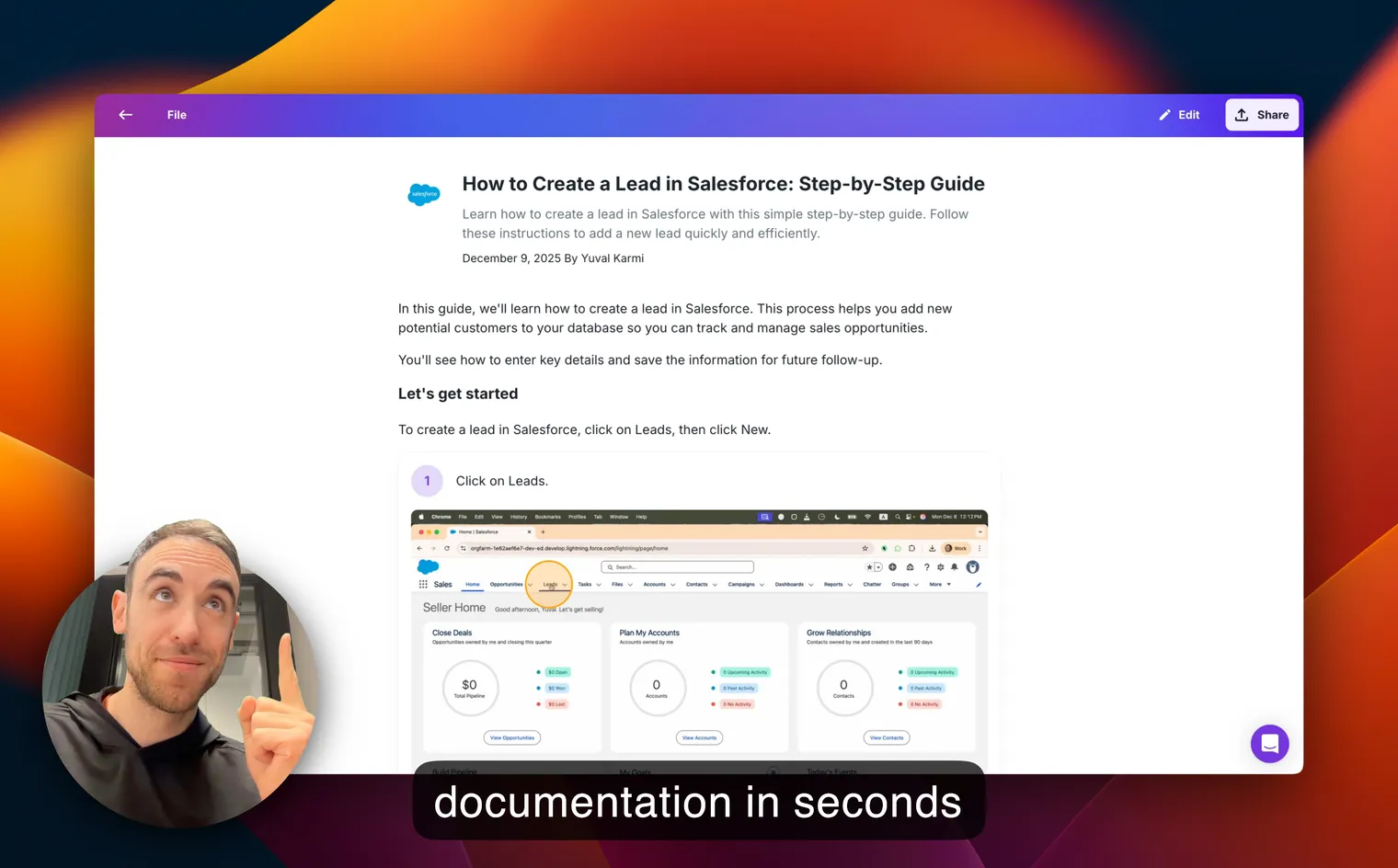
Glitter AI makes it easier to build and maintain onboarding checklists by letting teams capture each step visually. With screen recording and annotation features, HR and managers can create an interactive, video-based step-by-step guide that shows new hires exactly how to complete each task, from logging into systems to finding their way around internal tools. Our complete employee onboarding checklist guide walks through structuring the full program.
This visual approach cuts down on the time managers spend explaining the same things over and over, and it keeps the experience consistent for every new hire. When processes change, updating the materials is straightforward: just record the new procedure. No need to rewrite everything from scratch.
Teach your co-workers or customers how to get stuff done – in seconds.

Frequently Asked Questions
What does an onboarding checklist mean?
An onboarding checklist is a structured list of tasks and activities that walks new employees through their initial integration period. It's there to make sure all the important steps get completed in order.
What is an example of an onboarding checklist?
A typical onboarding checklist might include filling out employment paperwork, getting email and system access set up, attending orientation, meeting the team, completing required training, and having regular check-ins with a manager over the first 30-90 days.
Why is an onboarding checklist important?
It brings consistency to the new hire experience, speeds up the time it takes to get productive, keeps critical steps from slipping through the cracks, and helps new employees feel supported as they settle in.
How do I create an effective onboarding checklist?
Start by listing everything that needs to happen across admin, technical, and cultural integration. Organize tasks chronologically, assign clear owners, and include links to relevant resources. Keep updating it based on what new hires tell you works and what doesn't.