
Read summarized version with
What is Training Documentation?
Training documentation is the collection of written materials, videos, and guides that help employees learn how to do their jobs. Think of it as the “how-to” library for your organization. These resources walk people through tasks, explain procedures, and lay out company policies so everyone’s working from the same playbook.
Why does this matter? New hires can get up to speed faster when they have clear documentation to follow. Your existing team members have a reliable reference when they hit an unfamiliar situation. And when processes change (as they always do), you have a single source of truth to update rather than relying on tribal knowledge passed around in Slack messages.
Organizations typically use training documentation for getting new hires settled in, teaching technical skills, staying compliant with regulations, and making sure critical knowledge doesn’t walk out the door when someone leaves. The best training materials let people learn on their own time and come back to reference specific steps when they need a refresher.
What separates good training documentation from the stuff that collects dust? Clarity helps, of course. But so does making content easy to scan. Dense walls of text rarely stick. Modern training materials tend to lean on visuals, numbered steps, and concrete examples from actual workflows. Many teams complement their documentation with a step-by-step new-hire checklist to ensure nothing gets missed.
Key Characteristics of Training Documentation
- Structured and Organized: Good training documentation has a logical flow. Clear sections, descriptive headings, and easy navigation help learners find what they need without hunting through pages of content.
- Available in Multiple Formats: People learn differently. Some prefer written guides, others want video walkthroughs, and some need quick reference cards they can tape to their monitor. Offering training materials in various formats means more people actually use them.
- Task-Focused: The most useful training documentation focuses on what employees will actually do, not abstract theory. Step-by-step instructions for real tasks, often structured as repeatable procedure documents, beat generic overviews every time.
- Kept Up to Date: Outdated training materials are arguably worse than having none at all. When processes change, tools get updated, or policies shift, the documentation needs to reflect that.
- Includes Ways to Check Understanding: Quizzes, practical exercises, or even simple “try it yourself” prompts help confirm that people absorbed the material. They also reveal where someone might need extra support.
Training Documentation Examples
Example 1: Software Onboarding Manual
Picture a SaaS company bringing on new customer success reps. Their training documentation might include video walkthroughs of the CRM platform, annotated screenshots showing common workflows, and troubleshooting guides for issues that come up frequently. They’d probably add scripts for different customer scenarios too. New hires work through self-paced modules on their own, then keep quick reference guides handy during their first few customer calls.
Example 2: Manufacturing Safety and Equipment Training
A manufacturing plant needs operators to learn machine setup, proper operation, and safety protocols. Their training documentation leans heavily on visuals: photos, diagrams, and short text descriptions. It covers safety checklists, what to do in emergencies, quality standards, and basic maintenance. Operators can grab laminated guides right at their workstations, and they complete certification assessments before running equipment on their own.
Training Documentation vs Training Materials
People often use these terms interchangeably, though there’s a subtle difference worth noting.
| Aspect | Training Documentation | Training Materials |
|---|---|---|
| Purpose | The full knowledge base employees reference over time | Individual resources used during specific training sessions |
| Scope | Broader collection: manuals, guides, policies, and procedures | Single items like a slide deck, video, or worksheet |
| When to use | Building out complete training programs or onboarding systems | Supporting a particular session or learning objective |
How Glitter AI Helps with Training Documentation
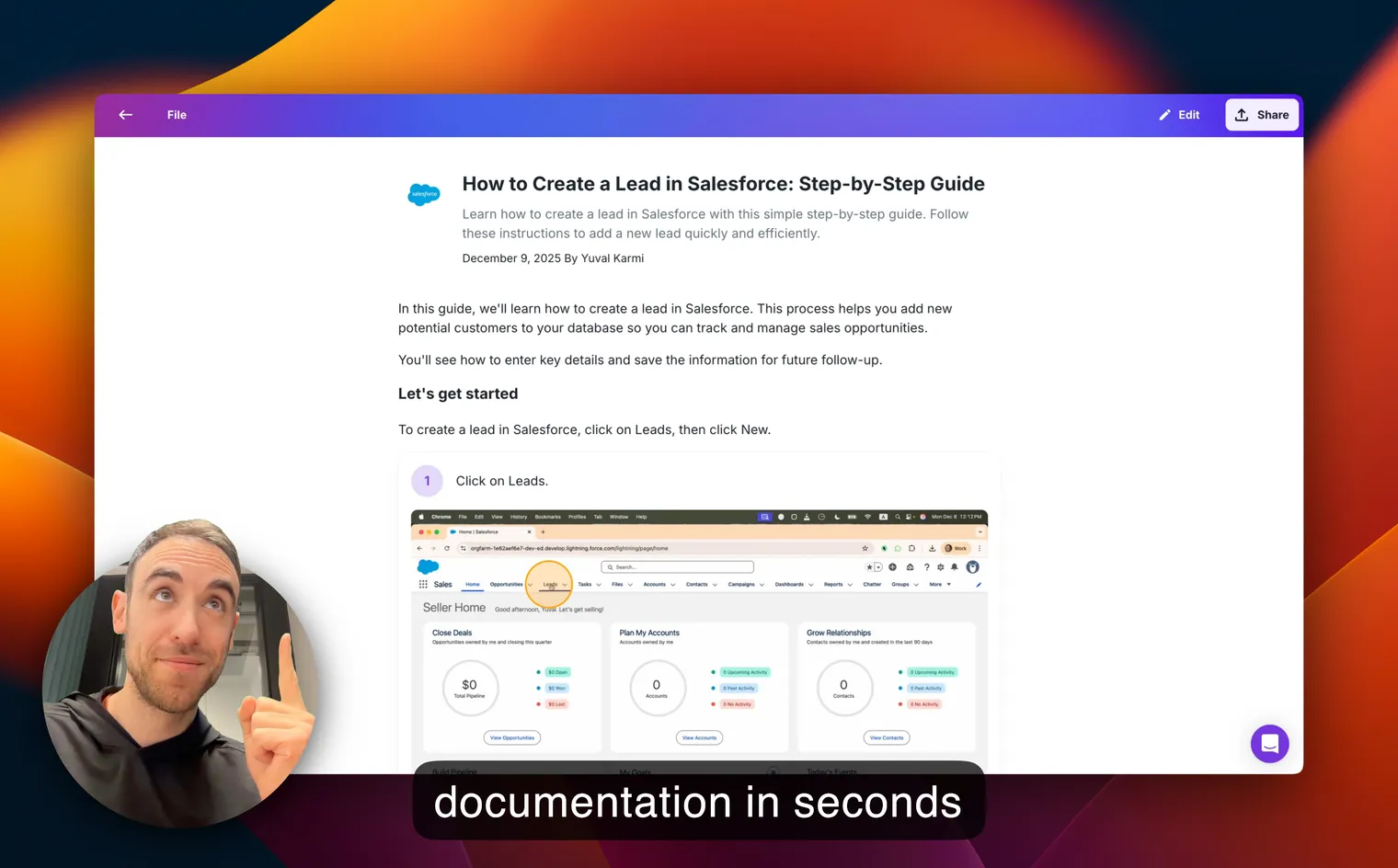
Creating training documentation usually means spending hours writing manuals or recording and editing videos. Glitter AI takes a different approach: record your screen while you walk through a process, and the AI-powered SOP generator automatically produces step-by-step guides complete with screenshots and annotations. Subject matter experts do the task once, and Glitter generates the SOPs automatically in minutes, whether you are documenting a niche workflow like a Xero onboarding or a payroll run, formalizing it as a training SOP, reinforcing it through ongoing practice, or adding a quick check to confirm people absorbed it.
Keeping training materials current is just as important as creating them in the first place, something that matters especially for compliance-driven accounting and financial services teams. A scheduled documentation review catches drift early, and when a process changes, teams can re-record just that section, tweak screenshots, or add new annotations without rebuilding everything from scratch. Your employees end up with documentation that actually reflects how things work today.
Teach your co-workers or customers how to get stuff done – in seconds.

Frequently Asked Questions
What is training documentation?
Training documentation is the collection of materials that teach employees how to do their jobs. This includes written guides, videos, reference sheets, and manuals covering the skills and processes people need to be effective in their roles.
What are examples of training documentation?
Common examples include employee handbooks, software user guides, safety manuals, onboarding materials, standard operating procedures, video tutorials, role-specific training manuals, and quick reference cards that employees can keep at their desks.
Why is training documentation important?
It helps new hires get up to speed faster, keeps knowledge from walking out the door when employees leave, ensures everyone follows the same processes, and gives people a reference to check when they are unsure about something. It also helps organizations stay compliant with regulations.
How do I create effective training documentation?
Figure out what people actually need to learn, get input from subject matter experts, write in plain language, add visuals to break up text, organize things logically, and test the materials with real learners before rolling them out. Set up a process to keep everything updated too.
What are the different types of training documentation?
The main types are orientation manuals for new hires, job-specific guides for particular roles, technical manuals for software or equipment, safety documentation, customer service guides, policy manuals, and visual step-by-step work instructions.