
Read summarized version with
I’ve watched too many operations teams struggle with the same problem.
Someone asks, “How do we receive shipments again?” or “What’s the protocol for cycle counts?” and the answer is usually, “Let me find Sarah - she’s been doing it for years.”
Sound familiar?
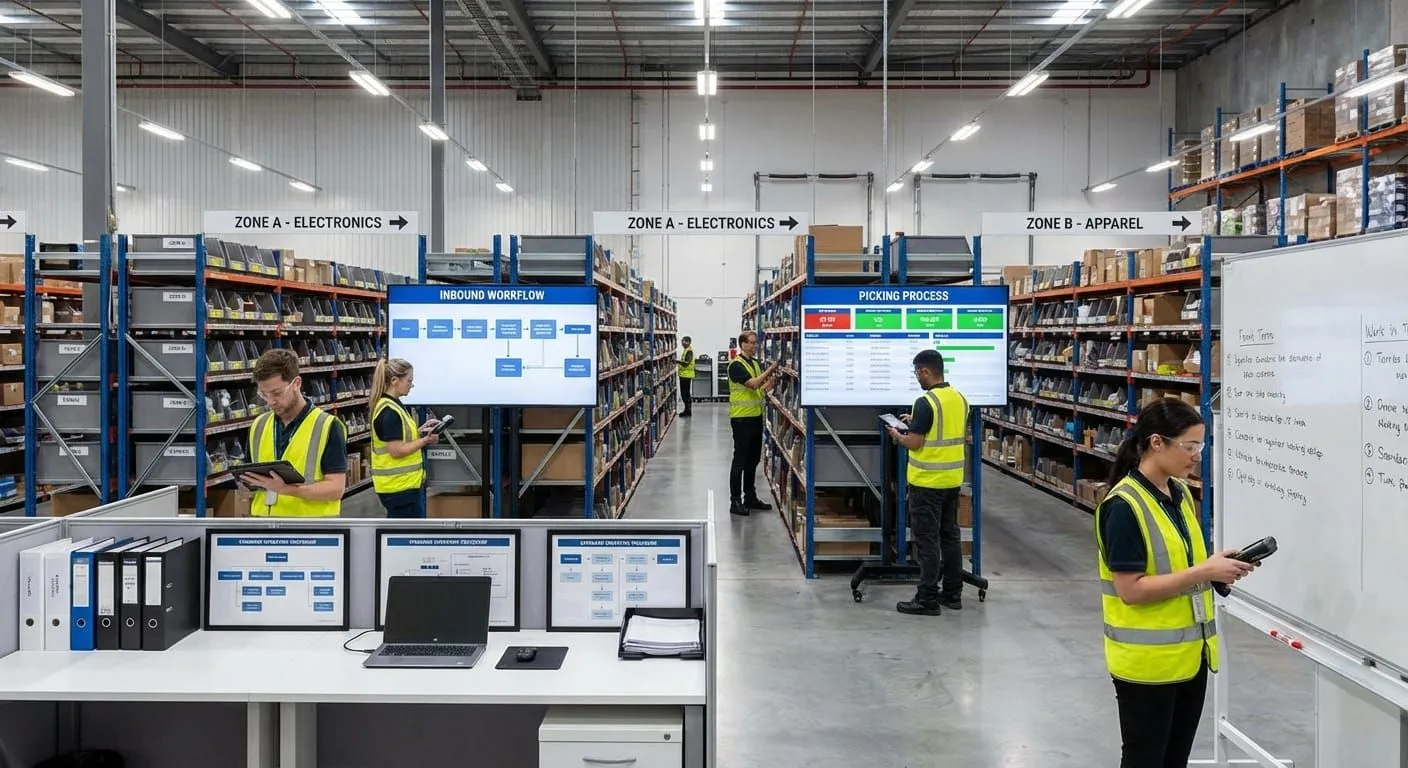
Here’s the thing. Your operations run on hundreds of small processes. Warehouse receiving. Inventory management. Quality control. Shipping procedures. Facility maintenance. Vendor coordination.
And if these processes only exist in people’s heads, you’re one resignation away from chaos.
I learned this firsthand while running Simpo and now building Glitter AI. When operations aren’t documented, you end up with inconsistent processes, costly mistakes, and team members who can’t get up to speed without shadowing someone for weeks.
So I’m going to walk you through the best practices I’ve learned for documenting operations processes. These are the same approaches I use with Glitter AI customers who run warehouses, manufacturing facilities, and logistics operations. A lot of that documentation covers work someone else does, and documenting a process you’ve never personally performed has its own set of rules worth knowing upfront.
Yuval / Founder & CEO, Glitter AI
Teach your co-workers or customers how to get stuff done – in seconds.

Why Operations Documentation Matters More Than You Think
Operations documentation isn’t just about having a nice manual sitting on a shelf somewhere. It’s about creating a system that scales.
When I talk to operations managers, they all tell me the same three pain points.
First, training takes forever. New warehouse staff need weeks to learn receiving procedures, pick and pack processes, and inventory systems like the steps covered when training a team on WooCommerce. Existing team members have to stop what they’re doing to train them, which slows down everyone.
Second, errors are expensive. When someone ships to the wrong address, miscounts inventory, or skips a quality check, it costs real money. And these mistakes usually happen because the process wasn’t documented clearly enough.
Third, knowledge walks out the door. Your best forklift operator retires. Your receiving manager takes another job. And suddenly, no one knows the specific steps they took to keep things running smoothly.
I’ve seen operations teams lose thousands of dollars fixing problems that could have been prevented with clear documentation. One Glitter AI customer told me they had to recall an entire shipment because their packing process wasn’t documented, and someone skipped a critical quality check.
That’s expensive. And it’s avoidable.
Start With Your Most Critical Operations Processes
You don’t need to document everything at once. In fact, you shouldn’t.
Start with the processes that have the highest impact - the ones that, if done wrong, cause the most problems.
For most operations teams, that means focusing on:
Receiving and Shipping Procedures
These are the gateway processes for your facility. If receiving is inconsistent, your inventory counts will be wrong from day one. If shipping is unclear, customers get the wrong products or damaged goods.
Document the exact steps for inspecting deliveries, updating your inventory system, labeling items, and preparing shipments. Include decision points like “What do we do if the delivery doesn’t match the purchase order?”
Inventory Management Workflows
Cycle counts. Physical inventory. Stock adjustments. Reorder procedures.
These processes directly impact your bottom line. If your team doesn’t follow consistent inventory procedures, you’ll either have too much stock (tying up cash) or too little (losing sales).
I recommend documenting your standard cycle count process first. It’s something you do regularly, and consistency here prevents bigger headaches down the line.
Quality Control Checkpoints
Whether you’re inspecting incoming materials or checking outgoing products, quality control needs clear standards.
Document what “acceptable” looks like. Include photos or screenshots showing examples of defects. Spell out exactly what to do when something fails inspection.
Equipment Operation and Maintenance
Forklifts. Pallet jacks. Conveyor systems. Packaging equipment.
If your team doesn’t know the proper operation procedures or follow a real equipment maintenance plan, you risk downtime and safety issues. Document the startup procedures, daily checklists, and troubleshooting steps for your most critical equipment.
Record your screen once, get a complete step-by-step guide with AI
The Best Format for Operations Documentation
Here’s something I learned the hard way: the format of your documentation matters just as much as the content.
You can write the most detailed warehouse procedure in the world, but if it’s a 20-page Word document buried in a shared drive, no one’s going to use it.
Operations documentation needs to be:
Visual. Your team is doing physical work. They need to see what the process looks like, not just read about it. Include screenshots of your warehouse management system, the kind you’d capture when training your team on OrderWise, photos of properly labeled inventory, diagrams of your facility layout.
Step-by-step. Don’t write paragraphs. Break everything down into numbered steps. “1. Scan the barcode. 2. Verify the quantity on screen. 3. Place the item in the designated bin.”
Accessible. Your documentation should be available where people work. If your team is on the warehouse floor, they need mobile-friendly guides they can pull up on a tablet or phone. If they’re at workstations, they should be able to access guides without leaving their inventory system.
Searchable. When someone needs to know “How do I process a return?” they should be able to search and find the answer in seconds. Not flip through a 100-page PDF.
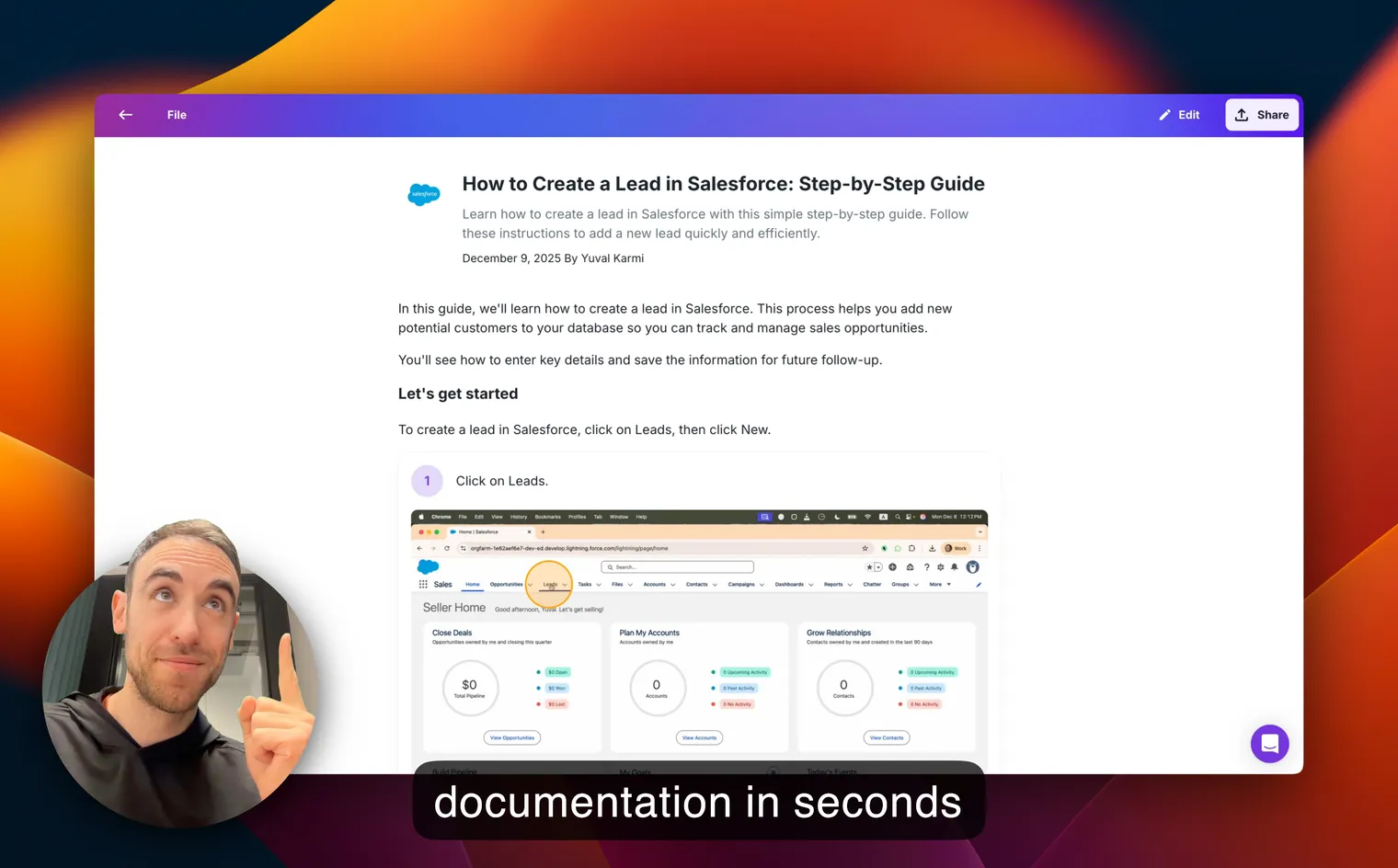
I built Glitter AI specifically for this. You record your screen while walking through a process once, and AI generates a step-by-step guide with screenshots automatically. It’s visual, organized, and way faster than writing everything manually.
Write for Your Actual Audience
This might sound obvious, but most operations documentation fails because it’s written for the wrong audience.
Your warehouse staff aren’t corporate executives. They don’t need formal business language. They need clear, direct instructions they can follow while they’re doing the actual work.
Here’s what I mean.
Bad: “Upon receipt of inventory, personnel should conduct a thorough verification of the delivery against the corresponding purchase order documentation to ensure accuracy.”
Good: “When a delivery arrives, check the items against the purchase order. Make sure the quantities and product codes match.”
See the difference? The second version is shorter, clearer, and easier to follow when you’re standing at a loading dock with a shipment to process.
Also, consider language barriers. Many operations teams are multilingual. If that’s your situation, keep sentences short and simple. Use consistent terminology. And include lots of visual references so people can follow along even if they’re still learning the language.
One more thing: get feedback from your team. If you’re a manager writing documentation, have someone who actually does the work review it. They’ll catch steps you missed or language that’s confusing.
Teach your co-workers or customers how to get stuff done – in seconds.
Include Decision Points and Troubleshooting
The best operations documentation doesn’t just tell people what to do when everything goes perfectly. It tells them what to do when things go wrong.
Because let’s be honest - things go wrong all the time.
The shipment arrives damaged. The barcode won’t scan. The inventory count doesn’t match the system. The forklift starts making a weird noise.
If your documentation only covers the happy path, your team will be stuck every time they hit an exception.
Here’s what I recommend.
Add “What If” Scenarios
After you document the standard process, add a section for common variations.
“What if the delivery doesn’t match the purchase order?” “What if the item is damaged?” “What if the barcode is missing?”
Then provide the exact steps to handle each situation. Who do they notify? What do they document? How do they update the system?
Create Troubleshooting Flowcharts
For complex processes with multiple decision points, a flowchart is your friend.
“Is the pallet damaged? Yes → Take photo, notify supervisor. No → Scan barcode and proceed.”
Flowcharts make it crystal clear what to do at each step, especially when there are multiple paths through a process.
Document Escalation Procedures
Sometimes your team can’t solve the problem themselves. That’s fine. Just make it clear when and how to escalate.
“If the issue can’t be resolved in 10 minutes, contact the warehouse supervisor at extension 234.”
Don’t leave your team guessing who to ask for help.
Keep Operations Documentation Up to Date
Here’s the brutal truth about operations documentation: it becomes outdated almost immediately.
You switch warehouse management systems. You change your receiving process. You reorganize your facility layout. You start using new equipment.
If your documentation doesn’t keep up, it becomes useless. Or worse - misleading.
I’ve seen this happen too many times. A company invests weeks creating comprehensive operations manuals, then six months later half the information is wrong because processes changed and no one updated the docs.
So how do you keep documentation current?
Assign Ownership
Every documented process should have an owner - someone responsible for keeping it accurate.
For warehouse receiving, that might be the receiving supervisor. For equipment maintenance, maybe it’s your facilities manager.
Make it part of their job to review and update their documentation regularly. Not once a year. Quarterly or even monthly for frequently changing processes.
Update When You Change Processes
This should be automatic, but it’s not. Whenever you implement a new procedure, update the documentation at the same time.
Not a week later. Not when you get around to it. Immediately.
If you’re using a tool like Glitter AI, this is way easier. Just record the new process once and generate updated documentation in minutes. No need to manually edit a massive Word document.
Get Feedback From Your Team
Your frontline team will notice when documentation is wrong before you do. They’re the ones actually following the processes.
Create a simple way for them to flag issues. “This step is outdated” or “This doesn’t match our current system.”
Then act on that feedback quickly. If someone tells you the documentation is wrong and you don’t fix it, they’ll stop trusting it. And they’ll stop using it.
Make Documentation Part of Your Operations Culture
The best operations documentation in the world doesn’t help if no one uses it.
You need to make documentation a core part of how your operations team works. Not an afterthought. Not something they do “if they have time.”
Here’s how.
Use Documentation for Training
When you onboard new warehouse staff, don’t just have them shadow someone. Give them documented processes to follow.
Walk them through the steps, then have them do it themselves using the documentation as a guide. This reinforces that documentation is the source of truth, not just “nice to have.”
It also speeds up training. Instead of spending days explaining everything verbally, you can point people to clear, visual guides, much like the approach in this walkthrough of training a team on Uphance, and let them learn at their own pace.
Reference Documentation When Correcting Mistakes
When someone makes an error, don’t just tell them what they did wrong. Show them the documented process.
“Here’s the receiving procedure. See step 4? That’s where we verify quantities before accepting the delivery.”
This isn’t about being punitive. It’s about reinforcing that the documentation exists to help them do their job correctly.
Celebrate When People Follow Processes Correctly
Positive reinforcement works. When your team consistently follows documented procedures and gets good results, acknowledge it.
“Great job on that shipment - you followed the quality control checklist perfectly and caught that defect before it went out.”
Over time, this creates a culture where following documentation is the norm, not the exception.
I’ve written before about how to create a documentation culture across your whole organization. The same principles apply to operations teams.
Let AI turn your screen recordings into perfect step-by-step guides
Operations Documentation Templates to Get Started
I know what you’re thinking. “This all sounds great, Yuval, but I don’t have time to create all this documentation from scratch.”
Fair point.
That’s why templates help. They give you a structure to follow so you’re not starting with a blank page.
Here are the templates I recommend for common operations processes.
Warehouse Receiving Procedure Template
- Verify delivery - Check packing slip against purchase order
- Inspect items - Look for damage, correct quantities, proper labeling
- Update system - Scan barcodes, log receipt in warehouse management system
- Stage inventory - Place items in designated receiving area
- Alert team - Notify purchasing/accounts payable that delivery is complete
- Handle exceptions - Document any discrepancies or damage
Inventory Cycle Count Template
- Select items - Pull list of items to count from system
- Physical count - Count items in their storage location
- Record count - Enter physical count into system
- Review variances - Flag any differences between system and physical count
- Investigate discrepancies - Recount if variance exceeds threshold
- Adjust inventory - Update system to match physical count if verified
- Document - Note any patterns or recurring issues
Shipping Procedure Template
- Pull order - Print pick list and shipping label
- Pick items - Gather products from inventory locations
- Quality check - Verify correct items, check for damage
- Pack shipment - Use appropriate packaging materials
- Apply label - Attach shipping label and any special handling notices
- Update system - Mark order as shipped, record tracking number
- Stage for pickup - Place in designated shipping area
Equipment Maintenance Template
- Equipment details - Model number, serial number, location
- Daily checks - Visual inspection, fluid levels, basic function test
- Weekly tasks - Cleaning, lubrication, safety check
- Monthly tasks - Deeper inspection, calibration if needed
- Annual service - Professional maintenance, part replacement
- Troubleshooting - Common issues and solutions
- Emergency contacts - Repair service numbers, internal contacts
You can find more comprehensive templates in my post about operations manual templates.
The key is to customize these for your specific operation. Every warehouse, every facility, every operation is different. Use templates as a starting point, but make them yours.
Common Operations Documentation Mistakes to Avoid
I’ve seen a lot of operations documentation over the years. Some of it is excellent. Most of it… isn’t.
Here are the mistakes I see most often.
Too Much Detail, Not Enough Clarity
Some people think more is better. They write 10-page procedures for simple processes.
The problem? No one reads 10 pages. They skim it, miss critical steps, and make mistakes.
Keep it concise. Focus on what people actually need to know to complete the task correctly. If your warehouse receiving procedure is longer than two pages, it’s probably too detailed.
No Visual References
Text-only documentation doesn’t work for operations.
Your team needs to see what they’re supposed to do. A screenshot of the warehouse management system screen. A photo of properly labeled inventory. A diagram showing where to stage received items.
Visuals make everything clearer and faster to understand.
Outdated Screenshots and References
This is a huge one. You update your software, but the screenshots in your documentation still show the old version.
Now your team is confused. The screen they’re looking at doesn’t match the documentation. They don’t know which button to click.
When you change systems or processes, update the documentation immediately. Better yet, use a tool that makes this easy to do.
Buried in Shared Drives
I can’t tell you how many times I’ve heard this: “We have great documentation! It’s all in the shared drive.”
Cool. Where in the shared drive? What’s it called? How do I search for the specific process I need?
If your documentation is hard to find, it might as well not exist. Make it easily searchable and accessible where your team actually works.
If you’re serious about improving operations efficiency, check out my guide on how to streamline business processes. A lot of the same principles apply to documentation.
How to Get Buy-In From Your Operations Team
Let’s talk about the elephant in the room.
Your operations team is busy. They’re measured on productivity - pallets moved, orders shipped, inventory accuracy.
So when you tell them they need to help document processes, they might not be thrilled.
I get it. I’ve been there.
Here’s how to get buy-in.
Show Them the Benefits
Don’t just say “We need better documentation.” Explain why it helps them personally.
“This means you won’t have to stop what you’re doing to train every new person. They’ll have a guide to follow.”
“This means when you’re out sick, someone else can cover your responsibilities without calling you.”
“This means fewer mistakes and less rework.”
Make it about how documentation makes their job easier, not more work.
Make It Easy
If documenting processes requires hours of writing, no one’s going to do it.
But if it’s as simple as recording your screen while you do the process once? That’s achievable.
That’s exactly why I built Glitter AI. You just do the process like you normally would, talk through the steps, and AI handles the rest. Screenshots, step-by-step instructions, everything.
No writing. No formatting. Just show it once and you’re done.
Start Small and Celebrate Wins
Don’t try to document everything at once. Pick one critical process. Document it. Show the results.
“Look at this receiving procedure guide. Clean. Clear. Visual. And it only took 10 minutes to create.”
Then ask for feedback. “What should we document next?”
When people see quick wins, they’re more likely to buy into the bigger effort.
I wrote about similar challenges in my post on how to delegate as a founder. The same principle applies: make the new system easier than the old one, and people will adopt it.
Teach your co-workers or customers how to get stuff done – in seconds.
The Tools I Recommend for Operations Documentation
You’ve got a few options for creating and managing operations documentation.
Word/Google Docs - The old standby. Simple, familiar, but not great for visual documentation or keeping things updated. Fine for basic procedures, but limited.
Video tutorials - Tools in the Loom category let you record walkthroughs. But videos aren’t searchable. And if someone needs to reference one step, they have to scrub through the whole video to find it.
Screenshots + manual writing - You can take screenshots and paste them into a document, adding text for each step. This works, but it’s incredibly time-consuming. Expect to spend hours on a single procedure.
Glitter AI - I built Glitter AI to solve this exact problem. You record your screen once while talking through the process, and AI generates a complete step-by-step guide with screenshots, titles, and descriptions. Takes minutes instead of hours. You can edit, share, or export to PDF.
There are also traditional knowledge base tools like Confluence or Notion. These work fine if you’re willing to manually create and format all your content. I find they’re better suited for general documentation than operations-specific procedures, but your mileage may vary.
The best tool is the one your team will actually use. Consider accessibility, ease of updates, and how long it takes to create new documentation.
For more options, check out my comparison of the leading tools for documenting processes.
Measuring the Impact of Better Operations Documentation
How do you know if your documentation efforts are working?
Here are the metrics I recommend tracking.
Training Time
How long does it take new warehouse staff to become productive?
If you implement good documentation, this should go down significantly. Instead of weeks of shadowing, new hires should be able to reference guides and ramp up faster.
Track the time from hire to full productivity. If it’s decreasing, your documentation is working.
Error Rates
Are you seeing fewer shipping mistakes? Fewer inventory discrepancies? Fewer quality control failures?
Better documentation should lead to more consistent processes, which means fewer errors.
Track your error rates before and after implementing documentation. Look for improvements.
Time Spent Answering Questions
How often are your supervisors interrupted to answer “How do I…?” questions?
When documentation is good, these interruptions should decrease. Your team can look up the answer themselves instead of asking someone.
This frees up your supervisors to focus on managing operations instead of being walking encyclopedias.
Employee Confidence
This one’s harder to measure, but it’s real. When employees have clear documentation to reference, they feel more confident doing their jobs.
You can measure this through surveys or simply by asking: “Do you feel like you have the resources you need to do your job well?”
If the answer becomes more positive over time, your documentation is helping.
Frequently Asked Questions
What is operations documentation?
Operations documentation is a collection of written guides, procedures, and instructions that explain how to complete specific operational tasks. This includes warehouse procedures, inventory management processes, shipping/receiving protocols, equipment operation, and facility maintenance tasks. Good operations documentation is visual, step-by-step, and easily accessible to the team members who need it.
How long should operations documentation take to create?
Traditional manual documentation can take hours or days per process. However, with modern tools like screen recording and AI, you can create comprehensive operation guides in minutes. The key is choosing a method that captures your actual process visually rather than writing everything from scratch.
What's the difference between SOPs and operations documentation?
SOPs (Standard Operating Procedures) are a type of operations documentation, but operations documentation is broader. SOPs typically focus on compliance and standardization, while operations documentation includes SOPs plus work instructions, equipment manuals, troubleshooting guides, and facility-specific procedures. Both serve the same goal: ensuring consistent, correct execution of operational processes.
How often should I update operations documentation?
Update operations documentation immediately whenever processes change. For stable processes, conduct reviews quarterly to ensure accuracy. Assign each documented process an owner responsible for keeping it current. If documentation becomes outdated, teams stop trusting and using it.
What's the best format for warehouse documentation?
The best format is visual and step-by-step. Include screenshots of your warehouse management system, photos of proper procedures, and numbered steps that are easy to follow. Documentation should be mobile-friendly so warehouse staff can access it on tablets or phones while working. Avoid long paragraphs or text-heavy documents.
How do I get my operations team to use documentation?
Make documentation part of training and daily operations from day one. Use it when onboarding new staff, reference it when correcting mistakes, and celebrate when team members follow procedures correctly. Most importantly, keep documentation accurate and easy to access. If it's outdated or hard to find, no one will use it.
Can AI help create operations documentation?
Yes, AI can significantly speed up documentation creation. Tools like Glitter AI let you record your screen while performing a process once, then automatically generate step-by-step guides with screenshots and descriptions. This reduces documentation time from hours to minutes while ensuring visual, accurate documentation.
What should I document first in my operations?
Start with your most critical processes - the ones that cause the biggest problems when done incorrectly. For most operations, this means receiving procedures, shipping workflows, inventory management processes, and quality control checkpoints. Document these first, show the value, then expand to other processes.
Start Documenting Your Operations Today
Look, I know operations documentation isn’t the most exciting project you’ll work on.
But it’s one of the most valuable.
Clear, visual, up-to-date documentation makes your operation more efficient, reduces costly errors, speeds up training, and creates consistency across your team.
And here’s the thing - it doesn’t have to take weeks or months.
Start with one critical process. Document it properly. Show your team. Get feedback. Then do the next one.
Before you know it, you’ll have a library of operations guides that actually get used. Not binders collecting dust on a shelf.
If you want to create operations documentation in minutes instead of hours, check out Glitter AI. Record your screen once while doing the process, and AI handles the rest - screenshots, step-by-step instructions, everything.
Whether you use Glitter AI or another approach, the important thing is to start. Your future self (and your operations team) will thank you.