
Read summarized version with
What are Collaboration Tools?
Collaboration tools are software applications designed to help teams work together more effectively. They pull communication, document sharing, project management, and workflows into centralized platforms where people can actually coordinate without the usual chaos. It doesn’t really matter whether team members sit in the same office or work remotely across time zones. These tools provide the infrastructure for getting things done together.
The category itself is pretty broad. Some tools focus on real-time communication through messaging and video calls. Others prioritize document collaboration, letting multiple people edit files at the same time. Project management tools help teams track tasks and deadlines. And enterprise platforms often bundle several of these capabilities into unified systems, though with varying degrees of success.
Studies suggest that employees lose a significant chunk of their week to ineffective collaboration, with organizations juggling hundreds of different apps to get work done. Good collaboration tools tackle this fragmentation by consolidating essential functions, improving knowledge sharing, and cutting down the friction that comes with working across teams.
Key Characteristics of Collaboration Tools
- Real-Time Communication: Instant messaging, video conferencing, and voice calls let team members connect immediately instead of waiting around for email responses.
- Shared Workspaces: Centralized spaces where teams can access documents, discussions, and project information without hunting through different systems.
- File Sharing and Co-Editing: The ability to share documents and work on them together, often with simultaneous editing and version tracking built in. Many teams use a content management system to organize these shared files.
- Integration Capabilities: Connections to other business applications so information flows between systems without someone manually copying things over.
- Access Control: Permissions and roles that determine who can view, edit, or manage different content and features.
Collaboration Tools Examples
Example 1: Remote Product Team
A distributed product team uses collaboration tools to coordinate development sprints. They run daily standups through video conferencing, manage tasks on a shared project board, collaborate on design files in real-time, and hash out decisions in persistent chat channels. Documentation lives in a shared central reference hub where anyone can contribute.
Example 2: Cross-Departmental Project
Marketing, sales, and product teams need to coordinate a product launch. They set up a shared workspace with launch timelines, asset libraries, and channels governed by a communication SOP. Each department updates their deliverables, and everyone can see progress without scheduling yet another status meeting. Clearly documented procedures help keep execution consistent.
Collaboration Tools vs Knowledge Management Systems
These two overlap quite a bit, but they serve different primary purposes.
| Aspect | Collaboration Tools | Knowledge Management Systems |
|---|---|---|
| Purpose | Enable real-time teamwork and communication | Store, organize, and retrieve organizational knowledge |
| Scope | Active projects and ongoing work | Long-term information preservation and access |
| When to use | Day-to-day team coordination and communication | Building institutional memory and documentation libraries |
How Glitter AI Helps with Collaboration Tools
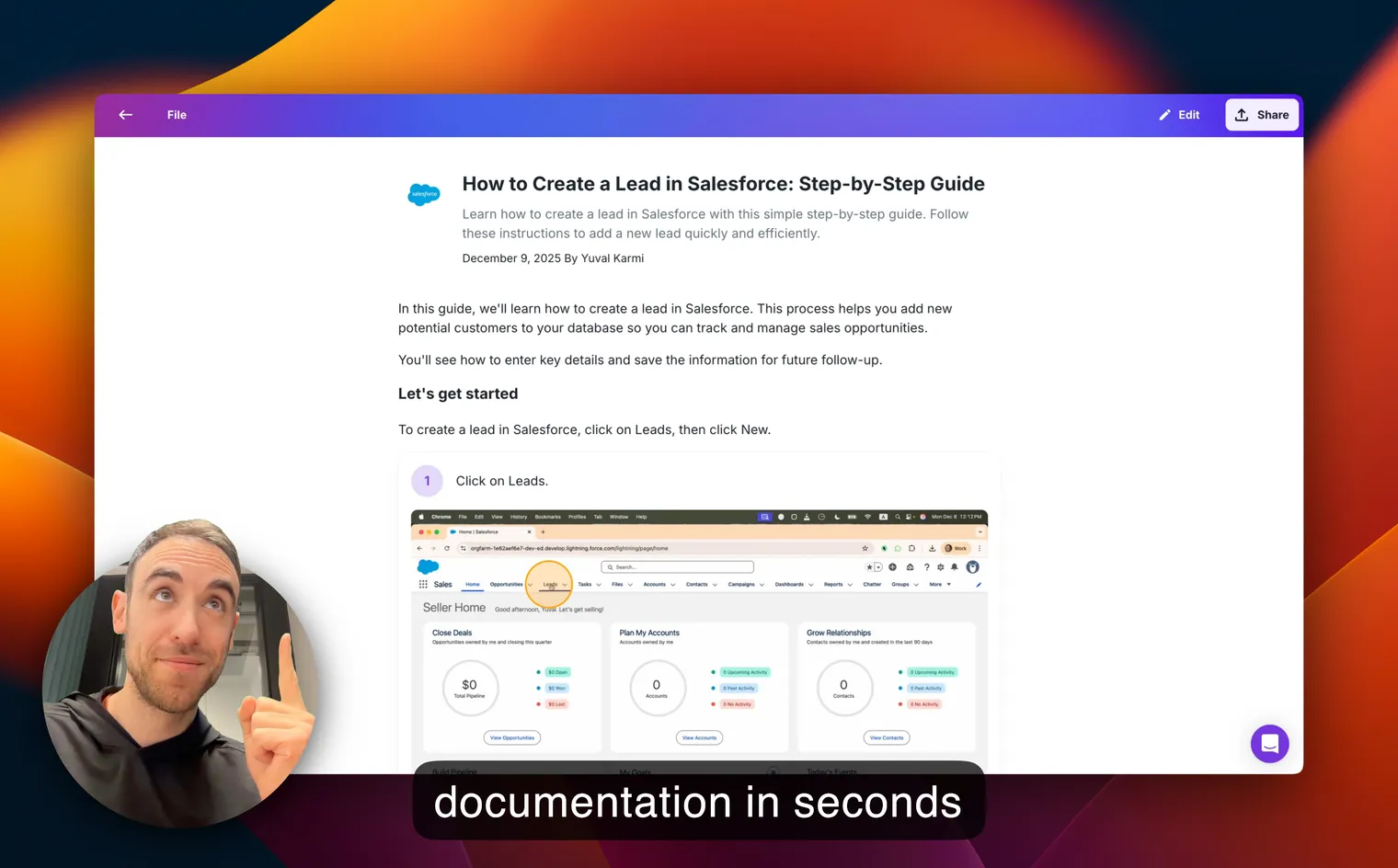
Glitter AI enhances team collaboration by making it simple to create and share procedural content. When someone figures out how to do something, they can record their screen instead of booking yet another walkthrough that a meeting SOP would otherwise govern, and Glitter automatically generates step-by-step documentation with annotated screenshots.
This addresses a common gap that even the best knowledge sharing tools struggle with: the knowledge that lives in people’s heads but never gets written down. Teams can quickly fill shared workspaces with visual guides, creating a single source of truth that makes it easier for colleagues and any team lead to follow processes without needing to schedule a live walkthrough every time.
Teach your co-workers or customers how to get stuff done – in seconds.

Frequently Asked Questions
What are collaboration tools?
Collaboration tools are software applications that let teams communicate, share files, and work together on projects. They include messaging platforms, video conferencing, document sharing, and project management software.
What are examples of collaboration tools?
Common examples include Slack and Microsoft Teams for communication, Google Workspace and Microsoft 365 for document collaboration, Asana and Monday for project management, and Zoom for video conferencing.
Why are collaboration tools important for teams?
Collaboration tools cut down on time wasted in ineffective communication, keep remote and distributed teams connected, centralize information so nothing falls through the cracks, and speed up decision-making through real-time interaction.
What features should I look for in collaboration tools?
Look for real-time messaging and video, file sharing with version control, integration with your existing business apps, mobile access, solid search functionality, and appropriate security controls.
How do collaboration tools improve productivity?
They cut down on email overload, eliminate duplicate work through shared visibility, speed up feedback loops, and make information easier to find. Teams spend less time coordinating and more time on actual work.
What is the difference between collaboration tools and project management tools?
Project management tools focus on planning, tracking tasks, and monitoring deadlines. Collaboration tools emphasize communication and file sharing. Many modern platforms combine both, though some do it better than others.
How do I choose the right collaboration tools for my team?
Think about your team size, whether you work remotely, what integrations you need, security requirements, and budget. Start with core needs like communication and file sharing before adding specialized tools.
Can collaboration tools work with existing business software?
Most modern collaboration tools integrate with popular business applications through APIs, native connectors, or integration platforms. Check compatibility with your critical systems before committing to new tools.
What security features do collaboration tools provide?
Enterprise collaboration tools typically offer single sign-on, data encryption, access controls, audit logs, compliance certifications, and administrative policies for managing user permissions and data retention.
How do collaboration tools support remote work?
They provide virtual meeting spaces, persistent chat for asynchronous communication, shared document access from anywhere, and visibility into team activity. Remote workers can participate equally regardless of where they happen to be.