
Read summarized version with
What is Content Governance?
Content governance refers to the framework of policies, processes, and assigned roles that determines how an organization handles its content from creation through archiving. Think of it as the rulebook for your documentation. It spells out who creates what, who signs off on it, how often things get reviewed, and when old content should be retired. Effective governance relies on robust document control practices to manage the lifecycle of each piece of content.
The real value here? Accountability. When content governance is in place, every document, SOP, and knowledge article has someone responsible for keeping it accurate. Without this kind of structure, documentation tends to fall into the “everyone’s job, nobody’s job” trap. You end up with outdated procedures floating around, conflicting versions of the same policy, and employees who stop trusting internal resources. Proper version control becomes essential to track who changed what and when.
With more organizations relying on AI-powered tools in 2026, content governance matters more than ever. If your AI assistant pulls from messy or outdated knowledge bases, the answers it gives will reflect that. Good governance means your AI systems work with accurate, current information.
Key Characteristics of Content Governance
- Clear Ownership Roles: Someone specific owns each piece of content. They’re responsible for keeping it accurate, scheduling reviews, and deciding when it needs updating or retiring.
- Standardized Processes: Content follows a predictable path from draft to publication to review to eventual archiving. Everyone knows the steps.
- Quality Control Mechanisms: Before content goes live, it gets checked. Verification steps catch errors, ensure compliance, and maintain organizational standards.
- Access Control and Permissions: Not everyone can edit everything. Roles and departments determine who views, modifies, publishes, or removes content.
- Lifecycle Management Rules: Content doesn’t just exist indefinitely. There are schedules for creation, regular review cycles, and clear policies about when to archive or delete.
Content Governance Examples
Example 1: Healthcare Organization
Consider a hospital network managing hundreds of clinical procedures and protocols. Under their content governance framework, each procedure document belongs to a specific physician. That physician must get the medical director’s sign-off before anything goes live. Every quarter, the document gets reviewed against current regulations. Only designated clinical staff can make edits. This level of structure might seem like overhead, but when patient safety depends on nurses following the right protocol, you can’t afford ambiguity.
Example 2: SaaS Company Knowledge Base
A B2B software company runs a customer-facing help center with thousands of articles. Their content governance assigns product managers as owners of feature documentation. Support leads review the FAQ section monthly, looking for questions that signal confusion. Technical writers act as gatekeepers for style and clarity. The system flags articles that haven’t been touched in six months, and retiring any article requires executive approval. Customers get reliable information, and the support team fields fewer repeat questions.
Content Governance vs Knowledge Curation
These two concepts overlap, but they’re tackling different problems.
| Aspect | Content Governance | Knowledge Curation |
|---|---|---|
| Purpose | Sets the rules, policies, and workflows | Filters and contextualizes information for usefulness |
| Scope | Covers all organizational content | Focuses on making specific knowledge findable and relevant |
| Focus | Consistency, compliance, accountability | Quality, relevance, context |
| When to use | Building the structural framework | Working within that framework to organize knowledge |
Put simply, content governance builds the guardrails. Knowledge curation is the expert work that happens inside them.
How Glitter AI Helps with Content Governance
Content governance falls apart when updating documentation takes too long, which is the root cause behind the reasons docs fall out of date. Glitter AI tackles this by making it fast to create and revise content. Screen recording captures processes as they actually happen, and AI-powered editing cleans things up without hours of manual work. When a process changes, you can update the documentation in minutes instead of days, which is exactly what it takes to keep process documentation current.
Version control tracks every edit, which gives you the audit trail compliance teams want and keeps documents fresh. Role-based permissions let you assign content owners and control who can publish or modify, the foundation of disciplined knowledge curation. Review schedules and approval chains are built in as a structured publishing workflow, so governance doesn’t feel like extra administrative overhead, and the controls map cleanly onto formal frameworks like COBIT.
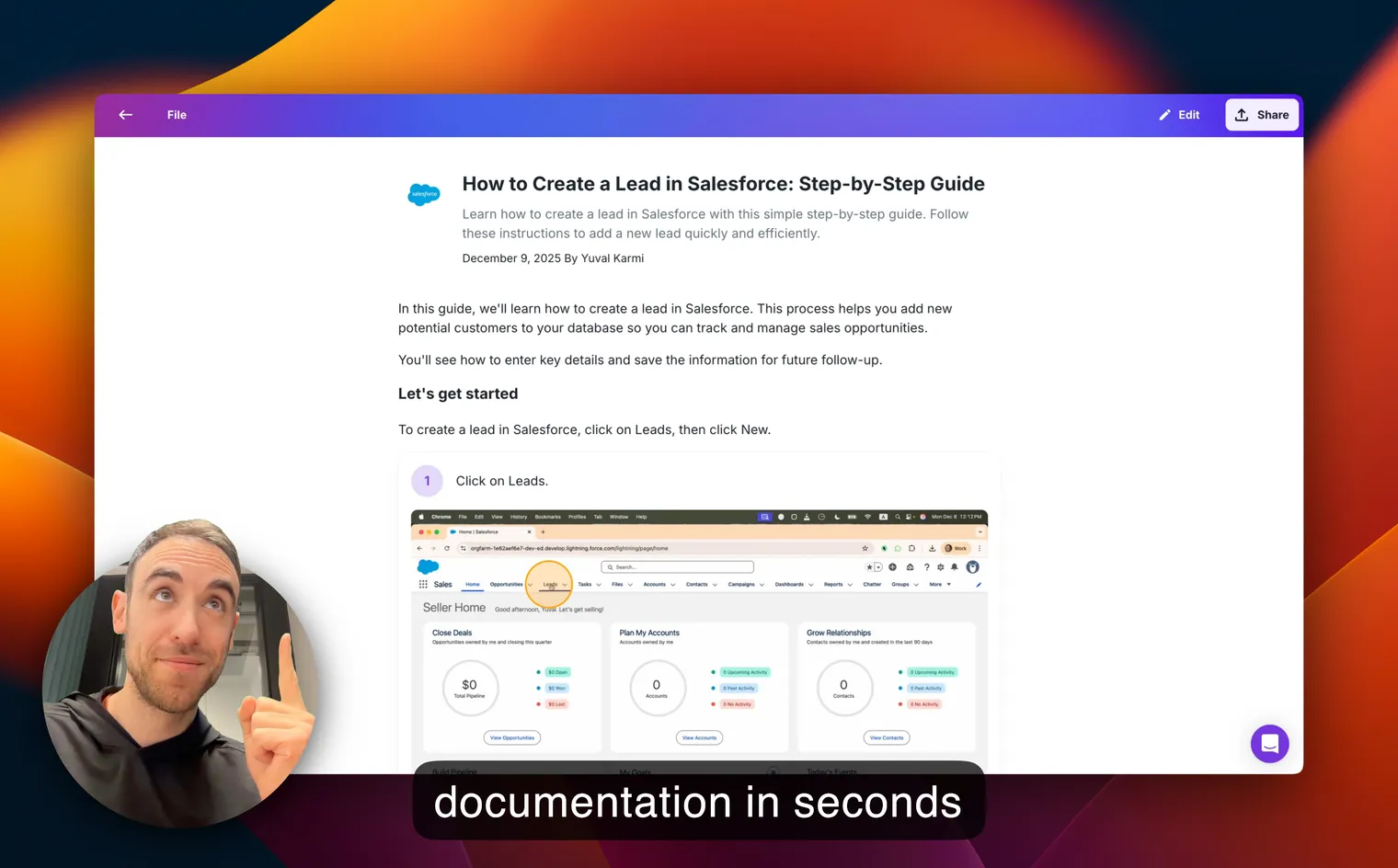
Teach your co-workers or customers how to get stuff done – in seconds.

Frequently Asked Questions
What does content governance mean?
Content governance is a framework of policies, processes, and roles that determines how your organization creates, maintains, reviews, approves, and archives content. It's essentially the rulebook for keeping documentation accurate and consistent.
What is an example of content governance?
A hospital might assign each clinical procedure document to a specific physician, require quarterly reviews for regulatory compliance, and limit editing access to designated clinical staff. This structure keeps protocols accurate and protects patient safety.
Why is content governance important?
Without governance, documentation becomes outdated and unreliable. Clear ownership, standardized processes, and quality controls keep content trustworthy. This matters even more now that AI tools depend on accurate knowledge bases to give useful answers.
How do I implement content governance?
Start by assigning owners to your content. Build review and approval workflows. Create standards and templates so content stays consistent. Set up access controls and regular review cycles. Pick tools with version control and collaboration features to make governance sustainable.