
Read summarized version with
What are HR Standard Operating Procedures?
HR standard operating procedures (HR SOPs) are written instructions that walk human resources teams through specific processes. Like any standard operating procedure, they cover a lot of ground, from hiring to terminations, and the goal is simple: make sure HR tasks get done the same way every time, no matter who’s handling them.
Why do HR departments bother with all this documentation? A few reasons. SOPs help prove that the right steps were followed when legal questions come up. They cut down on mistakes by spelling out exactly what to do. And honestly, they save time. Instead of figuring things out from scratch, any trained HR person can pick up the process and run with it.
Most HR teams keep SOPs for their bread-and-butter work: recruiting, getting new hires settled in, benefits, performance reviews, and exits. These documents take what’s in someone’s head and put it on paper, which becomes pretty valuable when that person moves on.
Key Characteristics of HR Standard Operating Procedures
- Compliance-Focused: HR SOPs typically spell out the specific steps needed to satisfy labor laws, anti-discrimination rules, and industry regulations. This helps keep the company out of legal trouble.
- Standardized Workflows: They create a consistent approach so every candidate, employee, or request gets treated the same way.
- Clear Accountability: Each SOP spells out who handles what, so there’s no confusion about who owns a task or who can sign off on decisions.
- Audit-Ready Documentation: Good HR SOPs include recordkeeping steps that come in handy during audits and show the organization did its due diligence.
- Regular Updates: Employment laws shift often, so these procedures need periodic reviews to stay in line with current regulations.
HR Standard Operating Procedure Examples
Example 1: Employee Onboarding
An onboarding SOP walks through every step from when someone accepts an offer to their 90-day check-in. It might specify that I-9 forms need to be finished within three days, equipment requests should hit IT five days before the start date, and the hiring manager sets up a 30-day review. This way, nobody slips through the cracks during those hectic first weeks.
Example 2: Performance Review Cycle
A performance management SOP lays out the annual review timeline, the forms people need to use, how calibration meetings work, and the process for adjusting compensation. Managers know when their reviews are due and how ratings connect to merit increases.
HR SOPs vs Employee Handbook
Both documents play a role in HR, but they’re aimed at different people and serve different purposes.
| Aspect | HR SOPs | Employee Handbook |
|---|---|---|
| Audience | HR team members | All employees |
| Purpose | How to execute HR processes | Company policies and expectations |
| Detail Level | Step-by-step procedural instructions | Policy summaries and guidelines |
| Examples | How to process a termination | What happens if you violate company policy |
Think of it this way: the employee handbook tells staff what the rules are. HR SOPs tell the HR team how to actually administer and enforce those rules.
How Glitter AI Helps with HR Standard Operating Procedures
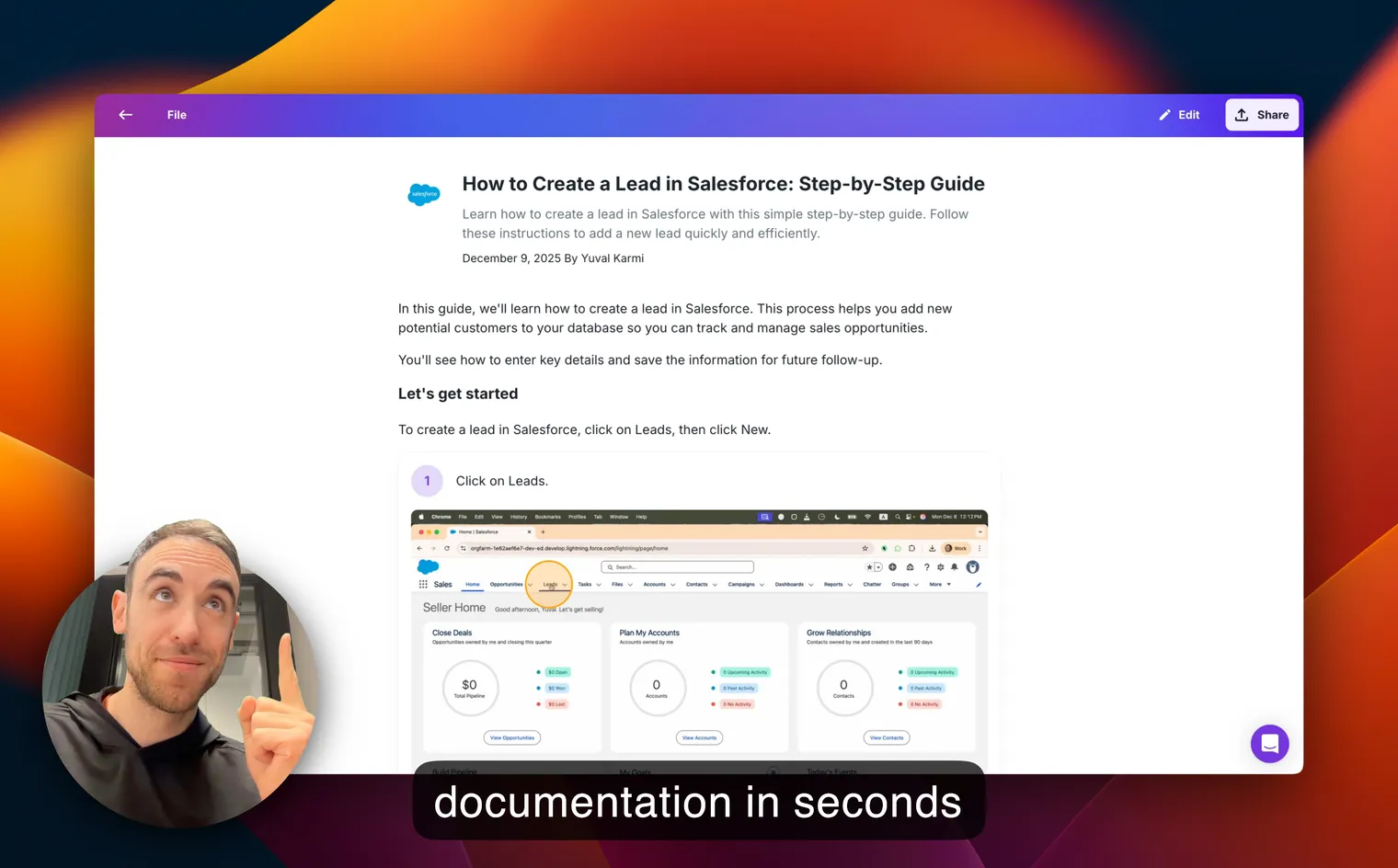
Glitter AI makes creating HR SOPs easier by letting HR professionals record their screen while they work through a process. The platform then generates step-by-step documentation with screenshots and annotations automatically, the same way teams capture a change management SOP when policies shift. When a senior HR manager handles a termination or runs benefits enrollment, Glitter captures the actual workflow as it happens, turning it into the kind of documented procedure that is easily adapted from a reusable HR SOP template.
This approach grabs how things really get done, not just how someone remembers them or thinks they should work, which is the foundation of SOPs employees actually follow. HR teams can update their SOPs quickly when regulations change, keep version histories for compliance audits, and share interactive guides that new HR team members can follow during training, especially when each one starts from a consistent template. The same approach extends to adjacent procedures, from a performance review SOP to a termination SOP for sensitive exits, with the same pattern carrying over to legal, internal communication, technical, and employee-support procedures.
Teach your co-workers or customers how to get stuff done – in seconds.

Frequently Asked Questions
What is an HR SOP?
An HR SOP (Human Resources Standard Operating Procedure) is a written set of step-by-step instructions that guides HR team members through specific processes like recruitment, onboarding, performance reviews, or employee separations.
What are examples of HR standard operating procedures?
Common HR SOPs include employee onboarding procedures, recruitment and hiring processes, performance review cycles, leave request handling, benefits enrollment, disciplinary action protocols, and offboarding or termination procedures.
Why are HR SOPs important?
HR SOPs help treat employees consistently, keep the organization compliant with labor laws, reduce errors in sensitive processes, preserve what the team knows, and let any trained HR person handle routine tasks the right way.
What should an HR SOP include?
An HR SOP should cover the procedure title, purpose, scope, step-by-step instructions, who's responsible for each step, required forms or systems, compliance notes, and recordkeeping requirements.
How often should HR SOPs be updated?
HR SOPs should be reviewed at least once a year, or whenever employment laws change, company policies shift, or HR systems get updated. Regular reviews keep procedures compliant and useful.
What is the difference between HR policies and HR SOPs?
HR policies state what the organization requires or allows (the rules), while HR SOPs explain how to put those policies into practice (the steps). Policies apply to everyone; SOPs are mainly for the HR team.
How do you create HR standard operating procedures?
Start by identifying which processes need documentation. Talk to the people who actually do the work, write out the steps, add compliance requirements, note who's responsible for what, get feedback from stakeholders, and set up a schedule for updates.
What HR processes need SOPs?
The HR processes that typically need SOPs include recruiting and hiring, onboarding, payroll, benefits administration, performance management, leave management, disciplinary actions, and employee exits or terminations.
How do HR SOPs support compliance?
HR SOPs support compliance by documenting that proper steps were followed, creating paper trails for audits, making sure employees get treated consistently to avoid discrimination claims, and building legal requirements into everyday work.
What tools help create HR SOPs?
Tools for creating HR SOPs include documentation platforms like Glitter AI that can generate procedures from screen recordings, standard document editors, workflow management systems, and SOP software with version control and approval features.