
Read summarized version with
What is Just-in-Time Training?
Just-in-Time Training (JIT training) is a learning approach that delivers targeted instruction to employees exactly when they need it to complete a specific task or solve an immediate problem. Instead of sitting through traditional classroom training sessions or working through lengthy onboarding programs, people get bite-sized, contextual guidance right when they need it, directly within their workflow. This approach often relies on microlearning modules and job aids to provide quick, focused support.
This training methodology has its roots in lean manufacturing principles, and it has found a natural home in modern workplace learning. The core idea is pretty straightforward: JIT training tackles the retention problem head-on by closing the gap between learning something and actually using it. When someone receives instruction immediately before doing a task, they apply that knowledge right away, which tends to stick much better than information absorbed weeks earlier.
What makes JIT training particularly effective is how it sidesteps cognitive overload. Traditional training often asks employees to absorb a lot of information with no chance to practice any of it. Unsurprisingly, much of that knowledge fades before it ever gets used. JIT training takes a different approach, delivering only what’s needed for the task at hand, which makes learning more practical and, frankly, less frustrating.
Key Characteristics of Just-in-Time Training
- Immediate Accessibility: Training content is available exactly when needed, embedded directly into the workflow or accessible through quick reference tools.
- Task-Specific Content: It focuses on providing only the information necessary to complete the current task, skipping unnecessary details or tangential topics.
- Short Duration: These resources are typically brief, lasting minutes rather than hours, so they don’t derail productivity.
- Contextual Relevance: The content relates directly to what the employee is working on, which makes it immediately useful rather than abstract.
Just-in-Time Training Examples
Example 1: Customer Service Software
A customer service representative runs into an unfamiliar return scenario while helping a customer. Rather than putting the customer on hold to dig through a lengthy manual, they pull up a quick 2-minute video tutorial embedded in their CRM. The video walks through exactly what they need to do for this type of return.
Example 2: Manufacturing Assembly
An assembly line worker needs to perform a quality check procedure that doesn’t come up very often. They scan a QR code at their workstation, which brings up a visual work instruction showing the inspection points and acceptable tolerances. They complete the check correctly without leaving their station or tracking down a supervisor.
Example 3: Sales Onboarding
A new sales representative has their first product demo in 15 minutes. They open a 5-minute refresher on their mobile device covering the key product features, so everything is fresh in their mind right before walking into the meeting.
Just-in-Time Training vs Traditional Training
| Aspect | Just-in-Time Training | Traditional Training |
|---|---|---|
| Purpose | Immediate task support and problem-solving | Comprehensive knowledge building and skill development |
| Scope | Narrow, focused on specific tasks or procedures | Broad coverage of topics and concepts |
| When to use | At the moment of need during workflow | Before job starts or during scheduled sessions |
| Duration | Minutes (2-10 minutes typical) | Hours or days for complete programs |
| Format | Videos, quick guides, checklists, embedded help | Classroom sessions, e-learning courses, workshops |
| Retention | High (immediate application) | Lower (time gap between learning and application) |
How Glitter AI Helps with Just-in-Time Training
Glitter AI makes creating and delivering just-in-time training straightforward. Teams can capture step-by-step processes as they happen using screen recording and automatic documentation generation, following training documentation best practices and starting from a proven training guide template. This means subject matter experts can quickly produce visual guides, video tutorials, and interactive walkthroughs that employees access exactly when they need them, much like they would when learning how to create a training manual.
The platform integrates training content directly into workflows, applying just-in-time delivery principles and performance support so employees find answers in seconds rather than minutes. Whether someone needs a quick video tutorial, a visual checklist, or an annotated screenshot guide, Glitter AI keeps learning resources contextual, searchable, and current.
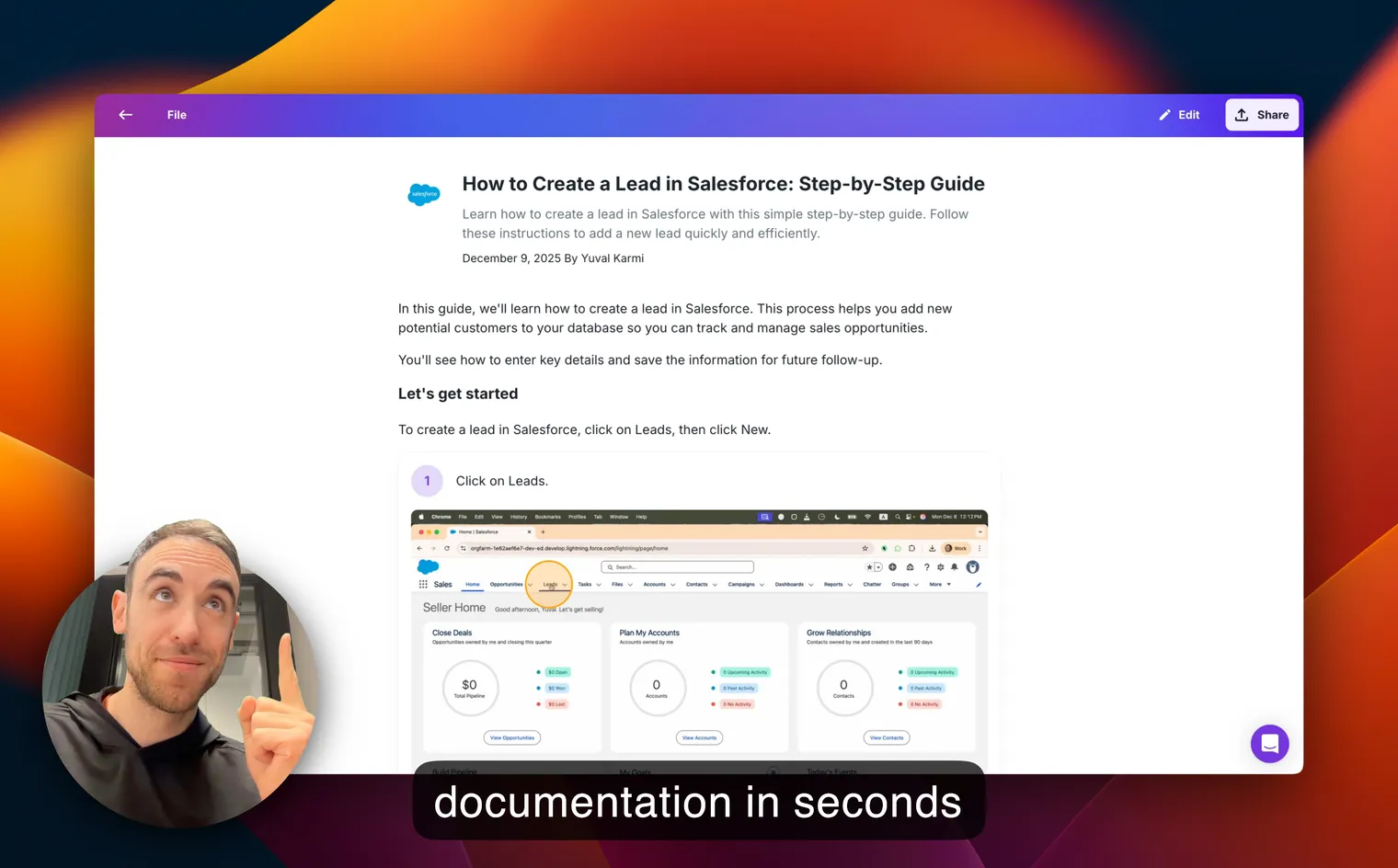
Teach your co-workers or customers how to get stuff done – in seconds.

Frequently Asked Questions
What does just-in-time training mean?
Just-in-time training means delivering learning content to employees exactly when they need it to complete a specific task. It provides immediate support at the point of work rather than expecting people to recall information from training sessions that happened days or weeks earlier.
What is an example of just-in-time training?
A common example is an employee accessing a quick video tutorial or step-by-step guide embedded in their software application when they encounter an unfamiliar task. They learn what they need and complete the task without leaving their workflow.
Why is just-in-time training important?
Just-in-time training matters because it improves knowledge retention and task performance by closing the gap between learning and doing. It also reduces time spent searching for information and helps employees solve problems on their own without disrupting their work.
How do I implement just-in-time training?
Start by creating short, focused learning resources for common tasks. Embed them directly into your workflows or software applications and make them easily searchable. Tools like Glitter AI can help you quickly capture and share step-by-step procedures as they happen.
What's the difference between just-in-time training and microlearning?
Both deliver short learning content, but they serve different purposes. Just-in-time training focuses on providing specific help at the exact moment of need within the workflow. Microlearning is a broader approach that delivers any learning content in small, focused modules, whether or not it's tied to immediate task performance.