
Read summarized version with
What is a Learning Path?
A learning path is essentially a curated sequence of training content, activities, and assessments that walks learners through a structured progression of knowledge and skills. Instead of throwing isolated training modules at employees and hoping something sticks, learning paths organize educational resources into a logical flow. The idea is simple: build competency step-by-step so learners grasp foundational concepts before tackling more complex topics.
Organizations rely on learning paths to standardize employee development, cut down on training time with focused bite-sized lessons, and ensure consistent skill acquisition across teams. When you map out exactly what knowledge and capabilities a role requires, employees get a clear roadmap from novice to expert without the guesswork.
These paths can run anywhere from a few days to several months depending on complexity. Most combine various training formats like video tutorials, written documentation, hands-on exercises, and knowledge assessments. Organizations typically deliver these through a learning management system, which tracks progress and manages content. Some incorporate microlearning modules for quick skill boosts alongside longer competency-based training segments. This mix accommodates different learning styles and helps reinforce retention.
Key Characteristics of a Learning Path
- Sequential Structure: Content follows a specific order where each module builds on what came before, ensuring skills develop logically.
- Goal-Oriented Design: Every path targets specific competencies, job roles, or business objectives. Learners know from the start what they’re working toward.
- Multimodal Learning: A good learning path incorporates diverse content types like videos, interactive simulations, documentation, and assessments to engage different preferences.
- Progress Tracking: Checkpoints, milestones, and completion metrics let learners and managers see how someone is advancing through the curriculum.
- Adaptive Flexibility: Paths can branch based on learner performance, role requirements, or skill gaps. This offers personalized experiences within a standardized framework.
Learning Path Examples
Example 1: Customer Support Representative Onboarding
A new customer support hire follows a 30-day learning path. It starts with company culture and product overview modules, then moves into communication skills training and ticketing system tutorials. From there, it advances to handling escalations and navigating internal knowledge bases. Each week includes knowledge checks and role-playing exercises. The whole thing wraps up with a certification assessment before the employee starts handling live customer inquiries.
Example 2: Manufacturing Quality Control Specialist
Production employees work through a learning path that covers equipment operation basics, safety protocols, quality inspection procedures, and documentation requirements. Video demonstrations show standard operating procedures in action, while hands-on practice sessions provide immediate feedback. Progressive competency assessments unlock advanced modules on statistical process control and root cause analysis as employees prove their skills.
Learning Path vs Training Module
While these terms are related, learning paths and training modules serve different purposes in employee development.
| Aspect | Learning Path | Training Module |
|---|---|---|
| Purpose | Comprehensive skill development journey | Single topic or skill instruction |
| Scope | Multiple interconnected topics over time | Focused, standalone content |
| When to use | Onboarding, role transitions, career development | Specific skill gaps, compliance updates, tool training |
How Glitter AI Helps with Learning Paths
Glitter AI makes creating learning path content much faster by letting subject matter experts capture and share procedural knowledge through screen recordings. Rather than spending weeks writing detailed training documentation, teams can simply record processes as they perform them. The platform automatically generates step-by-step guides that become building blocks for comprehensive learning paths.
Organizing recorded procedures into logical sequences is straightforward. You can add context and instructions, then update content whenever processes change. This keeps learning paths current and accurate without requiring extensive manual revision, which saves both time and money when maintaining employee development programs.
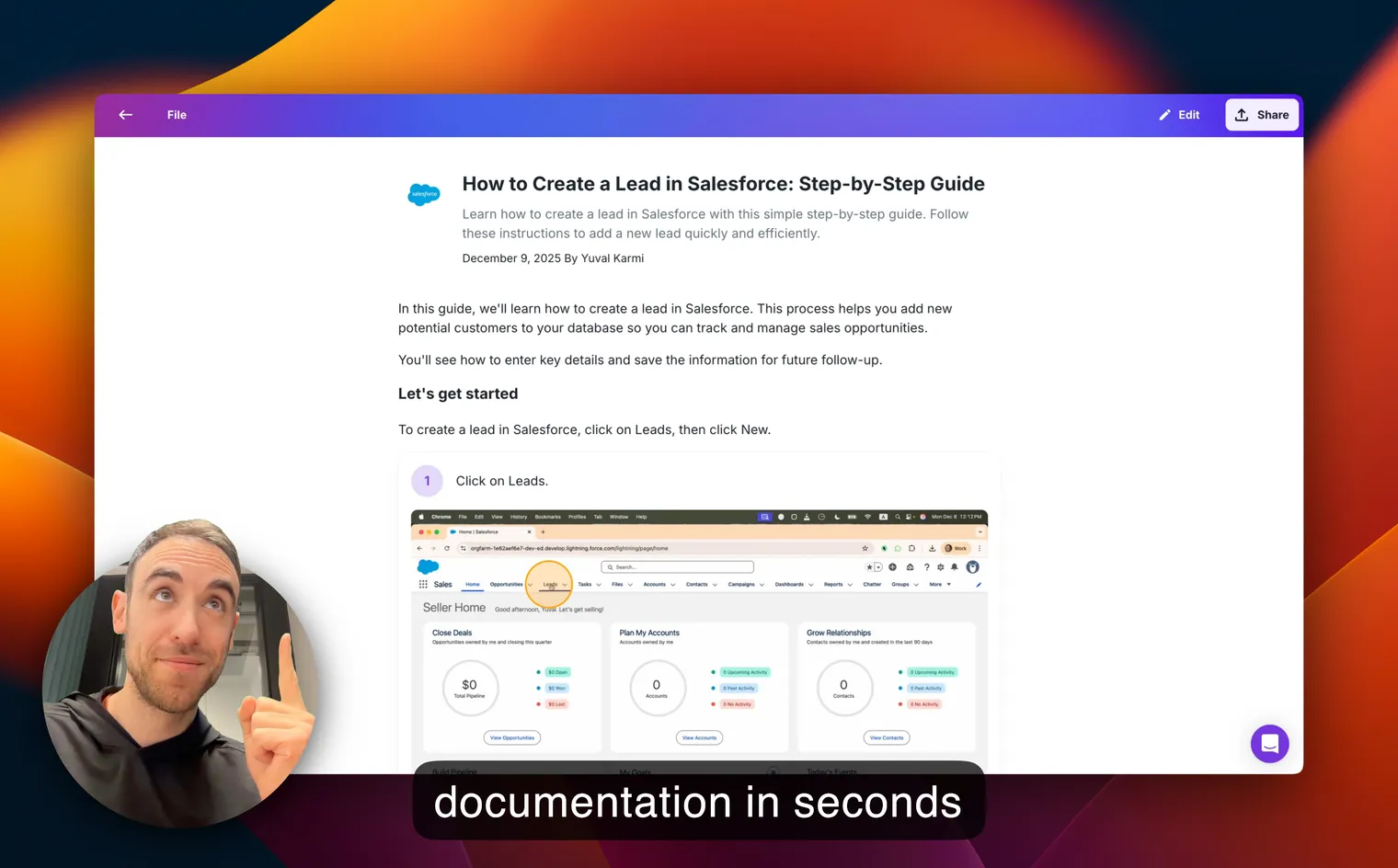
Teach your co-workers or customers how to get stuff done – in seconds.

Frequently Asked Questions
What does learning path mean?
A learning path is a structured sequence of training activities and resources designed to progressively develop specific skills or competencies. It guides learners from basic to advanced knowledge in a logical order.
What is an example of a learning path?
A typical example is a new employee onboarding learning path. It starts with company policies and culture, progresses through department-specific training, and ends with role-specific skills and certifications before the employee begins working independently.
Why is a learning path important?
Learning paths ensure consistent, comprehensive skill development by giving employees a clear roadmap. They reduce training time, eliminate knowledge gaps, and make it easier to track progress and measure training effectiveness.
How do I create a learning path?
Start by identifying your target competencies or role requirements. Then map out prerequisite knowledge and skill progression, organize content into logical modules, incorporate diverse learning formats, and add assessments to validate learning at key milestones.