
Read summarized version with
What is On-the-Job Training?
On-the-job training (OJT) is a hands-on learning method where employees pick up new skills and knowledge while actually doing their jobs. Instead of sitting through classroom sessions or clicking through e-learning modules, people learn by working. They get guidance from experienced colleagues, supervisors, or mentors who show them the ropes in real time.
What makes this approach work is how practical it is. Employees aren’t just absorbing theory; they’re practicing in real situations, getting feedback on the spot, and solving actual problems. OJT shows up in different forms depending on the workplace: shadowing, coaching, mentoring, job rotation, delegation, and apprenticeships all fall under this umbrella. Many organizations combine OJT with cross-training to build workforce flexibility.
Research on workplace learning suggests that about 68% of employees find on-the-job training the most useful way to learn. That preference makes sense when you think about it. People tend to retain more when training connects directly to the work they’ll be doing.
Key Characteristics of On-the-Job Training
- Learning in Context: Training happens where the work actually gets done. This makes knowledge stick better since employees can immediately see how concepts apply to their daily tasks.
- Practical Application: There’s no gap between learning something and using it. Employees practice new skills on real tasks, which reinforces what they’ve learned far better than reading about it would.
- Experienced Guidance: Seasoned employees, supervisors, or dedicated trainers provide hands-on instruction and feedback. Having someone who knows the job well makes a real difference in how quickly new hires get up to speed.
- Flexible and Adaptable: Some organizations run structured OJT programs with formal curricula and designated trainers. Others keep it informal, letting learning happen naturally through daily interactions. Both approaches can work depending on the role and company culture. Structured OJT often incorporates competency-based training methods.
On-the-Job Training Examples
Example 1: New Manufacturing Technician
A newly hired manufacturing technician spends two weeks shadowing a senior operator. During this time, they watch machine setup procedures, quality checks, and safety protocols in action. After the shadowing period, the technician starts handling tasks on their own while the senior operator stays nearby to offer corrections and answer questions. This approach helps the new hire learn proper procedures while keeping production errors to a minimum.
Example 2: Customer Service Representative
A customer service rep starts by listening in on calls handled by experienced teammates. Once they’ve gotten a feel for how conversations typically go, they begin taking calls themselves with a mentor monitoring in the background. The mentor jumps in with coaching when needed. Over time, the rep handles more calls independently but still has a clear path to escalate tricky situations.
Example 3: Restaurant Management
An assistant manager rotates through different positions in the restaurant: kitchen prep, serving, hosting. Spending time in each role gives them firsthand experience with the challenges staff face every day. That kind of cross-functional exposure builds the empathy and operational understanding that good managers need.
On-the-Job Training vs Classroom Training
Both approaches help employees grow, but they work differently and serve different purposes.
| Aspect | On-the-Job Training | Classroom Training |
|---|---|---|
| Purpose | Learn skills through real work tasks | Learn concepts and theory in a structured setting |
| Scope | Focused on immediate job performance | Broader knowledge foundation |
| When to use | Skill-building, role transitions, hands-on tasks | Compliance training, conceptual knowledge, policy education |
| Feedback | Immediate from mentors and work results | Delayed through assessments or exercises |
| Environment | Actual workplace with real tools and scenarios | Dedicated training space with simulations |
How Glitter AI Helps with On-the-Job Training
Glitter AI makes on-the-job training easier by helping trainers capture and share what they know. Rather than relying only on verbal explanations or having new hires watch over someone’s shoulder, trainers can create step-by-step visual guides and video walkthroughs. New employees can reference these materials during OJT, which keeps training consistent and gives learners something to review on their own time.
When organizations document their OJT processes using Glitter’s screen recording and workflow capture tools, they turn informal knowledge into training materials they can use again and again, whether that’s structured training built around standard operating procedures, platform-specific walkthroughs, or building a training program from scratch. It’s a useful complement to plain job shadowing, which captures every action a trainee watches but none of the reasoning behind it. This helps pass hard-won expertise from experienced employees to newcomers and supports ongoing employee development well beyond the first weeks. New hires get the benefit of hands-on guidance plus clear documentation, which speeds up their learning and takes some pressure off the experienced employees doing the training.
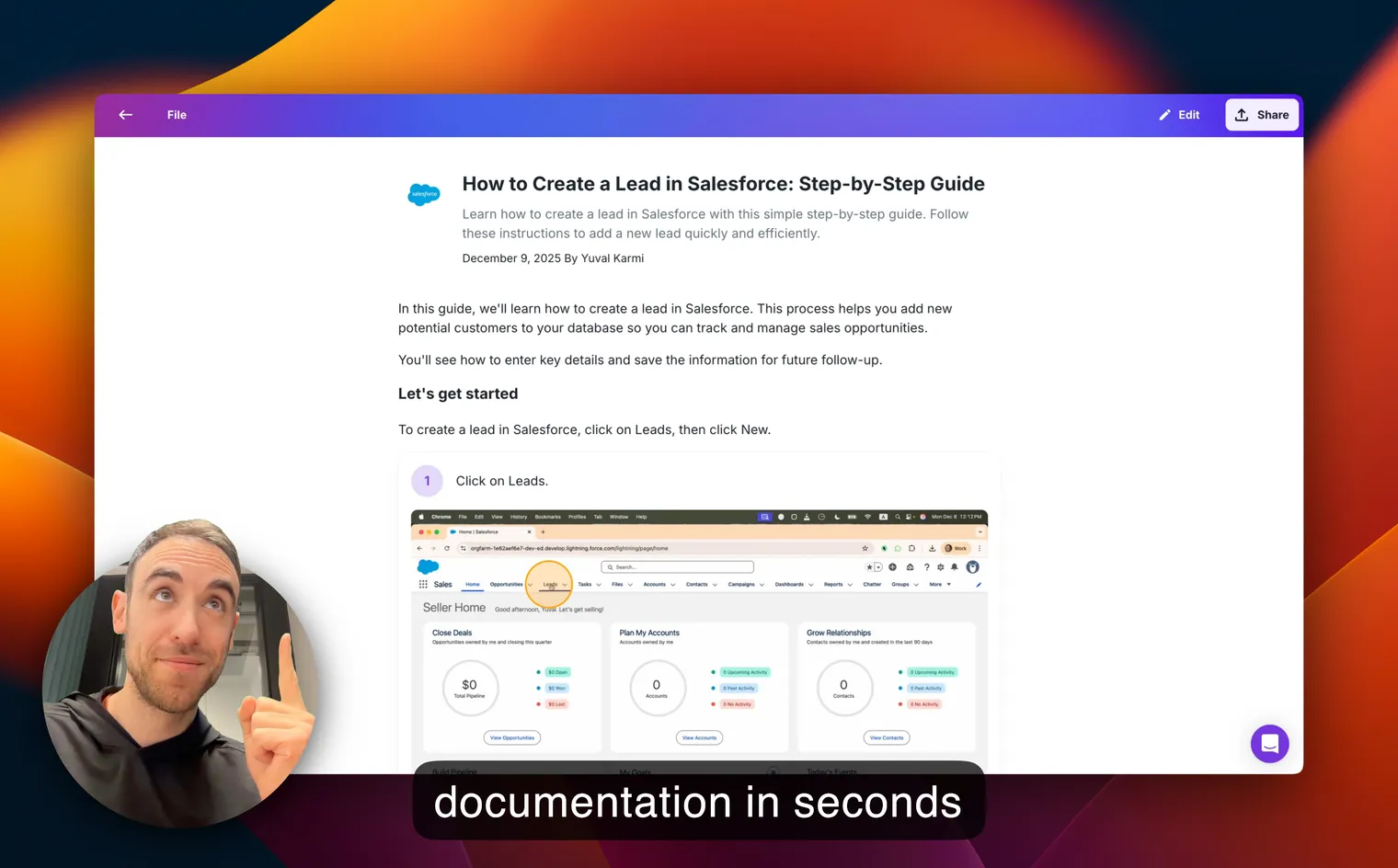
Teach your co-workers or customers how to get stuff done – in seconds.

Frequently Asked Questions
What does on-the-job training mean?
On-the-job training (OJT) is a hands-on learning method where employees learn new skills by doing actual work under the guidance of experienced colleagues or supervisors, rather than in a classroom or through e-learning.
What is an example of on-the-job training?
Job shadowing is a common example. A new employee watches an experienced worker handle daily tasks, then gradually takes on those responsibilities while getting real-time feedback and coaching.
Why is on-the-job training important?
OJT tends to be cost-effective and helps employees become productive faster. Because learning happens in real work contexts, people can apply skills immediately rather than waiting to transfer what they learned in a classroom to their actual jobs.
How do I implement on-the-job training?
Start by figuring out what new employees need to learn, then pair them with experienced mentors who can guide them through real tasks. Provide structured documentation and give regular feedback. Combining hands-on practice with reference materials like visual guides or SOPs helps keep training consistent.
What is the difference between structured and unstructured on-the-job training?
Structured OJT (SOJT) is a formal program with designated trainers and specific learning objectives. Unstructured OJT happens more naturally through daily work interactions and informal guidance from colleagues. Many organizations use a mix of both.