
Read summarized version with
What is Poka-Yoke?
Poka-Yoke is a Japanese term meaning “mistake-proofing” or “error prevention.” Shigeo Shingo developed this quality management technique in the 1960s while working on the Toyota Production System. The core idea is refreshingly practical: rather than expecting people to catch mistakes, you design processes and systems so errors either can’t happen or become immediately obvious when they do.
The thinking here is pretty straightforward. Instead of training people to be perfect (which never works for long), you make the system itself resistant to errors. Shingo originally called this concept “baka-yoke” (fool-proofing), but he changed the name because it felt disrespectful to workers. The new term reflects something important: blame the process, not the person.
Poka-Yoke goes beyond simple quality control. It represents a different way of thinking about defect prevention entirely, one that builds quality into each step rather than trying to catch problems through inspection after the fact. This approach aligns closely with continuous improvement philosophies and the waste-elimination principles of lean production.
Key Characteristics of Poka-Yoke
- Error Prevention by Design: The mechanism gets built directly into how things work, making mistakes physically or logically impossible rather than just discouraged.
- Immediate Detection: When you can’t prevent an error outright, the next best thing is instant feedback. Good Poka-Yoke alerts operators before defects spread downstream.
- Simplicity: The best Poka-Yoke solutions tend to be cheap and obvious. If you need a training manual to explain your error-proofing device, you’ve probably overcomplicated it.
- Respect for Workers: People make mistakes, especially in complex processes. This approach focuses on fixing the system, not pointing fingers.
Poka-Yoke Examples
Example 1: Manufacturing Assembly
On Toyota’s production lines, fixtures are designed so components can only fit one way into the assembly jig. There’s literally no wrong way to install them. Sensors also check if parts are missing before anything moves to the next station, stopping the line if something’s off. The result? Defect rates measured in parts per million, not percentages.
Example 2: Everyday Technology
USB-C cables are a great modern example of mistake-proofing in action. Unlike older USB-A connectors that always seemed to require three tries to plug in correctly, USB-C is symmetrical. You can insert it either direction, which eliminates both frustration and potential damage. Another classic: diesel fuel nozzles are sized larger than gasoline tank openings, so you physically can’t put diesel in a gas car.
Poka-Yoke Types: Control vs Warning
There are two main flavors of Poka-Yoke, depending on whether you’re preventing errors or catching them.
| Aspect | Control Poka-Yoke | Warning Poka-Yoke |
|---|---|---|
| Purpose | Stops errors before they happen | Alerts operators to potential problems |
| Mechanism | Physical or logical constraint | Sounds, lights, colors, or messages |
| Reliability | Higher, since it doesn’t rely on human response | Lower, because it needs someone to notice |
| When to use | When prevention is critical and actually feasible | When complete prevention isn’t practical |
How Glitter AI Helps with Poka-Yoke
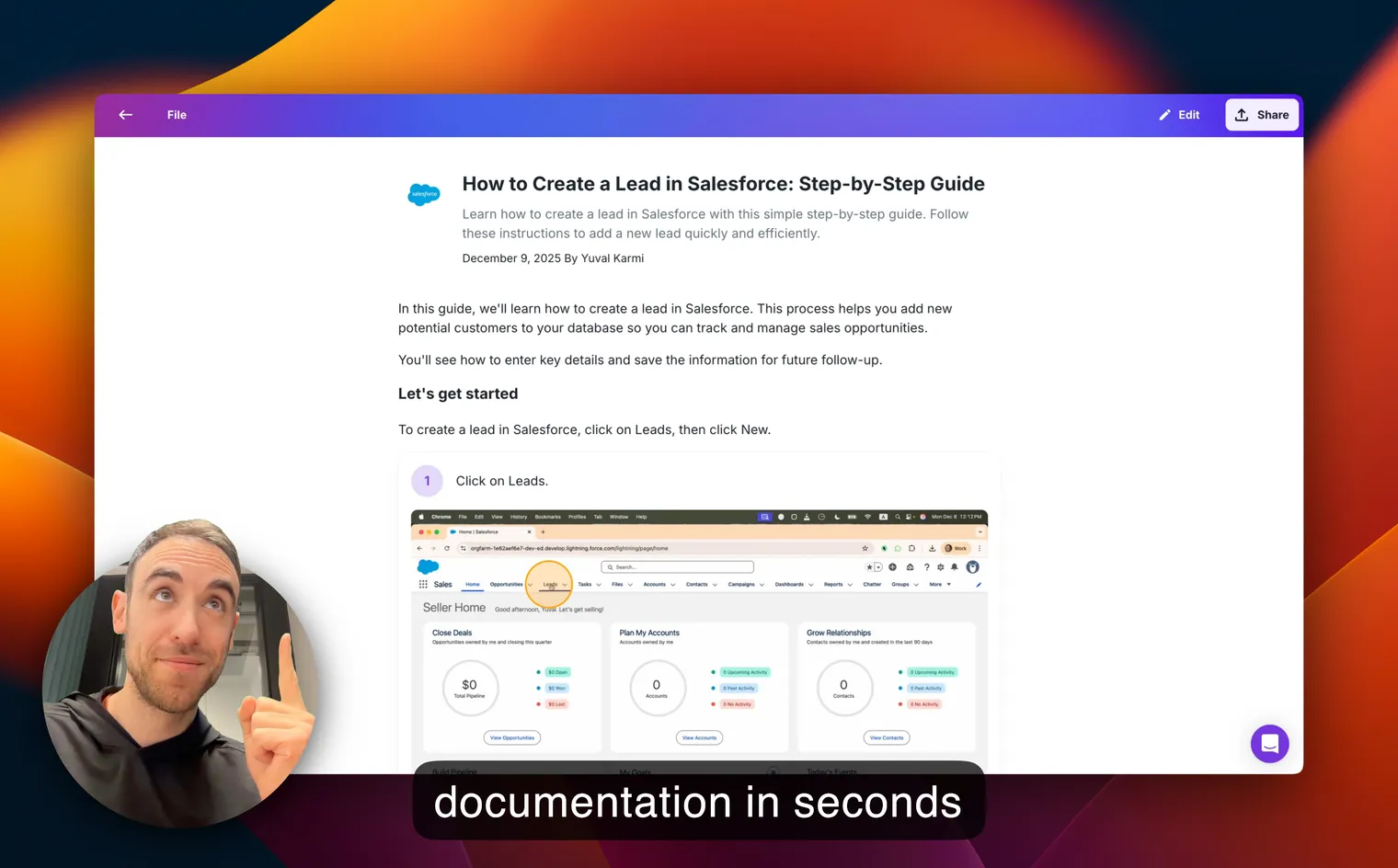
Glitter AI brings Poka-Yoke thinking to documentation. Quality controls are built right into the recording and editing workflow, so you don’t have to remember every step yourself. The platform captures each action automatically as you perform a process, which solves one of the most common documentation errors: forgetting to include critical steps.
With automatic screenshot capture, step numbering, and required field validation, Glitter AI makes it hard to produce incomplete or inaccurate SOPs and assembly work instructions. You’re not depending on someone’s attention to detail. The mistake-proofing is baked into how the tool works.
Teach your co-workers or customers how to get stuff done – in seconds.

Frequently Asked Questions
What does Poka-Yoke mean?
Poka-Yoke is Japanese for 'mistake-proofing' or 'error prevention.' It refers to designing processes and systems so that mistakes are either impossible to make or immediately obvious when they happen.
What is an example of Poka-Yoke?
USB-C cables are a good everyday example. They're symmetrical, so you can plug them in either way, which eliminates the wrong-orientation problem. In manufacturing, color-coded parts or fixtures that only accept components in the correct position are classic examples.
Why is Poka-Yoke important?
It catches defects before they happen instead of relying on inspection afterward. This cuts down on waste, rework, training costs, and customer returns, all while improving quality and efficiency.
How do I implement Poka-Yoke in my processes?
Look for the errors that keep happening in your process. Then figure out simple ways to either make those errors impossible (control) or immediately noticeable (warning). Keep solutions cheap and obvious. Build them into the workflow, not as an afterthought.