
Read summarized version with
What is Real-Time Editing?
Real-time editing lets multiple people work on the same document at exactly the same time. Everyone sees each other’s changes appear instantly on their screens. No more emailing files back and forth, and no more sitting around waiting for someone to finish before you can jump in. People make their edits, the document updates for all participants within seconds, and work actually gets done.
This kind of live collaboration has become pretty much essential for how teams operate now. With remote and hybrid setups being the norm rather than the exception, real-time editing means distributed teams can still huddle around a document together, just virtually. You can see where your colleague is typing, watch their edits appear, and respond immediately instead of waiting hours or days for feedback loops to complete.
What makes this work is that the technology handles the tricky parts automatically. Merging everyone’s changes without creating conflicts or losing work? That’s happening behind the scenes. Modern platforms use synchronization techniques that ensure when two people edit different parts of a document simultaneously, both changes get saved correctly. Honestly, it’s the kind of thing you probably don’t even notice until you realize it’s working perfectly.
Key Characteristics of Real-Time Editing
- Simultaneous Access: Multiple users can open and edit the same document at once, rather than locking others out while one person works.
- Instant Synchronization: Changes appear on everyone’s screen within milliseconds, so you’re always looking at the current version.
- Presence Indicators: Most platforms show you who else is in the document and where they’re working, typically with colored cursors or highlights.
- Automatic Conflict Resolution: When two people edit the same section, the system merges changes intelligently rather than creating conflicting versions.
- Cloud-Based Storage: Documents live online so they’re accessible from any device and stay synchronized.
Real-Time Editing Examples
Example 1: Training Manual Updates
A training coordinator and subject matter expert are collaborating on updating an employee onboarding manual. The SME adds new compliance requirements in one section while the coordinator updates screenshots in another. Both see each other’s progress in real time, leave comments as questions come up, and finish the update in a single session. Compare that to trading document versions over email for a week. This kind of collaboration accelerates sharing expertise across teams.
Example 2: Process Documentation Review
A quality team runs a live review of a standard operating procedure. The process owner shares the document, and three reviewers join to make simultaneous editing happen. One corrects a safety step, another clarifies a technical term, and the third adds a missing tool to the equipment list. The process owner watches changes happen and addresses questions on the spot, rather than consolidating feedback from three separate marked-up PDFs. Many teams manage this workflow through a content management system.
Real-Time Editing vs Version Control
These features complement each other but serve different purposes in document collaboration.
| Aspect | Real-Time Editing | Version Control |
|---|---|---|
| Purpose | Enable simultaneous collaboration | Track changes over time |
| Scope | What’s happening right now | What happened historically |
| When to use | Active collaboration sessions | Auditing, rollbacks, and compliance |
How Glitter AI Helps with Real-Time Editing
Glitter AI brings real time collaboration to process documentation in a way that goes beyond traditional document editing, with shared libraries and roles for teams built in. When you create or update a guide through screen recording, team members can use the same kind of collaboration tools to add annotations and refine steps together, leaving inline comments and feedback as they go. Everyone stays on the same page, literally, as updates sync instantly across the platform.
The platform handles the coordination so your team can focus on creating accurate, helpful documentation rather than managing file versions or waiting for someone to finish their edits. Combined with built-in change tracking and history, you get both smooth live editing and a complete history of how your documentation evolved.
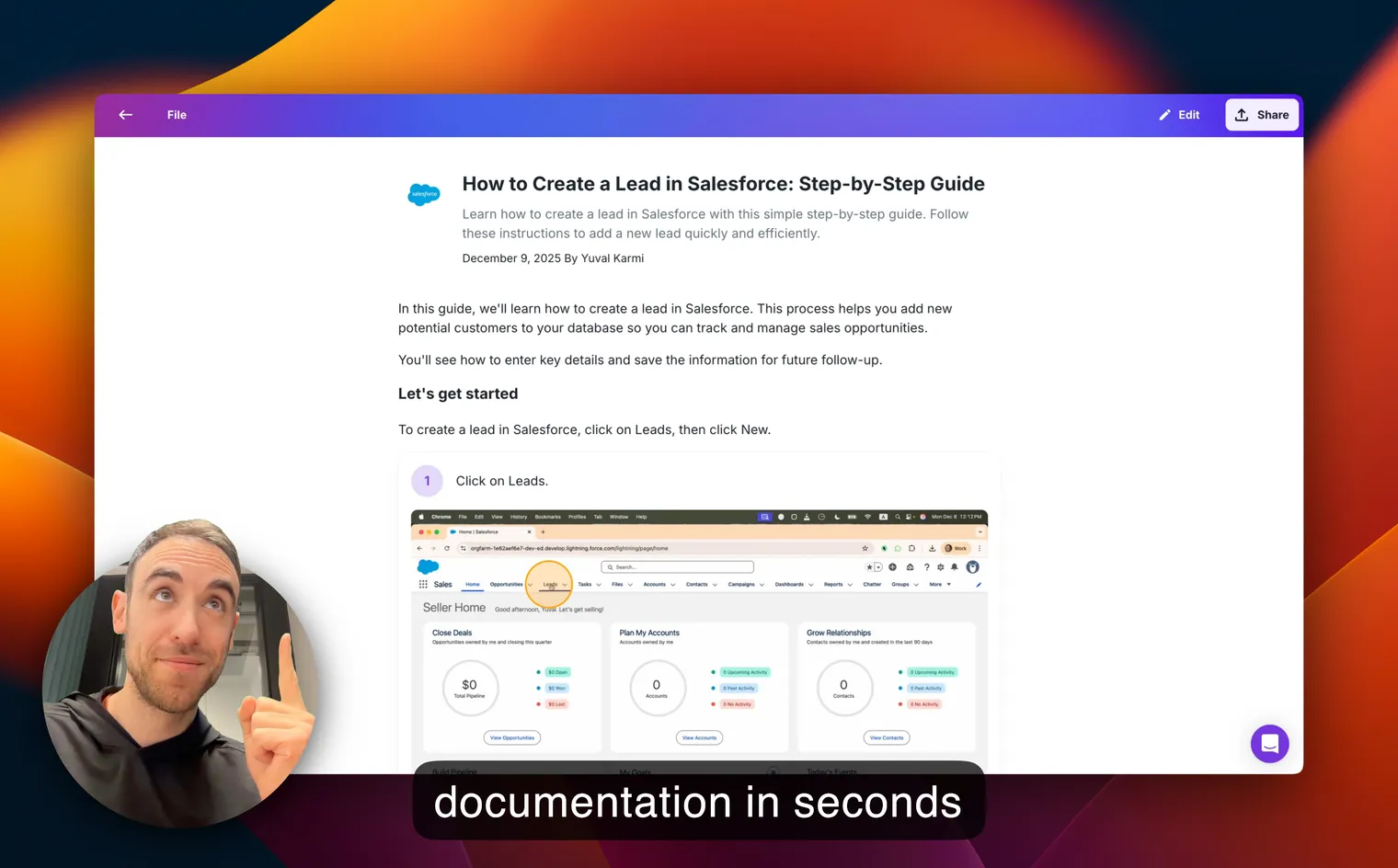
Teach your co-workers or customers how to get stuff done – in seconds.

Frequently Asked Questions
What does real-time editing mean?
Real-time editing means multiple people can work on the same document simultaneously, with all changes appearing instantly for everyone. There's no need to take turns or merge separate versions afterward.
What is an example of real-time collaboration?
A common example is a team working together in Google Docs, where everyone can type, comment, and make edits at the same time while seeing each other's cursors and changes appear live.
What is the difference between real-time editing and version control?
Real-time editing lets multiple people work on a document simultaneously. Version control tracks the history of changes over time. They work together: you collaborate live, and version control keeps a record of how the document evolved.
Why is real-time editing important for remote teams?
Remote teams can't gather around the same desk, so real-time editing creates a virtual shared workspace. Team members across different locations can collaborate as if they were in the same room.
How does real-time editing handle conflicts when two people edit the same text?
Modern platforms use operational transformation or similar algorithms to merge simultaneous edits automatically. If two people type in the same spot, the system preserves both contributions rather than overwriting one.
What tools support real-time document editing?
Popular tools include Google Docs, Microsoft 365, Notion, and specialized platforms like Glitter AI for process documentation. Most modern collaboration software includes some form of real-time editing.
Is real-time editing secure for sensitive documents?
Security depends on the platform. Enterprise tools typically offer encryption, access controls, and audit logs. Always check that your collaboration platform meets your organization's security requirements.
Can you do real-time editing offline?
True real-time editing requires an internet connection since changes need to sync between users. Some platforms let you work offline and sync when you reconnect, but that's not technically real-time collaboration.
How many people can edit a document in real time?
It varies by platform. Google Workspace supports up to 100 simultaneous editors. Most business needs fall well within these limits, but check your specific tool's capacity if you anticipate large group editing sessions.
Does real-time editing replace the need for document reviews?
Not entirely. Real-time editing speeds up collaboration, but formal review processes still matter for quality control, approvals, and compliance. The two approaches complement each other.