
Read summarized version with
What is Regulatory Compliance?
Regulatory compliance refers to how organizations follow the laws, regulations, guidelines, and specifications that apply to their business. Government bodies, industry regulators, and international authorities create these rules for good reasons: protecting consumers, safeguarding data, keeping markets fair, and maintaining ethical business practices.
What counts as compliance requirements depends on your industry, where you operate, and what your business actually does. But one thing stays consistent across the board: you need documentation. Lots of it. Organizations have to keep detailed records of their policies, procedures, and activities so they can prove compliance during audits and inspections. Getting this wrong can hurt. Violations often lead to federal fines, legal trouble, operational restrictions, and the kind of reputational damage that lingers.
The regulatory landscape in 2026 keeps expanding. New requirements pop up around data privacy, cybersecurity, AI governance, environmental standards, and financial reporting. Meeting these obligations means more than just understanding the rules. It requires building systems that can track, document, and verify adherence across everything your organization does. Organizations often maintain a quality manual as a foundational document for their compliance efforts.
Key Characteristics of Regulatory Compliance
- Industry-Specific Requirements: Each industry has its own regulatory framework to navigate. Healthcare deals with HIPAA. Publicly traded companies face SOX. Pharmaceuticals must handle FDA 21 CFR Part 11. Payment processors follow PCI DSS. And if you handle EU data, GDPR applies.
- Documentation and Record-Keeping: Compliance means maintaining detailed documentation of policies, procedures, decisions, and activities through proper controlled document management. Retention periods vary wildly, from a few years to indefinitely, depending on the specific regulation.
- Audit Trails and Accountability: You need comprehensive audit trails that track who made changes, what got modified, when it happened, and why. This chronological record demonstrates compliance and creates accountability through version history tracking.
- Continuous Monitoring and Adaptation: Compliance is never really “done.” It demands regular reviews, procedure updates, employee training, and adaptation as regulations evolve.
Regulatory Compliance Examples
Example 1: Healthcare Data Protection
Consider a hospital implementing HIPAA compliance. Following a healthcare documentation compliance guide, they need to document all policies for protecting patient health information, maintain detailed audit trails showing who accesses patient records, provide regular compliance training to staff, and run periodic risk assessments. Their compliance manual covers data encryption, access controls, breach notification protocols, and patient privacy rights.
Example 2: Financial Services Reporting
A publicly traded company dealing with Sarbanes-Oxley (SOX) Act requirements maintains comprehensive documentation of internal financial controls. They implement audit trails for all financial system changes, conduct regular compliance audits, and ensure executives certify financial statements. Their compliance program includes quarterly reviews, annual audits, and continuous monitoring of transaction logs.
Regulatory Compliance vs Regulatory Reporting
These terms get used interchangeably sometimes, but they serve different purposes.
| Aspect | Regulatory Compliance | Regulatory Reporting |
|---|---|---|
| Purpose | Adhering to laws and regulations through policies and procedures | Submitting required information to regulatory bodies |
| Scope | Comprehensive program covering all aspects of operations | Specific submissions and disclosures at scheduled intervals |
| When to use | Ongoing daily operations and decision-making | Periodic filing deadlines or event-triggered notifications |
How Glitter AI Helps with Regulatory Compliance
Glitter AI makes regulatory compliance more manageable by simplifying how you create, maintain, and update compliance documentation. Screen recording paired with AI-powered documentation generation lets the compliance officer quickly produce audit-ready procedures, document the exact data-handling steps behind frameworks like GDPR or SOC 2, and keep version-controlled compliance manuals that satisfy regulatory requirements.
The platform automatically timestamps and tracks version history, which creates natural audit trails for documentation updates. This helps organizations demonstrate compliance when inspectors come calling, and it complements the enterprise security controls regulated teams are expected to maintain. By turning complex compliance processes into clear visual documentation, our compliance documentation software helps teams make sure everyone understands and follows regulatory requirements. That reduces the risk of costly violations.
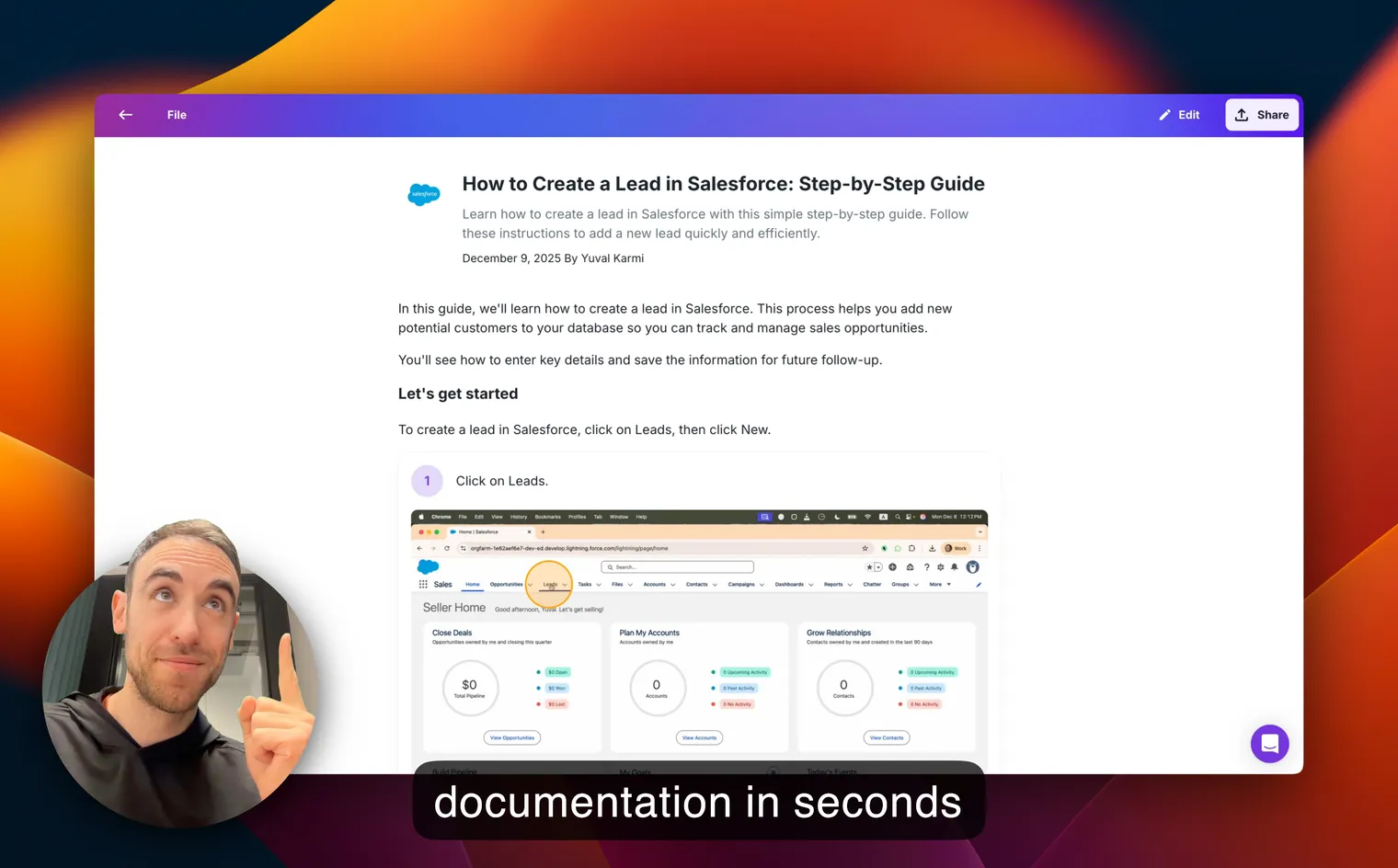
Teach your co-workers or customers how to get stuff done – in seconds.

Frequently Asked Questions
What does regulatory compliance mean?
Regulatory compliance means following the laws, regulations, industry standards, and guidelines that apply to your business. It involves documented policies, procedures, audit trails, and ongoing monitoring to make sure all your activities meet what regulators expect.
What is an example of regulatory compliance?
A healthcare organization following HIPAA is a common example. This includes documenting patient privacy policies, keeping audit logs of who accesses medical records, training staff on data protection, and running regular compliance audits to protect patient health information.
Why is regulatory compliance important?
Regulatory compliance protects your organization from legal penalties, fines, and operational restrictions. It also safeguards customers, maintains market integrity, and upholds ethical standards. Non-compliance can result in severe financial penalties, reputational damage, and in serious cases, even business closure.
How do I implement regulatory compliance?
Start by identifying which regulations apply to your industry. Then document the required policies and procedures, set up audit trails and monitoring systems, train employees on compliance requirements, and conduct regular audits to verify you're meeting requirements and spot any gaps.