
Read summarized version with
What is a Runbook?
A runbook is a reference document containing the procedures, instructions, and operational knowledge your team needs to manage, maintain, and troubleshoot IT systems. Similar to a formal operating procedure, the concept originated in data centers and server operations, where teams needed reliable step-by-step guidance for handling routine tasks, system maintenance, and emergency situations.
Think of runbooks as operational guides that help IT teams respond consistently when incidents occur, perform maintenance tasks correctly, and keep systems running reliably. They capture critical knowledge about system configurations, dependencies, troubleshooting steps, and escalation procedures all in one accessible place.
Today’s runbooks have grown well beyond simple checklists. They often include automation scripts, monitoring thresholds, rollback procedures, and links to a broader DevOps SOP and other relevant resources. This makes them valuable for reducing mean time to resolution (MTTR), cutting down on human error during high-pressure incidents, and ensuring operations can continue even when the usual subject matter experts aren’t available.
Key Characteristics of Runbook
- Actionable Procedures: Contains specific, step-by-step instructions that technical teams can follow right away during incidents or maintenance windows
- Incident-Focused: Designed primarily for troubleshooting, emergency response, and recovering from system failures or degraded performance
- Technical Detail: Includes system-specific information like server names, configuration files, command-line instructions, and architectural diagrams
- Automation-Ready: Often integrates with automation tools and scripts so common tasks and responses can be executed quickly
- Living Documentation: Needs regular updates based on system changes, lessons learned from incidents, and evolving operational requirements
Runbook Examples
Example 1: Database Performance Issue
Consider a database runbook for handling slow query performance. It would include diagnostic queries to identify blocking sessions, steps to analyze execution plans, procedures for adding indexes, and clear escalation criteria for when to involve the database administrator. The runbook also specifies acceptable response times and rollback procedures in case optimization attempts cause new problems.
Example 2: Web Application Deployment
A deployment runbook walks through the complete process for releasing new application versions, sitting alongside the broader software documentation a developer relies on. This covers pre-deployment checklists, database migration steps, deployment commands, smoke tests to verify everything works, rollback procedures if issues come up, and notification protocols for keeping stakeholders informed throughout the deployment. Each step functions like a detailed task-level instruction that any team member can follow.
Runbook vs Playbook
While both documents provide operational guidance, they serve different purposes and audiences.
| Aspect | Runbook | Playbook |
|---|---|---|
| Purpose | Technical system operations and incident response | Strategic business processes and decision frameworks |
| Scope | Specific to IT infrastructure and technical systems | Broader organizational processes across departments |
| When to use | During system incidents, maintenance, or technical tasks | For business workflows, sales processes, or strategic initiatives |
How Glitter AI Helps with Runbook
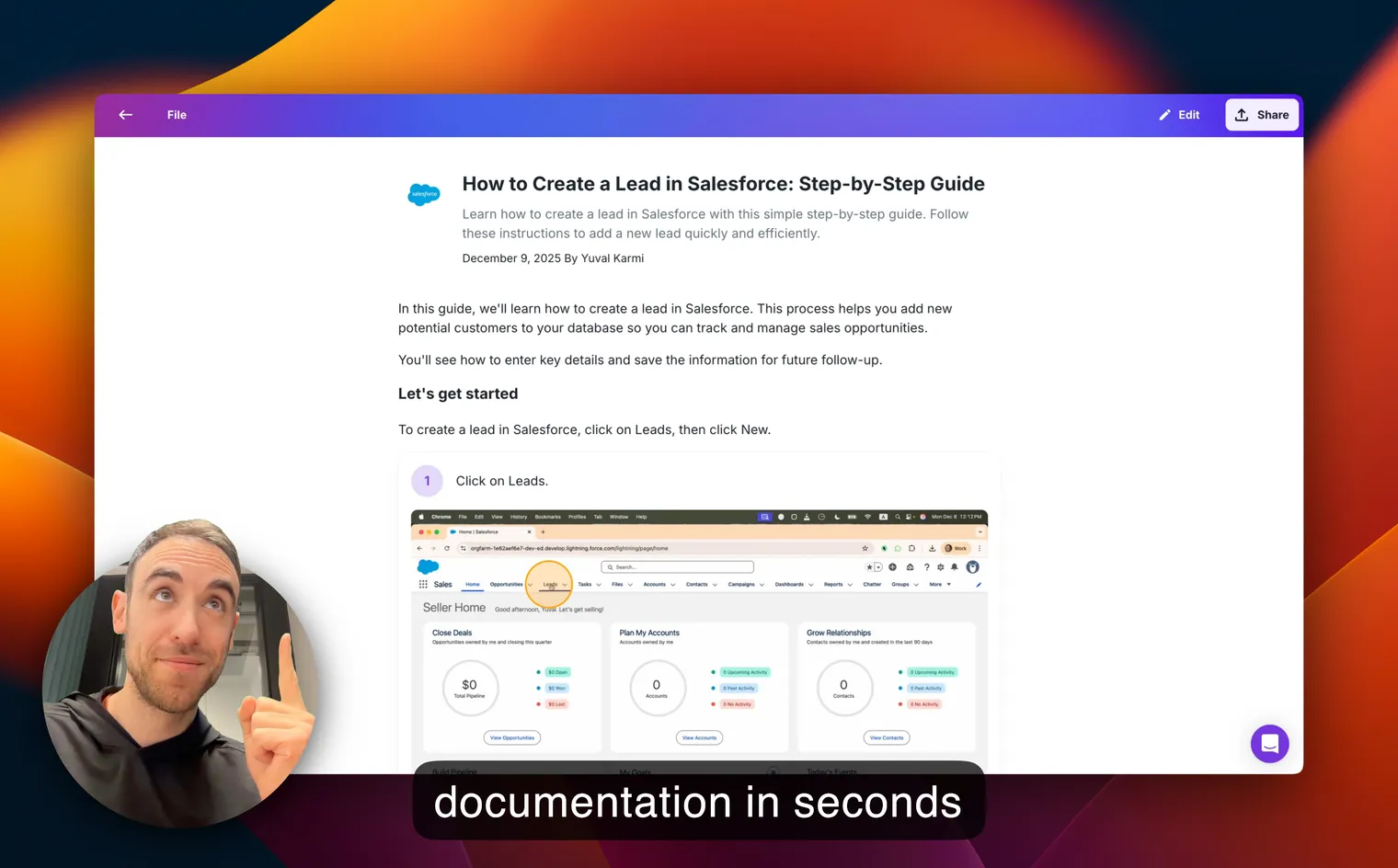
Glitter AI simplifies runbook creation by letting teams record their screen while performing operational tasks and troubleshooting procedures. Rather than manually documenting every command and step, IT and support teams can capture the actual process visually, complete with screenshots, command outputs, and real-time annotations. This approach helps ensure runbooks accurately reflect how your current systems and procedures actually work.
Glitter AI also makes runbooks easier to access and maintain by converting recorded procedures into searchable, editable documentation, reinforcing solid IT documentation practices. Teams can quickly update runbooks when systems change, add clarifying notes to complex steps, and preserve critical operational knowledge even as team members move on to new roles, the same discipline that keeps a wider IT SOP trustworthy.
Teach your co-workers or customers how to get stuff done – in seconds.

Frequently Asked Questions
What does runbook mean?
A runbook is a documented set of procedures and instructions that IT teams use to maintain systems, troubleshoot issues, and respond to operational incidents. It contains the specific steps needed to handle technical tasks and emergencies.
What is an example of a runbook?
A server restart runbook that includes pre-restart health checks, the exact commands to execute, verification steps to confirm successful restart, and troubleshooting procedures if the server fails to come back online properly.
Why is a runbook important?
Runbooks ensure consistent incident response, reduce downtime by providing quick access to troubleshooting procedures, preserve critical operational knowledge, and enable any team member to handle technical issues even when experts are unavailable.
How do I create a runbook?
Document your operational procedures by identifying common incidents and tasks, recording the exact steps to resolve them, including relevant system details and commands, testing the procedures, and regularly updating based on system changes and lessons learned.