
Read summarized version with
SOP Meaning: What Does SOP Stand For?
SOP stands for Standard Operating Procedure - a documented set of step-by-step instructions that defines how to perform a routine task the same way every time. Strip away the jargon and the SOP meaning really comes down to one word: consistency. When everyone follows the same proven method, it stops mattering who does the work, or when. The result holds up.
You’ll hear the term most in business and operations, but the idea travels. Manufacturing, healthcare, aviation, IT, government, the military - they all lean on SOPs to standardize work where mistakes carry a cost. Quality-management standards like ISO 9001 put it in writing, requiring organizations to keep “documented information” (procedures, essentially) for their key processes.
It helps to think of SOPs as the operational backbone of a well-run business. They capture what your best people already know, shorten training for new hires through structured SOP training, and keep you on the right side of the regulations that apply to your industry. Our full guide on how SOPs work goes deeper if you want it. Manufacturing floor or marketing agency, healthcare clinic or busy kitchen - the SOP does the same quiet job of keeping things running and quality where it belongs.
There’s more to the business SOP definition than instructions on a page, though. A good SOP also spells out who owns what, and that’s the line that separates a procedure from a rule (see policy vs procedure). It creates real accountability and gives you something to improve on over time. Once a team genuinely understands what an SOP means for their daily work, the work tends to move faster, with fewer mistakes and a lot less second-guessing.
What Does SOP Mean?
SOP is an acronym for Standard Operating Procedure, and most people say it letter by letter (“ess-oh-pee”) rather than as a word. One SOP is a single document covering one task. “SOPs” in the plural points to the whole library of procedures an organization keeps. Uppercase or lowercase, SOP or sop, the meaning doesn’t change; the capitalization is just style.
“Standard Operating Procedure” is the expansion you’ll run into almost everywhere. Now and then, in a military context, the acronym stands for “Standing Operating Procedure” instead, meaning a persistent order that holds until someone changes it. Regulated industries get very literal about the meaning. The U.S. Food & Drug Administration, for instance, requires drug manufacturers to “establish and follow written procedures” for production and process control (21 CFR 211.100). For everyday business use, the SOP meaning stays simple: the agreed, documented way a specific task should be done, every time.
Key Characteristics of Business SOPs
- Standardization: SOPs pin down one consistent way to finish a task. No guesswork, and no more “well, I usually do it like this” drifting between teams.
- Documentation: Business SOPs are written documents or digital guides that stick around as permanent references. They capture what works and keep that knowledge from walking out the door when someone leaves.
- Step-by-Step Format: A good SOP breaks a messy process into clear steps you can act on. Someone new should be able to follow it without years of experience behind them.
- Compliance Focus: SOPs make regulatory requirements easier to meet by documenting exactly which procedures and controls got approved.
SOP Examples in Business
Example 1: Customer Service SOP
A retail business writes an SOP for handling customer returns. The document walks through greeting the customer, checking the receipt, inspecting the item, processing the refund, and updating inventory - the kind of detail a broader retail SOP brings to every storefront task. Nothing fancy. But now every customer gets the same professional experience no matter who happens to be working that day.
Example 2: Accounts Payable SOP
A finance department puts together an SOP for processing vendor invoices. It covers verifying accuracy, collecting the right signatures, entering data into the accounting system, scheduling payments, and filing everything where it belongs. This business SOP heads off costly payment errors, and it keeps the auditors happy when they come knocking.
Example 3: Content Publishing SOP
A marketing team documents how they publish blog posts. The SOP covers writing, image formatting, SEO optimization, legal review, scheduling, and social promotion. Everyone knows exactly what “done” looks like, and brand consistency quietly stops being something anyone has to chase.
SOP vs Work Instruction vs Process
| Aspect | SOP | Work Instruction | Process |
|---|---|---|---|
| Purpose | Standardize routine operations | Provide detailed task guidance | Define overall workflow |
| Scope | Department or function-level | Single task or activity | End-to-end business flow |
| Detail Level | Moderate detail with context | Highly detailed, step-by-step | High-level overview |
| When to use | Repeating business activities | Technical or complex tasks | Understanding big picture |
When the task is technical and unforgiving, many organizations pair their SOPs with detailed task instructions that fill in the granular, step-by-step guidance.
How Glitter AI Helps with Business SOPs
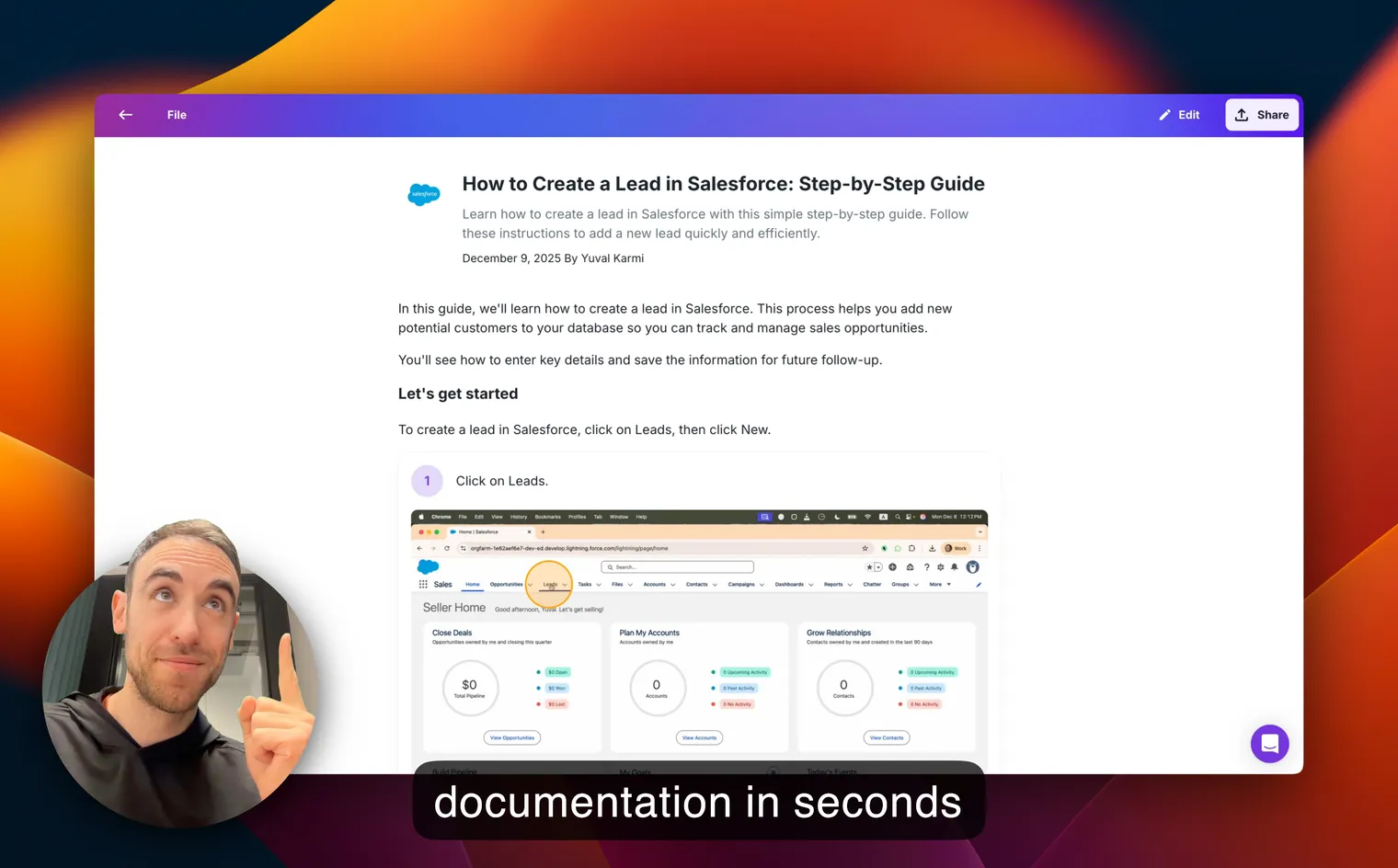
Glitter AI takes most of the pain out of creating and maintaining SOPs. Rather than spending hours writing documentation from scratch - a finance workflow, say, or a recurring equipment maintenance routine - teams just record their screen while doing the task. Glitter handles the rest, turning that recording into a polished SOP with screenshots, step descriptions, and clean formatting. Want the fundamentals first? Our explainer on what an SOP is and why it matters is a solid starting point, and a free SOP generator lets subject matter experts get what they know on paper in minutes rather than days. The same workflow covers narrower procedures too: a communication SOP for internal messaging, a legal SOP for compliance work, or something as ordinary as a recurring meeting agenda.
Keeping SOPs current gets a lot easier as well. When a technical process shifts - the steps behind a DevOps workflow, for example - you record the new version and that’s it. Glitter’s AI-powered tools can blur sensitive information, add annotations where they help, and translate SOPs into other languages, which is a big part of why it holds up as SOP software for small businesses. Extend that same approach to broader process documents and sharing standardized procedures across global teams, multi-warehouse logistics included, stops being the headache it used to be.
Teach your co-workers or customers how to get stuff done – in seconds.

Frequently Asked Questions
What does SOP stand for in business?
SOP stands for Standard Operating Procedure - a documented set of step-by-step instructions for completing routine business tasks consistently.
Why do businesses need SOPs?
Businesses need SOPs to ensure consistency, reduce errors, speed up training, maintain compliance, and preserve institutional knowledge when employees leave.
What is the difference between SOP and policy?
A policy defines what should be done (the rules and guidelines), while an SOP defines how to do it (the specific steps and procedures).
How long should a business SOP be?
Most effective business SOPs are 1-5 pages long, providing enough detail for someone to complete the task without being overwhelming or difficult to follow.
Who writes SOPs in a business?
SOPs are typically written by subject matter experts who perform the task regularly, often with support from documentation specialists or operations managers.
When should a company create an SOP?
Companies should create SOPs for any task that's performed repeatedly, involves multiple steps, requires compliance, or needs consistent quality standards.
What are the main components of a business SOP?
A business SOP includes a title, purpose, scope, responsibilities, step-by-step procedures, definitions, and references to related documents or policies.
How often should SOPs be updated?
SOPs should be reviewed at least annually and updated immediately when processes change, new regulations are introduced, or errors are discovered.
Can small businesses benefit from SOPs?
Yes, small businesses benefit significantly from SOPs because they help scale operations, onboard employees faster, and maintain quality as the company grows.
What industries use SOPs most?
Healthcare, manufacturing, food service, finance, pharmaceuticals, and aviation rely heavily on SOPs for compliance and safety, though all industries benefit from standardized procedures.