
Read summarized version with
What is Training Assessment?
Training assessment is how you measure whether someone actually learned what they were supposed to learn. Think of it as a diagnostic tool that helps you spot knowledge gaps, track how people are progressing, and confirm that employees have picked up the skills they need to do their jobs well.
It’s worth noting the difference from training evaluation, which looks at how effective a training program is for the organization as a whole. Training assessment zeros in on individual learner performance instead. It often ties into competency-based training programs where employees must demonstrate specific skill mastery. These assessments happen at different stages: before training starts (to see where someone is at), during the training itself (to make sure things are clicking), and after everything wraps up (to verify people actually mastered the material and can apply it).
What does a training assessment look like in practice? Quizzes, hands-on demonstrations, simulations, quick knowledge checks, practical exercises. Many organizations track these through a learning management system to monitor progress and identify gaps. The point is making sure the money and time spent on training actually results in people getting better at their jobs. It also helps you figure out who might need extra help and which skills need more attention.
Key Characteristics of Training Assessment
- Individual-Focused: Measures how specific learners are progressing, what they’re retaining, and which skills they’re picking up, rather than looking at program-wide metrics.
- Multiple Touchpoints: Happens before, during, and after training so you can catch gaps as they emerge instead of discovering them too late.
- Performance-Based: Focuses on whether people can actually do the thing, not just explain the theory behind it.
- Diagnostic Purpose: Pinpoints where someone is struggling, what concepts are unclear, and where additional instruction might help.
- Data-Driven Feedback: Gives instructors concrete information to adjust their approach and helps learners see exactly where they stand.
Training Assessment Examples
Example 1: Software Onboarding Assessment
A tech company runs pre-training assessments before bringing new developers onto their proprietary platform. New hires take a baseline test covering programming basics, security protocols, and version control. As they work through the training, they tackle coding exercises after each module to make sure concepts are sticking. At the end, developers have to build a working feature using the company’s tech stack, which shows whether they can actually apply what they learned in something close to real development work.
Example 2: Healthcare Compliance Assessment
A hospital uses training assessments for nurses learning updated patient safety protocols. Before training begins, nurses take a knowledge check on infection control procedures to establish their starting point. Throughout the training, scenario-based questions test whether they can spot safety risks in realistic situations. The final assessment has each nurse demonstrate proper hand hygiene, equipment sterilization, and patient interaction in simulated care environments. They need to pass this before earning their certification.
Example 3: Manufacturing Quality Control Assessment
A manufacturing facility assesses production line workers during quality control training. First, workers complete a visual inspection test to see how well they can already identify defects. During training, they inspect sample products and document what they find. The final assessment requires them to inspect actual production samples with at least 95% accuracy before they can work independently on the floor.
Training Assessment vs Training Evaluation
These terms get mixed up a lot, but they serve different purposes when measuring how well training is working.
| Aspect | Training Assessment | Training Evaluation |
|---|---|---|
| Focus | Individual learner performance and knowledge | Overall program effectiveness and ROI |
| Scope | Specific skills, knowledge, and competencies | Broader organizational impact and business results |
| Timing | Before, during, and after training | Primarily after training completion |
| Purpose | Diagnose learning gaps and verify mastery | Judge program quality and justify training investment |
| Audience | Individual learners and instructors | Organizational leaders and stakeholders |
How Glitter AI Helps with Training Assessment
Glitter AI makes it easier to create training assessment materials by letting trainers quickly document what good performance looks like. With screen recording and visual documentation features that go beyond what a traditional tool like Camtasia offers, subject matter experts can capture exactly how tasks should be done, giving you clear benchmarks for evaluating whether learners are hitting the mark.
Anchoring assessments to a well-built training program, a reusable training guide template, and clear benchmarks ensures you’re measuring what actually matters. Tracking the right training metrics and tying results to a clear key performance indicator makes progress visible to leadership. A training coordinator can run a gap analysis on the findings and fold them into an after action review so each cohort improves on the last. The platform’s AI capabilities help trainers put together assessment criteria by automatically generating step-by-step documentation from recorded demonstrations. Teams can build libraries of assessment scenarios, practical exercises, and knowledge checks. This makes it simpler to see whether learners can actually apply their training to real situations and earn certification while keeping assessment standards consistent across the organization. Combined with solid training documentation, these assessments ensure employees have both the reference materials and verification they need.
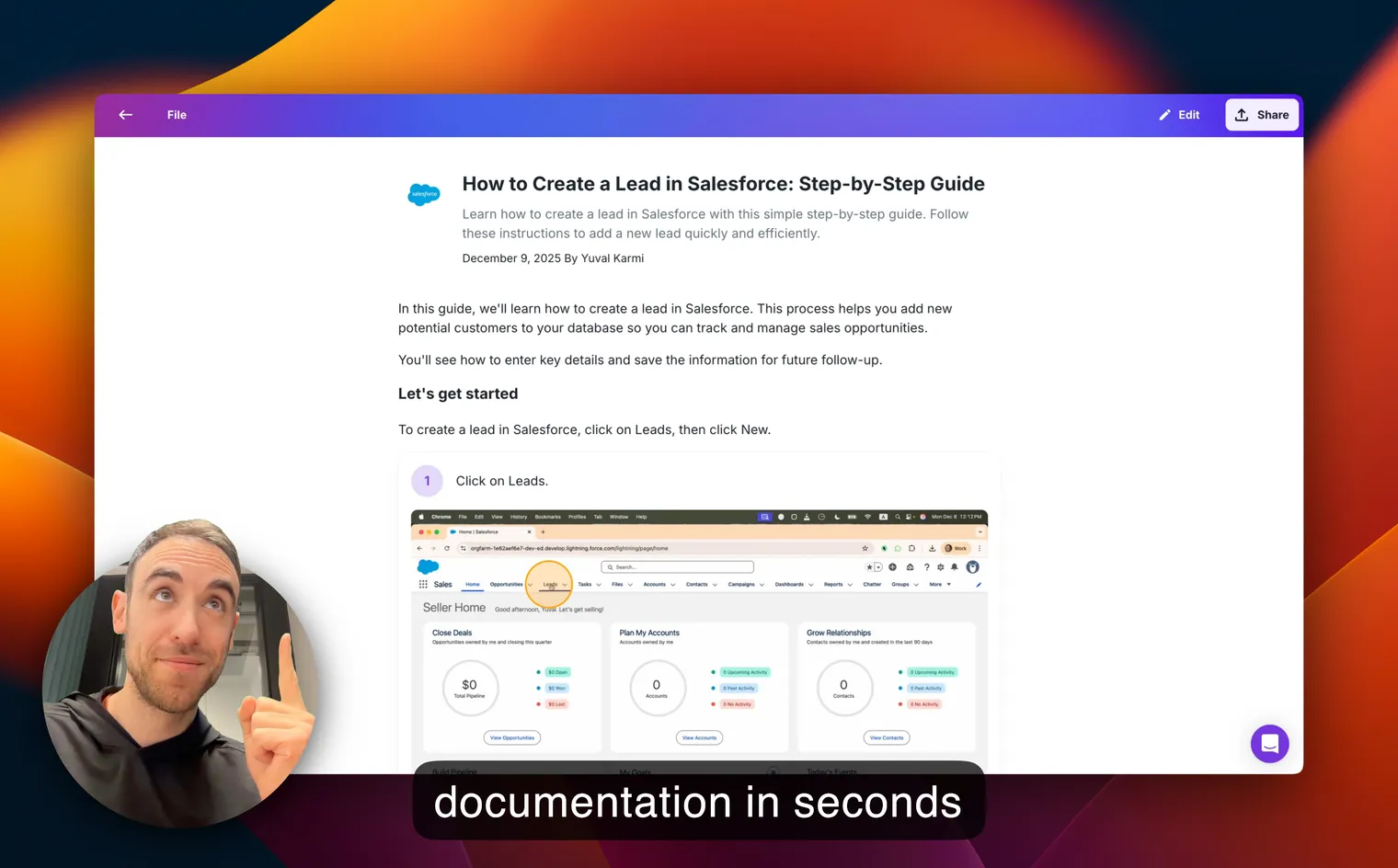
Teach your co-workers or customers how to get stuff done – in seconds.

Frequently Asked Questions
What does training assessment mean?
Training assessment is how you measure someone's knowledge, skills, or performance before, during, or after training. It helps you spot learning gaps, track progress, and confirm that employees have picked up the competencies they need.
What is an example of training assessment?
A customer service training program might include a pre-training quiz on product knowledge, role-playing exercises during training to practice communication, and a post-training simulation where employees handle realistic customer scenarios to show they've got it down.
Why is training assessment important?
It confirms that employees are actually learning and retaining what matters, helps identify who needs more support, gives instructors real-time feedback to adjust their approach, and verifies that training investments are paying off in better job performance.
How do I conduct a training assessment?
Start with pre-training assessments to see where people are at, use formative assessments during training to check understanding, and wrap up with post-training assessments that have learners demonstrate skills in realistic scenarios. Mix quizzes with practical demonstrations and hands-on exercises.
What is the difference between training assessment and training evaluation?
Training assessment focuses on individual learner performance and what they're retaining, while training evaluation looks at how effective the overall program is and its ROI at the organizational level.