
Read summarized version with
What is a Video SOP?
A video SOP is a documented standard procedure delivered through video instead of the usual text-heavy documents. Rather than scrolling through pages of written instructions, employees simply watch someone demonstrate exactly how to perform a task or workflow. These video-based SOPs typically combine screen recordings, narration, annotations, and real-world demonstrations to show what needs to be done rather than just describing it.
Why have video SOPs gained so much traction lately? Honestly, it comes down to a frustrating reality: most people just don’t read documentation. Research suggests viewers retain something like 95% of a message when they watch it, compared to roughly 10% when reading. That gap matters a lot when you’re trying to train people on critical procedures or keep execution consistent across different teams.
The format tends to shine for tasks with visual elements, things like software workflows, equipment operation, safety procedures, or really any process where seeing the action beats reading about it. A video SOP picks up the subtleties that written task instructions often gloss over, like the precise sequence of clicks in an application or how to properly position your hands when running a piece of machinery.
Key Characteristics of Video SOP
- Visual Demonstration: Video SOPs show the task actually being performed, which clears up the ambiguity that written instructions can leave behind. Employees see what each step looks like in practice.
- Shorter and More Engaging: The most effective video SOPs typically run 60 to 180 seconds. This keeps things focused and respects people’s time while covering the essential steps.
- Higher Retention Rates: Visual learning seems to help employees remember procedures better than text-based alternatives. The result? Fewer errors and less need for repeated training. This makes video SOPs especially useful for training videos and visual work instructions.
- Easily Accessible: Employees can pull up video SOPs whenever they need a quick refresher, pause to follow along step by step, or rewatch sections that didn’t quite click the first time.
- Quick to Update: When processes change, you can re-record specific sections without rebuilding everything from scratch.
Video SOP Examples
Example 1: Software Workflow
A finance team creates a video SOP for processing expense reimbursements in their accounting software, much like a hands-on Sage 100 training walkthrough. The video captures the screen as a team member walks through each step: logging in, navigating to the right module, entering expense details, attaching receipts, and submitting for approval. New hires watch the three-minute video and can immediately replicate the same process on their own.
Example 2: Equipment Setup
A manufacturing facility produces a video SOP for setting up a packaging machine at the start of each shift. The camera follows a technician through every step while narration covers the safety checks, calibration requirements, and quality verification. Line workers can reference the video whenever they’re assigned to that station.
Video SOP vs Written SOP
Both formats document procedures, but they communicate information in pretty different ways.
| Aspect | Video SOP | Written SOP |
|---|---|---|
| Format | Visual demonstration with audio | Text with images or diagrams |
| Engagement | Higher retention and attention | Lower retention, often skimmed |
| Best for | Visual tasks, software workflows, hands-on procedures | Reference material, regulatory documentation, detailed specifications |
| Update effort | Re-record affected sections | Edit text and replace screenshots |
| Accessibility | Requires video playback capability | Works offline, easier to search |
Plenty of organizations end up using both formats together. The video SOP shows how to perform the task, while a written SOP, sometimes produced with a tool like the one covered in this Windows Steps Recorder guide, serves as a searchable reference and compliance record.
How Glitter AI Helps with Video SOP
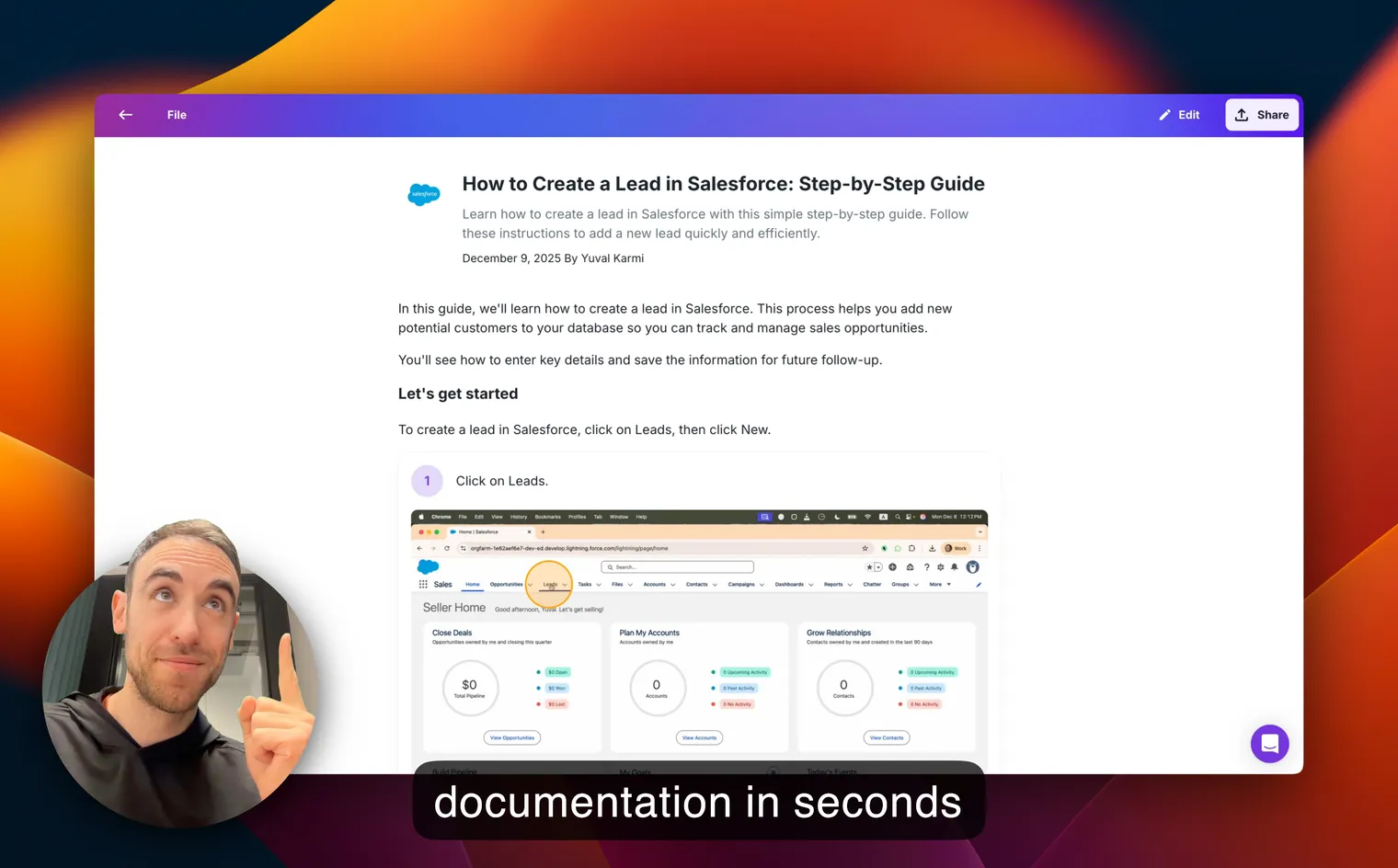
Glitter AI makes creating video SOPs surprisingly straightforward. Subject matter experts record their screen while performing a workflow, and Glitter automatically transforms that recording into a polished video SOP complete with step-by-step annotations, written instructions you can refine in the transcript editor, and visual highlights. No video editing experience needed.
This approach tackles the biggest obstacle to video SOP adoption for any team, from operations to marketing: the time and effort that producing quality instructional videos has traditionally required, and it leans into the same advantages that make visual SOPs outperform text-only documentation. Teams can capture procedures as they actually happen, keep SOPs up to date as processes evolve, and share interactive guides employees can follow in real-time, which is half the battle in creating SOPs employees actually follow.
Teach your co-workers or customers how to get stuff done – in seconds.

Frequently Asked Questions
What is a video SOP?
A video SOP is a standard operating procedure presented in video format. Instead of written instructions, it uses visual demonstrations to show employees exactly how to perform a task, combining screen recordings or live footage with narration and annotations.
What are the benefits of video SOPs over written SOPs?
Video SOPs tend to offer higher retention rates (research suggests around 95% vs 10% for text), eliminate ambiguity in instructions, engage employees more effectively, and work better for visual or hands-on tasks. They're also faster for employees to consume than reading through lengthy documents.
How long should a video SOP be?
Most effective video SOPs run between 60 and 180 seconds. If a procedure takes longer to demonstrate, consider breaking it into a series of shorter videos. This length keeps viewers engaged while covering the essential steps.
When should I use a video SOP instead of a written SOP?
Video SOPs work best for tasks with visual components like software workflows, equipment operation, hands-on procedures, and processes where seeing the action helps more than reading about it. Written SOPs may be better suited for regulatory documentation or detailed specifications.
How do I create a video SOP?
Record your screen or camera while performing the task, add narration to explain each step, include annotations or highlights for key actions, and keep things concise. Tools like Glitter AI can automate much of this by generating polished video SOPs from simple screen recordings.
Can video SOPs replace written documentation?
Video SOPs typically complement rather than replace written documentation. The video demonstrates how to perform tasks, while written SOPs serve as searchable references and compliance records. Many organizations find value in using both formats together.
What types of procedures work best as video SOPs?
Software tutorials, equipment operation, safety procedures, assembly tasks, customer service workflows, and any process with visual components tend to work well as video SOPs. Tasks where showing is more effective than telling are ideal candidates.
How do I update a video SOP when processes change?
When procedures change, you can re-record just the affected sections rather than rebuilding the entire video. Modern tools let you swap out specific segments, update annotations, or add supplementary clips to keep video SOPs current.
Are video SOPs effective for training new employees?
Yes, video SOPs work really well for training. New employees can watch demonstrations of exact procedures, pause to follow along, and rewatch sections as needed. This can reduce training time and helps ensure consistent instruction across all new hires.
What equipment do I need to create video SOPs?
For software-based video SOPs, you'll need screen recording software and a microphone for narration. For physical tasks, a camera or smartphone does the job. Tools like Glitter AI simplify everything by automatically generating video SOPs from basic recordings without requiring video editing skills.