
Read summarized version with
What Does SOP Stand For?
SOP stands for a standardized written procedure. In practical terms, it’s a written guide that walks employees through routine tasks so everyone does them the same way. You’ll find SOPs in pretty much every industry out there, whether that’s healthcare, manufacturing, software development, or retail.
Here’s where things can get a bit confusing: in military settings, SOP sometimes means “Standing Operating Procedure.” But if you’re in a business context, assume it means Standard Operating Procedure. Either way, the idea is the same: put instructions in writing so the task gets done correctly no matter who handles it or when.
Why do organizations bother with SOPs? Mainly because they turn the stuff that lives in people’s heads into something anyone can reference. Rather than tracking down a coworker to ask how something works, you can just pull up the SOP and follow the steps. Fewer mistakes, faster onboarding through documented HR standard operating procedures, and operations that don’t fall apart when key people take vacation or move on.
Key Characteristics of an SOP
- Standardized Format: SOPs typically share a consistent structure. You’ll usually see a title, purpose statement, scope, step-by-step instructions, and expected outcomes. This predictability makes them easier to follow.
- Clear Instructions: Each step should be written plainly enough that someone with basic training can complete the task without having to guess what comes next.
- Accountability: Most SOPs spell out who handles each step and who signs off on the finished work.
- Regular Updates: An SOP that sits unchanged for years probably doesn’t reflect how things actually get done. Good ones get reviewed periodically to account for process changes, new regulations, or better methods.
SOP Meaning Across Industries
Healthcare and Pharmaceuticals
In healthcare, SOP stands for the protocols that keep patients safe and help organizations stay compliant. Hospitals rely on a healthcare SOP for hand hygiene, medication administration, and dozens of other clinical procedures. Pharmaceutical companies lean on them heavily to satisfy FDA requirements.
Manufacturing and Operations
On factory floors, SOPs document how to operate equipment, run safety checks, and maintain quality control. The SOP meaning here really comes down to consistency: reducing defects and getting the same quality output whether it’s the day shift or night shift, this plant or that one.
SOP vs Policy vs Work Instruction
People mix these up all the time, so here’s a quick breakdown:
| Document Type | Purpose | Level of Detail |
|---|---|---|
| Policy | States what must be done and why | High-level rules and principles |
| SOP | Explains how to perform a process | Step-by-step procedures |
| Work Instruction | Details how to complete a specific task | Granular, task-specific guidance |
Think of it this way: policies set the rules, SOPs describe the process for following those rules, and task-level instructions zoom in on individual tasks within that process.
How Glitter AI Helps Create SOPs
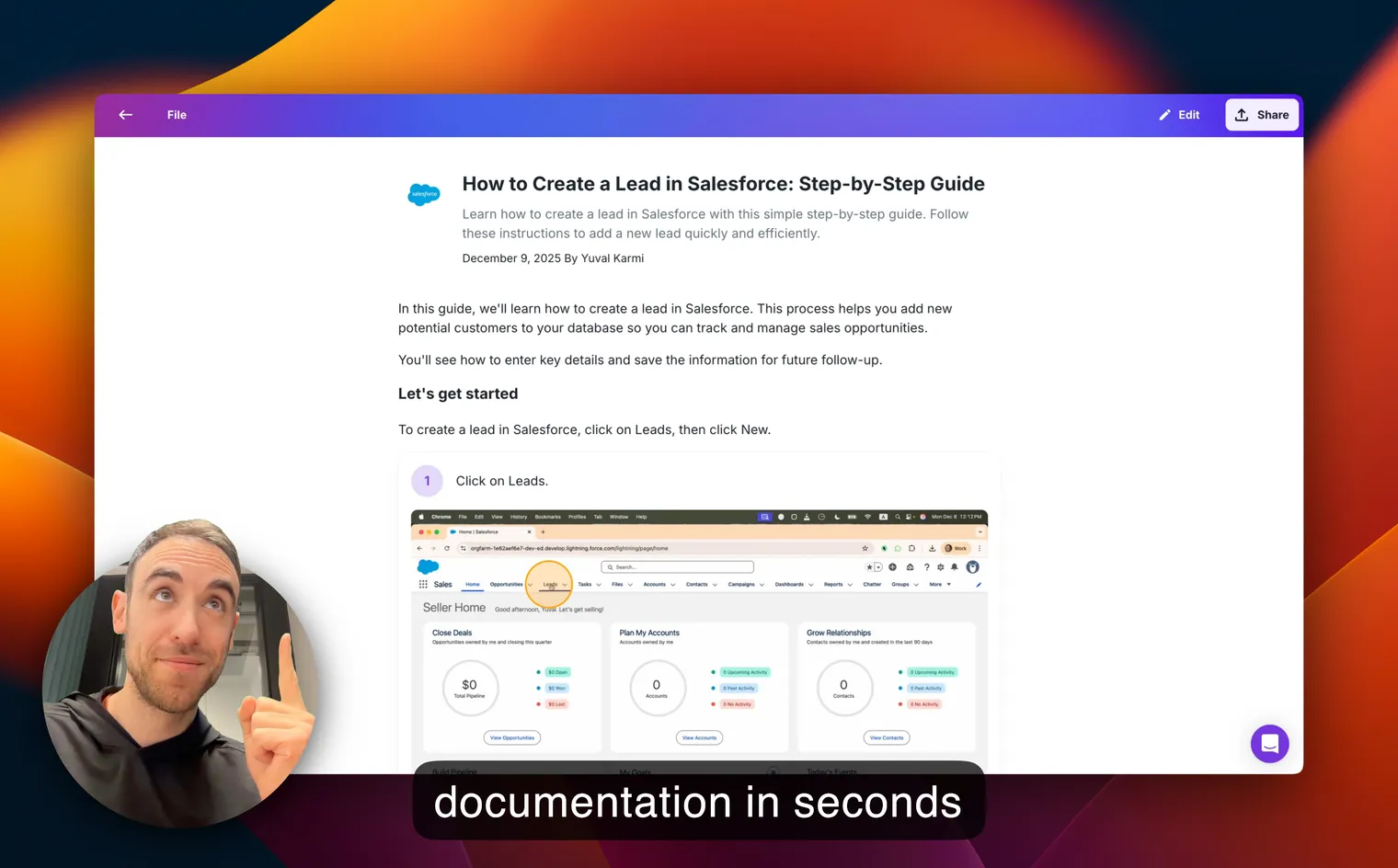
Knowing what SOP stands for is one thing. Actually creating useful SOPs? That’s where teams tend to struggle, and a primer on what an SOP is and why it matters, including when teams mean a standing operating procedure, is a good place to start. Glitter AI makes the process a lot simpler by letting subject matter experts record their screen while they run through a workflow, skipping most of the manual effort a step-by-step approach to writing an SOP usually involves. The platform then generates step-by-step documentation complete with screenshots and instructions.
What’s nice about this approach is that it captures how work actually happens, not how someone vaguely remembers it happening. Teams can put together professional SOPs in minutes rather than hours, covering everything from factory-floor production and warehouse fulfillment to front-of-house service, internal handoffs, and engineering runbooks. Bringing new staff up to speed is smoother too, since recorded workflows double as hands-on SOP training material. Sharing the finished guides across the organization is what makes creating your first SOP far less intimidating for beginners, and the result becomes a living resource that evolves with your business.
Teach your co-workers or customers how to get stuff done – in seconds.

Frequently Asked Questions
What does SOP stand for in business?
In business, SOP stands for Standard Operating Procedure. It refers to documented instructions that outline how employees should perform routine tasks to ensure consistency, quality, and compliance.
What is the full meaning of SOP?
SOP stands for Standard Operating Procedure. In military contexts, it may also stand for Standing Operating Procedure, but both terms describe the same concept of documented procedural instructions.
What is an SOP and why is it important?
An SOP is a Standard Operating Procedure that documents step-by-step instructions for completing tasks. SOPs are important because they reduce errors, ensure compliance, speed up training, and maintain consistency across teams.
What does SOP stand for in healthcare?
In healthcare, SOP stands for Standard Operating Procedure. Healthcare SOPs document protocols for patient care, medication administration, infection control, and regulatory compliance.
What does SOP stand for in manufacturing?
In manufacturing, SOP stands for Standard Operating Procedure. Manufacturing SOPs cover equipment operation, safety protocols, quality control checks, and production processes.
Is SOP the same as a policy?
No, SOP and policy are different. A policy states what must be done and why at a high level, while an SOP (Standard Operating Procedure) explains how to perform a process with step-by-step instructions.
What is the difference between SOP and work instruction?
An SOP outlines a complete process with general steps, while a work instruction provides detailed guidance for a specific task within that process. SOPs are broader; work instructions are more granular.
Who writes SOPs in an organization?
SOPs are typically written by subject matter experts, process owners, or technical writers who understand the process. They are often reviewed by management and compliance teams before approval.
How often should SOPs be updated?
Most organizations review and update SOPs every 6 to 12 months, or whenever processes change, regulations are updated, or issues are identified during audits or daily operations.
What does SOP format look like?
A typical SOP format includes a title, purpose statement, scope, step-by-step instructions, roles and responsibilities, safety considerations, and expected outcomes. Some SOPs also include flowcharts or checklists.