
Read summarized version with
Spekit has built a solid reputation as a sales enablement platform that serves up just-in-time training directly inside the tools your teams use every day. Salesforce users, in particular, tend to appreciate having instant access to processes, definitions, and documentation without bouncing between tabs. The company rolled out some notable AI features in 2025, including an “AI Sidekick” that answers questions on the fly and “Deal Rooms” for packaging content to share with buyers. Gartner also named them a “Visionary” in their November 2025 Magic Quadrant, which hints at where the company is heading with AI Agents and Revenue Intelligence.
That said, Spekit doesn’t work for every team. Costs can spiral as headcount grows (and there are reports of surprise integration fees showing up at renewal time). The platform was originally designed with Salesforce users in mind. Mobile support is pretty limited. Some users run into bugs and performance hiccups. And if your workflows involve desktop applications? You’re simply out of luck.
I’m Yuval, and I founded Glitter AI. Before I started building my own documentation tool, I spent quite a bit of time testing out digital adoption platforms and sales enablement tools. I’ve gotten a feel for where Spekit really delivers and where teams tend to hit roadblocks.
This guide covers the best Spekit alternatives for 2026, with an honest look at the pros and cons of each option. If you’re rethinking your training approach more broadly, our guide to employee training best practices is worth a read.
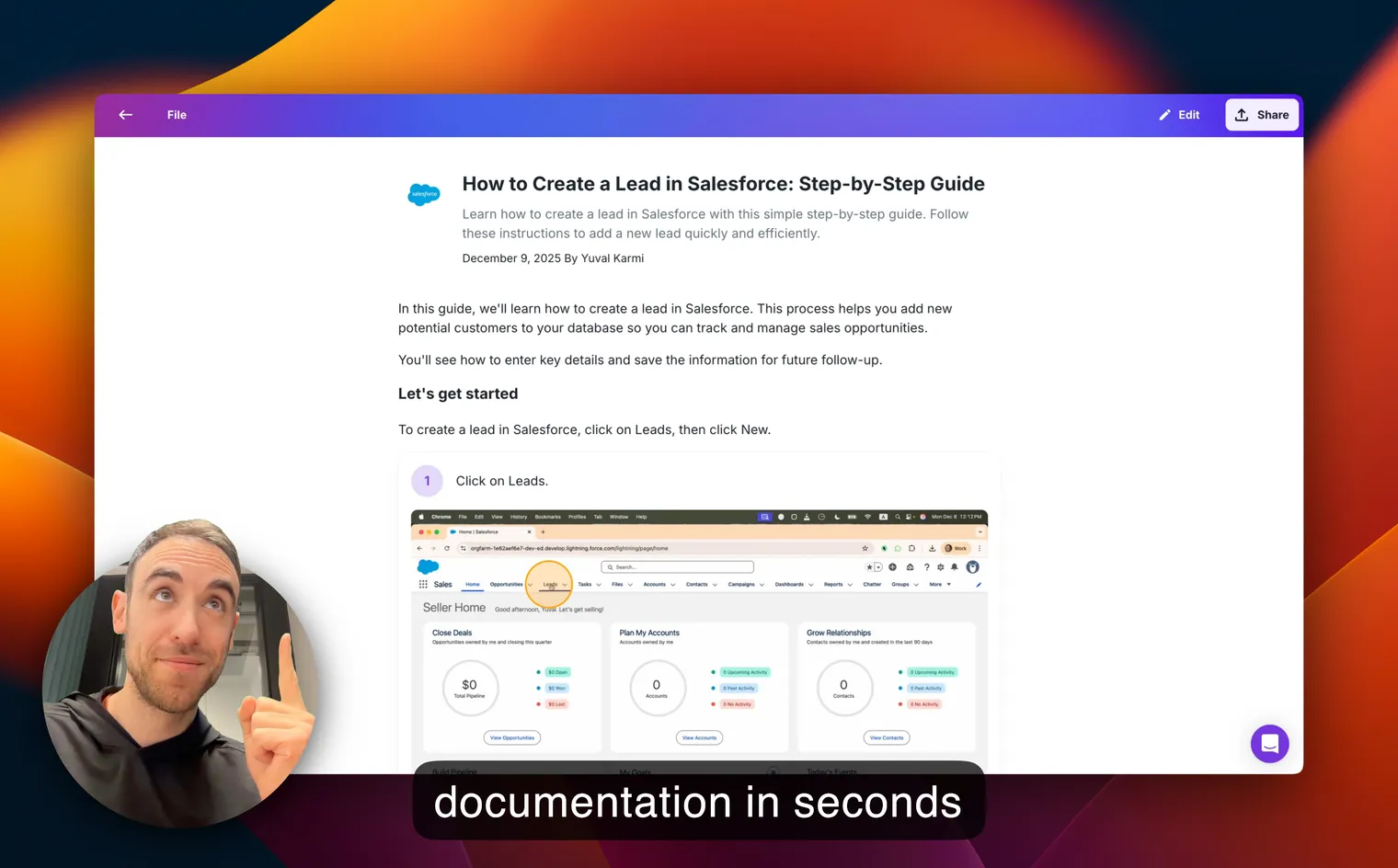
Teach your co-workers or customers how to get stuff done – in seconds.

Top Spekit Alternatives at a Glance
| Tool | Best For | Starting Price | Free Tier | Desktop Support |
|---|---|---|---|---|
| Glitter AI | Visual documentation & training | $20/mo | 10 guides | Yes |
| WalkMe | Enterprise digital transformation | ~$79,000/year avg | No | Yes |
| Pendo | Product analytics + adoption | ~$48,350/year | Yes (500 MAU) | No |
| Whatfix | Omnichannel employee onboarding | ~$6/user/mo | No | Yes |
| Scribe | Quick process documentation | $25/mo annual (solo) | Yes (web only) | Yes (Paid) |
| Guru | Knowledge management + search | $10/user/mo | Yes (3 users) | No |
Why Look for Spekit Alternatives?
Spekit is a capable platform, but teams often run into a few recurring issues:
High Cost for Growing Teams
Spekit uses a per-user-per-month pricing model. Basic plans start around $10/user, while Premium runs about $20/user. For a 100-person team, that means $1,000 to $2,000 per month, or $12,000 to $24,000 annually. One user put it this way: “Spekit is expensive for large teams or organizations planning to scale… its contract cost quickly because of out-of-control.” - Whatfix Competitor Analysis
On top of that, enterprise contracts may include platform fees starting around $1,000/month, which adds up fast.
If you’re expecting rapid growth, the numbers can become uncomfortable since costs scale with every new hire. Another frustration that comes up often: “Minimum seat requirement + unclear pricing - Makes it less accessible for smaller teams and forces demo-based pricing.” - Kendo.ai Review
Originally Built for Salesforce Only
Spekit was originally designed with only Salesforce users in mind. While it now supports other applications, the platform’s DNA is still very much tied to SFDC. If your focus is driving adoption for non-Salesforce tools, other DAPs may fit better.
No Desktop Application Support
Spekit is built for web-based applications and doesn’t work with desktop software. That’s a problem for organizations relying on on-premise tools. A lot of enterprises still depend on desktop apps for core workflows, so this gap matters.
Limited Customization Options
Users have noted that Spekit’s in-app content creation tools don’t offer much customization. Training materials can end up feeling disconnected from your brand. If you have strict brand guidelines, this might cause friction.
Basic Plans Lack Premium Support
Dedicated Customer Success Managers and advanced support only come with premium tiers (around $20/user/month). Teams on the Basic plan ($10/user/month) sometimes find it hard to get help when implementation issues pop up. As one review puts it: “The entry-level pricing tiers of Spekit lack advanced support. In order to have higher levels of customer support… organizations are forced into a premium pricing bracket.”
To be fair, when premium support is available, users tend to praise the Customer Success team as “stellar,” “responsive,” and genuinely helpful during rollouts.
Limited Scope Beyond Sales Workflows
Compared to WalkMe or Guru, Spekit is easier to set up and offers strong contextual guidance, but it’s fairly narrow outside sales-driven workflows. If you have highly customized environments or use cases beyond sales and customer success, it likely won’t be the best fit.
Not SCORM-Compliant
Spekit doesn’t support SCORM, which matters if you need to integrate with enterprise learning management systems or track training completion for compliance. One reviewer noted: “Spekit lacks video coaching, onboarding paths, and deep content analytics… Not a Full LMS.”
Weak Mobile Experience
One of the more persistent complaints: there’s no real mobile app. Spekit relies on a responsive web view that users describe as “difficult to navigate.” For field sales teams who need access while they’re out and about, this is a real problem. A Kendo.ai review summarized it well: “No dedicated mobile app - Call history and analytics are harder to access on mobile.”
Glitter AI handles this differently: you can capture processes on mobile via video-to-guide conversion and create documentation that works anywhere.
Search Functionality Issues
Spekit aims to reduce how often you need to search, but users report the search function itself “can be inefficient, sometimes requiring exact keywords to find information.” Others mention that “navigating through its interface can be more difficult due to the subpar layout and performance issues.”
Bugs and Performance Issues
Some users encounter bugs and performance problems. One example: “Adding a modal as the first step of a flow could cause a bug where the flow doesn’t appear to employees.” Reviews mention that “Spekit’s software has numerous bugs and performance issues that you’ll need to reckon with.” No tool is perfect, but this pattern does raise stability questions.
Minor UI Frustrations
There are occasional complaints about the Spekit window opening in awkward spots, or the hover feature getting stuck until you refresh the page. Some users find the “little pop-ups about new features” disruptive: “I don’t like the little pop-ups about new features and would prefer to just check a notification page for new Spekits.” These are small annoyances, but they add up.
Hidden Integration Fees
Long-time customers have reported that Spekit started charging separately for integrations at renewal time. One procurement note states: “Spekit is now charging separately for their integration fee’s which were previously offered at no cost.” If you’re already a customer, keep an eye on this during contract renewals.
TL;DR: Our Top Picks
Best for Visual Documentation: Glitter AI - Build training guides 11x faster with voice narration. A strong choice if documentation matters more than in-app overlays.
Best for Enterprise Scale: WalkMe - The industry heavyweight with FedRAMP certification and solid automation. Makes sense for large organizations tackling complex digital transformation.
Best for Product Analytics: Pendo - Pairs deep user behavior insights with adoption tools. A natural fit for product teams.
Best for Multi-Platform: Whatfix - Covers web, desktop, and mobile. Worth a look if your tech stack is varied.
Best for Click-Only Capture: Scribe - The fastest path to screenshot-based documentation. Generates generic step text from UI clicks; expect manual editing before the guides are useful.
Best for Knowledge Management: Guru - AI-powered search and knowledge verification. Great if you’re juggling a large knowledge base.
1. Glitter AI - Best for Visual Documentation & Training
Best for: Teams who need thorough training documentation with visual walkthroughs
I built Glitter AI to tackle a different problem than traditional digital adoption platforms: how do you create engaging training content without it taking forever?
How It Works
Spekit delivers bite-sized learning inside apps, but it won’t help you actually build the training materials themselves. Glitter fills that gap. You record any process while talking through what you’re doing. The tool captures screenshots and transcribes your voice into clear, step-by-step guides that sound natural.
This matters because most teams spend weeks creating content before they can even think about loading it into an enablement platform.
Key Features
- Desktop and browser capture (extension works with Chromium browsers)
- Voice narration in 99 languages with automatic transcription
- AI voiceover/narration (coming soon)
- Magic Article: AI turns guides into fuller documentation
- Video-to-guide conversion (repurpose existing training videos)
- Screenshot editing with blur and annotation tools (data redaction on paid plans)
- Multiple export formats (PDF, HTML, Markdown, PowerPoint)
- Embed guides anywhere without viewer fees
- 5-15 minute recording time (varies by plan)
Pricing
- Free: 10 guides total (not monthly), 5 min recording time, desktop + web capture, Magic Article
- Pro: $20/month ($16/month annual) - Unlimited guides, 15 min recording time
- Team: $75/month for 5 users ($15/user) - 30 min recording time, collaboration
- Enterprise: Starting at $8,000/year - SSO, audit trails, custom teams
Pros
- Much cheaper than Spekit ($20/mo vs $10-20/user)
- Output sounds natural because it uses your actual explanations
- Desktop support included in free tier (Spekit doesn’t do desktop at all)
- Probably the fastest content creation of any documentation tool
- Multi-language support (99 languages)
- No per-viewer fees, which keeps costs manageable as you scale
- Works with any application, not just web-based ones
Cons
- Not a traditional DAP, so no in-app overlays
- You have to narrate out loud (can feel a bit awkward in open offices)
- Newer product with a smaller template library
- Better suited for training materials than real-time just-in-time learning
- No Salesforce-specific integration like Spekit offers
- Browser extension only works with Chromium browsers (Chrome, Edge, Arc, Brave)
- Free plan caps you at 10 guides
When to Choose Glitter AI
Glitter makes sense if you need to create training documentation quickly, whether that’s for sales enablement, employee onboarding, or building out a knowledge base. It’s especially good for teams that want full written guides and SOPs rather than tooltips and pop-ups. For tips on structuring your training content effectively, see our guide on SOP training.
If your priority is in-app guidance that shows up contextually inside Salesforce or other web apps, a traditional DAP like Spekit may be the better call.
What Spekit Does Well
In fairness to Spekit, users consistently point to a few strengths:
- Ease of use: Compared to heavier DAPs like WalkMe, Spekit gets called “intuitive” and “easy to use” with faster implementation
- Salesforce integration: The native Salesforce integration is “seamless” and “extensive” - best-in-class for CRM enablement
- Just-in-time learning: The core idea of surfacing information directly in workflows gets a lot of praise
- AI Sidekick: The 2025 AI features have been well-received for cutting down time spent hunting for answers
- Customer support (on Premium): When you have access, the Customer Success team is consistently rated as excellent
2. WalkMe - Best for Enterprise Digital Transformation
Best for: Large enterprises dealing with complex digital transformation projects
How It Works
WalkMe essentially created the Digital Adoption Platform (DAP) category to help users navigate overwhelming digital environments. It combines AI, analytics, engagement, guidance, and automation in a transparent overlay that walks users through tasks inside any enterprise software.
Key Features
- FedRAMP Ready & StateRAMP participation (enterprise-grade security)
- Advanced workflow automation spanning multiple applications
- ActionBot for automating routine tasks
- Comprehensive analytics and insights
- Multi-platform support (web, desktop, mobile)
- Role-based guidance and personalization
- Integration with major enterprise software
- Employee-focused training options with task lists
Pricing
WalkMe pricing depends on which features you need. Vendr procurement data shows average annual contracts around $79,000, with deals ranging from roughly $9,000 for smaller deployments to over $400,000 for large enterprises. You’ll need to contact WalkMe for a custom quote.
Pros
- Only DAP with FedRAMP Ready status, which is significant for government contractors
- The most mature platform with a deep feature set
- Strong automation that cuts down on manual work
- Handles complex, multi-system workflows well
- More robust training and guidance capabilities than Pendo, including task lists
- Dedicated customer success support
- Large partner ecosystem for implementations
Cons
- Pricing puts it out of reach for most SMBs (average contract runs around $79,000/year)
- Installation can get complicated, especially for on-premise deployments
- Steep learning curve and tricky implementations: “The setup can take time, especially when building advanced flows. Some features have a bit of a learning curve.” - G2 Review
- May be overkill for simpler use cases like basic sales enablement
- Needs significant internal resources to manage: “It requires coding knowledge and a full-time owner to maintain content.” - Userpilot Analysis
- After the SAP acquisition, there’s concern it may deprioritize non-SAP applications
- Support can be slow: “Support team is extremely slow to respond with resolutions for critical bugs. When I try to contact my client success manager for help, I’m told that if she responds I’ll be billed for professional services hours.” - G2 Review
When to Choose WalkMe
WalkMe fits if you’re a large enterprise (1,000+ employees) tackling major digital transformation, particularly in government or highly regulated industries where FedRAMP compliance matters. The investment starts to make sense when training costs on complex software like SAP already run into millions.
Skip WalkMe if you’re a small or mid-sized sales team that mostly needs enablement content and quick access to documentation.
3. Pendo - Best for Product Analytics + Adoption
Best for: Product teams looking for deep analytics alongside adoption tools
How It Works
Spekit is focused on driving software adoption internally, while Pendo is really built for external user adoption challenges. It gives product managers the ability to create product tours, onboarding flows, and in-app messages that help users hit their “aha!” moment and stick around.
Key Features
- Comprehensive product analytics and user behavior tracking
- In-app guides, tooltips, and walkthroughs
- Pendo Listen for building roadmaps from user feedback
- AI-powered insights and recommendations
- NPS and user sentiment tracking
- Feature tagging and event tracking
- Roadmap planning tools
- Session replay
- G2 Review Rating of 4.5 out of 5 stars across 1,206 reviews
Pricing
There’s a free tier (up to 500 MAUs) covering basic product analytics and guides. Paid plans start around $12,000 annually, with median contracts hitting about $48,000/year. Enterprise deployments can run over $140,000/year. Contact Pendo for custom pricing based on your monthly active users.
Pros
- Best-in-class product analytics
- Strong implicit event tracking features
- AI woven into different modules
- Solid feedback and roadmap planning features
- Helpful for understanding the “why” behind user behavior
- Fits well with product-led growth strategies
- Good integrations with product management tools
Cons
- One of the pricier options in this comparison
- Analytics capabilities may be excessive if you just need training
- Wasn’t originally designed for internal IT software adoption the way Spekit was
- Analytics aren’t always actionable, landing somewhere between insights and guidance
- Setup and configuration can get complicated
- Steeper learning curve than simpler alternatives
- Pricing can be jarring: “Pendo quoted me 30k USD to use their webhook… I wanted to understand is it normal business process to push prospects away with quotations like these.” - Reddit User
- Some mobile SDK stability issues: “We’ve been facing crashes on our iOS app from the Pendo library” - Pendo Community Post
When to Choose Pendo
Pendo makes sense if you’re a SaaS company that needs both product analytics and user adoption tools. It works well when you want to deeply understand customer behavior before building out guidance flows.
Skip Pendo if your main focus is internal employee enablement (like Spekit) or if analytics aren’t central to what you’re trying to do.
4. Whatfix - Best for Omnichannel Employee Onboarding
Best for: Organizations that need support across web, desktop, and mobile
How It Works
Whatfix is an enterprise digital adoption platform covering web-based, mobile, and desktop implementations. It handles both internal employee use cases and external customer-facing ones. Where Spekit is web-only, Whatfix has a broader reach.
Key Features
- Multi-platform support (web, desktop, mobile)
- Interactive walkthroughs and on-screen guidance
- Task lists and workflow automation
- Self-help widget with searchable knowledge base
- Analytics for tracking user engagement and software usage
- Personalized onboarding experiences
- Multiple content formats (slideshows, videos, guides)
- More intuitive than WalkMe
Pricing
Whatfix starts around $6/user per month on Salesforce AppExchange. Full enterprise pricing is custom and not publicly listed. You’ll need to contact them for details.
Pros
- Supports desktop applications, unlike Spekit
- Getting started is as simple as adding a browser extension
- Automatically generates content in multiple formats
- Works for both employee and customer use cases
- Solid analytics capabilities
- More affordable than Spekit on Salesforce AppExchange
- Less complex to implement than WalkMe
- Interface is more intuitive than WalkMe
Cons
- Custom pricing makes costs hard to predict (median contract around $32,000/year)
- No DeepUI technology, so you’ll need manual updates when apps change
- Can struggle with workflows spanning multiple systems
- Tries to cover a lot of ground, which sometimes means trade-offs
- Not FedRAMP Ready like WalkMe
- Advanced features still require some technical know-how
- Flow maintenance can be frustrating: “We found that the flows were barely used and quite clunky. To me, the flows weren’t usable because they consistently timed out.” - Reddit User
- Learning curve can be steep: “The tool itself is challenging for the less technical people to use… as you need to know the CSS classes to show flows and steps.” - Gyde.ai Review
When to Choose Whatfix
Whatfix works well if you need a digital adoption platform that spans web, desktop, and mobile. It’s a good middle ground for teams that find Spekit too limiting (web-only) but don’t want to deal with WalkMe’s complexity and cost.
Skip Whatfix if you only need documentation creation or if FedRAMP compliance is a requirement.
5. Scribe - Best for Click-Only Capture
Best for: Teams that need fast, browser-based documentation and don’t mind editing generic step text
How It Works
Scribe automates the creation of step-by-step guides. Unlike Spekit, which focuses on in-app delivery, Scribe is about making the documentation in the first place. Install the browser extension, go through your task, and Scribe generates a shareable guide.
Key Features
- Instant process documentation with automatic screenshots
- Screenshot editor with annotations
- PDF converter and download for guides
- One-click sharing via link
- Embeddable guides for websites and knowledge bases
- Guide Me: Interactive, in-browser walkthroughs
- Sidekick: Find guides for any website you’re on
- AI-powered workflow improvement suggestions
- Combine multiple guides into larger documents
Pricing
- Basic (Free): Web apps only, basic features, Scribe branding
- Pro Personal: $23/month for solo users - desktop capture and exports
- Pro Team: $12/user/month (minimum 5 seats = $60/month) - team collaboration
- Enterprise: Custom pricing - advanced security, compliance, multi-team management
Pros
- Probably the fastest way to create simple screenshot-based guides
- More focused on employee training than in-app overlays
- Almost no learning curve, just click through your process
- Good for software tutorials and quick how-tos
- Free tier is actually useful for individuals
- Customers report saving 35 to 42 hours per person per month
- Works well for browser-based applications
Cons
- Not a digital adoption platform, so no in-app overlays like Spekit
- Free plan is web-only, no desktop capture
- Output can feel generic without context (no voice narration)
- Only supports English (Glitter supports 99 languages)
- Can’t edit the underlying screenshots, so you’ll need to re-record if the app changes
- Missing core DAP features like in-app guided experiences
- Less flexible when scaling across teams or regions
- Desktop app can be unreliable: “I have recorded and completed the same process 15 or so times now - 95% of them show up as a blank scribe with ‘no steps’” - Reddit User
- 5-seat minimum for team plans: “I called to get enterprise pricing and was given $39 per user plus an additional $1300 per month. So that is $18,000 per year for 5 users. I feel like this was a bait and switch.” - Reddit User
When to Choose Scribe
Scribe works if you need to create simple, screenshot-based guides quickly for browser applications - if generic auto-generated step text is sufficient for your team. It’s a reasonable fit for sales teams documenting processes, building internal wikis, or putting together help centers.
Skip Scribe if you need in-app contextual guidance like Spekit provides, or if you want documentation that captures the why behind each step rather than just the click.
6. Guru - Best for Knowledge Management + AI Search
Best for: Teams managing large knowledge bases who need AI-powered search
How It Works
Spekit delivers just-in-time learning through pop-ups and tooltips. Guru takes a different route by making all your company knowledge instantly searchable. It uses AI to surface relevant information based on what you’re working on, without needing you to manually set up content in each app.
Key Features
- AI-powered knowledge search across all tools
- Browser extension for accessing knowledge anywhere
- Knowledge verification workflow to keep content fresh
- Slack, Chrome, and app integrations
- Collections for organizing content by team or topic
- Suggested content based on context
- Analytics on knowledge usage and gaps
- Collaborative editing and version history
Pricing
- Free: Up to 3 users, basic features
- Starter: $10/user/month - unlimited users, integrations
- Builder: $20/user/month - advanced permissions, analytics
- Expert: Custom pricing - SSO, advanced security
Pros
- Lower starting price than Spekit ($10/user vs $10-20/user)
- AI-powered search finds answers without manual tagging
- Verification workflow keeps content accurate
- Works across all applications via browser extension
- Good for teams with knowledge scattered across different tools
- Free tier for small teams
- Less intrusive than pop-up based training
Cons
- Focuses on knowledge management, not guided walkthroughs
- No in-app onboarding flows or interactive training
- Teams need to maintain the knowledge base
- Less visual than documentation tools like Glitter
- Not specifically built for sales enablement like Spekit
- You may need another tool for structured onboarding
When to Choose Guru
Guru fits well if your main challenge is knowledge scattered across tools (Confluence, Google Docs, Slack) and you need AI-powered search to surface what’s relevant. It works for teams that have decent documentation but struggle to actually find it when they need it.
Skip Guru if you need structured onboarding flows, visual training guides, or in-app walkthroughs like Spekit offers.
Feature Comparison Table
| Feature | Spekit | Glitter AI | WalkMe | Pendo | Whatfix | Scribe | Guru |
|---|---|---|---|---|---|---|---|
| In-App Overlays | Yes | No | Yes | Yes | Yes | No | No |
| Desktop Support | No | Yes (Chromium) | Yes | No | Yes | Yes (Paid) | No |
| Mobile App | Weak (web only) | No | Yes | No | Yes | No | No |
| Voice Narration | No | Yes | No | No | No | No | No |
| AI Features | AI Sidekick (2025) | Magic Article | Limited | AI-powered | Limited | AI suggestions | AI-powered search |
| Knowledge Search | Basic | No | No | No | No | No | Advanced |
| Product Analytics | Basic | No | Advanced | Advanced | Good | No | Basic |
| Salesforce Focus | Yes | No | No | No | Yes | No | No |
| Multi-Language | Limited | 99 | Limited | Limited | Limited | English only | Limited |
| Free Tier | No | 10 guides | No | Yes (500 MAU) | No | Yes (web only) | Yes (3 users) |
| SOC 2 Compliant | Yes | Yes | Yes | Yes | Yes | Yes | Yes |
| SCORM Support | No | No | Yes | No | Yes | No | No |
| Best For | Sales Enablement | Documentation | Enterprise DAP | Product Analytics | Multi-Platform | Quick Guides | Knowledge Mgmt |
Pricing Comparison
| Tool | Starting Price | Notes | Best Value For |
|---|---|---|---|
| Whatfix | ~$6/user/mo (SFDC) | Custom enterprise pricing | Multi-platform needs at scale |
| Guru | $10/user/mo | Free for up to 3 users | Teams needing knowledge management |
| Spekit | ~$10/user/mo (Basic) | $20/user (Premium), minimum seats apply | Salesforce-heavy sales teams |
| Glitter AI | Free, then $20/mo | 10 guides on free plan | Solo creators and small teams |
| Scribe | Free, then $25/mo annual | Free plan web only, paid includes desktop | Individuals creating quick guides |
| Pendo | ~$12,000-$48,350/year | Based on MAUs, custom pricing | SaaS product teams |
| WalkMe | ~$79,000/year avg | Enterprise only, custom pricing | Large enterprise transformations |
How to Choose the Right Spekit Alternative
1. Define Your Primary Use Case
Sales Enablement with Salesforce: Spekit was built for this. That said, Guru is worth a look for knowledge search, and Glitter is solid for creating comprehensive guides.
Employee Training Across Multiple Apps: WalkMe or Whatfix are worth considering. They handle cross-application workflows well.
Creating Training Documentation: Glitter AI or Scribe. These tools focus on building the actual content rather than just displaying it.
Product Onboarding: Pendo or Whatfix tend to work well for customer-facing use cases.
2. Consider Your Tech Stack
Salesforce-Heavy Environment: Spekit is probably still the best fit, though Whatfix integrates well at a lower price point.
Desktop Applications: Glitter AI (free tier), WalkMe, or Whatfix. Spekit doesn’t do desktop.
Web Applications Only: Any of these options work, but Spekit, Pendo, Scribe, and Guru are optimized for web.
Multiple Platforms (Web + Desktop + Mobile): Whatfix or WalkMe are your best options.
3. Evaluate Your Budget
Under $100/month: Glitter AI ($20/mo) is probably your most cost-effective bet for documentation.
$100-$500/month: Guru ($10/user for 10-50 users) or Scribe Team ($65/mo annual for 5 users).
$500-$2,000/month: Spekit ($10-20/user for 50-100 users) or Whatfix.
$2,000+/month: WalkMe or Pendo for enterprise-grade features.
4. Technical Resources Available
Limited Technical Team: Stick with no-code options like Glitter AI, Scribe, or Guru.
Strong Technical Team: WalkMe and Whatfix can take advantage of technical resources for more complex implementations.
No IT Support: Spekit, Glitter, or Scribe are designed for non-technical users.
5. Scale and Growth Plans
1-10 Users: Glitter AI, Scribe, or Guru keep costs reasonable.
10-50 Users: Guru or Spekit with predictable per-user pricing.
50-200 Users: Spekit, Whatfix, or Glitter (no per-viewer fees) depending on what you need.
200+ Users: WalkMe, Whatfix, or Pendo are built for enterprise scale.
6. Content Creation vs Delivery
Need to Create Content: Glitter AI or Scribe are focused on fast content creation.
Need to Deliver Existing Content: Spekit, WalkMe, and Guru do well at delivering content contextually.
Need Both: You might combine Glitter (creation) with Spekit or Guru (delivery).
Frequently Asked Questions
What is the cheapest Spekit alternative?
Glitter AI has the lowest starting price at $20/month for unlimited documentation creation. Guru is the cheapest per-user option at $10/user/month for knowledge management. If you’re looking for a digital adoption platform similar to Spekit, Whatfix starts around $6/user on Salesforce AppExchange.
Which Spekit alternative works with desktop applications?
Glitter AI (including the free tier), WalkMe, and Whatfix all support desktop applications. Spekit, Pendo, and Guru are web-only. If your team relies on desktop software, this distinction matters a lot.
Do I need a digital adoption platform or documentation tool?
It really depends on what you’re trying to solve:
- Choose a DAP (Spekit, WalkMe, Whatfix) if you need interactive, in-app guidance overlaid on your software
- Choose a documentation tool (Glitter AI, Scribe) if you need to create training materials, SOPs, or knowledge base articles
- Choose knowledge management (Guru) if you need AI-powered search across existing content
A lot of teams end up using multiple tools: one to create content, another to deliver it.
Which alternative is best for non-Salesforce users?
If Salesforce isn’t central to your workflow, take a look at Glitter AI for documentation, Whatfix for multi-platform digital adoption, or Guru for knowledge management. Spekit was built specifically for Salesforce and may not be the best match for other setups.
Can I export documentation from these tools?
Full Export Capabilities: Glitter AI (PDF, HTML, Markdown, PowerPoint), Scribe (PDF, HTML)
Limited Export: Spekit, WalkMe, Pendo, and Whatfix are focused on in-app delivery rather than exportable content
Knowledge Export: Guru lets you export content, but it’s mainly designed for in-app search
Which alternative has the best search functionality?
Guru has the most advanced AI-powered search across all company knowledge. Spekit has basic search within its own knowledge base. For finding information in documentation, Glitter’s export to searchable formats (HTML, Markdown) works well when plugged into existing knowledge bases.
Is there a free alternative to Spekit?
Yes:
- Glitter AI: 10 guides free with full desktop and web capture
- Scribe: Free tier for basic web-based guides
- Guru: Free for up to 3 users
Spekit doesn’t have a free tier, just demos and trials.
Which alternative is easiest to implement?
Glitter AI, Scribe, and Guru have the fastest time-to-value. Implementation typically takes hours, not weeks. Spekit is moderately easy to implement but does require some setup time. Enterprise DAPs like WalkMe and Whatfix often take weeks or months for a full rollout.
Is my data safe with Spekit?
Spekit is SOC 2 Type II compliant and supports SSO integrations. That said, their privacy policy notes they may use “anonymized, de-identified, or aggregate data… for analytics and business insights without restriction.” They also list OpenAI and Anthropic as subprocessors for their AI features. If you’re concerned about AI training on customer data, ask for their specific “Integrations and Model Development Policy” before signing.
Can these tools replace Spekit for sales enablement?
For Salesforce-specific enablement: Spekit is still purpose-built for this.
For documentation-based enablement: Glitter AI creates more comprehensive training materials faster.
For knowledge search: Guru provides better AI-powered search across all your tools.
For multi-platform: Whatfix supports more applications than Spekit.
The right replacement depends on which Spekit features you actually rely on most.
Where is Spekit headed strategically?
Spekit is shifting toward AI Agents and Revenue Intelligence. After earning a “Visionary” spot in Gartner’s Magic Quadrant in November 2025, their roadmap emphasizes “interoperability, smarter orchestration, and deeply contextual AI.” They’ve integrated with Gong for revenue insights and are moving past simple tooltips toward becoming more of a proactive “Sales Assistant.” If you’re evaluating Spekit for the long term, keep in mind that it’s evolving from a documentation platform into an AI-powered revenue enablement suite.
Which alternative offers the best ROI?
For small teams (1-20 users), Glitter AI tends to offer the best ROI at $20/month flat rate with no per-user fees. For teams already invested in Salesforce, Spekit’s tight integration may still justify the cost. For enterprises with complex needs, WalkMe’s automation can deliver solid ROI despite higher costs by cutting manual training overhead.
Our Top Pick for 2026
After looking at all these spekit alternatives, here’s my honest take:
For Creating Sales Enablement Content: Glitter AI
If what you really need is to create comprehensive training materials, sales playbooks, and process documentation, Glitter AI offers a strong mix of speed, quality, and affordability. Voice narration lets you produce natural-sounding guides 11x faster than writing manually, and you avoid per-user pricing as your team grows.
For Salesforce-Focused Just-in-Time Learning: Spekit
If Salesforce is central to your workflow and you need contextual pop-ups right inside the CRM, Spekit is still the best purpose-built solution. The Salesforce integration is hard to beat. Notable customers include Southwest Airlines, Invesco, Zoom, Ibotta, and Camping World.
For Knowledge Search Across Tools: Guru
If your main struggle is scattered knowledge across multiple tools, Guru’s AI-powered search tends to deliver better ROI than Spekit’s in-app delivery approach.
For Enterprise Multi-Platform Needs: Whatfix
If you need to support desktop applications and multiple platforms (which Spekit can’t do), Whatfix offers a good balance of features and implementation ease.
Next Steps
The best way to decide is to actually try the tools:
- Start with Glitter AI’s free tier (10 guides) to create your initial training documentation
- Trial Guru (free for 3 users) to test AI-powered knowledge search
- Request a Spekit demo if you’re Salesforce-heavy and need in-app guidance
- Contact Whatfix or WalkMe if you’re evaluating enterprise solutions with desktop support
Keep in mind: the best tool isn’t necessarily the one with the most features. It’s the one your team will actually use. Spekit does well at Salesforce enablement, but if you need documentation creation, desktop support, or multi-language capabilities, alternatives may serve you better.