
Read summarized version with
Whatfix has built a solid reputation as a digital adoption platform for enterprise employee training. It works well for teams onboarding users to complex software like CRMs and ERPs through interactive walkthroughs and in-app guidance. The company keeps the product moving, with major updates rolling out twice each quarter, and they recently secured $125 million in Series E funding (September 2024).
But it’s not the right choice for everyone. Pricing gets complicated quickly (baseline starts around $24K/year but can balloon to $40K-$70K+ for bigger deployments). Implementation takes longer than most teams expect (usually 1-3 months). And sometimes you just need something different.
I’m Yuval, founder of Glitter AI. Before building my own tool, I spent years testing digital adoption platforms and process documentation solutions. I’ve seen where Whatfix works well and where teams hit roadblocks.
This guide covers the best Whatfix alternatives for 2026, with honest assessments of what each tool does right and where it comes up short. If you’re weighing adjacent tools, our roundup of the top Spekit alternatives covers the same DAP territory and digs into Chameleon too. You might also find our WalkMe vs Pendo comparison useful.
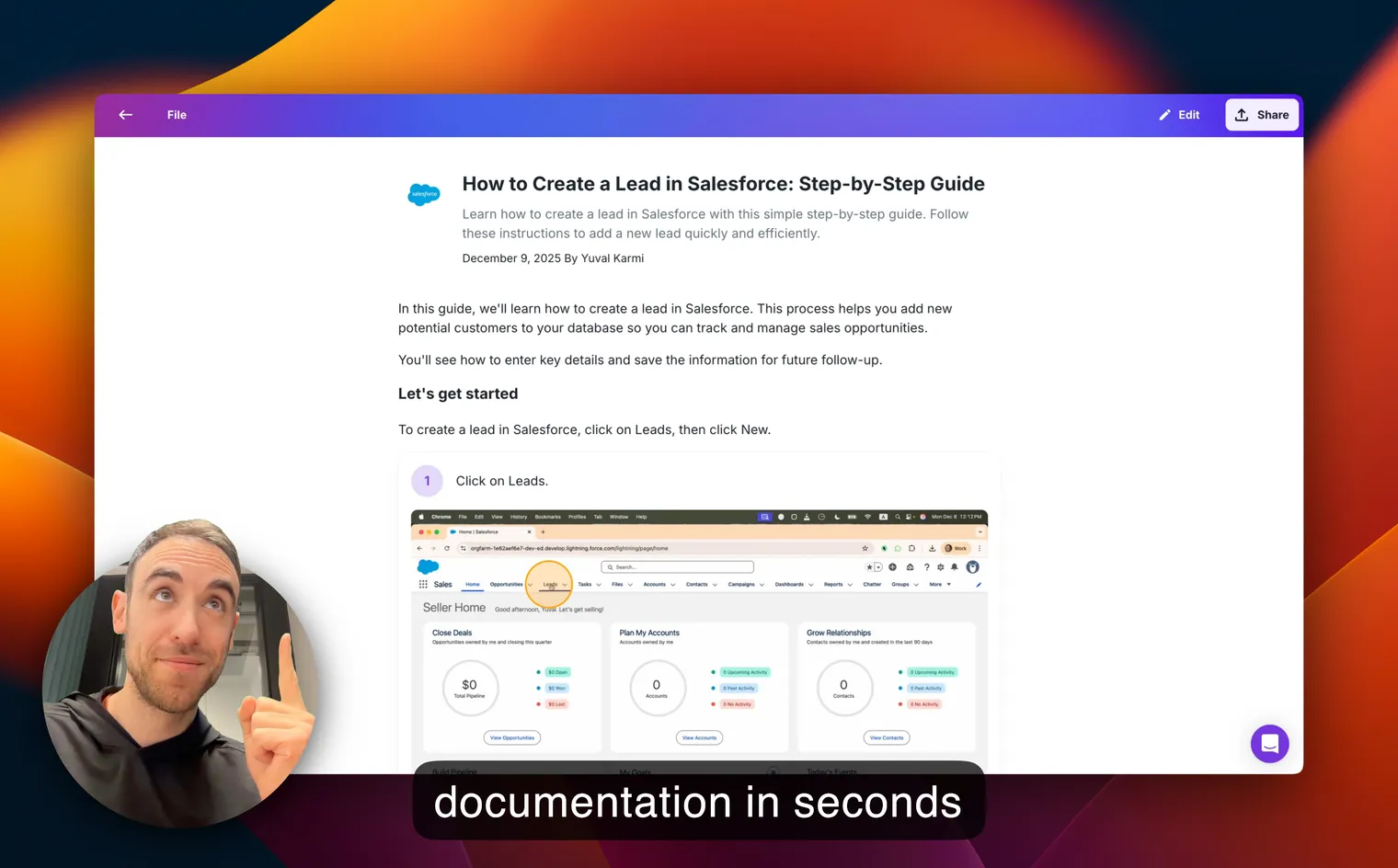
Teach your co-workers or customers how to get stuff done – in seconds.

Top Whatfix Alternatives at a Glance
| Tool | Best For | Starting Price | Free Tier | FedRAMP Ready |
|---|---|---|---|---|
| Glitter AI | Documentation & training guides | $16-20/mo | 10 guides | No |
| WalkMe | Enterprise digital transformation | ~$79,000/year avg | No | Yes |
| Pendo | Product analytics + adoption | ~$48,350/year | 500 MAU | No |
| Userpilot | SaaS user onboarding | $299/mo | No | No |
| UserGuiding | Budget-friendly onboarding | $89/mo | 14-day trial | No |
| Apty | Enterprise employee training | Custom | No | No |
| Scribe | Quick process documentation | $35/mo monthly (solo) | Yes (limited) | No |
| Whatfix | Enterprise DAP (baseline) | ~$24,000/year | Demo only | No |
Why Look for Whatfix Alternatives?
Whatfix works well for plenty of teams, but a few issues keep surfacing:
Complex and Expensive Pricing
Whatfix’s pricing structure is notoriously hard to understand. You pay per application and per user type, with key features locked behind higher tiers. Entry-level contracts typically start around $24,000 annually, but larger deployments with multiple applications and enterprise user counts often land between $40,000 and $70,000+ per year.
It doesn’t stop there. Product Analytics and Mirror (simulation) are frequently sold as separate add-ons, so the base DAP price doesn’t include deeper analytical capabilities. Mobile support for iOS/Android is another separate pricing component. And implementation fees for professional services usually come on top of the license cost.
Costs grow as you add applications and as your monthly active users increase. Teams often end up spending more than they budgeted after adding custom dashboards, extra training content, or integrations they hadn’t fully vetted upfront.
Steep Learning Curve and Complex Implementation
Customers frequently mention that getting Whatfix running takes more effort than they anticipated. The sheer number of features stretches out implementation timelines considerably. Implementation cycles often run 1-3 months with significant IT involvement.
While marketed as no-code, advanced styling and robust element selection often require CSS/JavaScript knowledge. As one user put it: “The tool itself is challenging for the less technical people to use… as you need to know the CSS classes to show flows and steps.” Certain customizations need CSS knowledge, which creates a hurdle for non-technical teams expecting a truly visual editor.
Manual Maintenance Burden
Whatfix lacks DeepUI technology, so you’re responsible for manual updates whenever your applications change. If you’re managing multiple apps or working with software that updates frequently, this becomes a real time drain.
Users report that flows break easily when the underlying application’s UI changes, requiring frequent content rebuilding. As one frustrated customer noted: “It does the job but maintaining it is kind of a pain to me… UI changes in the host application frequently require rebuilding in-app flows from scratch.”
There are also reports of editor bugs, with some users experiencing issues where “The Add Step button is not working; Unable to save Smart Tips/Flow/Beacon” due to Chrome cookie settings conflicting with the Whatfix Studio extension.
Limited Cross-Application Workflows
Whatfix doesn’t handle cross-system workflows particularly well. In enterprise settings where processes naturally span multiple applications, this limitation can be a dealbreaker.
Security and Compliance Considerations
Whatfix does provide enterprise-grade security certifications including ISO 27001:2013, SOC 2 Type 2, GDPR, CCPA, and HIPAA compliance. But without FedRAMP Ready status, Whatfix creates compliance challenges for government contractors and federal agencies where FedRAMP is mandatory.
Data centers are located in USA (Virginia, Arizona) and Europe (Zurich, Dublin) for data residency needs. SSO via SAML 2.0 is supported but often gated to Enterprise plans.
On the plus side, Whatfix explicitly states they do NOT use customer data to train their AI models. Your proprietary documents, application data, and user interactions are used solely to generate runtime responses and are not used for AI training or fine-tuning.
Jack of All Trades, Master of None
By trying to cover every possible use case, Whatfix ends up being a “jack of all trades, master of none.” Users describe the product analytics as fairly basic, lacking real depth. The Task List widget only shows the first 20 tasks, which can limit guidance available to users.
Advanced analytics like funnels and cohorts are often gated in a separate “Product Analytics” module rather than being fully integrated into the base DAP price.
That said, Whatfix does provide broad platform support including Web, Desktop, and Native Mobile (iOS, Android, and Flutter as of late 2025). Recent updates include GenAI Training Simulation (Mirror 2.0) and Software Release Management features to control update rollout. They’ve also added auto-translation capabilities in Premium/Enterprise tiers and SCORM/xAPI export for LMS integration.
Salesforce Integration Issues
Whatfix has specific technical hurdles with Salesforce Lightning. Content Security Policy (CSP) errors prevent Preview Mode from working properly. The official workaround? “Use a browser extension to disable the CSP policy.” That’s a hacky solution that raises security concerns rather than providing a seamless native integration for admins.
Limited Training Depth
Digital adoption platforms like Whatfix fall short when it comes to sustained skill development. They’re missing comprehensive training paths, certification options, role-based progression, and the analytics you’d need for audits or compliance. Users often skip overlays, and product teams struggle to confirm whether people are actually learning rather than just clicking through.
What Users Are Saying
Real customer complaints paint a clear picture:
“We found that the flows were barely used and quite clunky. To me, the flows weren’t usable because they consistently timed out…”
- Reddit User, Instructional Design Community (Nov 2023)
“Multiple users report a ‘steep learning curve.’ … Such complexity means product teams must involve their engineering team for initial setup and advanced customization, inevitably causing delays.”
- Product Manager Review (Oct 2025)
“It does the job but maintaining it is kind of a pain to me. Has anyone here tried Pendo, Whatfix, Appcues… that felt easier to use?”
- Reddit User, Software Community (Oct 2025)
“Whatfix charges per application, per user type, and locks essential features behind higher tiers… That $23K baseline assumes minimal applications… Add customer-facing apps or advanced analytics, and you’ll quickly reach the upper range.”
- Pricing Analysis (Aug 2025)
On the bright side, users consistently praise Whatfix’s Customer Success team as “attentive,” “proactive,” and “responsive.” Though some note this support is necessary precisely because of the product’s technical complexity. Enterprise customers get dedicated Customer Success Managers, and the team offers 24/7 support via email, chat, and phone for critical issues.
TL;DR: Our Top Picks
Best for Documentation & Training: Glitter AI - Create training guides 11x faster with voice narration. Best fit for teams focused on documentation over in-app overlays.
Best for Enterprise Scale: WalkMe - The industry leader with FedRAMP certification and solid automation. Built for large organizations tackling complex digital transformation.
Best for Product Analytics: Pendo - Started as an analytics platform, and it shows. Strong at understanding user behavior before building adoption flows.
Best for SaaS Teams: Userpilot - A modern, code-free platform designed for product-led growth at a fraction of enterprise DAP costs.
Best Budget Option: UserGuiding - A capable feature set at $89/month makes it realistic for startups and small teams.
1. Glitter AI - Best for Documentation & Training Guides
Best for: Teams who need training documentation, not just in-app overlays
I built Glitter AI because I noticed a gap that traditional digital adoption platforms weren’t filling. The challenge of actually creating training content in the first place.
How It Works
Whatfix and similar DAPs help users navigate software, but they don’t help you produce the underlying training materials. Glitter addresses this by letting you record any process while narrating what you’re doing. It captures screenshots and transcribes your voice into clear, natural step-by-step guides.
This matters because most teams spend weeks building content before they can even load it into a DAP.
Key Features
- Desktop and browser capture (both included in free tier, Chromium browsers only)
- Voice narration captures the “why” behind each step, not just clicks
- Creates both written guide AND video tutorial from a single recording
- 99 language support with automatic AI transcription
- Magic Article: AI transforms guides into full documentation
- Video-to-guide conversion (repurpose existing training videos)
- Screenshot editing with blur and annotation tools (sensitive data redaction on paid plans)
- Multiple export formats (PDF, HTML, Markdown, PowerPoint)
- Embed guides anywhere with no viewer fees for embedded content
- 5-15 minute recording time (depending on plan)
Pricing
- Free: 10 guides total (not monthly), 5 min recording time, desktop + web capture, Magic Article
- Pro: $20/month ($16/month annual) - Unlimited guides, 15 min recording time, sensitive data redaction
- Team: $75/month for 5 users ($15/user) - 30 min recording time, collaboration
- Enterprise: Starts at $8,000/year - SSO, audit trails, custom teams
Pros
- Voice capture means guides explain the “why,” not just generic “click here” instructions
- Creates video AND written documentation from one recording (competitors only do one or the other)
- 31% cheaper than Scribe for individual plans, dramatically cheaper than Whatfix
- Desktop support in free tier (most competitors gate this behind paid plans)
- Fastest content creation: 11x faster than traditional documentation methods
- Multi-language support (99 languages vs Scribe’s English-only)
- No viewer fees for embedded guides keeps costs manageable as teams grow
- Never uses your data to train AI models
Cons
- Not a traditional DAP: focuses on creating documentation, not in-app overlays
- Requires narrating out loud (can feel awkward in open offices)
- Newer product with a growing feature set
- Better suited for training materials than software onboarding flows
- Chromium browsers only (no Safari or Firefox support)
- Sensitive data redaction requires paid plan
When to Choose Glitter AI
Pick Glitter if you need to create training documentation quickly, whether that’s for employee onboarding, process documentation, or knowledge bases. It works well for teams that want written guides and SOPs rather than interactive in-app walkthroughs.
If in-app overlays and real-time user guidance are what you need, look at a traditional DAP instead.
2. WalkMe - Best for Enterprise Digital Transformation
Best for: Large enterprises with complex digital transformation initiatives
How It Works
WalkMe targets enterprise employee training on software, often used to onboard internal users to third-party systems like Salesforce, SAP, or Workday. The ActionBot automates routine tasks, workflow automation handles multi-step processes, and analytics track how employees interact with workflows.
Key Features
- FedRAMP Ready & StateRAMP participation (enterprise-grade security)
- Advanced workflow automation across multiple applications
- ActionBot for automating routine tasks
- Comprehensive analytics and insights
- Multi-platform support (web, desktop, mobile)
- Role-based guidance and personalization
- Integration with major enterprise software
Pricing
Annual costs average around $79,000, with some enterprise deployments reaching $200,000-$400,000+ per year. Contact WalkMe for custom enterprise pricing.
Pros
- Only DAP with FedRAMP Ready status, critical for government contractors
- Most mature platform with an extensive feature set
- Strong automation capabilities that cut down on manual work
- Handles complex, multi-system workflows well
- Dedicated customer success support
- Large partner ecosystem for implementations
Cons
- Complex installation process, particularly for on-premise deployments
- Steep learning curve and challenging implementations
- High pricing puts it beyond reach for most SMBs
- Can be overkill for simpler use cases
- Requires significant internal resources to manage
- Often requires a dedicated full-time employee to maintain content
As one G2 reviewer noted: “It requires coding knowledge and a full-time owner to maintain content… Support is very unresponsive and unhelpful.”
When to Choose WalkMe
WalkMe makes sense if you’re a large enterprise (1,000+ employees) in the middle of major digital transformation, especially in government or highly regulated industries where FedRAMP compliance is non-negotiable. The investment makes sense when training costs on complex software like SAP run into millions.
Skip WalkMe if you’re a small to mid-sized business or need something you can get running quickly without extensive configuration.
3. Pendo - Best for Product Analytics + Adoption
Best for: Product teams who want deep analytics alongside adoption tools
How It Works
Pendo takes a different approach by making product analytics the foundation, then layering adoption tools on top. It tracks how people use your app, provides detailed analytics, and surfaces where they get frustrated or drop off.
Key Features
- Comprehensive product analytics and user behavior tracking
- In-app guides, tooltips, and walkthroughs
- Pendo Listen for building product roadmaps from user feedback
- AI-powered insights and recommendations
- NPS and user sentiment tracking
- Feature tagging and event tracking
- Roadmap planning tools
- Session replay
Pricing
Pendo offers a free tier limited to 500 MAU. For paid plans, Pendo costs $48,350/year on average, which is steep for growing startups. Contact Pendo for custom pricing based on MAUs.
Pros
- Best-in-class product analytics platform
- Free tier available (up to 500 MAU)
- AI integration across different modules
- Strong feedback and roadmap planning features
- Good at uncovering the “why” behind user behavior
- Works well for product-led growth strategies
- Solid integrations with product management tools
Cons
- Most expensive option in this comparison
- Analytics capabilities may be more than you need if training is your main goal
- Primarily built for SaaS product teams, not internal employee training
- Setup and configuration can get complex
- Higher learning curve than simpler alternatives
- CRM integrations have 24-hour data sync delays
As one Reddit user put it: “Pendo quoted me 30k USD to use their webhook… I wanted to understand is it normal business process to push prospects away with quotations like these.”
When to Choose Pendo
Pendo fits well if you’re a SaaS company that needs both product analytics and user adoption tools. It’s particularly useful when you want to understand user behavior deeply before creating guidance flows.
Skip Pendo if you’re mainly focused on employee training (not customer onboarding) or if analytics aren’t a priority for you.
4. Userpilot - Best for SaaS User Onboarding
Best for: Product-led SaaS companies focused on user activation and expansion
How It Works
Userpilot is a modern, code-free digital adoption platform built for growth. It lets non-technical teams create contextual onboarding experiences and drive user activation, feature adoption, and expansion revenue at a fraction of traditional DAP costs.
Key Features
- No-code builder for onboarding flows and tooltips
- Comprehensive analytics and user insights
- Onboarding checklists and progress tracking
- A/B testing for onboarding experiments
- User segmentation and targeting
- Mobile push notifications
- In-app surveys and NPS tracking
- Resource centers and self-help widgets
Pricing
Userpilot starts at $299/month to manage 2,000 active users per month. That’s significantly more affordable than Whatfix, WalkMe, or Pendo while offering comparable features.
Pros
- Lowest operational cost among competitors with similar capabilities
- Built specifically for user onboarding and product adoption
- Code-free implementation makes it accessible for non-technical teams
- Strong A/B testing for optimization
- Good balance of analytics and engagement features
- Responsive customer support
Cons
- Primarily built for customer onboarding in SaaS products, not employee training
- Doesn’t support desktop applications (web-based only)
- Smaller market presence than WalkMe or Whatfix
- Limited workflow automation compared to enterprise DAPs
- Not ideal for complex, multi-system enterprise environments
- Editor can freeze or crash during complex flow creation
As one SoftwareFinder reviewer noted: “Sometimes when creating flows on Userpilot the interface hangs and takes time to load, which also eats up RAM.”
When to Choose Userpilot
Userpilot works well if you’re a SaaS company building product-led growth motions. It’s good for teams that need to activate users quickly and drive feature adoption without spending a fortune.
Skip Userpilot if you need employee training for desktop applications or require FedRAMP compliance.
5. UserGuiding - Best Budget-Friendly Option
Best for: Startups and small teams needing basic onboarding at low cost
How It Works
UserGuiding is a no-code digital adoption solution that works with a Chrome extension. You can create various user onboarding elements as an overlay on your product without writing code. It’s straightforward to set up and popular with startups, though it’s not built for enterprise scale.
Key Features
- Product tours and interactive walkthroughs
- Onboarding checklists and progress tracking
- Hotspots and tooltips for feature highlights
- Resource centers with self-help content
- NPS surveys and in-app announcements
- Simple analytics and engagement tracking
- Segment-based targeting
- Integrations with HubSpot, Google Analytics, Intercom, Mixpanel, Slack
Pricing
Pricing starts at $89/month with a 14-day free trial available with annual billing. That makes it one of the more affordable options in this category.
Pros
- Most affordable option among digital adoption platforms
- Intuitive, no-code setup that’s easy to get started with
- Strong 4.7/5 rating on G2 for ease of use
- Good for startups working with limited budgets
- Fast implementation compared to enterprise solutions
- Sufficient for basic onboarding needs
Cons
- Lacks enterprise governance and automation
- Limited advanced functionalities like in-depth analytics and complex workflow automation
- More suited to small and mid-sized companies
- May struggle with larger enterprise requirements
- Smaller feature set compared to premium alternatives
- Limited customization options
When to Choose UserGuiding
UserGuiding is a solid choice if you’re a startup or small team that needs basic product tours and onboarding flows without spending thousands per month. It works well for straightforward onboarding needs.
Skip UserGuiding if you’re a large enterprise, need advanced analytics, or require complex workflow automation.
6. Apty - Best for Enterprise Employee Training
Best for: Large enterprises focused on ROI from employee training
How It Works
Apty focuses on what enterprise teams care about most: ROI. It’s built for complex environments where internal tools like Salesforce, SAP, or Workday need high adoption, clean data, and compliant processes. What sets it apart is how deeply AI is woven into everything from proactive guidance to automation and analytics.
Key Features
- Guide users across web and desktop apps with contextual tooltips, workflows, and validations
- No-code editor with visual step-by-step configuration
- Apty Monitor and Pulse for analyzing friction, drop-offs, and usage trends
- Apty OneX: GenAI-powered assistant for dynamic, real-time support
- Export workflows as PDFs, PowerPoints, or MP4 files
- SOC 2, Type 2 certification for data security
- Strong analytics to identify where employees get stuck
- Contextual in-app help resources
Pricing
Apty uses custom pricing aimed at large-scale deployments. Expect to invest both budget and internal resources to get full value from it.
Pros
- Strong focus on measurable ROI and business outcomes
- Advanced GenAI assistant (Apty OneX) for intelligent support
- SOC 2 Type 2 certified with enterprise-grade security
- Good for compliance and audit requirements
- Can export content in multiple formats
- Strong 4.7/5 rating on G2 (146 reviews)
- Detailed analytics for optimization
Cons
- Setup can be complex and requires significant configuration
- Requires hands-on support rather than self-service
- Primarily an employee onboarding tool, missing features for customer onboarding
- Custom pricing means costs aren’t transparent upfront
- Geared toward organizations with internal IT resources
- Overkill for small teams or simple use cases
When to Choose Apty
Apty makes sense if you’re a large enterprise that needs to train employees on complex internal systems and requires detailed analytics to demonstrate ROI. It’s a good fit when compliance, security, and governance are priorities.
Skip Apty if you’re a small team, need customer-facing onboarding, or want something you can implement quickly without extensive IT involvement.
7. Scribe - Best for Quick Process Documentation
Best for: Teams needing fast, screenshot-based documentation
How It Works
Scribe (ScribeHow) is an automated process and guide builder that simplifies creating step-by-step guides. The AI feature converts tasks into detailed instructions with annotated screenshots. Install the browser extension, complete your task, and Scribe generates a shareable guide.
Key Features
- Instant process documentation with automatic screenshots
- Screenshot editor with annotations
- PDF converter and download for guides
- One-click sharing via link
- Embeddable guides for websites and knowledge bases
- Guide Me: Interactive, in-browser walkthroughs
- Sidekick: Discover guides for any website you’re on
- AI-powered workflow improvement suggestions
- Combine multiple guides into comprehensive documents
Pricing
- Basic (Free): Web apps only, basic features, Scribe branding
- Pro Personal: $25/mo annual or $35/mo monthly for solo users with desktop capture and exports
- Pro Team: $13/user/month annual or $17/user/month monthly (minimum 5 seats = $65/mo annual floor, $85/mo monthly floor) for team collaboration
- Enterprise: Custom pricing with advanced security, compliance, multi-team management
Note: Reddit users report enterprise quotes of $18,000 annually for small teams, so get pricing in writing.
Pros
- Fastest way to create simple screenshot-based guides
- No learning curve, just click through your process
- Good for software tutorials and quick how-tos
- Free tier is genuinely useful for individuals
- Automatic screenshot capture saves time
- Works well for browser-based applications
Cons
- Not a digital adoption platform, no in-app overlays or user guidance
- Free plan only works with web apps, lacks desktop capture
- Generic output without context (no voice narration)
- Only supports English (Glitter supports 99 languages)
- Can’t edit underlying screenshots, must re-record if app changes
- User minimums and pricing complexity for team plans
- Less flexible when scaling across teams or regions
- Desktop app has reliability issues
As one Reddit user complained: “I have recorded and completed the same process 15 or so times now - 95% of them show up as a blank scribe with ‘no steps’, even though it showed all steps before hitting complete.”
When to Choose Scribe
Scribe works well if you need to create simple, screenshot-based guides quickly for browser applications. It’s useful for internal wikis, help centers, or one-off training materials.
Skip Scribe if you need in-app user guidance, desktop application support in the free tier, or documentation that sounds natural rather than generic.
Feature Comparison Table
| Feature | Glitter AI | WalkMe | Pendo | Userpilot | UserGuiding | Apty | Scribe |
|---|---|---|---|---|---|---|---|
| In-App Overlays | No | Yes | Yes | Yes | Yes | Yes | No |
| Desktop Capture | Yes (Free) | Yes | No | No | No | Yes | Yes (Paid) |
| Voice Narration | Yes | No | No | No | No | No | No |
| Video + Written Output | Yes | No | No | No | No | Partial | No |
| Product Analytics | No | Advanced | Advanced | Good | Basic | Good | No |
| Workflow Automation | No | Advanced | Basic | Basic | Basic | Advanced | No |
| Multi-Language | 99 | Limited | Limited | Limited | Limited | Limited | English only |
| Free Tier | 10 guides | No | 500 MAU | No | Trial only | No | Yes (limited) |
| FedRAMP Ready | No | Yes | No | No | No | No | No |
| No AI Training on Data | Yes | Yes | Yes | Unknown | Unknown | Unknown | Yes |
| Best For | Documentation | Enterprise DAP | Product Analytics | SaaS Onboarding | Budget DAP | Enterprise Training | Quick Guides |
Pricing Comparison
| Tool | Starting Price | Best Value For |
|---|---|---|
| Glitter AI | Free (10 guides), then $16-20/mo | Solo creators and small teams needing documentation |
| UserGuiding | $89/mo | Startups with basic onboarding needs |
| Scribe Team | $65/mo annual (5 users) | Teams needing screenshot-based guides |
| Userpilot | $299/mo (2K MAU) | SaaS companies with moderate user bases |
| Whatfix | ~$24,000/year (up to $70K+) | Mid-size to large enterprises with multiple applications |
| WalkMe | ~$79,000/year avg | Large enterprises with complex transformation |
| Pendo | ~$48,350/year | Product teams prioritizing analytics |
| Apty | Custom (enterprise) | Large organizations focused on training ROI |
How to Choose the Right Whatfix Alternative
1. Define Your Primary Use Case
Employee Training on Internal Tools: Consider WalkMe, Whatfix, or Apty. These platforms work well for helping employees adopt complex enterprise software.
Customer Onboarding in Your SaaS Product: Look at Userpilot, Pendo, or UserGuiding. They’re built for product-led growth and user activation.
Creating Training Documentation: Choose Glitter AI or Scribe. These tools help you create the actual content rather than just display it.
2. Consider Your Budget
Under $100/month: Glitter AI ($16-20/mo) or UserGuiding ($89/mo) are your best bets.
$100-$500/month: Scribe Team ($85/mo monthly for 5 users) or Userpilot ($299/mo) offer good value.
$2,000-$6,000/month: You’re in the range where enterprise DAPs start making sense if you need their advanced features. Whatfix baseline starts around $24K/year.
$6,000+/month: WalkMe, Pendo, and high-end Whatfix deployments ($40K-$70K+/year) are viable if their ROI justifies the investment.
3. Evaluate Technical Resources
Limited Technical Team: Choose no-code solutions like Glitter AI, Scribe, UserGuiding, or Userpilot.
Strong Technical Team: WalkMe, Whatfix, and Apty can leverage your technical resources for complex implementations.
4. Platform Support Needed
Desktop Applications: Glitter AI (free tier), WalkMe, Whatfix, Apty, or Scribe (paid tier).
Web Applications Only: Any option works, but Userpilot, Pendo, and UserGuiding are optimized for web.
Mobile Applications: WalkMe and Whatfix offer the best mobile support.
5. Compliance Requirements
FedRAMP Required: WalkMe is your only option in this list.
SOC 2 Required: Apty, WalkMe, and most enterprise DAPs provide this.
No Specific Requirements: All options are viable based on other criteria.
6. Scale and Growth Plans
1-10 Users: Glitter AI, Scribe, or UserGuiding keep costs manageable.
10-100 Users: Userpilot or UserGuiding offer good scaling economics.
100-1,000 Users: Consider Whatfix or WalkMe if you need enterprise features.
1,000+ Users: WalkMe, Whatfix, Pendo, or Apty are built for this scale.
Frequently Asked Questions
What is the cheapest Whatfix alternative?
Glitter AI offers the lowest starting price at $16-20/month for unlimited documentation creation with its Pro plan. The free tier includes 10 guides total. UserGuiding is the cheapest traditional digital adoption platform at $89/month.
Which Whatfix alternative is best for small businesses?
UserGuiding ($89/mo) is the best digital adoption platform for small businesses. If you need documentation rather than in-app overlays, Glitter AI ($16-20/mo) provides better value.
Do I need a digital adoption platform or documentation tool?
It depends on your use case:
- Choose a DAP (WalkMe, Userpilot, UserGuiding) if you need interactive, in-app guidance that overlays on your software
- Choose a documentation tool (Glitter AI, Scribe) if you need to create training materials, SOPs, or knowledge base articles
Many teams need both: documentation tools to create the content, then DAPs to deliver it contextually within applications.
Which alternative has the best analytics?
Pendo has the most comprehensive product analytics, followed by WalkMe. That said, this is overkill if you just need basic user tracking. Userpilot offers good analytics for SaaS teams at a lower price point.
Can I use Whatfix alternatives for customer onboarding?
Yes, but choose the right tool:
- Customer Onboarding: Userpilot, Pendo, UserGuiding
- Employee Training: WalkMe, Whatfix, Apty
- Both: Some platforms support both, but usually excel at one
Glitter AI and Scribe work for creating training content whether it’s for customers or employees.
Which Whatfix alternative is easiest to implement?
Glitter AI and UserGuiding have the fastest time-to-value, with implementation measured in hours rather than weeks. Scribe is also quick to set up. Enterprise DAPs like WalkMe and Whatfix typically require weeks or months for full implementation.
Do any alternatives offer free plans?
Yes:
- Glitter AI: 10 guides total (not monthly) free with full desktop and web capture
- Pendo: Free tier for up to 500 MAU
- Scribe: Free tier for basic web-based guides
- UserGuiding: 14-day free trial (not a perpetual free plan)
Most enterprise DAPs (WalkMe, Whatfix, Apty) don’t offer free tiers, only demos and trials.
Which alternative is best for multi-language support?
Glitter AI supports 99 languages with automatic transcription and translation. That’s significantly more than Whatfix or other alternatives, which typically support 10-20 languages at most. Scribe only supports English.
Can I export documentation from these tools?
Full Export Capabilities: Glitter AI (PDF, HTML, Markdown, PowerPoint), Apty (PDF, PowerPoint, MP4), Scribe (PDF, HTML)
Limited Export: Most DAPs focus on in-app delivery rather than exportable content
Is there a one-time purchase option instead of subscription?
Most digital adoption platforms and documentation tools use subscription pricing. For documentation specifically, you might find one-time purchase options in specialized screen recording tools, but they typically lack the AI features and ongoing updates of subscription products.
Our Top Pick for 2026
After looking at all these alternatives, here’s my honest recommendation:
For Creating Training Documentation: Glitter AI
If your main need is creating training materials, SOPs, and knowledge base content, Glitter AI offers the best combination of speed, quality, and affordability. Unlike competitors that just capture clicks, Glitter captures the “why” behind each step through voice narration, creating guides that actually explain things. You get both video AND written documentation from one recording. The $16-20/month price point is accessible for teams of any size, and the 10-guide free tier lets you test it without commitment.
For Enterprise Digital Adoption: WalkMe
If you’re a large enterprise (1,000+ employees) needing in-app guidance for complex software adoption, WalkMe remains the gold standard. The FedRAMP certification and mature feature set justify the premium pricing for organizations at scale.
For SaaS Product Onboarding: Userpilot
If you’re a SaaS company building product-led growth motions, Userpilot provides the best balance of features and affordability. You get comprehensive onboarding tools and analytics at a fraction of WalkMe or Pendo’s cost.
For Budget-Conscious Teams: UserGuiding
If you’re a startup or small team that needs basic digital adoption features without breaking the bank, UserGuiding at $89/month is hard to beat.
Next Steps
The best way to decide is to actually try the tools:
- Start with Glitter AI’s free tier (10 guides) to create your initial training documentation
- Trial UserGuiding or Userpilot (14-day free trial) to test in-app guidance
- Request demos from WalkMe, Pendo, or Apty if you’re evaluating enterprise solutions
The best tool isn’t necessarily the one with the most features. It’s the one your team will actually use. Start simple, measure results, and scale up if needed. For more on building an effective training program around whatever tool you choose, see our guide to employee training best practices.