
Read summarized version with
Employee training is evolving quickly.
Remember when “training” meant eight hours in a conference room watching PowerPoint slides? Those days are fading. Today’s employees expect something better, and frankly, the old methods weren’t working that well to begin with.
I’m Yuval, founder of Glitter AI. I’ve trained teams, sat through my share of both great and terrible training sessions, and spent a lot of time thinking about what actually helps people learn, especially when it comes to new hire training where first impressions stick. Here are the employee training best practices I’ve seen work in 2026.
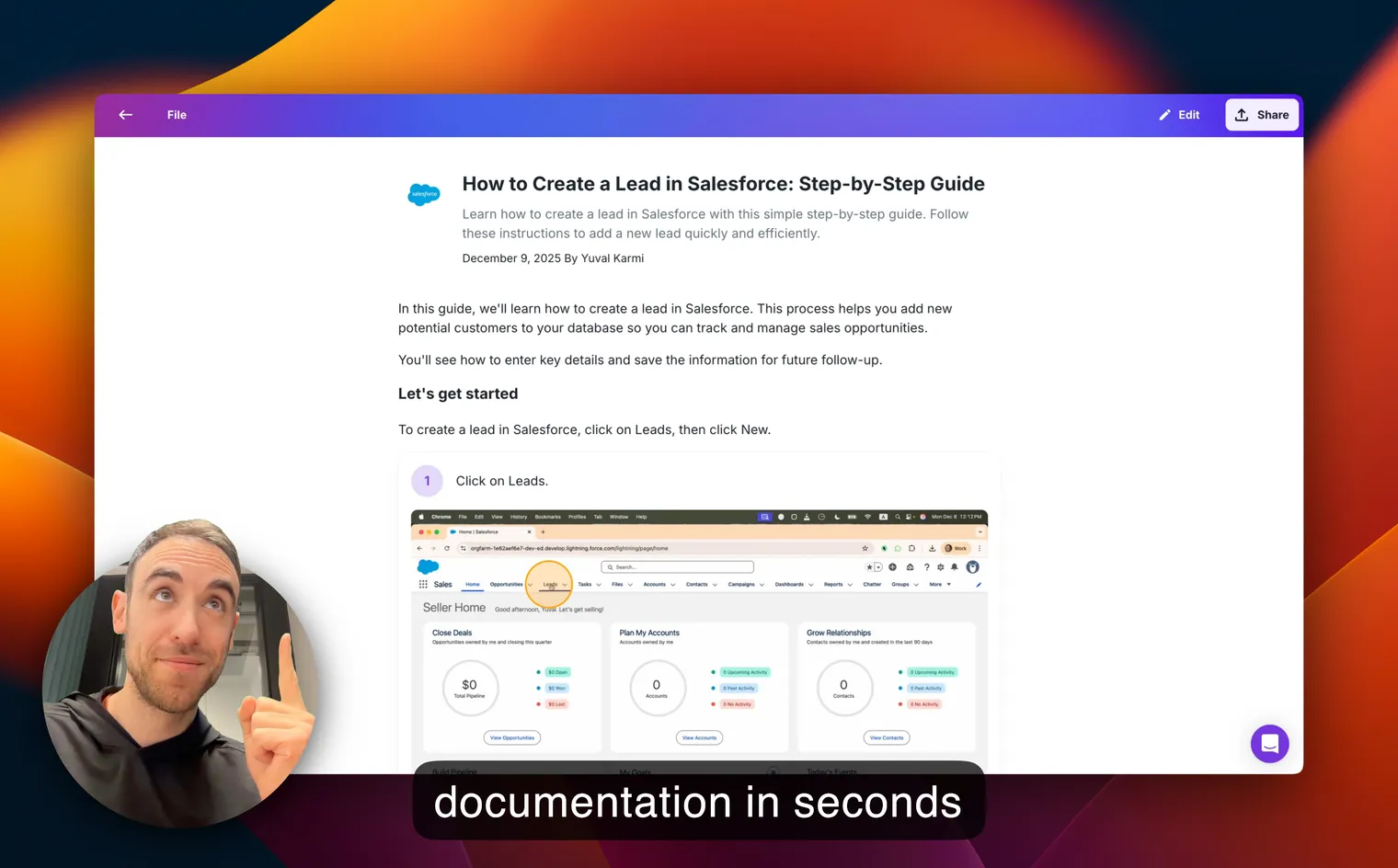
Teach your co-workers or customers how to get stuff done – in seconds.

Why Traditional Training Falls Short
Before diving into what works, it helps to understand why the old approach misses the mark.
Information Overload
Packing everything into one long session feels like you’re being efficient. You’re not. Our brains can only take in so much at once. Research suggests people forget around 70% of new information within a day if there’s no reinforcement.
Passive Learning
Listening isn’t the same as learning. Real understanding comes from doing things, applying knowledge, getting feedback. Most traditional training asks too little of learners.
One-Size-Fits-All
Everyone brings different experience, different learning preferences, different needs. Training that ignores these differences simply doesn’t work as well as something more targeted.
Disconnected from Work
When training happens in isolation, weeks before someone actually does the job, it rarely sticks. Learning works best when it’s tied to real application.
No Follow-Up
Even great training fades without reinforcement. A single event, no matter how well designed, isn’t enough on its own.
Best Practice 1: Make Learning Bite-Sized
Smaller chunks work better. This approach goes by “microlearning,” and there’s good reason it’s become popular.
Why Microlearning Works
- It respects how attention actually functions (most of us can’t focus intensely for hours)
- Short sessions fit into packed schedules
- Spaced repetition leads to better retention
- Learners feel less overwhelmed
How to Implement It
Break content into modules. Rather than one two-hour training session, try eight 15-minute pieces.
Keep each piece focused. Cover one concept per session, not three.
Make content available on demand. Let people learn when it works for them.
Build quick reference materials. Short guides people can pull up right when they need them.
Tools like Glitter AI simplify this process, making a microlearning approach practical. You can put together focused, task-specific guides in just a few minutes.
Best Practice 2: Show, Don’t Just Tell
Visual learning isn’t simply a personal preference. It’s how most human brains process information best.
The Power of Visual Content
- People remember about 65% of visual information, compared to roughly 10% of text alone
- Visuals get processed far faster than written words
- Screenshots and demos cut down on confusion
- Video is increasingly what workers prefer, especially younger ones
Practical Applications
Add screenshots to every guide. When documenting software as work instructions, each step should include a visual.
Record your screen for demos. Seeing something done beats reading about it.
Use diagrams for tricky concepts. Visual representations clarify how pieces connect.
Create video walkthroughs. For complex processes, a well-made video tutorial often beats text. I’ve written more about this in my training video tips.
The challenge is creating visual content without it eating up your day, especially when you are not a professional writer. That’s part of why I built Glitter AI. It captures screenshots automatically as you work, turning what experts know into explicit knowledge instead of something locked in their heads, so visual documentation happens without extra effort. That is the foundation of solid training documentation and the kind of documentation culture that keeps a team learning.
Best Practice 3: Make Training Active, Not Passive
Engagement matters more than almost anything else. Content that people just watch or read doesn’t stick.
Ways to Increase Engagement
Give practice exercises. After someone learns something, have them use that knowledge.
Include quizzes and knowledge checks. Low-stakes assessments help people see if they really understand.
Connect to real work. Link training to actual tasks as quickly as you can.
Allow discussion and Q&A. People learn by asking questions and talking through ideas.
Build in hands-on time. Watch, then try, then do it independently.
The 70-20-10 Model
This framework is useful when designing training:
- 70% of learning happens through doing the job
- 20% comes from learning with others (mentors, colleagues)
- 10% comes from formal training
This doesn’t mean formal training is unimportant. It just needs to support and set up the other 90%.
Best Practice 4: Meet People Where They Are
Not everyone shows up with the same background.
Assess Before You Train
Before giving everyone identical training, figure out what they already know. An experienced hire needs a different approach than someone fresh out of school.
Ways to assess:
- Skills tests
- Intake conversations
- Self-reported expertise levels
- Review of past experience
Offer Multiple Paths
Let people skip material they’ve mastered. Create different tracks for different roles. Allow self-pacing when possible.
Provide Multiple Formats
Some people absorb video better. Others prefer to read. Some need to try things themselves. When you can, give options.
Teach your co-workers or customers how to get stuff done – in seconds.
Best Practice 5: Learn in the Flow of Work
The best learning tends to happen exactly when someone needs it, not weeks earlier.
Just-in-Time Learning
Rather than front-loading everything, provide resources people can access in the moment:
- A searchable knowledge base
- Quick reference guides
- In-app help and tooltips
- Documentation that’s easy to find
Embed Learning in Tools
Training works better when it lives close to where the work happens. If you’re teaching someone about your CRM, the training should connect directly to that CRM.
Create a Culture of Asking
People should feel okay asking questions. “We covered that three weeks ago” isn’t a helpful answer when someone’s stuck.
Best Practice 6: Assign Mentors and Buddies
Learning from people beats learning from materials alone.
The Value of Human Connection
- Mentors offer context that no document can capture
- Questions get answered faster
- New hires feel more welcome and supported
- Knowledge that’s hard to write down gets passed along
How to Do Mentorship Right
Pick willing mentors. Forcing people into the role backfires.
Make time for it. Mentoring takes real time. Don’t treat it as extra on top of a full workload.
Set clear expectations. Both mentor and mentee should know what they’re signing up for.
Follow up. Check that the relationship is actually working for both people.
Best Practice 7: Give Frequent Feedback
Training without feedback leaves people guessing.
Why Feedback Matters
People need answers to:
- Am I doing this correctly?
- What should I work on?
- What am I already doing well?
Without feedback, people keep making the same mistakes and build habits that are hard to break.
How to Provide Training Feedback
Be specific. “Nice work” doesn’t tell anyone anything. “Your customer email was clear and hit the right tone” actually helps.
Be timely. Feedback right after a task lands better than feedback two weeks later.
Be balanced. Cover both what’s working and what needs work.
Be developmental. Focus on helping them get better, not just grading performance.
Best Practice 8: Measure and Improve
If you’re not measuring, you’re mostly guessing.
What to Track
Completion metrics:
- Who finished the training?
- How long did it take?
- Which content got used most?
Learning metrics:
- Quiz and assessment scores
- Skills people can demonstrate
- Certifications earned
Performance metrics:
- How quickly do people become productive?
- Error rates
- Manager observations
- Quality of work
Experience metrics:
- How satisfied are people with training?
- What do new hires say?
- What’s missing?
Continuous Improvement
Put data and feedback to use:
- Spot content that isn’t landing
- Find gaps in what you’re teaching
- Test different delivery methods
- Refine the program over time
Best Practice 9: Keep Content Current
Out-of-date training might be worse than no training at all. It teaches the wrong things.
Maintenance is Critical
I wrote a full guide on keeping documentation updated, but the essentials are:
- Give each piece of training content an owner
- Put reviews on the calendar
- Build updates into your process when things change
- Make updating simple
The Easier It Is to Update, the More It Happens
One reason I created Glitter AI is that traditional documentation is a pain to create and even harder to update. When re-recording a process takes five minutes, updates actually get done.
Best Practice 10: Lead by Example
Culture shapes training more than any program can.
Leaders Must Model Learning
If leadership treats training as a box to check, so will everyone else. When leaders invest in their own growth, make time for learning, and support their team’s development, it sends a message that learning actually matters here.
Remove Barriers
- Give people dedicated time for training
- Don’t make them feel bad for learning during work hours
- Recognize development, not just output
- Invest in learning resources
Frequently Asked Questions
What are the best practices for employee training in 2026?
The most effective training practices focus on microlearning (breaking content into 15-minute focused sessions), visual learning (since people remember 65% of visual information versus 10% of text alone), and active engagement rather than passive listening. The 70-20-10 model guides modern training: 70% of learning happens through doing the actual job, 20% through mentoring and peer learning, and only 10% through formal training sessions. Just-in-time learning, where employees access resources exactly when needed, has also proven far more effective than front-loading information weeks before it's used.
How do you measure training effectiveness?
Effective measurement requires tracking four key areas: completion metrics (who finished training and how long it took), learning metrics (assessment scores and demonstrated skills), performance metrics (time to productivity, error rates, and work quality), and experience metrics (employee satisfaction and feedback). Research shows people forget around 70% of new information within a day without reinforcement, so measuring retention over time is critical. The clearest picture comes from analyzing patterns across all these metrics together rather than relying on any single indicator.
What is the 70-20-10 model of employee training?
The 70-20-10 model is a framework showing how people actually learn at work: 70% of learning happens through hands-on job experience, 20% comes from learning with others like mentors and colleagues, and 10% comes from formal training programs. This doesn't diminish the importance of structured training, but rather shows that formal programs should support and enable the other 90% of learning. The model emphasizes why training needs to connect directly to real work, why mentorship matters, and why practice exercises and hands-on time are more valuable than hours of lectures.
How often should employee training materials be updated?
Training materials should be reviewed quarterly at minimum and updated immediately whenever processes change. Out-of-date training can actually be worse than no training because it teaches people the wrong way to do things. The key to keeping content current is assigning a specific owner to each piece of training content, scheduling regular reviews on the calendar, and building updates into your workflow when processes change. Making the update process as simple as possible significantly increases the likelihood that updates actually happen consistently.
How long should employee training sessions be?
Short, focused sessions work better than long ones due to how human attention and memory function. Instead of a single two-hour training session, breaking content into eight 15-minute modules leads to better retention and less overwhelm. Microlearning respects that most people can't maintain intense focus for hours, fits into packed schedules without disruption, and allows for spaced repetition which improves long-term retention. Each session should focus on one specific concept rather than covering multiple topics, and content should be available on-demand so employees can learn when it works best for their schedule.
What makes training more engaging for employees?
Active learning creates significantly more engagement than passive watching or reading. The most effective approaches include practice exercises immediately after learning new concepts, low-stakes quizzes for knowledge checks, connecting training directly to real work tasks, facilitating discussion and Q&A sessions, and building in hands-on time following the "watch, then try, then do independently" model. Visual content also dramatically increases engagement since people process images far faster than text and remember 65% of visual information compared to roughly 10% of text alone.
Getting Started
You don’t have to tackle all of this at once. Start with:
- Break your current training into smaller pieces
- Add visuals to whatever content gets used most
- Pair new hires with mentors or buddies
- Build in feedback loops so you know how people are doing
- Start collecting data on what works and what doesn’t
And if creating training content feels like too much work, give Glitter AI a try. You can build visual, step-by-step guides in minutes just by walking through the process. Your first 10 guides are free.