Read summarized version with
 ChatGPT
 Perplexity
 Gemini
 Claude
 Grok
GrokWhat is an AI Screenshot Editor?
An AI screenshot editor is software that uses artificial intelligence to automatically enhance, annotate, and modify captured screen images. Traditional screenshot tools simply grab what’s on your screen and leave you with a raw image file. AI screenshot editors go further by analyzing the content and making intelligent edits for you. They can spot sensitive information like passwords or personal data and blur it out, identify UI elements worth highlighting, and add professional-looking annotations without you having to do it manually.
These tools have grown more popular as teams produce more visual work instructions and documentation. The AI takes care of repetitive work that used to eat up editing time: cropping to focus on what matters, applying consistent styling to callouts, making sure screenshots look polished before sharing or publishing.
The difference between an AI screenshot editor and basic screen capture really comes down to that intelligence layer. A traditional tool hands you a raw image. An AI-powered editor hands you something already optimized for communication. When paired with screen recording capabilities, these tools become even more powerful for creating comprehensive documentation.
Key Characteristics of AI Screenshot Editors
- Automatic Sensitive Data Detection: The AI identifies and suggests blurring for passwords, email addresses, personal information, and other confidential content in your screenshots
- Smart Annotations: Relevant arrows, highlights, and callouts get added automatically to draw attention to important UI elements without you placing them by hand
- One-Click Enhancement: Consistent styling, shadows, and backgrounds can be applied to make screenshots look professional with minimal effort
- Content-Aware Editing: The tool understands what’s being captured and can make intelligent cropping or focus decisions
- On-Device Processing: Many AI screenshot tools process images locally on your device, so sensitive data never gets uploaded to external servers
AI Screenshot Editor Examples
Example 1: Software Documentation
A product team documents their application for user guides. When they capture a screenshot of the settings panel, the AI automatically spots the password field and suggests blurring it. It also adds numbered callouts to each setting option based on visual hierarchy. What used to take 10 minutes of manual editing in Photoshop now happens in seconds.
Example 2: Customer Support
A support representative needs to walk a customer through a confusing billing interface. Using an AI screenshot editor, they capture the screen, and the AI highlights the relevant buttons and fields right away. The representative adds a quick text description, and the screenshot is ready to send. The customer gets clear visual guidance instead of a dense block of text.
Example 3: Training Content Creation
An L&D team builds training materials for a new CRM system. The AI screenshot editor automatically detects form fields and action buttons, adding consistent highlight colors across hundreds of screenshots. This keeps visual consistency throughout the training program without needing a design team to standardize each image individually.
AI Screenshot Editor vs Traditional Screenshot Tools
Both capture what’s on your screen, but they serve different purposes.
| Aspect | AI Screenshot Editor | Traditional Screenshot Tool |
|---|---|---|
| Editing Required | Minimal, AI handles most enhancements | Extensive manual editing needed |
| Sensitive Data | Auto-detected and blur suggested | Manual identification required |
| Annotations | Smart placement based on content | Fully manual placement |
| Consistency | Automatic styling across images | Requires manual templates |
| Best For | Documentation, tutorials, support | Quick one-off captures |
| Learning Curve | Low, AI does the heavy lifting | Higher for professional results |
How Glitter AI Helps with Screenshot Editing
Glitter AI includes a built-in screenshot editor that uses AI to speed up documentation and keep it secure. When you capture a screenshot, Glitter automatically detects sensitive information like passwords, API keys, and personal data, suggesting what to blur before the image ever leaves your device.
The editor comes with professional annotation tools: arrows, pointers, text callouts, shapes, highlights, and number badges for sequential steps. Since everything processes locally, teams dealing with confidential information can take advantage of AI assistance without worrying about compliance. Screenshots become part of your process documentation with minimal effort while maintaining the visual quality that makes instructions easy to follow.
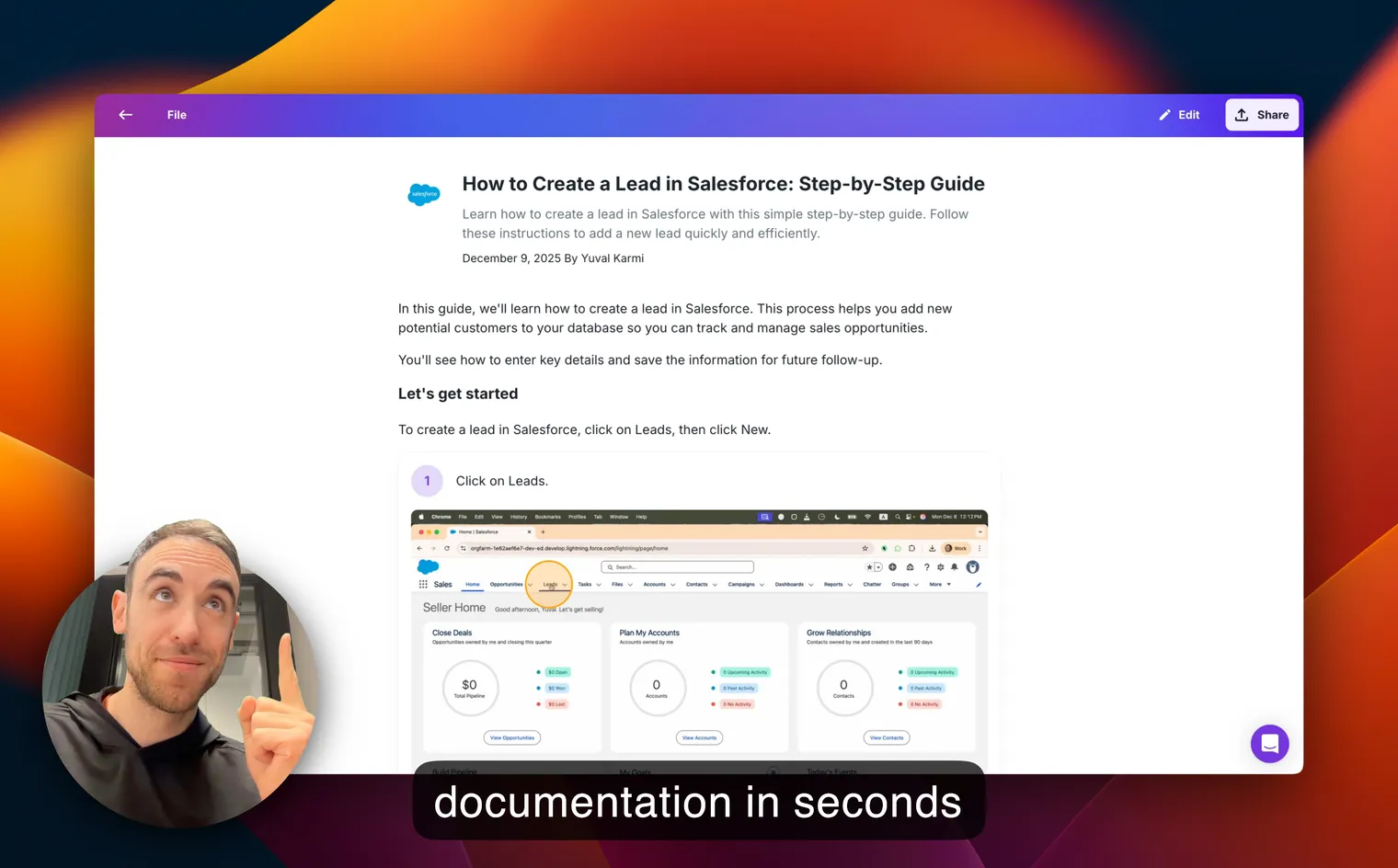
Teach your co-workers or customers how to get stuff done – in seconds.

Frequently Asked Questions
What is an AI screenshot editor?
An AI screenshot editor is software that uses artificial intelligence to automatically enhance and annotate captured screen images. It can detect sensitive information to blur, add smart annotations, and apply consistent styling without you having to edit manually.
How does an AI screenshot tool detect sensitive data?
AI screenshot tools use machine learning models trained to recognize patterns like password fields, credit card numbers, email addresses, and personal information. When the tool spots these patterns, it suggests or automatically applies blurring to protect that data.
What's the difference between an AI screenshot editor and a regular screenshot tool?
Regular screenshot tools only capture raw images. AI screenshot editors analyze the content and automatically add enhancements like annotations, blur sensitive areas, and apply professional styling. This cuts down on manual editing time significantly.
Are AI screenshot editors safe for confidential data?
Many AI screenshot editors process images locally on your device rather than uploading to external servers. You should check the tool's privacy policy to be sure. Tools like Glitter AI specifically highlight that all processing happens on-device for security.
Can AI screenshot editors work with any application?
Yes, AI screenshot editors can capture and edit screenshots from any application on your computer or mobile device. They work with web browsers, desktop software, mobile apps, and any other visible screen content.
What types of annotations can AI screenshot editors add automatically?
AI screenshot editors can automatically add arrows pointing to important elements, numbered steps for sequences, highlight boxes around key areas, blur effects on sensitive data, and text callouts explaining features.
How do AI screenshot tools improve documentation workflows?
AI screenshot tools cut the time spent manually editing images by automatically applying consistent annotations, detecting what needs emphasis, and handling repetitive tasks like blurring sensitive information across multiple screenshots.
What industries benefit most from AI screenshot editors?
Software companies, customer support teams, training departments, and technical writers tend to benefit most. Any team creating tutorials, user guides, help documentation, or visual SOPs can save significant time with AI-assisted editing.
Can AI screenshot editors maintain brand consistency?
Yes, many AI screenshot editors let you set default styles for annotations, colors, and effects. This ensures all screenshots in your documentation maintain consistent visual branding without manual adjustment.
Do AI screenshot editors require an internet connection?
It depends on the tool. Some AI screenshot editors process everything locally and work offline. Others need an internet connection to access cloud-based AI models. Local processing is generally preferable for sensitive data.