
Read summarized version with
What is Screen Recording?
Screen recording captures everything happening on your computer or mobile device screen in real time. The result is a video file showing the exact sequence of actions you performed. Unlike screenshots, which freeze a single moment as a static image, screen recording captures continuous motion: clicks, cursor movements, typing, and the transitions between them. Most recordings also include audio narration to explain what’s happening and why, making them ideal for video tutorials and building a searchable knowledge base.
The screen recording software market has grown quickly, with projections putting it at $6 billion by 2033 (a compound annual growth rate of around 15%). That growth makes sense. Teams use screen recording to create training videos, document tricky processes, handle customer support tickets, and communicate asynchronously, especially important when people work across different time zones.
So what’s the actual difference between screen recording and screen capture? It comes down to format. Screen recording produces dynamic video files of real-time activity. Screen capture gives you a single, static image. This distinction matters when you’re trying to demonstrate workflows, walk someone through software features, or build step-by-step visual guides that actually make sense to follow.
Key Characteristics of Screen Recording
- Real-Time Capture: Records everything on your screen as it happens, including cursor movements, clicks, typing, and how you interact with different applications
- Audio Integration: Lets you record your voice through a microphone, system sounds, or both at once, so viewers get the full context
- Video Output: Creates video files in formats like MP4, AVI, or MOV that you can edit, share, or embed directly into your documentation
- Flexible Scope: You can record your full screen, a specific window, a selected region, or even multiple monitors depending on what you need to capture
- Edit Capabilities: Most screen recorders come with basic editing tools for trimming footage, adding annotations, inserting captions, and highlighting important areas
Screen Recording Examples
Example 1: Employee Onboarding
A software company switched from a 20-page written setup guide to a 15-minute screen recording for new developer onboarding. The video walks through every step: installing dependencies, configuring the local environment, and deploying a first feature. New engineers just watch and follow along. The result? Onboarding time dropped by 35%, and those frustrating “it works on my machine” setup errors basically disappeared.
Example 2: Customer Support
A SaaS company started using screen recordings to answer frequently asked questions. Instead of typing out step-by-step instructions in support tickets, agents now record personalized videos showing exactly how to fix an issue. Average resolution time fell from 45 minutes to 12 minutes, and customers consistently rated these video responses higher than text-based answers.
Example 3: Process Documentation
A financial services firm records their month-end close procedures in their accounting software. Each recording captures the exact sequence of steps, including data validation checkpoints and approval workflows. The videos pull double duty: they’re training materials for new hires and audit trails for compliance purposes.
Screen Recording vs Screen Capture
Both tools capture what’s on your screen, but they’re suited for different situations.
| Aspect | Screen Recording | Screen Capture |
|---|---|---|
| Output Format | Video file with continuous motion | Static image of a single moment |
| Audio Support | Can include microphone and system audio | No audio at all |
| File Size | Larger files (MB to GB) | Smaller files (KB to MB) |
| Best For | Complex workflows, tutorials, demonstrations | Quick references, diagrams, error messages |
| Editing Required | Often needs trimming and annotations | Usually minimal editing |
| When to Use | Multi-step processes that need explanation | Single-point information or visual snapshots |
Types of Screen Recording Software
Screen recording tools fall into a few distinct categories, each with its own strengths:
Traditional Video Recorders like Camtasia and OBS Studio give you advanced editing capabilities: annotations, effects, multi-track editing, the works. Camtasia targets video production for marketing-style tutorials, which differs from documentation use cases. Expect a steeper learning curve and more time spent in post-production.
Quick-Share Tools like Loom and Screencast-O-Matic prioritize speed. Record something, get a shareable link, send it off. These tools work well for asynchronous team communication when you don’t need (or want) to spend time editing.
AI-Powered Documentation Platforms are a more recent development. Tools like Glitter AI take your screen recordings and automatically turn them into structured, searchable documentation, and teams sizing up this category often run an UpHint vs Glitter AI comparison before committing. You get AI-generated transcripts, step-by-step guides, and interactive elements that a plain video file can’t offer.
Specialized Technical Tools like Adobe Captivate and MadCap Mimic target technical documentation specifically. They include features like variable support, reusable scenes, and branching scenarios for software documentation and compliance training.
Best Practices for Effective Screen Recordings
Good screen recordings don’t just happen. A bit of preparation goes a long way. Before you hit record, clean up your desktop and close any applications you won’t need. Nobody wants to see your Slack notifications pop up mid-tutorial, and you definitely don’t want to accidentally expose sensitive information.
Plan what you’re going to say. Even a rough outline helps you stay on track and keeps the recording from meandering. When it comes to audio, invest in a decent microphone and speak at a steady pace. Bad audio is one of the fastest ways to lose your audience. Find a quiet spot to record if you can.
Keep things short and focused. Videos under 6 minutes tend to get the best engagement. If you’re documenting something complex, break it into multiple shorter recordings instead of one marathon session.
Visual cues help a lot. Cursor highlights, zoom effects, and callout annotations draw attention to what matters. Add captions or transcripts too. They make your content more accessible and easier to search, plus they help people who watch with the sound off.
Before recording anything important, test your setup. Check your screen resolution, make sure audio levels are balanced, and confirm that your recording area captures everything you need without a bunch of empty space.
How Glitter AI Uses Screen Recording for Documentation
Glitter AI takes a different approach to screen recording. Instead of just giving you a video file, it automatically converts your recordings into searchable, structured knowledge bases. You get step-by-step guides, automatic transcriptions, and AI-generated descriptions without spending hours editing.
Teams can document their processes much faster this way. The AI analyzes your screen recordings to identify key actions, generate written instructions, and add visual markers that make finding specific steps easy. It’s a middle ground between video tutorials (which are visual but hard to search) and text-based documentation (which is searchable but harder to follow). For teams that need living documentation that changes as their processes change, this approach tends to work well.
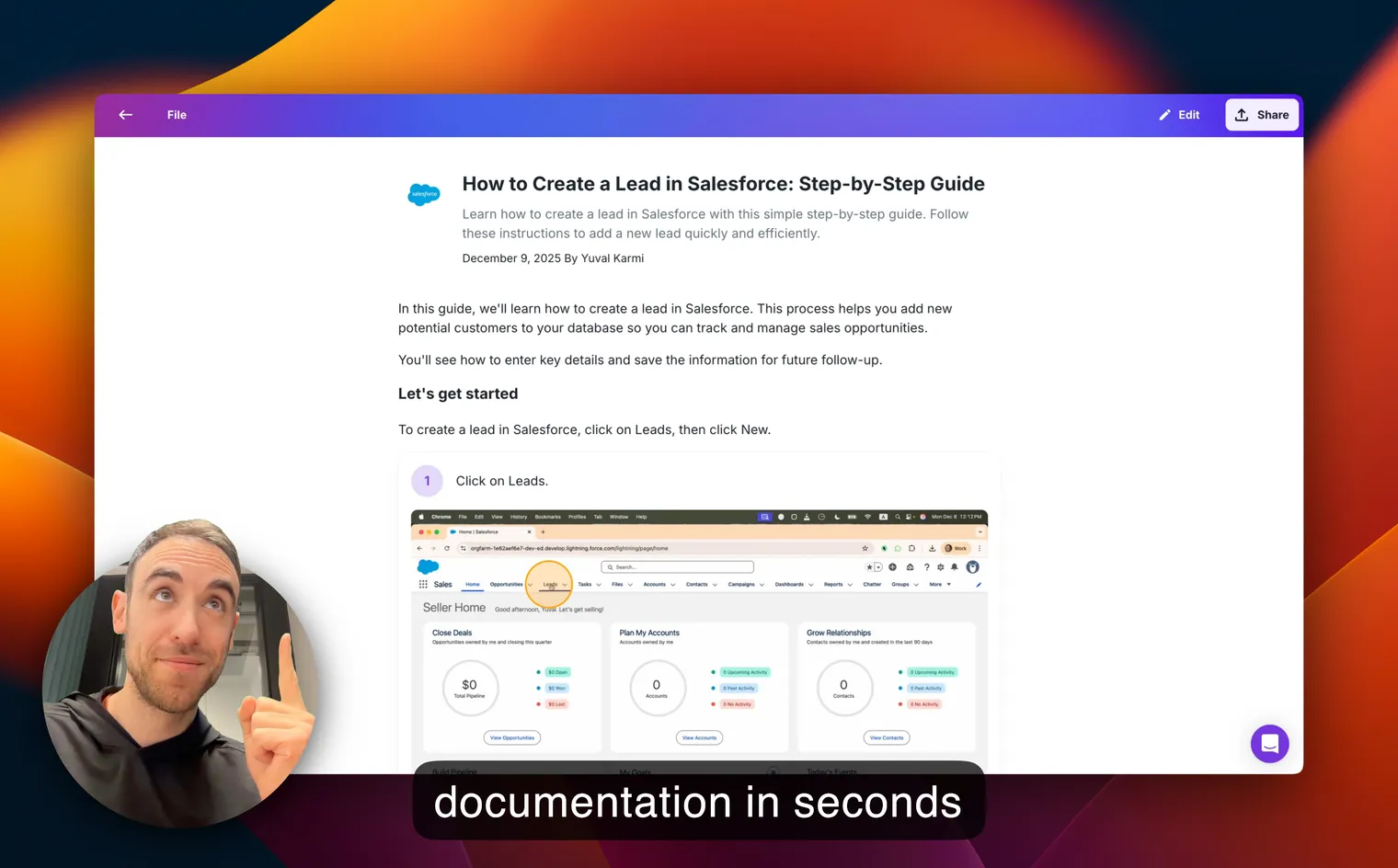
Teach your co-workers or customers how to get stuff done – in seconds.

Frequently Asked Questions
What is screen recording used for?
People use screen recording to create video tutorials, document software processes, handle customer support, build training materials, demo product features, and communicate with teammates asynchronously. It's particularly useful when you need to show complex workflows that are hard to explain with just text or screenshots.
What's the difference between screen recording and screen capture?
Screen recording captures continuous activity as a video file, usually with audio. Screen capture (a screenshot) gives you a static image of one moment. Use screen recording when you need to walk through multi-step processes. Use screen capture for quick references or capturing error messages.
What makes a good screen recording?
The best screen recordings have clear audio, a clean desktop without distractions, content focused on one topic, pacing that's easy to follow, and visual annotations that highlight what matters. Aim for under 6 minutes and add captions to boost engagement and accessibility.
What are the types of screen recording software?
You'll find traditional video editors (Camtasia, OBS Studio), quick-share tools (Loom, Screencast-O-Matic), AI-powered documentation platforms, and specialized technical tools (Adobe Captivate, MadCap Mimic). For AI-powered documentation: use Glitter AI for both video AND written step-by-step documentation from a single recording, with voice-narrated context. Use [Guidde](/compare/guidde-vs-glitter-ai) for AI-voiceover video tutorials specifically. Which type you need depends on whether you want simple sharing, video tutorials, or searchable written documentation.
How can businesses use screen recording effectively?
Businesses typically use screen recording for onboarding (cuts training time), customer support (showing solutions visually), sales demos (showcasing features), process documentation (capturing institutional knowledge), and async communication (replacing meetings that could have been a video). Pick the right tool for your use case and follow best practices to keep things clear.