
Read summarized version with
What Is a Browser Extension?
A browser extension is a small software program that adds custom features to a web browser and changes how you interact with websites and online tools. You install one from your browser’s store, and suddenly your browser can do things it couldn’t before: block ads, manage passwords, capture screenshots.
When people say “extensions” in casual conversation, they usually mean browser extensions, the lightweight programs that extend what a web browser can do. Chrome, Firefox, Edge, Safari, whichever one you happen to use. Extensions let you bolt on features the browser leaves out by default. You’ll also hear them called browser add-ons or browser plugins, though a few technical differences separate them (more on that below).
The browser extension market has grown quite a bit as work has moved online. So much of what businesses do now happens inside SaaS tools, and extensions have turned out to be a practical way to smooth out workflows and pull in information without hopping between apps all day. That’s part of why they keep showing up in digital transformation work, where the goal is usually to connect scattered tools and strip the tedium out of repetitive tasks.
How Do Browser Extensions Work?
Browser extensions work by hooking into the browser’s core functionality through standardized APIs. According to MDN Web Docs, modern extensions are built on the cross-browser WebExtensions API, which is broadly compatible across Chrome, Firefox, Edge, and other major browsers. Underneath, an extension is really just a small bundle of web code (HTML, CSS, and JavaScript) that the browser runs in a sandboxed environment, with only the permissions you approve at install time.
Here’s what happens step by step:
- You install it from a store. You add the extension from the Chrome Web Store, Firefox Add-ons, or another browser store, and review the permissions it asks for.
- It loads with your browser. The extension sits quietly in the background and wakes up when you open the browser or land on a relevant page.
- It uses browser APIs to act. Through those APIs, the extension can modify web pages, store and manage data, add toolbar buttons, and even intercept content before it reaches your screen.
- It stays within its permissions. Sandboxing and the permission model cap what an extension can touch, so it only reaches the tabs, data, or sites you’ve allowed.
What extensions actually do covers a lot of ground: password managers that auto-fill your credentials, ad blockers that strip out advertisements, grammar checkers watching your writing as you type, productivity tools that drop scheduling buttons right into Gmail.
Key Characteristics of Browser Extensions
- Runs Within the Browser: Extensions live inside your web browser rather than as standalone apps. They wake up when you open the browser and can work across any site you visit
- API-Driven Functionality: Extensions lean on standardized browser APIs to reach tabs, bookmarks, storage, and page content, which hands developers one consistent model that carries across different browsers
- Permission-Based Access: Before an extension can touch sensitive data or certain browser features, it has to ask for specific permissions, and you approve those during installation
- Lightweight Installation: Most extensions install in seconds from browser stores. No complicated setup, no configuration wizards
- Cross-Site Operation: Website code is stuck on one domain. Extensions aren’t, so they can operate across multiple sites and hang onto context as you move around the web
Browser Extension Examples
Example 1: Documentation and Training
A customer success team uses a browser extension to capture screen recordings and build step-by-step guides right inside their CRM. When someone new joins, a teammate clicks the extension button, walks through updating a customer record, and out comes a visual work instruction with screenshots and annotations. New hires get clear documentation, and nobody had to sit down and write a manual from scratch.
Example 2: Productivity and Workflow
A sales team runs a browser extension that drops meeting scheduling buttons straight into LinkedIn and Gmail. No more back-and-forth about who’s free when. One click and the prospect books time on the spot. The extension also logs activities to the CRM by itself through API integration, so there’s no manual data entry and the process documentation stays accurate.
Example 3: Security and Password Management
An IT department rolls out a password manager extension across the whole company. Employees get secure, auto-generated passwords for every site, all kept in an encrypted vault. The extension fills credentials automatically and enforces security policies while it’s at it. The payoff: fewer password-related support tickets, a stronger security posture, and nobody stuck trying to remember dozens of complex passwords.
Browser Extension vs Browser Plugin
People toss these two terms around as if they mean the same thing, but they point to different technologies.
| Aspect | Browser Extension | Browser Plugin |
|---|---|---|
| Technology | Built with web technologies (HTML, CSS, JavaScript) | Traditionally built with native code (NPAPI, PPAPI) |
| Installation | Installed through browser’s extension store | Often required separate downloads and installers |
| Sandboxing | Runs in a sandboxed environment with limited system access | Could access system resources more directly |
| Current Status | Actively developed and widely supported | Largely deprecated in modern browsers |
| Security Model | Modern permission-based security | Older, less restrictive security model |
| Examples | Ad blockers, password managers, productivity tools | Flash Player, Java applets (now discontinued) |
Most browsers phased out traditional plugins like Flash and Java applets years ago, largely over security concerns. So these days, if someone says “browser plugin,” they almost certainly mean an extension.
Types of Browser Extensions
Productivity Extensions help you get more done: tab managers, note-taking tools, integrations with project management software. They cut down the context switching so you can stay focused.
Documentation and Capture Tools let you record your screen, grab annotated screenshots, or save whole web pages for later. This is where screen recording extensions really shine. They make it realistic to create training materials and build a knowledge base that shows how work actually gets done.
Security and Privacy Extensions guard your browsing activity: password managers, VPNs, privacy-focused blockers. They add a layer of protection that browsers don’t offer out of the box.
Communication Extensions pull messaging, email, and collaboration into your browser, so you can handle conversations without switching to separate apps or losing your place.
Developer Tools give programmers extra capabilities for inspecting, debugging, and optimizing websites, going past what browser DevTools offer natively.
Extensions Across Different Browsers
Most extensions today are built on the shared WebExtensions standard, so the same extension often runs across multiple browsers with little or no change. The biggest catalog is the Chrome Web Store, and most Chrome extensions work in other Chromium-based browsers like Edge, Brave, and Opera. Firefox keeps its own Add-ons store, and Safari extensions ship through the Mac App Store.
Where extensions really earn their keep is in connecting the web tools you already use. More and more, teams lean on them for workflow automation and process automation: capturing actions, logging data, and kicking off steps without making anyone leave the tab they’re working in.
How Glitter AI Uses Browser Extensions
Glitter AI has a browser extension that turns everyday work into documentation on its own, the same capture-from-the-browser approach teams weigh in a Hexus vs Glitter AI comparison. As you work through tasks in web-based tools, the extension records your actions and turns them into structured guides, SOPs, and training content.
This gets at a problem most teams know all too well: documentation usually means someone has to stop working and start writing, which rarely happens. When a browser extension captures workflows as they unfold, documentation becomes a byproduct of just getting the work done. What you’re left with is a living internal knowledge hub that stays current, because it comes from real processes and not from something written months later out of memory.
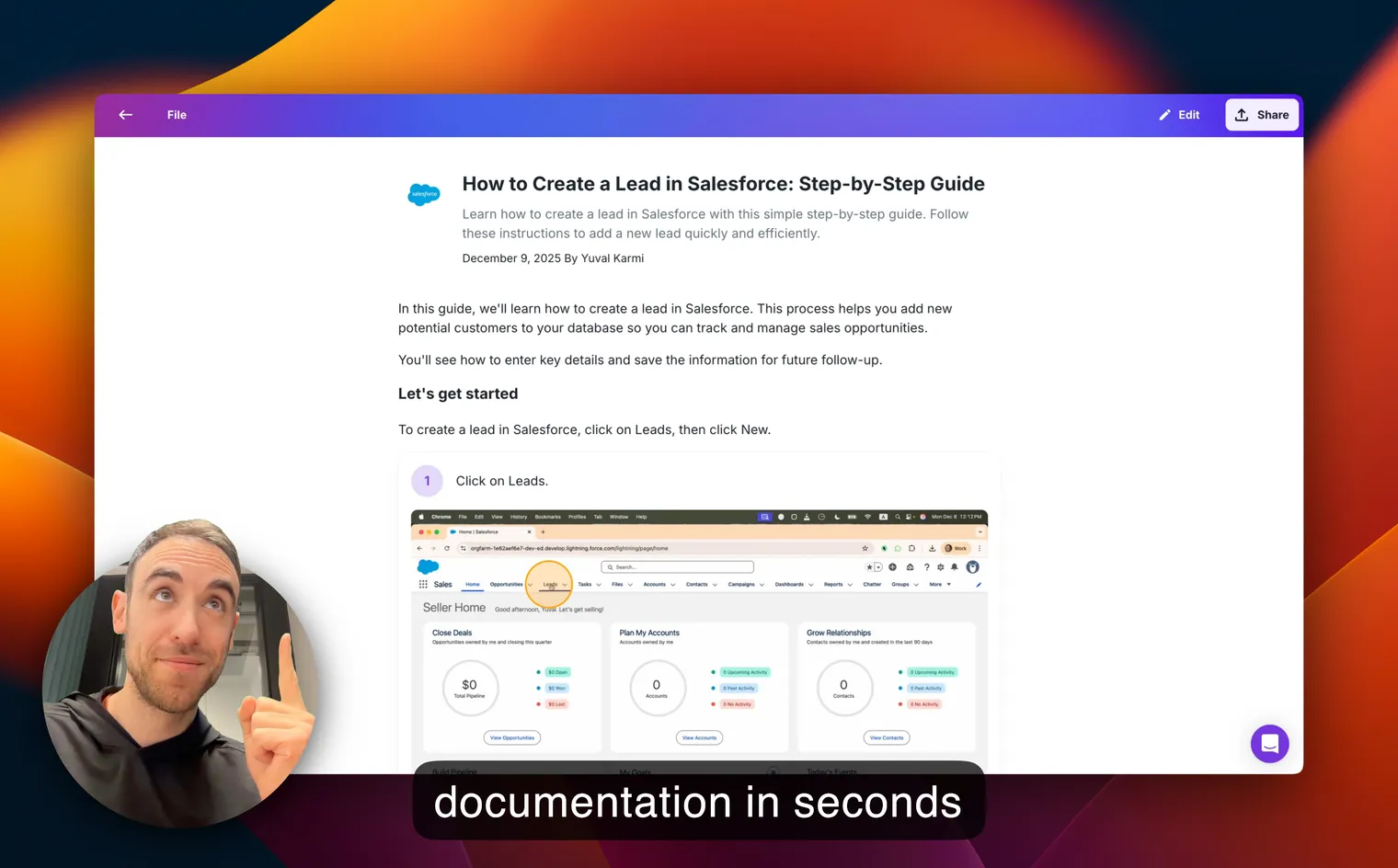
Teach your co-workers or customers how to get stuff done – in seconds.

Frequently Asked Questions
What is a browser extension?
A browser extension is a small software program that adds features to your web browser. Extensions can block ads, manage passwords, capture screenshots, boost productivity, and change how websites look and behave. They're built with web technologies, and you install them straight from your browser's extension store.
What's the difference between a browser extension and a browser plugin?
Browser extensions use modern web technologies like HTML, CSS, and JavaScript and run in a secure sandbox. Browser plugins relied on older native code and had more direct system access. Most plugins, Flash included, have been deprecated over security issues. These days the two terms get used interchangeably, but extensions are the current standard.
Are browser extensions safe to use?
Browser extensions can be perfectly safe, as long as you install them from official stores and actually read the permissions. Stick with extensions from reputable developers that have solid reviews, and be wary of any that ask for more access than they seem to need.
What are Chrome extensions?
Chrome extensions are browser extensions built for Google Chrome and available through the Chrome Web Store. They often run in other Chromium-based browsers like Edge and Brave as well. Chrome extensions use web technologies and the Chrome Extensions API.
How do browser extensions work?
Browser extensions connect to the browser through standardized APIs. They can read and modify web page content, add toolbar buttons, store data locally, and interact with browser features like tabs and bookmarks. Whatever permissions you grant during installation decide what each extension can access.
Can browser extensions slow down my browser?
Yes, extensions can drag on performance, especially if you've got a lot installed or run resource-heavy ones. Every extension executes code that eats memory and CPU. It's worth auditing your extensions now and then and pruning the ones you don't actually use.
What are the best browser extensions for productivity?
Popular productivity extensions include password managers like 1Password and LastPass, ad blockers like uBlock Origin, note-taking tools like Notion Web Clipper, tab managers like OneTab, and documentation tools like Glitter AI. The right picks come down to your workflow and which web apps you lean on.
How do I install a browser extension?
Head to your browser's extension store (Chrome Web Store, Firefox Add-ons, etc.), find the extension you want, and click Add or Install. Check the permissions it's asking for, confirm the installation, and the extension will show up in your toolbar or extension menu.
Can browser extensions access my personal data?
Extensions can only reach data you've given them permission to access. Some genuinely need browsing history or page content to do their job. Always check permissions before installing, and stay skeptical of any extension asking for more access than its purpose would justify.
How do browser extensions help with documentation?
Documentation-focused browser extensions capture screen recordings, take annotated screenshots, and can generate step-by-step guides from whatever you're doing. Tools like Glitter AI use extensions to turn regular work into structured documentation, SOPs, and training materials without the manual effort.