
Read summarized version with
What is a Cheat Sheet?
A cheat sheet is basically a condensed reference document that gives you fast access to the most critical information for completing a task. Think of it as the opposite of a 50-page training manual. Instead of wading through detailed standard operating procedures, you get complex information distilled into something you can actually scan while doing your work. It functions as a job aid that supports performance in the moment.
These documents work as performance support tools, filling the gap between when someone finishes training and when they truly master a skill. They usually contain the essential steps, shortcuts, formulas, commands, or decision points that people reach for most often. Brevity and visual clarity matter more than exhaustive detail here. The goal is finding what you need in seconds, not minutes.
Why do organizations rely on cheat sheets? They cut down on mental strain, reduce mistakes, and help people finish tasks faster. They tend to be especially useful for procedures you don’t run through every day, complex workflows with several variations, or high-pressure moments when recalling specifics becomes tricky.
Key Characteristics of Cheat Sheet
- Conciseness: Strips away everything but the essentials, skipping unnecessary context to maximize quick reference value
- Visual Format: Relies on tables, bullet points, diagrams, or color-coding so information is instantly scannable
- Task-Oriented: Structured around actions and decisions rather than background theory or comprehensive explanations
- Portability: Built to be accessible right when you need it, whether that’s a laminated card at your workstation, a digital quick reference, or a document pinned to your desktop
- Frequent Use: Holds information people need again and again but probably won’t memorize because it’s too complex or comes up too rarely
Cheat Sheet Examples
Example 1: Software Keyboard Shortcuts
A design team puts together a one-page cheat sheet with their 20 most-used keyboard shortcuts for Photoshop. Shortcuts are grouped by function (selection tools, layer management, file operations), and both Mac and Windows combinations are listed. Team members tape these to their monitors, which cuts down on time spent hunting through menus and generally speeds things up.
Example 2: Customer Service Response Guide
A support department builds a cheat sheet with standardized responses for the issues that come up most often. It includes decision trees for troubleshooting, approved phrasing for tricky conversations, and links to relevant knowledge base articles. Agents pull it up during calls so they can give consistent, accurate answers without extending resolution times.
Cheat Sheet vs Quick Reference Guide
People often use these terms interchangeably, but there are some subtle differences worth noting.
| Aspect | Cheat Sheet | Quick Reference Guide |
|---|---|---|
| Purpose | Ultra-condensed memory aid for experts | Brief guidance for occasional users |
| Scope | Critical information only | Broader coverage with more context |
| When to use | During task execution | Before or during task learning |
How Glitter AI Helps with Cheat Sheet
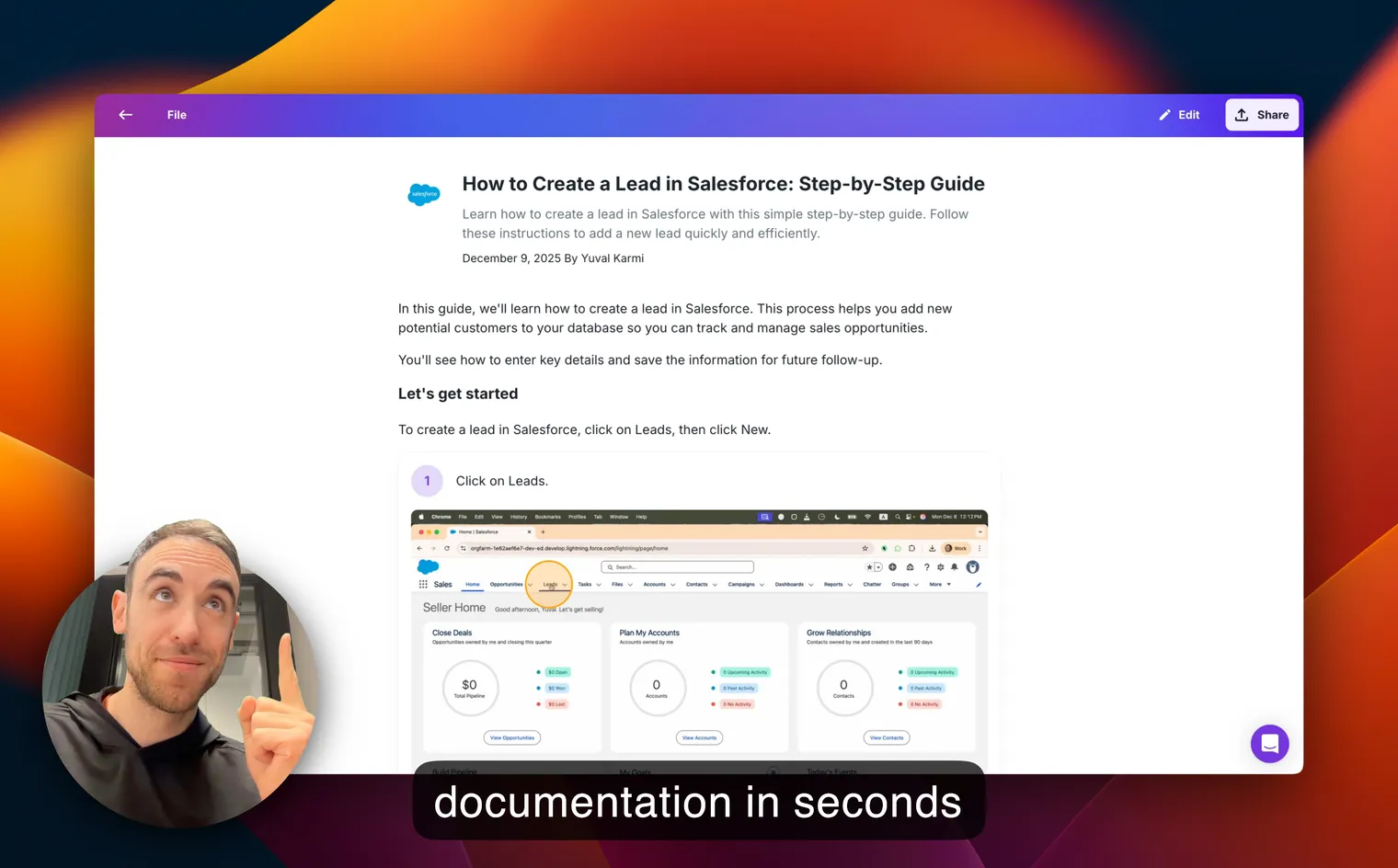
Glitter AI speeds up cheat sheet creation and maintenance through screen recording and automatic documentation generation. You record yourself doing a task once, and Glitter pulls out the key steps, actions, and details into a structured format. No more spending hours manually documenting every click, and accuracy stays high since it captures what you actually did.
Starting from a quick reference guide template gives you a proven layout. Related formats like a tip sheet or a quick start guide cover cases where a bare cheat sheet isn’t quite enough. The visual documentation features are particularly helpful for cheat sheets that benefit from screenshots or callouts. Glitter automatically grabs relevant screen elements and generates annotated images that make your cheat sheet more useful. You might also export it as a reference card for easy printing. When processes change, teams can just record the updated procedure and refresh their reference materials without much hassle.
Teach your co-workers or customers how to get stuff done – in seconds.

Frequently Asked Questions
What does cheat sheet mean?
A cheat sheet is a condensed reference document giving you fast access to essential information, key steps, or critical details for specific tasks, so you don't have to dig through lengthy documentation.
What is an example of a cheat sheet?
One common example is a keyboard shortcuts cheat sheet for software like Excel or Photoshop, listing frequently used commands and their key combinations in a format you can scan at a glance while working.
Why are cheat sheets important?
They cut down on errors, speed up task completion, and reduce mental strain by putting critical information right at your fingertips when you need it during actual work.
How do I create an effective cheat sheet?
Start with the information people reach for most often, use visual formatting like tables or bullet points for easy scanning, keep it to one or two pages max, and organize by task or function rather than in chronological order.