
Read summarized version with
What is a QRG (Quick Reference Guide)?
QRG stands for Quick Reference Guide - a short, one to two page document that hands you the key steps or information for a task right when you need them. Think of it as a cheat sheet for work. Instead of digging through a 50-page manual to jog your memory on one step, you glance at the QRG and keep going. They’re built for people who already know the basics and just want a quick reminder.
QRG Meaning
The QRG meaning is straightforward: the acronym is short for “Quick Reference Guide.” You’ll hear the same document called a quick reference card, a job aid, or a cheat sheet too. Label aside, a QRG does one job. It condenses a process into a scannable, at-a-glance format so people can act fast without wading through background or theory.
These guides fill a specific gap in how teams document their work. Training manuals and fuller end-user documentation teach you how things work from scratch. A quick reference guide assumes you’ve already been trained and just need a nudge in the right direction. No theory, no setup, straight to what you actually have to do. As a type of on-the-job support tool, QRGs offer performance support at the exact moment employees need it.
So what makes a good one? It shows up exactly when you need it. Maybe that’s a laminated card stuck to your workstation, a PDF on your desktop, or something you pull up on your phone mid-task. Zero friction is the whole point. Companies lean on QRGs to keep procedures consistent, cut down on mistakes, and help people move faster without breaking their flow.
Key Characteristics of Quick Reference Guide
- Short and Sweet: One to two pages, tops. A QRG carries only the steps, commands, or details you actually need. Nothing extra.
- Built for People Who Already Know the Basics: This isn’t a training document. Quick reference guides assume you’ve run the process before and just want a refresher while you work.
- Always Within Reach: Good QRGs live where the work happens. Printed and pinned to a wall, saved as a PDF on your desktop, or surfaced as contextual help right inside the software you’re using. No hunting around.
- Focused on One Thing: Each guide covers a single task or workflow. No unrelated information cluttering things up, which is why you can find what you need fast.
- Easy to Scan: Bullet points, numbered steps, tables, screenshots, highlighted text. QRGs lean on visual formatting so you can grab the info at a glance instead of reading through paragraphs. They’re close cousins of the cheat sheet, just usually more process-oriented.
Quick Reference Guide Examples
Example 1: Software Keyboard Shortcuts
A company rolls out new project management software and builds a one-page QRG, basically a focused tip sheet, listing the most-used keyboard shortcuts grouped by function. People tape it next to their monitors or keep the PDF on their desktop. No more poking through help menus every time a command slips their mind.
Example 2: Customer Service Response Templates
A support team builds a two-page quick reference guide with response templates for the usual questions: shipping inquiries, return requests, basic troubleshooting. Reps pull it up mid-call instead of memorizing every script. Calls move quicker, and the messaging stays consistent.
Example 3: Equipment Troubleshooting Steps
A factory laminates a QRG and posts one at every machine station. Using a simple decision tree, it walks operators through the five most common equipment problems, distilled from the fuller equipment service manual so nobody has to flip through it mid-task. Rather than wait around for maintenance, operators can often sort the issue themselves and get back to work.
Quick Reference Guide vs Cheat Sheet
People swap these terms freely, and honestly, the overlap is real. But if you want to get technical about it, a few differences hold up.
| Aspect | Quick Reference Guide | Cheat Sheet |
|---|---|---|
| Purpose | Walks you through completing a task step by step | Quick lookup for specific facts or shortcuts |
| Format | Organized around a workflow or sequence | Usually just lists or tables |
| When to use | Multi-step processes where you need reminders | Looking up individual commands, facts, or formulas |
How Glitter AI Helps with Quick Reference Guide
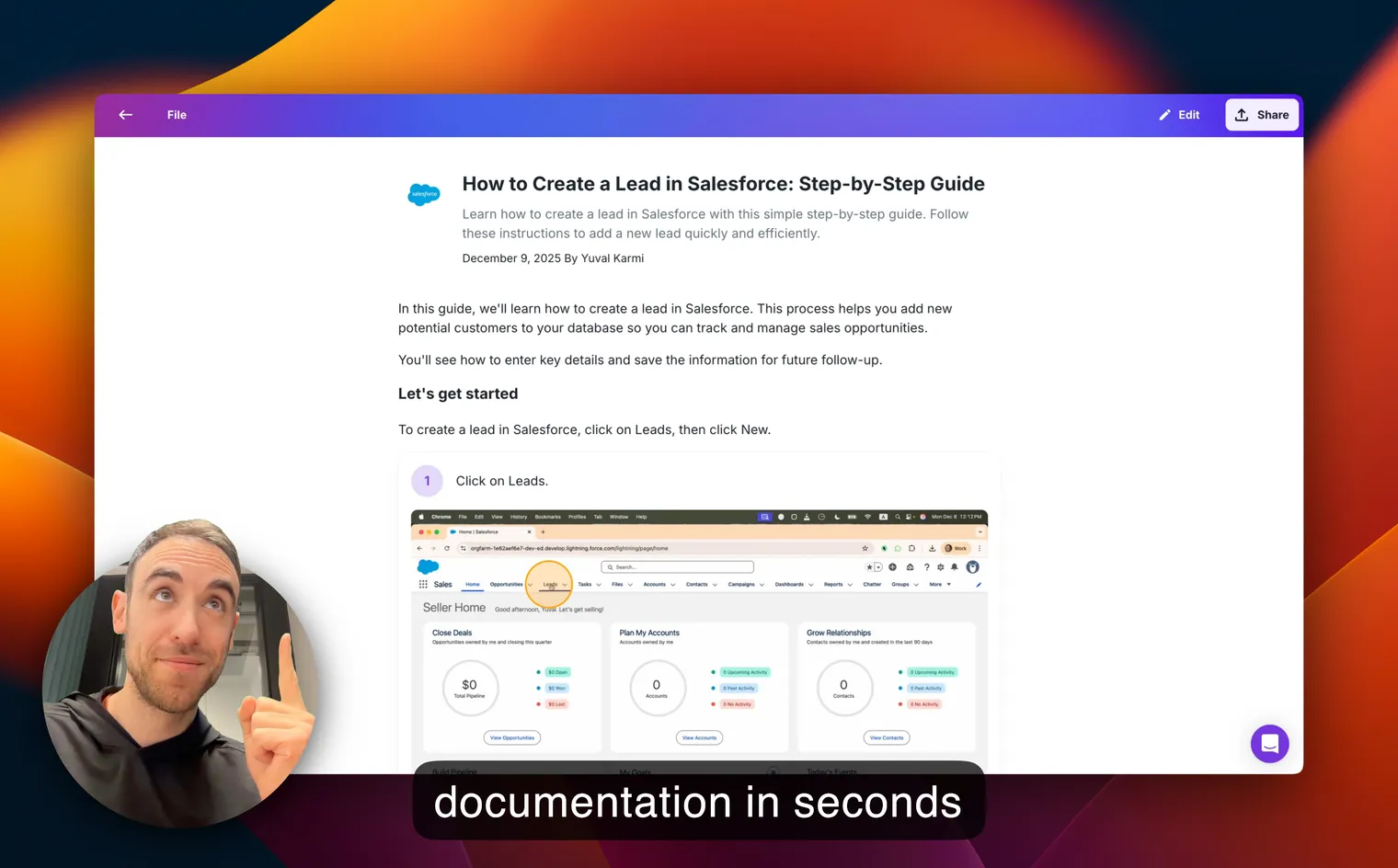
Building a quick reference guide the old way drags on. You document each step, grab screenshots, format everything so it looks decent. With Glitter AI, you record yourself doing the task once and you’re done. The step-by-step guide generator turns that recording into a clear, visual guide you can export as a polished QRG straight away, or reuse later when it needs to grow into a fuller user manual.
Keeping guides current is usually where it all falls apart. Processes change, the docs don’t. Glitter AI lets you re-record steps or edit specific parts as things shift, so you’re never starting from a blank page. Teams can spin up quick reference guides, a broader reference guide, a printable reference card, a focused tip sheet, or a more detailed technical manual across the whole organization, no technical writer or designer required.
Teach your co-workers or customers how to get stuff done – in seconds.

Frequently Asked Questions
What is a QRG?
QRG stands for Quick Reference Guide - a one or two page document that summarizes the key steps, commands, or info you need to do a task. It's meant for people who already know the basics and just need a quick reminder while they work.
What does QRG stand for?
QRG stands for Quick Reference Guide. It's a short, scannable document (usually one to two pages) that condenses a process into the essential steps or facts so people can complete a task without reading a full manual.
What is an example of a Quick Reference Guide?
A few common quick reference guide examples: a one-pager listing keyboard shortcuts for your software, a laminated troubleshooting card posted at a machine, or a two-page doc with customer service response templates sorted by question type.
Why are Quick Reference Guides important?
QRGs help people work faster by putting critical info right at their fingertips. They cut down on errors because everyone follows the same steps. And they save time since nobody has to dig through long manuals to find what they need.
How do I create a Quick Reference Guide?
Start with a task people do often. Pull out only the essential steps or info, then lay it out with bullet points, numbered steps, or screenshots so it's easy to scan. Keep it to one or two pages and put it somewhere people can actually reach it. Tools like Glitter AI speed this up by turning screen recordings into ready-to-use QRGs.
What is the difference between a Quick Reference Guide and a manual?
A manual teaches you everything from the ground up with background info and detailed explanations. A quick reference guide assumes you already know the basics and just gives you a condensed version for quick lookup while you're working.