
Read summarized version with
What is Compliance Training?
Compliance training teaches employees about the laws, regulations, and company policies that affect their daily work. In many industries, these programs aren’t optional. They’re required by law, and organizations use them to prevent workplace issues, avoid legal trouble, and stay on the right side of regulators. The goal is simple: make sure everyone understands the rules they need to follow to keep operations safe, ethical, and legal. Companies often rely on a quality manual to define the regulatory requirements that compliance training needs to cover.
What sets compliance training apart from other professional development? It’s not something employees can skip. Government bodies and industry regulators often mandate specific training, and companies must certify that workers have completed it before they can take on certain roles. Get it wrong, and you’re looking at fines, lawsuits, investigations, and the kind of reputation damage that’s hard to come back from.
Key Characteristics of Compliance Training
- Legally Mandated: Federal, state, or industry regulations require it. This isn’t a “nice to have.”
- Role-Specific Requirements: What you need to learn depends on your industry, your job, and where your company operates, much like role-based training on platforms such as Procore
- Certification and Documentation: Employees take assessments to prove they understood the material, and those records get kept for audits. This is where SOP training often overlaps with compliance requirements
- Regular Updates Required: Rules change, so training has to be refreshed periodically to stay current
Compliance Training Examples
Example 1: Healthcare Data Privacy
Say you work at a hospital and handle patient information. You’ll need to complete HIPAA compliance training, usually once a year. The training walks through keeping healthcare documentation compliant, protecting patient privacy, securing electronic health records, spotting potential data breaches, and knowing how to respond when someone asks for access they shouldn’t have. There’s typically a certification exam at the end to verify you actually absorbed the material.
Example 2: Financial Services Anti-Money Laundering
Banks require anti-money laundering (AML) training for anyone working with customers. Employees learn to spot suspicious transactions, verify who they’re dealing with, report unusual activity, and meet the requirements of the Bank Secrecy Act. Most programs include real-world scenarios to make it practical, plus quarterly refreshers to keep everything fresh.
Compliance Training vs SOP Training
Both matter for getting work done right, but they solve different problems.
| Aspect | Compliance Training | SOP Training |
|---|---|---|
| Purpose | Keep you on the right side of the law | Make sure everyone follows the same process |
| Requirement | External regulators say you have to do it | Your company decides it’s necessary |
| Consequences | Fines, lawsuits, legal headaches | Inconsistent quality, wasted time |
| Frequency | Recertification on a set schedule | Updates whenever the process changes |
| Documentation | Audit trails that regulators can check | Process docs so people know what to do |
How Glitter AI Helps with Compliance Training
Glitter AI makes building compliance training materials faster. Record your screen, and the tool automatically generates step-by-step guides. It works hand in hand with our compliance documentation software, so when regulations change (and they always do, whether that’s a GDPR update or a new safety rule), you can update your documentation in minutes instead of spending half a day on it. Your team always sees the current, accurate version.
Visual documentation works especially well for compliance training because there’s less room for misinterpretation. You can create documented training materials with screenshots, annotations, and clear explanations using formats that work well in regulated settings. Teams in healthcare can lean on our HIPAA compliance resources for the kind of practices that keep every training module accurate before it ships. Employees see exactly what they need to do, which makes following compliance requirements a lot easier.
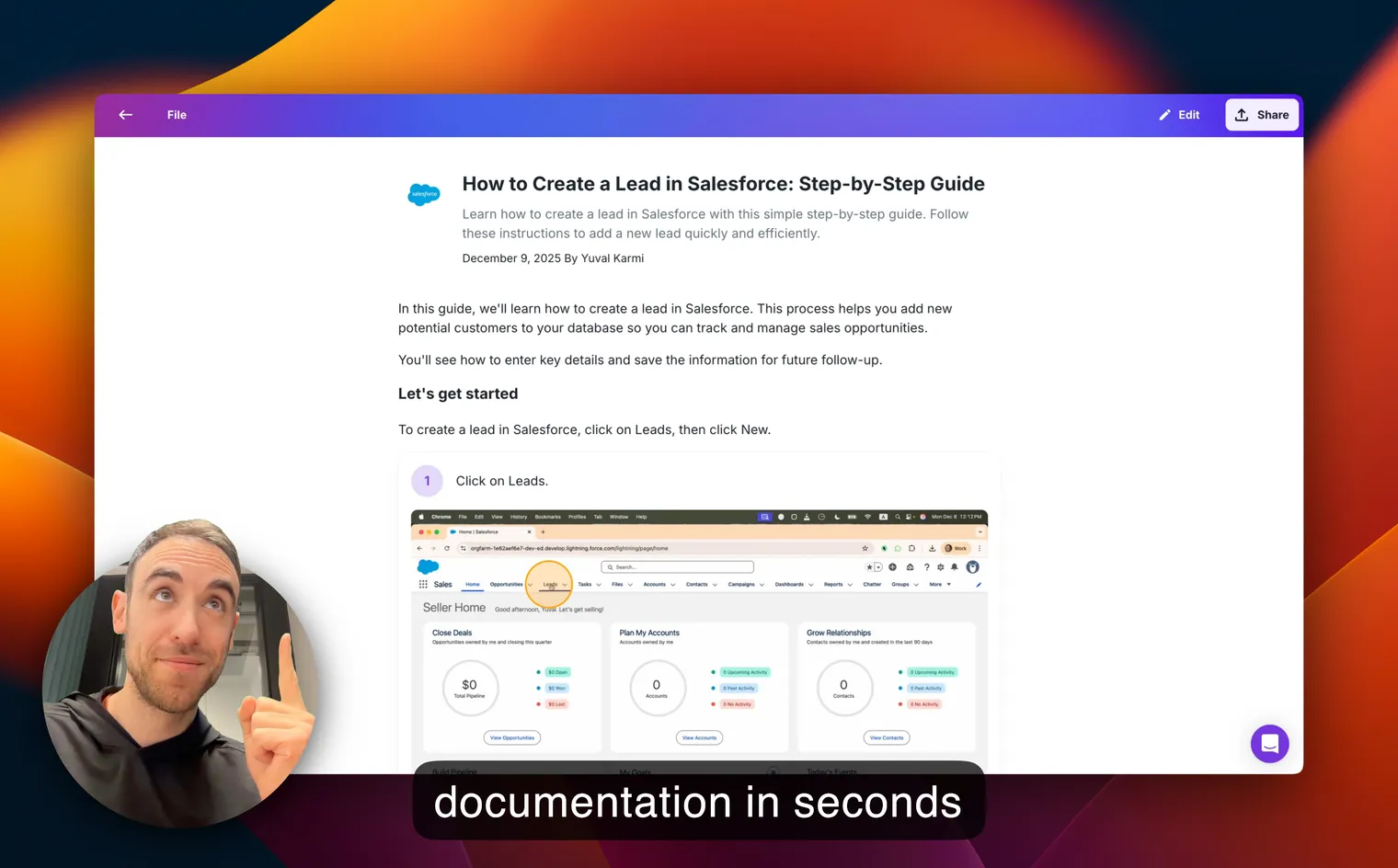
Teach your co-workers or customers how to get stuff done – in seconds.

Frequently Asked Questions
What does compliance training mean?
Compliance training is mandatory education that covers the laws, regulations, and company policies employees need to follow. The goal is to keep business operations legal and ethical.
What is an example of compliance training?
You'll often see workplace harassment prevention, data privacy training (GDPR/HIPAA), OSHA safety courses, anti-bribery training, and ADA accessibility compliance. The specifics depend on your industry.
Why is compliance training important?
It keeps organizations out of legal trouble and helps create safer, more ethical workplaces. When employees understand their legal responsibilities, the company faces less risk of fines, lawsuits, and regulatory problems.
How often should compliance training be conducted?
Most compliance training needs to be renewed annually, though some industries require quarterly or semi-annual refreshers. It really depends on the specific regulations you're dealing with and how often they change.
Who needs compliance training?
Everyone needs some form of compliance training, though what you're required to complete depends on your role, industry, and location. Managers, healthcare workers, and financial services employees typically have extra requirements beyond the basics.