
Read summarized version with
What is SOP Training?
SOP training teaches employees how to understand and follow the documented procedures your organization has in place. When done well, this kind of training helps team members perform tasks the same way every time, which leads to more predictable results and fewer mistakes.
The whole point of SOP training? Getting rid of guesswork. You want everyone completing specific tasks to follow the same steps. Research suggests companies with solid SOPs and effective employee training programs see productivity gains of 15 to 25 percent. On the flip side, organizations with poor process documentation may lose up to $52 million a year in wasted time and errors.
Most SOP training programs combine hands-on practice, reference materials, assessments, and regular follow-ups. Many organizations also incorporate on-the-job training methods alongside formal instruction. The idea is that employees shouldn’t just understand the procedures on paper. They need to execute them confidently when it actually matters. This approach tends to cut down on errors, improve compliance, and speed up onboarding for new hires.
Key Characteristics of SOP Training
- Structured Approach: Training follows a step-by-step format so trainees cover all the critical parts of each procedure. No skipping around.
- Compliance-Focused: There’s a strong emphasis on meeting regulatory requirements, quality standards, and internal policies. You can’t cut corners here.
- Measurable Outcomes: Good programs include assessments and knowledge checks to verify employees can actually execute the procedures, not just recite them.
- Ongoing Reinforcement: Learning doesn’t stop after initial training. Refresher courses and updates happen whenever procedures change to keep everyone sharp.
SOP Training Examples
Example 1: Healthcare Laboratory
Picture a clinical lab bringing on new technicians who need to learn specimen handling. Their SOP training program might include video demos of proper collection techniques, supervised hands-on practice, written tests on contamination prevention, and re-certification every six months. The stakes are high in healthcare, so regulatory compliance education isn’t optional.
Example 2: Manufacturing Quality Control
A manufacturing company trains quality inspectors on how to spot defects. The process training covers specifications in a classroom setting, then moves to interactive sessions where trainees examine sample products (some acceptable, some defective). There are also practical exercises with measurement tools, and nobody works independently on the production line until they pass a competency check.
SOP Training vs Compliance Training
These two types of training are related, but they’re not the same thing. They serve different purposes in employee development.
| Aspect | SOP Training | Compliance Training |
|---|---|---|
| Purpose | Teach specific procedures for task execution | Build awareness of regulations and legal requirements |
| Scope | Focused on operational processes and workflows | Broader coverage of laws, policies, and ethical standards |
| When to use | When employees need to perform standardized tasks | When meeting regulatory or legal obligations |
How Glitter AI Helps with SOP Training
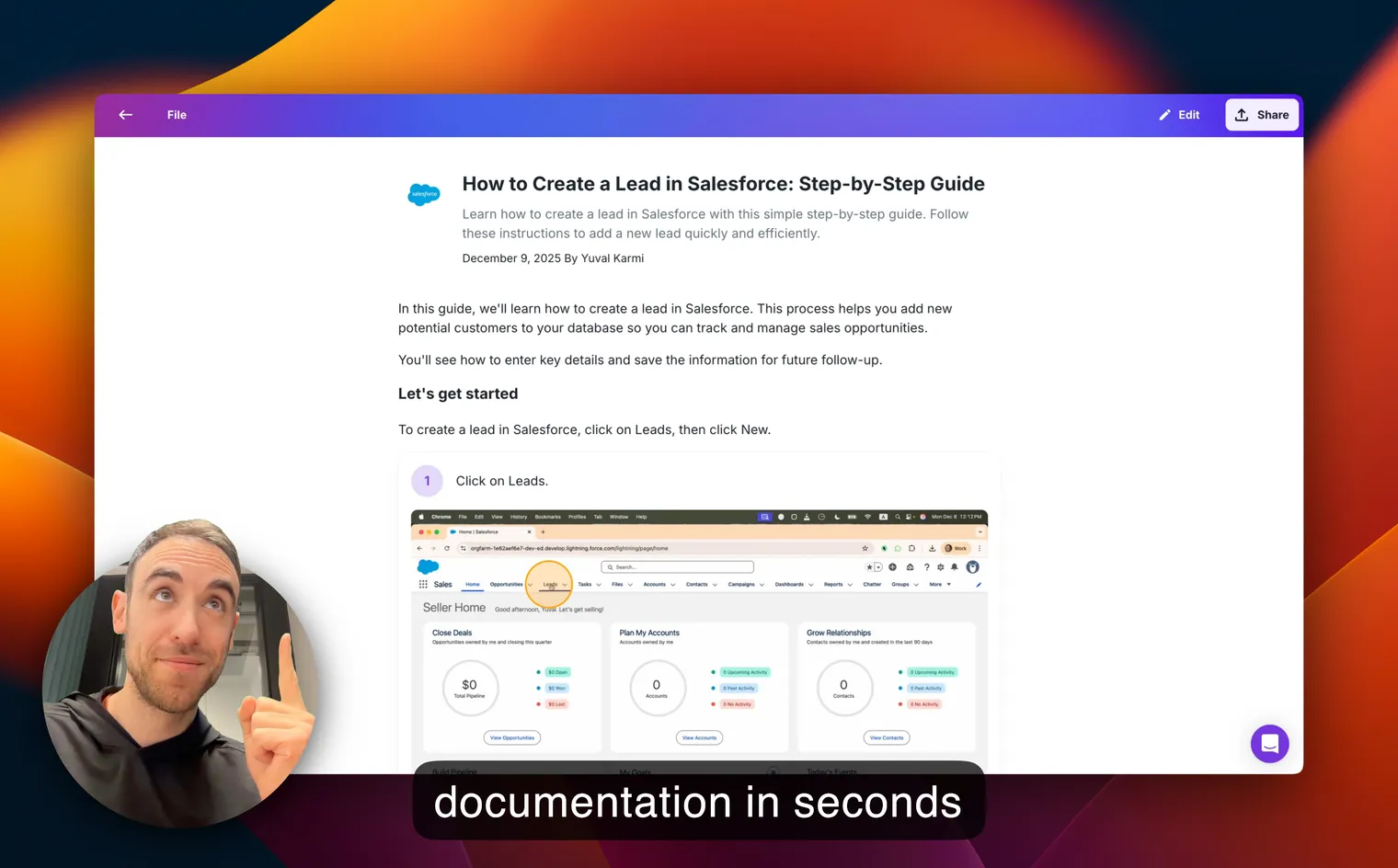
Glitter AI lets teams create visual, step-by-step training materials straight from screen recordings. Instead of handing new hires a static PDF manual, trainers can record actual workflows as they perform tasks, building the kind of reusable training SOP that scales across regulated processes and software-specific onboarding alike. That hands-on format reflects why visual SOPs tend to beat text-only documentation for learning. The platform then generates interactive guides with screenshots, annotations, and clear instructions, a far more engaging way to do SOP training.
What about when procedures change? That’s where Glitter really helps. Teams can quickly record new workflows and push updated guides to everyone instantly. This closes the gap between when a procedure changes and when employees actually learn about it, which means better compliance, fewer mistakes, and procedures that are more likely to be SOPs employees actually follow.
Teach your co-workers or customers how to get stuff done – in seconds.

Frequently Asked Questions
What does SOP training mean?
SOP training is any educational program that teaches employees how to follow and execute standard operating procedures. The goal is getting tasks done consistently and correctly based on documented protocols.
What is an example of SOP training?
A hospital training nurses on medication administration is a good example. This would cover dosage verification, documentation requirements, and safety protocols through hands-on practice and supervised execution.
Why is SOP training important?
It reduces errors, helps you stay compliant with regulations, and improves operational efficiency. Organizations with good SOP training programs tend to see productivity improvements of 15-25%.
How do I implement effective SOP training?
Start with clear learning objectives and involve subject matter experts when creating content. Give employees hands-on practice, measure competency through assessments, and run refresher training whenever procedures change.