
Read summarized version with
What is Cycle Time?
Cycle time captures the total elapsed time from when work actually begins on a process until that work wraps up. In manufacturing, this might look like measuring from when raw materials hit a production line to when a finished product rolls off the end. For knowledge work, think of it as the time from when someone starts working on a support ticket until they mark it resolved.
What sets cycle time apart from lead time is that it doesn’t count the waiting around before work kicks off. Cycle time focuses purely on active processing time, which makes it especially useful for spotting bottlenecks and understanding where operations get bogged down.
Teams track cycle time to get a handle on baseline performance, set targets for improvement, and see whether process changes are actually working. Generally speaking, shorter cycle times point to more efficient operations, quicker responses to customers, and smarter use of resources.
Key Characteristics of Cycle Time
- Process-Specific Measurement: Every process has its own cycle time, reflecting the particular steps, resources, and complexity that go into completing that workflow.
- Start-to-Finish Focus: The clock starts when work actually begins (not when something lands in a queue) and stops when the deliverable is finished and ready to move on.
- Improvement Indicator: Works as a key performance indicator showing whether changes to processes, training programs, or tools are speeding things up or slowing them down.
- Capacity Planning Tool: Gives organizations a way to figure out throughput capacity, staffing needs, and production schedules based on how fast work actually gets done.
Cycle Time Examples
Example 1: Manufacturing Assembly Line
Picture an automotive parts manufacturer tracking cycle time at a circuit board assembly station. They clock it at 47 seconds per unit, meaning from the moment a worker grabs the first component to when the completed board moves to the next station is 47 seconds flat. The team notices a frequently used tool is positioned awkwardly, so they relocate it within arm’s reach. That small change brings cycle time down to 44 seconds, which adds up to three extra units per hour in throughput.
Example 2: Customer Support Process
A software company measures cycle time for support tickets from the moment an agent starts working on an issue until they close it out. They’re averaging 35 minutes. After putting together visual work instructions for common problems, that drops to 22 minutes. Agents spend less time hunting for answers and more time actually helping customers.
Cycle Time vs Lead Time
People mix these up all the time, but cycle time and lead time track different things.
| Aspect | Cycle Time | Lead Time |
|---|---|---|
| Definition | Time spent actively working on a process | Total time from request to delivery, including wait time |
| Starts when | Work begins | Customer makes a request or order is placed |
| Includes waiting | No, only active work time | Yes, includes queue time and delays |
| Best for measuring | Process efficiency and throughput capacity | Customer experience and delivery speed |
| When to use | Internal process optimization | Customer-facing performance metrics |
How Glitter AI Helps with Cycle Time
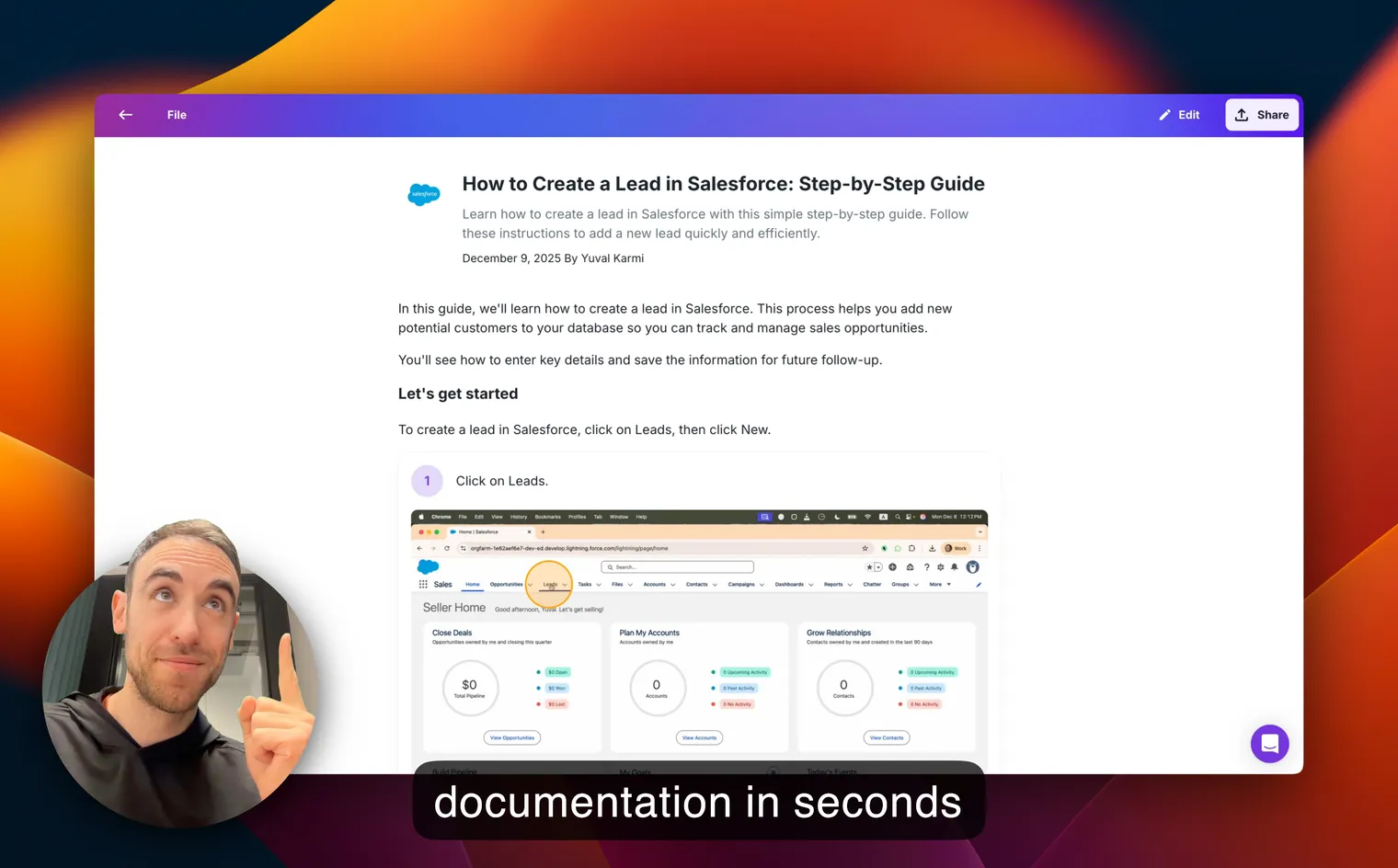
Glitter AI helps teams reduce cycle time by creating visual work instructions that cut out the wasted minutes workers spend searching for information or puzzling over what comes next. When everyone on the team has access to step-by-step screen recordings showing exactly how to complete tasks, work happens faster and more consistently, often pacing teams closer to their takt time and directly bringing down process cycle time.
There’s also the documentation side. When teams spot bottlenecks or find workflow improvements through value stream mapping or gemba walks, Glitter AI lets them quickly capture the new way of doing things as visual documentation. That way, cycle time improvements stick across all shifts and team members instead of getting lost when someone forgets the new approach.
Teach your co-workers or customers how to get stuff done – in seconds.

Frequently Asked Questions
What does cycle time mean?
Cycle time is the total time from when work begins on a process until it wraps up. It measures how long it takes to produce one unit or complete one full cycle of work, counting only active processing time without the waiting and delays.
What is an example of cycle time?
In manufacturing, if a worker takes 12 minutes from the moment they start assembling a product until it moves to the next station, the cycle time is 12 minutes. In customer service, if an agent spends 25 minutes from opening a ticket to resolving it, that's a 25-minute cycle time.
Why is cycle time important?
Cycle time matters because it directly affects productivity, customer satisfaction, and operating costs. Shorter cycle times translate to faster delivery, higher throughput, and better resource use. Tracking it helps organizations find bottlenecks and see whether their process improvements are paying off.
How do I reduce cycle time?
You can reduce cycle time by cutting unnecessary steps, standardizing how work gets done, improving training with visual instructions, moving tools and materials closer to where they're needed, and clearing out bottlenecks. Make sure to document what works so the improvements last.