
Read summarized version with
What is Lead Time?
Lead time measures the total elapsed time from when someone makes a request to when they actually receive what they asked for. It covers everything that happens in between: the waiting around, the actual work, and all those handoffs between different teams or departments.
For business operations, lead time gives you the full picture of how efficient your processes really are. It’s different from cycle time, which only counts the time spent actively working. Lead time captures the entire experience from the customer’s point of view. Organizations keep track of lead time to spot bottlenecks, set expectations people can actually trust, and make their service delivery better overall.
When companies kick off efforts to improve how work flows, reducing lead time is usually near the top of the list. This ties into continuous improvement philosophies like kaizen, where teams make small, incremental changes that steadily reduce delays. Makes sense, really. Shorter lead times tend to mean happier customers, a stronger competitive position, and better use of resources.
Key Characteristics of Lead Time
- Customer-Centric Measurement: Lead time tracks the full duration from the customer’s perspective, not just how long your internal teams spend on something
- Includes Wait Time: Unlike cycle time, lead time accounts for all those periods when work is sitting in a queue, waiting on resources, or stalled between steps
- End-to-End Visibility: It captures everything from the initial request through final delivery, which often reveals inefficiencies that span multiple departments
- Predictive Value: When you measure lead time consistently, you can forecast accurately and set deadlines that are actually realistic
Lead Time Examples
Example 1: Manufacturing
A furniture manufacturer gets a custom order on Monday. The wood materials show up Thursday, production starts Friday, assembly wraps up the following Tuesday, and the finished piece ships Wednesday for Thursday delivery. The total lead time? 11 days. But active manufacturing only took 5 of those days.
Example 2: Software Development
A customer submits a feature request that lands in the backlog on January 5th. The team starts building it January 20th, finishes by January 27th, and deploys to production February 1st. That’s a lead time of 27 days, even though the actual development work was only 7 days.
Example 3: Documentation Creation
An employee asks for a new documented procedure for a repeatable task covering a critical process. The request sits waiting for 3 days before a technical writer picks it up. Writing takes 2 days, review and approval take another 4 days, and publication takes 1 day. Total lead time: 10 days.
Lead Time vs Cycle Time
Knowing the difference between these two metrics helps you figure out where delays are actually happening.
| Aspect | Lead Time | Cycle Time |
|---|---|---|
| Start Point | Customer request received | Active work begins |
| End Point | Deliverable received by customer | Active work completes |
| Includes Wait Time | Yes, all waiting and queue time | No, only active processing |
| When to Use | Measuring customer experience and setting expectations | Analyzing work efficiency and team productivity |
How Glitter AI Helps with Lead Time
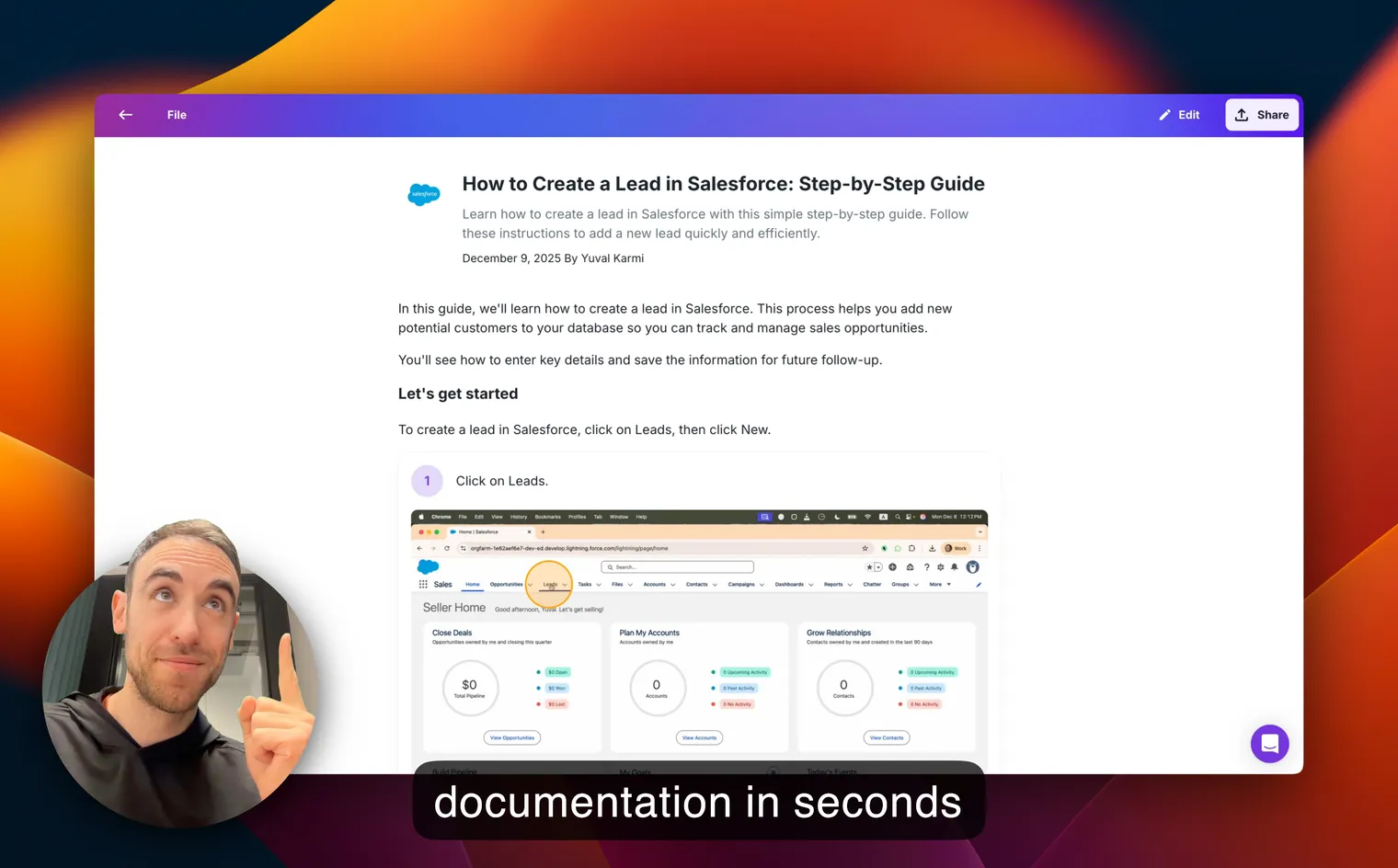
Glitter AI cuts documentation lead time dramatically by making the whole creation process faster. Traditional documentation can take days or weeks from request to publication, with a lot of time eaten up by writing, formatting, capturing screenshots, going through review cycles, and maintaining lean documentation.
With Glitter’s automated screen recording and instant documentation generation, teams can put together comprehensive guides in minutes instead of days. This big drop in lead time means employees get the information they need much faster, support teams can respond to requests right away, and organizations can keep their documentation current without creating bottlenecks.
Teach your co-workers or customers how to get stuff done – in seconds.

Frequently Asked Questions
What does lead time mean?
Lead time is the total duration from when a customer makes a request until they receive the completed deliverable, including all waiting periods and active work time.
What is an example of lead time?
If a customer orders a product on Monday and receives it on Friday, the lead time is 5 days, regardless of how long manufacturing actually took.
Why is lead time important?
Lead time directly impacts customer satisfaction and competitiveness. Shorter lead times mean faster delivery, better customer experience, and the ability to respond more quickly to market demands.
How do I reduce lead time?
Reduce lead time by identifying and eliminating bottlenecks, minimizing wait times between process steps, improving handoffs between teams, and automating repetitive tasks where possible.