
Read summarized version with
What is a Documentation Owner?
A Documentation Owner is someone responsible for creating, maintaining, and improving specific documentation within an organization. This goes beyond just contributing content. A documentation owner has real accountability for keeping their assigned docs accurate, current, and useful for the people who need them.
Think of documentation owners as the go-to people for questions about their domain. They know the subject matter inside and out, understand who’s reading the documentation, and can make smart decisions about what needs updating. This kind of distributed ownership keeps documentation fresh without putting all the burden on a single central team. When paired with a formal documentation review process, owners can ensure both accuracy and currency.
Why does this matter? Organizations are learning the hard way that “everyone’s responsible” often means “no one’s responsible.” Clear ownership prevents documentation from going stale.
Key Characteristics of a Documentation Owner
- Accountability: They’re on the hook for quality, accuracy, and timeliness. Not just edit access, but actual responsibility
- Domain Expertise: They know their subject area well enough to make good calls about content without constant hand-holding
- Lifecycle Management: Their job spans the full journey, from first draft through regular updates to eventually retiring outdated materials
- Governance Authority: They decide on content structure, when to publish, how to verify accuracy, and what to archive. This often involves keeping versioned records to track changes and maintain a clear history
- Stakeholder Coordination: They work with contributors, reviewers, and end users to make sure the documentation actually serves people’s needs
Documentation Owner Examples
Example 1: Product Documentation
Picture a product manager who owns all feature documentation for their product area. They talk to engineering to nail down technical details, lean on a software documentation guide for developers to keep technical docs consistent, check in with customer success to learn what questions keep coming up, and make sure user guides go live before each feature launches. Even during quiet periods with no product changes, they still review and update the docs quarterly. It’s an ongoing commitment.
Example 2: Process Documentation
Consider an operations team lead who owns the employee onboarding documentation. They keep the onboarding checklist current, revise training materials whenever policies shift, and make sure new hire guides reflect how things actually work today. When HR changes benefits information, they coordinate to update the relevant sections in their documentation set.
Documentation Owner vs Process Owner
These roles can overlap, but they’re not the same thing.
| Aspect | Documentation Owner | Process Owner |
|---|---|---|
| Primary Focus | Documentation accuracy and accessibility | Process execution and optimization |
| Scope | Specific documents or documentation sets | End-to-end business process |
| Deliverables | Updated documentation, style guides, knowledge articles | Process improvements, performance metrics, efficiency gains |
| When to use | When assigning responsibility for keeping specific content current | When assigning responsibility for an operational workflow |
How Glitter AI Helps with Documentation Ownership
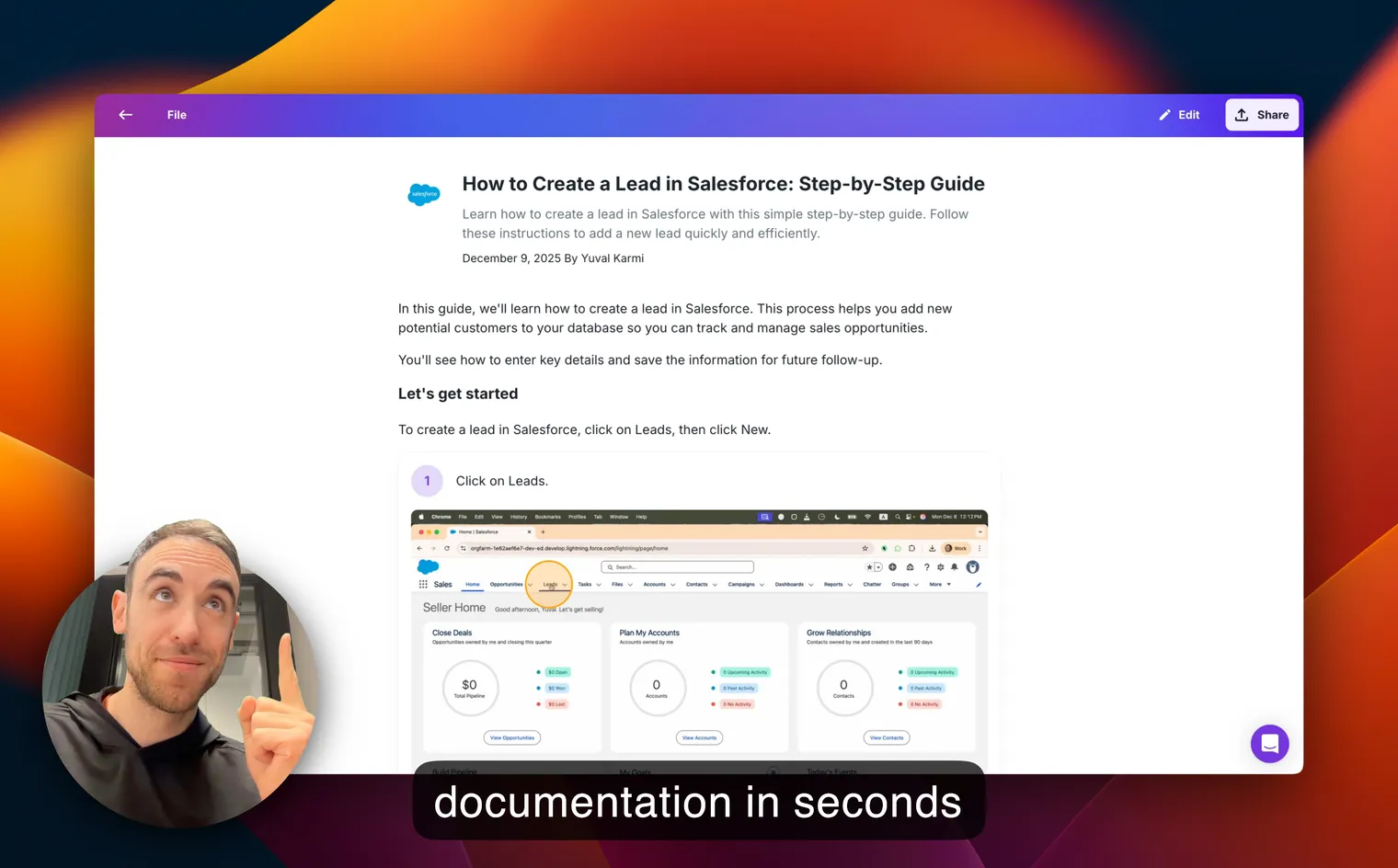
Glitter AI makes life easier for documentation owners. Instead of spending hours writing step-by-step procedures from scratch, owners can record their screen and let the platform generate structured documentation automatically. They review it, make edits, and publish.
For companies with multiple documentation owners or a dedicated documentation manager, Glitter tracks who updated what and when, with team permissions that scope who can edit which content. That visibility helps with accountability and makes compliance a lot simpler. Documentation owners can also set up review schedules and get reminders when it’s time for updates, which is the single best defense against documentation getting outdated and a core part of keeping process documentation up to date. Clear ownership is also how teams build a lasting documentation culture rather than letting docs rot. No more forgetting about that quarterly review until someone complains about outdated content, and document control becomes much simpler with these built-in workflows.
Teach your co-workers or customers how to get stuff done – in seconds.

Frequently Asked Questions
What does a documentation owner do?
A documentation owner creates, maintains, reviews, and updates specific documentation sets. They're responsible for accuracy, manage the content lifecycle, coordinate with stakeholders, and make decisions about structure, publication timing, and content retirement.
What is an example of documentation ownership?
A product manager who owns all feature documentation for their product area is a common example. They coordinate with engineering, update guides before releases, review content quarterly, and keep documentation accurate throughout the product lifecycle.
Why is documentation ownership important?
Clear ownership prevents documentation from becoming outdated or neglected. When specific individuals own documentation, you avoid the diffusion of responsibility that happens with collective ownership. The result is higher quality, more current information.
How do you assign documentation ownership?
Look at domain expertise and organizational role. The person closest to the content, who knows it best and has a stake in keeping it accurate, usually makes the best owner. Be clear about responsibilities, review schedules, and decision-making authority.