
Read summarized version with
What is an External Knowledge Base?
An external knowledge base is a customer-facing platform where organizations store and share information with people outside the company. Unlike internal knowledge bases built for employees, an external knowledge base is either publicly accessible or available to customers through login credentials. The whole point? Let people find answers on their own without having to contact support.
These self-service repositories usually contain FAQs, product documentation, troubleshooting guides, how-to articles, and video tutorials. The goal is pretty straightforward: empower customers to solve their own problems while cutting down on support tickets and phone calls.
Companies across all kinds of industries rely on external knowledge bases to make the customer experience smoother, reduce support costs, and give people 24/7 access to information. Research suggests that upwards of 90% of customers actually prefer using a self-service help library when it can answer their questions, which is probably why it has become such a core part of modern customer service. Many companies pair their external knowledge base with a help center that provides additional support options.
Key Characteristics of an External Knowledge Base
- Public accessibility: Open to anyone without company credentials, though some sections might require a customer login
- Self-service design: Built so users can find answers on their own through search, categories, and clear navigation
- Customer-focused content: Written in plain language for regular users, not technical jargon aimed at internal staff
- Search optimization: Equipped with solid search functionality so people can quickly track down the articles they need
External Knowledge Base Examples
Example 1: SaaS Product Documentation
A project management software company maintains an external knowledge base filled with getting-started guides, feature tutorials, and integration documentation. A customer searching for “how to create a project template” can pull up step-by-step instructions right away instead of waiting around for a support response.
Example 2: E-commerce Support Center
An online retailer publishes articles covering shipping policies, return procedures, and payment options in their customer-facing knowledge base. Shoppers can find out about delivery times or figure out how to track their orders instantly, which means fewer calls flooding the support line.
External Knowledge Base vs Internal Knowledge Base
Both types serve as centralized information repositories, but they target different audiences and serve different purposes.
| Aspect | External Knowledge Base | Internal Knowledge Base |
|---|---|---|
| Audience | Customers, partners, public | Employees, contractors |
| Access | Open or customer-gated | Requires company credentials |
| Content | Product help, FAQs, tutorials | SOPs, policies, procedures |
| Purpose | Self-service support | Internal operations |
How Glitter AI Helps with External Knowledge Bases
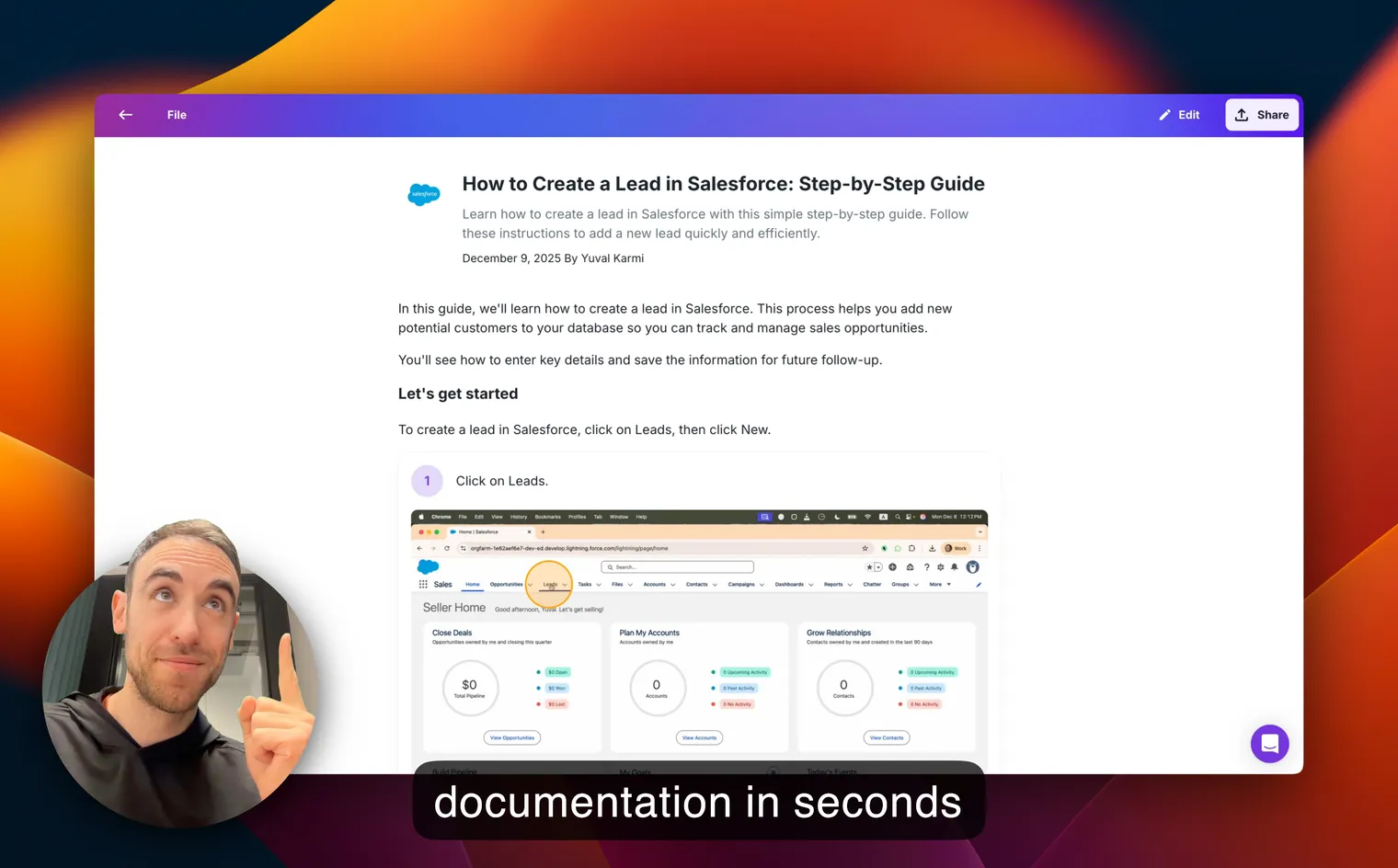
Glitter AI makes creating external knowledge base content much easier by automatically capturing screen recordings and turning them into step-by-step guides that draw on a shared best practice library keeping articles useful. Rather than manually writing out each tutorial and taking screenshots along the way, teams can follow a repeatable build process and let Glitter generate polished self-service knowledge and support documentation that is ready for customers.
This approach also helps keep external knowledge base articles up to date as products change. When a feature gets updated, teams can re-record the process and Glitter produces fresh documentation, which makes ongoing knowledge curation far less of a burden so customers always have accurate, visual instructions to work with.
Teach your co-workers or customers how to get stuff done – in seconds.

Frequently Asked Questions
What is an external knowledge base?
An external knowledge base is a public-facing repository of information designed to help customers, partners, or the general public find answers to questions without contacting support.
What is the difference between an internal and external knowledge base?
An internal knowledge base is for employees and contains operational content like SOPs, while an external knowledge base is customer-facing and contains product help, FAQs, and tutorials.
Why do companies need a customer knowledge base?
A customer knowledge base reduces support ticket volume, provides 24/7 self-service support, improves customer satisfaction, and lowers operational costs for the support team.
What content should be in a public knowledge base?
Public knowledge bases typically include FAQs, getting-started guides, product documentation, troubleshooting articles, video tutorials, and how-to instructions.
How does an external knowledge base reduce support costs?
By enabling customers to find answers independently, external knowledge bases deflect support tickets and calls, allowing teams to focus on complex issues rather than repetitive questions.
What is a customer-facing knowledge base?
A customer-facing knowledge base is another term for an external knowledge base - a self-service resource where customers can access product information, guides, and support articles.
How do you organize an external knowledge base?
Organize content by topic categories, product areas, or user journeys. Include robust search functionality, clear navigation, and link related articles to help users find information quickly.
What makes an external knowledge base effective?
Effective external knowledge bases have accurate and updated content, intuitive search and navigation, clear language written for customers, and visual aids like screenshots and videos.
Should an external knowledge base require login?
Most external knowledge bases are fully public for discoverability, though some organizations gate certain content for logged-in customers while keeping general articles open.
How often should you update a customer knowledge base?
Update content whenever products change, when customer feedback indicates confusion, or when analytics show articles are not solving user problems. Regular audits help maintain accuracy.