
Read summarized version with
What is FAQ?
FAQ stands for “Frequently Asked Questions.” It’s essentially a collection of common questions and answers about a topic, product, service, or organization. Think of an FAQ as a self-service resource where users can find answers to their questions without needing to contact support or dig through lengthy documentation. The best FAQs are concise, easy to scan, and tackle the questions people actually ask most often.
FAQs have become a staple in customer service and internal knowledge management, and for good reason. Unlike detailed knowledge articles that go deep on a single topic, FAQs keep things short and to the point. They help support teams by handling repetitive questions automatically, while giving users the quick answers they’re looking for.
In practice, FAQs work both proactively and reactively. They anticipate what people need to know, surface important information upfront, and provide fast answers that keep things moving.
Key Characteristics of FAQ
- Question-Answer Format: A question paired with a direct answer. Simple, scannable, easy to digest.
- Brevity and Clarity: Answers usually run 50-200 words. Enough to answer the question, but not so much that readers lose interest.
- Customer-Centric: The questions should sound like how actual users would phrase them. This makes them easier to find and more relevant.
- Organized by Topic: Most FAQs group related questions into sections so users can browse by category instead of scrolling through everything.
- Regularly Updated: Good FAQs evolve over time. They change based on what customers actually ask, what shows up in support tickets, and how your product or processes change.
FAQ Examples
Example 1: Product FAQ Page
Say you run an online store. Your FAQ page might include questions like “What’s your return policy?”, “How long does shipping take?”, and “Do you ship internationally?” Each answer gives the specifics: timeframes, costs, what to expect. Customers get their answers right away instead of waiting on an email or sitting on hold.
Example 2: Internal Process FAQ
An HR department puts together an FAQ document for employees about benefits enrollment. It covers questions like “When can I change my health insurance plan?”, “How do I add a dependent to my coverage?”, and “What happens to my benefits if I go on leave?” Employees can find answers on their own, and HR spends less time answering the same questions over and over.
FAQ vs Knowledge Article
Both FAQs and knowledge articles give users information, but they’re built for different situations.
| Aspect | FAQ | Knowledge Article |
|---|---|---|
| Purpose | Quick answer to a common question | Full explanation with context and solutions |
| Scope | Short, direct response | In-depth coverage of a topic |
| Length | 50-200 words, mostly text | 300-1500+ words, often with images or video |
| When to use | Simple questions with straightforward answers | Complex issues that need step-by-step guidance |
Best Practices for FAQ Pages
Gather Questions from Real Users
The best FAQs come from actual questions, not guesses about what people might ask. Look at your support tickets, listen to sales calls, and pay attention to user feedback. Those are your real FAQs.
Use Natural Language
Write questions the way your users would ask them. If people commonly misspell something or phrase a question a certain way, use that phrasing. It makes your FAQ easier to find.
Keep Answers Concise
Get to the point quickly. If someone needs more detail, link them to a full knowledge article or a how-to guide. Most people just want the short answer.
Organize and Categorize
Group related questions together. Nobody wants to scroll through 50 unrelated questions to find the one they need. Categories help people browse by topic.
Include Search Functionality
Once you have more than 10-15 questions, add a search bar. It helps users jump straight to what they’re looking for instead of scanning through everything. Many organizations house their FAQs within a broader knowledge base or help center that provides unified search across all support content.
How Glitter AI Helps with FAQ
Glitter AI makes creating and updating FAQ documentation a lot easier, and teams sizing up options often look at how Glitter AI stacks up against ScreenSteps. Instead of writing out every step of a process, you just demonstrate it. Glitter records your screen and actions, then automatically generates clear answers with annotated screenshots and video.
This works especially well for “how-to” FAQ answers and product demos. What used to require writing, taking screenshots, and formatting now just takes a quick recording session. When processes change, you re-record and regenerate, tidying up the result in the guide editor before it goes live. Your FAQ stays up to date without the usual documentation headache.
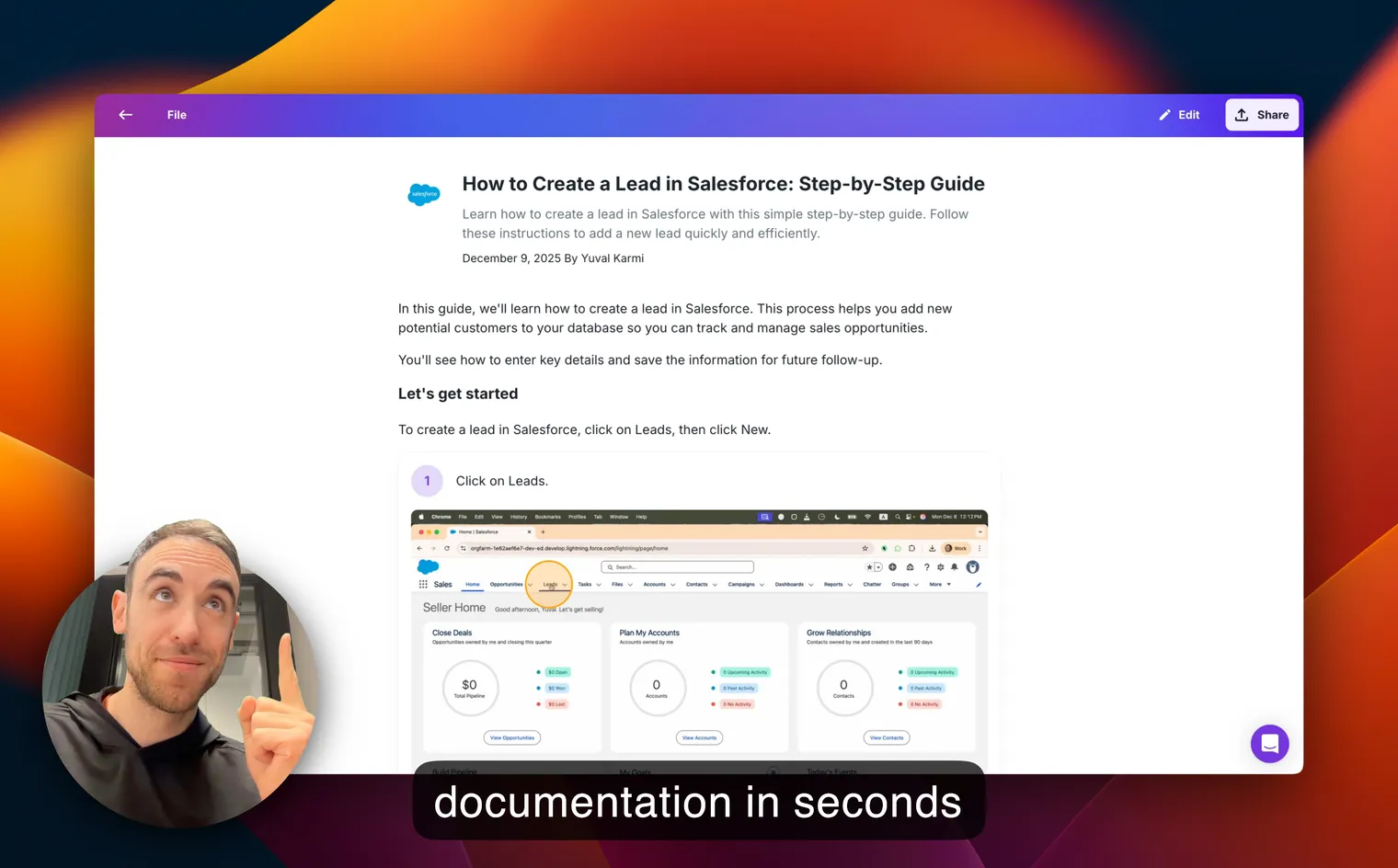
Teach your co-workers or customers how to get stuff done – in seconds.

Frequently Asked Questions
What does FAQ stand for?
FAQ stands for 'Frequently Asked Questions.' It's a list of common questions and answers about a topic, product, or service. The goal is to help people find answers fast without needing to contact support.
What is an example of an FAQ?
A shipping FAQ on an e-commerce site is a classic example. It answers questions like 'How long does delivery take?', 'What are the shipping costs?', and 'Can I track my order?' Each question gets a short, direct answer with the specifics.
Why are FAQs important?
FAQs cut down on repetitive support requests and give users instant answers. This improves customer satisfaction and frees up your support team to handle the more complex issues that actually need human attention.
How do I create an effective FAQ?
Start with real questions from customers, support tickets, and sales conversations. Write questions the way people actually ask them, keep answers clear and short, organize by topic, and update regularly as things change.
What is the difference between FAQ and knowledge base?
An FAQ gives brief answers to common questions. A knowledge base is bigger. It includes FAQs, but also detailed knowledge articles, how-to guides, and other documentation, all in one searchable place.