
Read summarized version with
What is an Internal Knowledge Base?
An internal knowledge base is where your company stores everything employees need to know. Unlike customer-facing help centers that anyone can access, an internal KB keeps proprietary information, confidential processes, and company-specific knowledge behind closed doors. Think of it as your organization’s private digital brain.
The goal? Give people one place to find answers, a single source of truth. HR policies, onboarding materials, technical documentation, SOPs, troubleshooting guides. Instead of interrupting a coworker or hunting through old emails, someone checks the internal knowledge base first.
Here’s the thing though: what separates a useful internal knowledge base from a forgotten document dump is whether anyone actually maintains it. The ones that work have clear owners, regular content reviews, and a culture where contributing knowledge isn’t optional. Effective knowledge management is what keeps your internal KB current and keeps teams aligned.
Key Characteristics of Internal Knowledge Base
- Restricted Access: Only employees and authorized internal stakeholders see the content. Sensitive company information stays protected while remaining available to the people who need it.
- Comprehensive Coverage: Everything lives here. Company policies, SOPs, technical docs, training materials, and hard-won know-how passed along informally that would otherwise exist only in people’s heads. If employees need it for work, it belongs in the internal knowledge base.
- Searchability: People can find answers without knowing exactly where to look. Good search functionality means fewer interruptions and faster problem-solving.
- Collaborative Maintenance: Teams across departments can contribute, update, and review content. This keeps knowledge current and accurate rather than stale and forgotten.
Internal Knowledge Base Examples
Example 1: Technology Company
A software company keeps engineering runbooks, product specs, security protocols, sales playbooks, and HR policies in their internal knowledge base. Before a release, developers check deployment procedures. Sales reps pull up competitive intelligence before calls. New hires work through onboarding during week one. Everyone operates from the same information.
Example 2: Healthcare Organization
A hospital network stores clinical protocols, administrative procedures, compliance documentation, and staff training in their internal KB. Nurses access patient care guidelines during shifts. Administrators reference regulatory requirements for audits. HR runs a consistent onboarding process. Sensitive medical protocols stay protected while authorized staff can still reach them.
Internal Knowledge Base vs External Knowledge Base
These serve completely different audiences, even though the technology often looks similar.
| Aspect | Internal Knowledge Base | External Knowledge Base |
|---|---|---|
| Audience | Employees and internal stakeholders only | Customers, prospects, and the general public |
| Content | Proprietary processes, confidential policies, internal procedures | Product documentation, FAQs, help articles, tutorials |
| Access | Restricted, often requiring authentication | Public or customer-login accessible |
Most organizations end up with both. The internal KB handles how things work behind the scenes. The external one helps customers get value from what you sell.
How Glitter AI Helps with Internal Knowledge Base
Let’s be honest: building and maintaining an internal knowledge base takes forever. Subject matter experts have their actual jobs to do, and documenting processes always seems to slide down the priority list, a problem that hits even harder for distributed teams documenting processes remotely. You end up with a knowledge base that starts strong but slowly becomes outdated and incomplete, which is often what pushes teams to weigh Document360 alternatives in the first place.
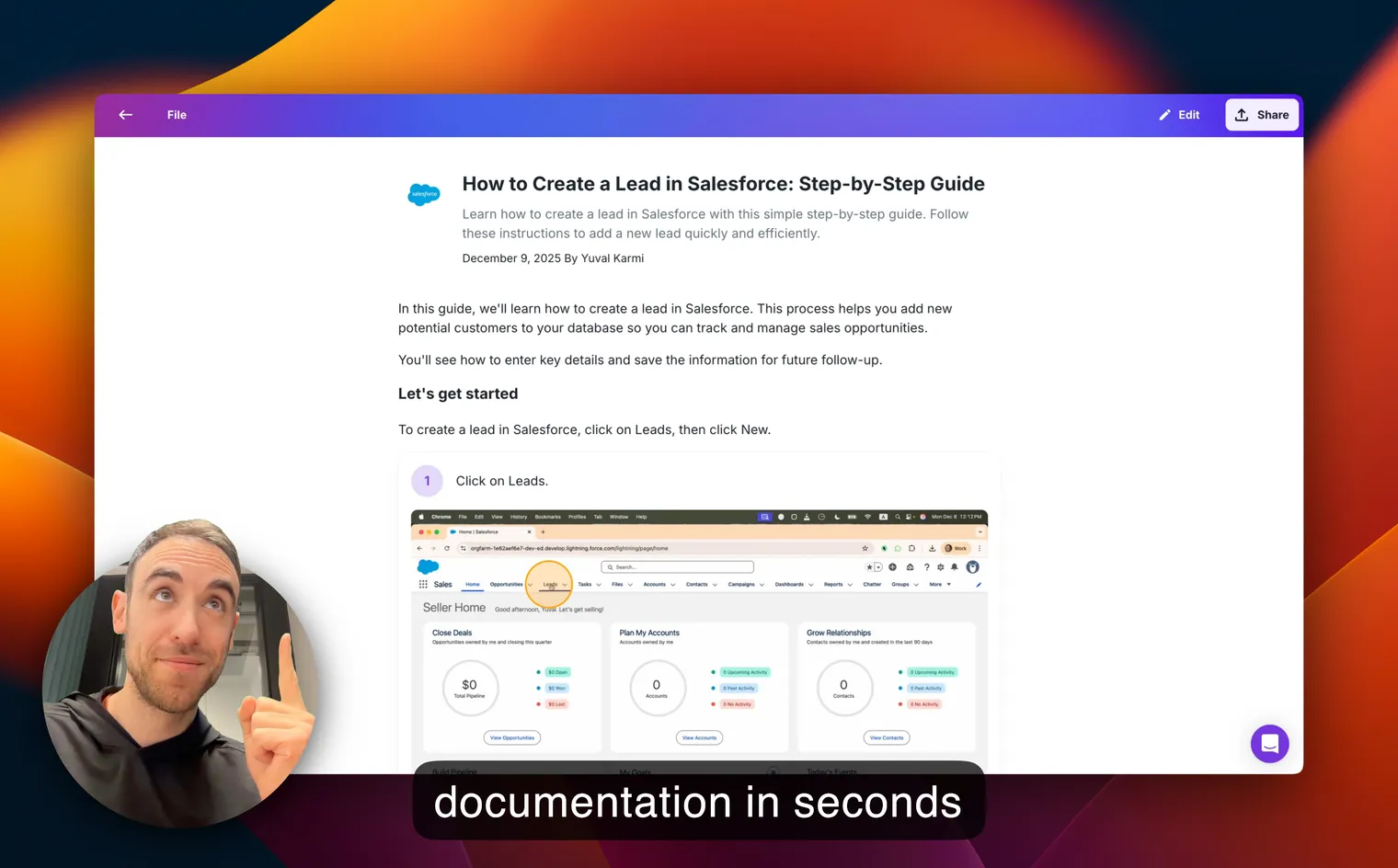
Glitter AI fixes this by making documentation quick and painless. Employees record their screen while doing a process, and Glitter automatically creates visual step-by-step guides with screenshots and clear instructions. What used to take hours now takes minutes. Teams can fill their internal KB, or a dedicated knowledge management system, with accurate, consistent content that people actually use because it’s visual and easy to follow, turning scattered docs into a curated best practice library. If you’re outgrowing your current wiki, it’s worth weighing the alternatives to Tettra, Document360, or Coda before you commit. The same approach powers our employee handbook builder for policy documentation.
Teach your co-workers or customers how to get stuff done – in seconds.

Frequently Asked Questions
What is an internal knowledge base?
An internal knowledge base is a private, centralized repository of company information accessible only to employees. It stores policies, procedures, training materials, and proprietary knowledge that staff need to do their jobs effectively.
What should an internal knowledge base include?
An internal KB should include standard operating procedures, company policies, onboarding materials, technical documentation, troubleshooting guides, best practices, and any other information employees need to reference in their roles.
What is the difference between an internal and external knowledge base?
An internal knowledge base is restricted to employees and contains proprietary company information. An external knowledge base is public-facing and provides customers with product documentation, FAQs, and support resources.
Why do companies need an internal knowledge base?
Companies need internal knowledge bases to centralize information, reduce time spent searching for answers, preserve institutional knowledge, speed up employee onboarding, and keep processes consistent across teams.
How do you build an internal knowledge base?
Start by auditing existing documentation, identifying knowledge gaps, choosing software that fits your needs, establishing content ownership, and systematically documenting processes. Regular maintenance and updates are essential for long-term success.
What is an internal KB?
Internal KB is shorthand for internal knowledge base. It's a private information repository for employees that stores company documentation, procedures, and institutional knowledge in a searchable, centralized location.
What is the best software for an internal knowledge base?
The best software depends on your needs. Options range from dedicated knowledge base platforms to wiki tools and documentation software. Key features to look for include search functionality, access controls, version history, and easy content creation.
How do you keep an internal knowledge base up to date?
Assign content owners responsible for specific sections, schedule regular content reviews, encourage employees to flag outdated information, and use tools that make updating quick and easy. Documentation should be part of standard workflows, not an afterthought.
What is the ROI of an internal knowledge base?
Organizations typically see ROI through reduced time searching for information (which studies show can consume 20% of work hours), faster employee onboarding, fewer repetitive questions to subject matter experts, and better knowledge retention when employees leave.
How is an internal knowledge base different from a company wiki?
The terms overlap significantly. A company wiki emphasizes collaborative editing in a Wikipedia-style format, while an internal knowledge base may have more structured content types and publishing workflows. Many modern tools combine both approaches.