
Read summarized version with
What is an Internal Wiki?
An internal wiki is basically your company’s private version of Wikipedia. It’s a secure, collaborative website where employees can create, edit, and share information in real time. Unlike those static documents that end up buried in shared drives, an internal wiki stays connected through links and gets updated continuously. When done right, it becomes your one authoritative place for company information, so finding related information actually feels intuitive.
The word “wiki” comes from Hawaiian, meaning “quick,” and that captures what makes it work: anyone with access can add or update content without needing to know HTML or bother IT. Content grows organically as people contribute what they know. You’ll typically find meeting notes, standard operating procedures, product documentation, HR policies, project plans, and team playbooks living in a wiki, which is why teams outgrowing an all-in-one doc workspace often weigh the best Coda alternatives when deciding where this content should live.
What really distinguishes an internal wiki from other documentation tools is that everything links together. Pages reference each other, search pulls up relevant content, and version history shows exactly who changed what. The result? A living document that supports strong knowledge management by reflecting what your organization actually knows right now, not what someone documented six months ago and never touched again.
Key Characteristics of an Internal Wiki
- Collaborative Editing: Anyone with access can create pages or update existing ones. This distributed ownership fosters a healthy habit of writing things down as a team and prevents bottlenecks where one person becomes the documentation gatekeeper.
- Interconnected Pages: Wiki pages link to related topics, building a web of knowledge that users can browse naturally. These connections help surface context you might not have known to look for.
- Search and Navigation: Full-text search and organized categories make finding specific information straightforward, even when your wiki grows to thousands of pages.
- Version History: Every edit gets tracked, showing who made changes and when. This creates accountability and lets you revert mistakes or trace how a process evolved over time.
- Access Control: Internal wikis are private by default. Permissions determine who can view, edit, or manage different sections.
Internal Wiki Examples
Example 1: Engineering Team Knowledge
A software company uses their internal wiki to document system architecture, coding standards, deployment procedures, and incident postmortems. New engineers work through the wiki to understand how systems are built. After an outage, the team documents what broke and how they fixed it, so that knowledge sticks around for the next time something similar happens.
Example 2: Company Operations Hub
A growing startup treats their internal wiki as the single source of truth for operations. The employee handbook lives there, along with benefits details, expense policies, and how each department runs. When a policy changes, one wiki update reaches everyone immediately. No more emails that get lost or forgotten.
Internal Wiki vs Knowledge Base
Both store organizational information, but they take different approaches.
| Aspect | Internal Wiki | Knowledge Base |
|---|---|---|
| Purpose | Collaborative space for evolving organizational knowledge | Structured repository for finalized, approved content |
| Editing | Anyone can edit; changes go live immediately | Often requires formal review and approval |
| When to use | When knowledge evolves frequently and collaboration matters | When content needs to be authoritative and tightly controlled |
How Glitter AI Helps with Internal Wikis
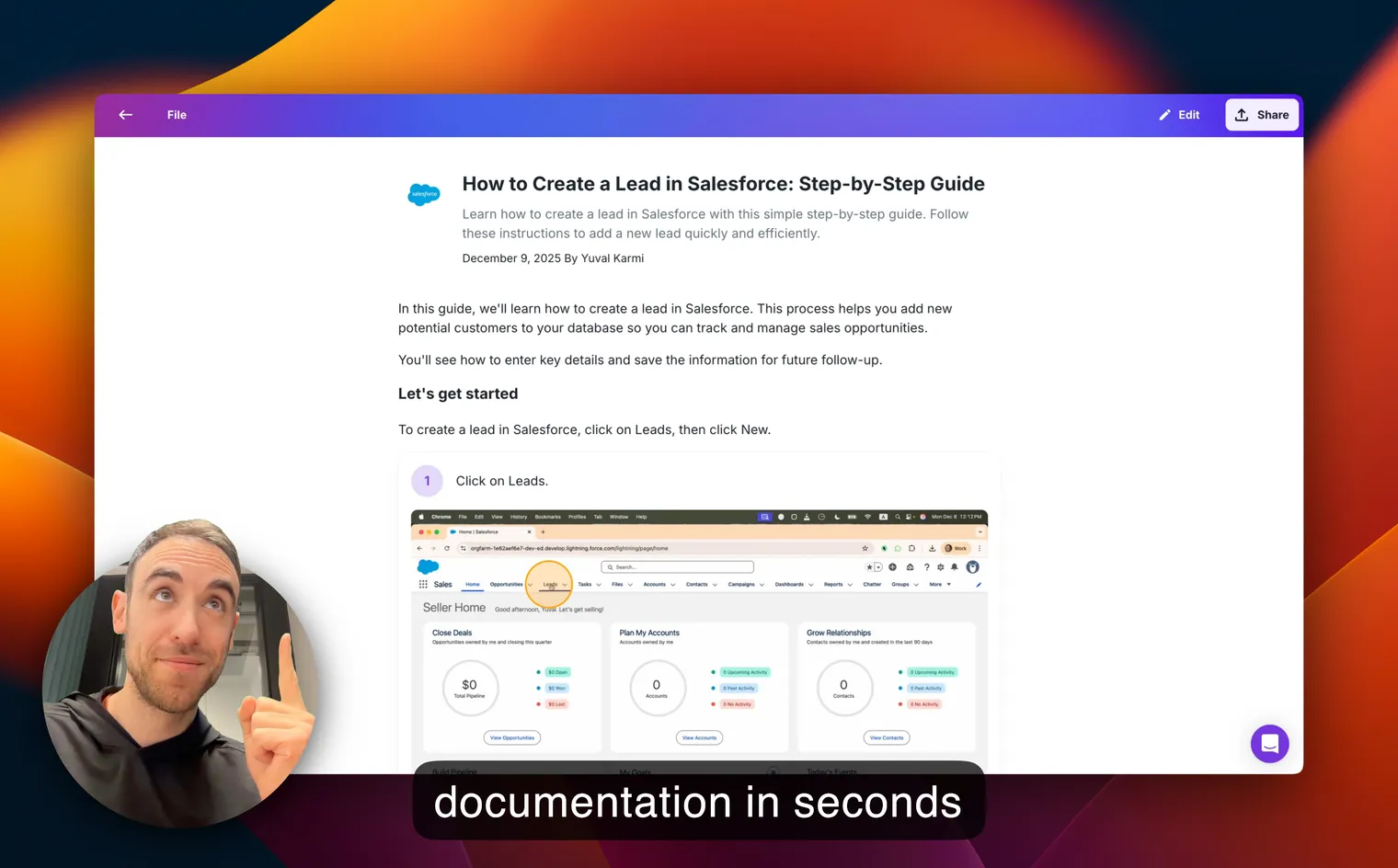
Glitter AI speeds up the process of populating an internal wiki significantly. Rather than spending hours writing documentation from scratch, teams just record their screen while doing a task, a faster path than starting in one of the Slite alternatives and typing pages by hand. Glitter automatically generates step-by-step guides with screenshots that can go straight into the wiki, which makes ongoing knowledge curation far less of a chore.
This works especially well for process documentation that changes often. When a workflow updates, someone records the new process and Glitter produces fresh documentation. The wiki stays current without anyone having to manually rewrite everything. If you’re still choosing where that knowledge should live, our step-by-step guide to creating a knowledge base walks through the decision. A head-to-head Notion vs Confluence comparison, plus roundups of the best Confluence alternatives, Tettra alternatives, Whale alternatives, and Nuclino alternatives, cover the leading wiki platforms.
Teach your co-workers or customers how to get stuff done – in seconds.

Frequently Asked Questions
What is an internal wiki?
An internal wiki is a private, collaborative website where employees create, edit, and share organizational knowledge, policies, and documentation that only team members can access.
What is the best internal wiki software?
Popular options include Confluence, Notion, Slite, Nuclino, and Tettra. The right choice depends on your team size, what integrations you need, and your budget.
How do I set up a team wiki?
Pick wiki software that fits your needs, create an initial structure with main categories, invite your team, and start documenting key processes. Focus first on high-value content like onboarding materials and frequently asked questions.
What should I put in a private wiki?
SOPs, company policies, meeting notes, project documentation, technical guides, onboarding materials, and any knowledge that multiple people need to access on a regular basis.
How is an internal wiki different from a shared drive?
Wikis are built for easy editing, linking between pages, and search. Shared drives just store files without encouraging collaboration or making it easy to discover related content.
Who should maintain an internal wiki?
Everyone should contribute, but having designated knowledge managers or documentation owners for each section helps keep content accurate and current.
How do I get employees to use the internal wiki?
Make it the official source for important information, work it into daily workflows, lead by example, and keep content accurate and easy to find.
Can an internal wiki replace email for knowledge sharing?
Wikis excel at persistent, reusable knowledge. Email works better for time-sensitive communications. Most teams use both together, with wikis for documentation and email for notifications.
How often should internal wiki content be reviewed?
Critical procedures should be reviewed quarterly, other content at least annually. Setting up reminders or assigning content owners helps ensure reviews actually happen.
What are the benefits of using an internal wiki?
They centralize knowledge, cut down time spent searching for information, preserve institutional knowledge when employees leave, and let people find answers to common questions on their own.