
Read summarized version with
What is an Operations Manual?
An operations manual is essentially your organization’s playbook for getting things done. It pulls together all the procedures, policies, and operational processes that keep a business running smoothly. Think of it as the authoritative source for how work actually happens, giving teams a consistent approach and helping new hires get up to speed when someone leaves or transitions to a different role.
What sets an operations manual apart from training materials is its focus on day-to-day operational reality rather than skill-building. It tackles the practical questions that come up constantly: “How do we process invoices?” “What’s our customer escalation procedure?” “Who handles equipment maintenance, and how?” You’ll typically find documented operating procedures, org charts, key contact information, emergency protocols, and decision-making frameworks all in one place.
Why do organizations invest time in operations manuals? They help maintain quality standards, keep you on the right side of regulations, speed up employee onboarding, and preserve the institutional knowledge that might otherwise walk out the door. A good operations manual cuts down on operational risks and mistakes, and it frees teams to work more independently without needing constant guidance. When used alongside a guide for teaching job skills, it provides both reference material and skill development resources.
Key Characteristics of Operations Manual
- Comprehensive Scope: Covers all the critical operational processes across departments, everything from daily routines to emergency procedures and how to handle exceptions
- Centralized Reference: Acts as the single source of truth for how the organization operates, available to anyone who needs it
- Living Document: Gets updated regularly to reflect process improvements, regulatory changes, and how the organization evolves over time
- Practical Focus: Prioritizes actionable procedures over theoretical concepts, with clear instructions you can actually follow
- Cross-Functional Coverage: Includes processes that span multiple departments and spells out handoff points between teams. Many organizations also develop a playbook for strategic decision-making alongside their operations manual.
Operations Manual Examples
Example 1: Restaurant Operations Manual
Picture a restaurant chain with a 200-page operations manual that covers everything from opening and closing procedures to food prep standards, health and safety protocols, inventory management, customer service guidelines, equipment maintenance schedules, and employee scheduling. Each location manager relies on this manual to make sure every restaurant runs the same way, whether you’re in Chicago or Miami.
Example 2: IT Department Operations Manual
A tech company might build an operations manual for their IT department that walks through network maintenance procedures, how to set up user accounts, backup and disaster recovery protocols, security incident response plans, vendor management processes, and software deployment steps. The manual gives IT staff a consistent approach to routine tasks and helps them respond effectively when something critical goes wrong.
Operations Manual vs Procedure Manual
These two documents are closely related, but they serve somewhat different purposes in your organizational documentation.
| Aspect | Operations Manual | Procedure Manual |
|---|---|---|
| Purpose | Document how the entire organization operates | Detail specific procedures for particular processes |
| Scope | Comprehensive view of all operational aspects | Focused on specific procedures or a single department |
| Audience | All operational staff across the organization | Specific roles performing particular procedures |
| When to use | As the primary operational reference for the organization | For detailed guidance on specific processes |
How Glitter AI Helps with Operations Manual
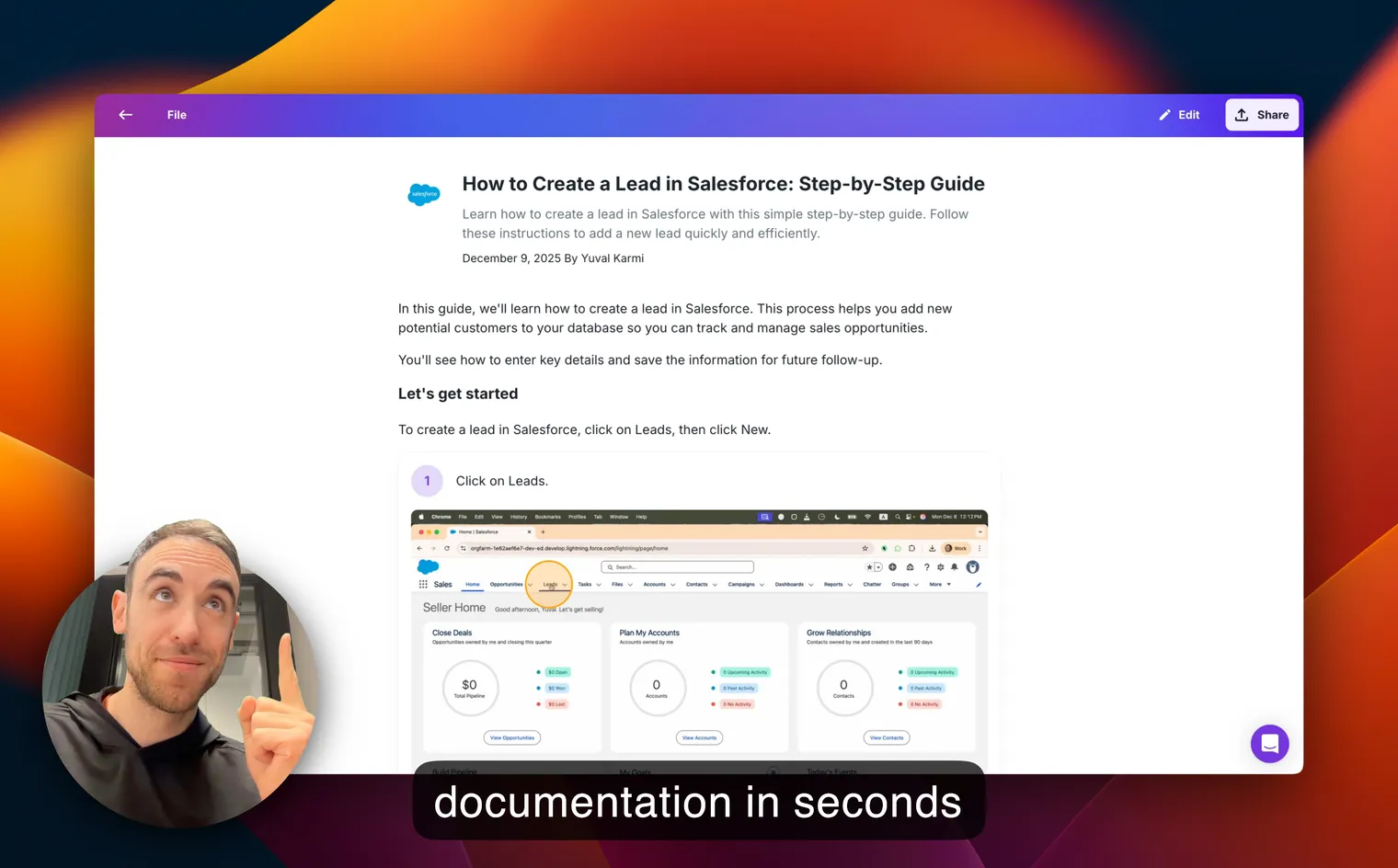
Glitter AI changes the game for operations manual creation and maintenance. Instead of trying to write procedures from memory (which, let’s be honest, rarely captures what actually happens), teams can record their screens while performing operational tasks. Glitter then generates clear, visual SOPs automatically in minutes that slot right into your operations manual. The output follows the same operations documentation best practices that keep references trustworthy.
The real headache with operations manuals has always been keeping them current as processes change, and it helps to understand what a well-built SOP looks like before you start. With Glitter AI, updating procedures takes minutes rather than hours. Process changed? Just record the new workflow, swap out the old section, and every operational process in your manual stays a trusted, up-to-date resource that people actually use, not a dusty document everyone ignores.
Teach your co-workers or customers how to get stuff done – in seconds.

Frequently Asked Questions
What does operations manual mean?
An operations manual is a comprehensive reference document that consolidates all standard operating procedures, policies, and processes required to run an organization or department effectively. It serves as the authoritative guide for daily operations.
What is an example of an operations manual?
A common example is a retail store operations manual that covers opening and closing procedures, cash handling, inventory management, customer service protocols, safety procedures, and employee scheduling guidelines.
Why is an operations manual important?
Operations manuals ensure consistency across teams, enable efficient onboarding, preserve institutional knowledge, reduce operational errors, ensure compliance with regulations, and allow the organization to function smoothly even when key employees are absent.
How do I create an operations manual?
Start by identifying all critical operational processes, document current workflows through observation or screen recording with tools like Glitter AI, organize procedures logically by department or function, and establish a regular review schedule to keep the manual current.