
Read summarized version with
What is a Playbook?
A playbook brings together proven processes, procedures, and best practices into one reference guide for handling specific business situations. While a documented step-by-step procedure typically covers a single task, a playbook takes a broader view. It combines multiple processes, decision frameworks, and tactical guidance to help teams navigate complex scenarios from start to finish.
Think of a playbook as the go-to resource when your team faces a challenge they’ve seen before or needs to execute a strategic initiative. Most playbooks include step-by-step instructions, decision trees, templates, real examples, and troubleshooting tips. These elements are tailored to specific contexts, whether that’s a sales cycle, customer success interaction, or incident response situation.
Organizations rely on playbooks to create consistency across teams, speed up onboarding, and make sure critical business processes get executed the same way every time. When you surface what actually works through process discovery and capture that institutional knowledge, teams can respond effectively to familiar situations without starting from scratch. For IT operations, a step-by-step operations guide serves a similar purpose with a more technical focus.
Key Characteristics of Playbooks
- Scenario-Focused: Built for specific business situations or use cases, not isolated tasks
- Multi-Process Integration: Weaves together multiple procedures, workflows, and decision points into one cohesive guide
- Strategic and Tactical: Covers both the big-picture strategy and the nuts-and-bolts execution steps
- Living Document: Gets updated regularly as teams learn new things, markets shift, and performance data comes in
- Context-Rich: Goes beyond instructions to include examples, templates, scripts, and real-world applications
Playbook Examples
Example 1: Sales Playbook
A B2B software company puts together a sales playbook that covers qualification criteria, discovery questions, objection handling scripts, competitive positioning guides, and deal closing checklists. Sales reps use this playbook throughout the sales cycle to navigate prospect conversations, position the product effectively, and keep deals moving forward.
Example 2: Customer Success Playbook
A SaaS company builds out a customer success playbook containing onboarding workflows, health score criteria, expansion opportunity indicators, churn risk responses, and QBR templates. Customer success managers turn to this playbook to make sure every customer gets consistent, high-quality engagement at each stage of their journey.
Example 3: Incident Response Playbook
An IT operations team maintains an incident response playbook with escalation procedures, communication protocols, troubleshooting decision trees, rollback procedures, and post-incident review templates. When something breaks, the team follows the playbook to get services back up quickly while minimizing the impact on the business.
Playbook vs Runbook
Both playbooks and runbooks give teams procedural guidance, but they’re designed for different purposes and audiences.
| Aspect | Playbook | Runbook |
|---|---|---|
| Purpose | Strategic guide for business scenarios | Operational guide for technical tasks |
| Scope | Broad, multi-process approach | Narrow, specific procedure focus |
| When to use | Recurring business situations requiring judgment | Routine technical operations and troubleshooting |
| Audience | Cross-functional teams, client-facing roles | Technical teams, IT operations |
| Content | Strategy, processes, templates, best practices | Step-by-step technical instructions, commands |
How Glitter AI Helps with Playbooks
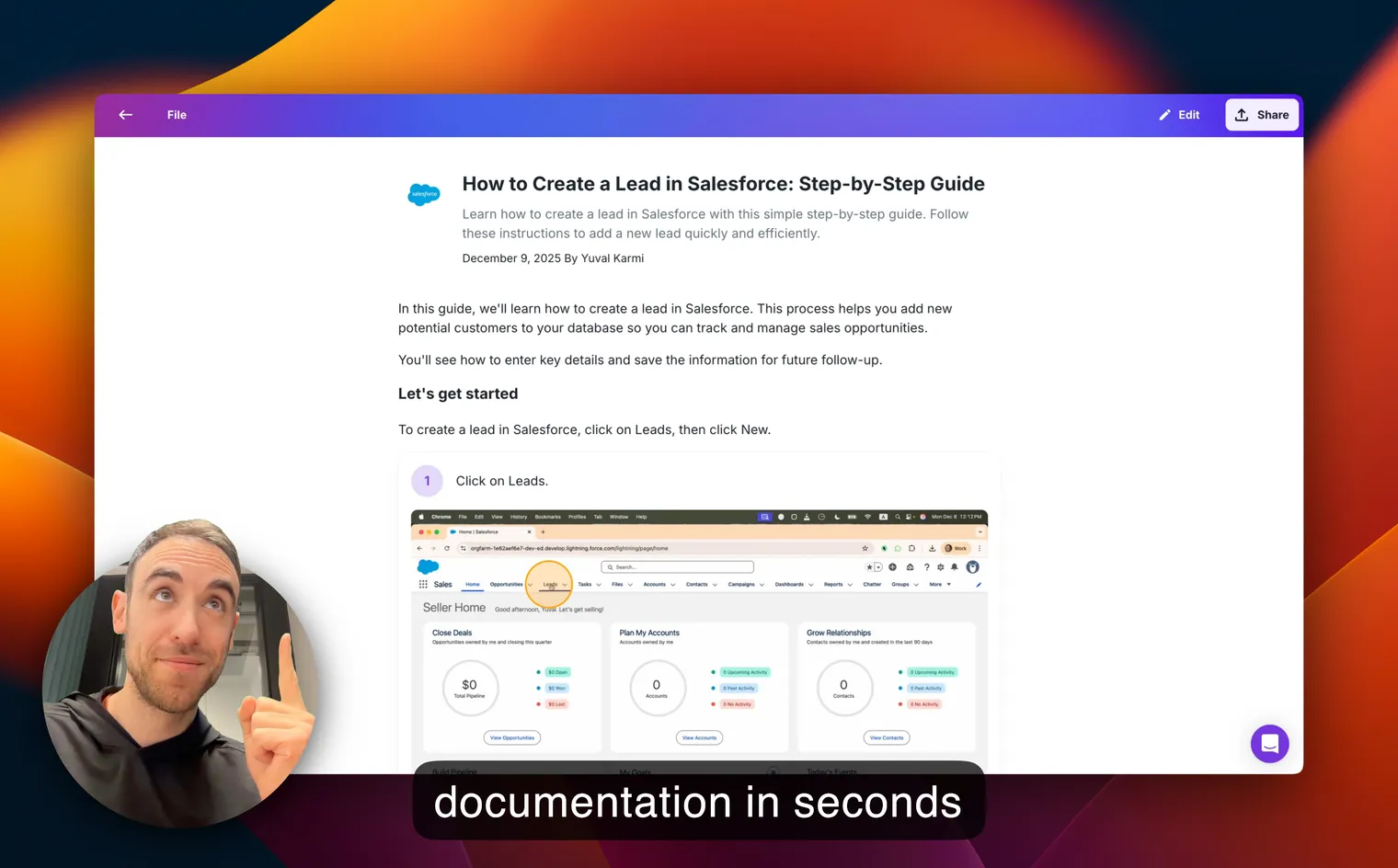
Glitter AI makes playbook creation faster by letting teams capture processes visually as they actually do them. Instead of writing documentation from memory (which, let’s be honest, often means things get forgotten or simplified), teams can record their screen while walking through scenarios. Glitter then generates structured, editable playbook content with screenshots and step-by-step instructions included, giving you a clear visual map of each process flow inside the playbook.
When a process evolves toward its intended future state, updating playbooks becomes straightforward. Teams can re-record updated workflows rather than hunting through documents to find what needs editing, which makes it easier to spot a recurring bottleneck and fix it before it slows everyone down. Glitter handles the formatting and organization automatically, so playbooks stay current without requiring hours of manual maintenance.
Teach your co-workers or customers how to get stuff done – in seconds.

Frequently Asked Questions
What does playbook mean in business?
In a business context, a playbook is a strategic guide documenting proven processes, best practices, and decision frameworks for handling specific scenarios. This might include sales cycles, customer interactions, or crisis management situations.
What is an example of a playbook?
A common example is a sales playbook containing prospect qualification criteria, discovery questions, competitive battle cards, pricing guidelines, and proposal templates. Sales teams use it to guide prospects through the buying journey in a consistent way.
Why is a playbook important?
Playbooks help teams execute consistently, get new employees up to speed faster, preserve institutional knowledge, and improve outcomes by documenting approaches that have proven to work in specific situations.
How do I create a business playbook?
Start by picking a specific scenario to document. Talk to your top performers about current best practices, organize the content by workflow stages, add templates and real examples, then keep updating based on results and team feedback.