
Read summarized version with
What is a Procedure Manual?
A procedure manual is a document that pulls together all the detailed instructions and guidelines your team needs to perform specific tasks and processes. Where individual standardized procedures (SOPs) focus on one process at a time, a procedure manual collects multiple procedures into a single reference that helps keep everyone on the same page.
Think of it as your organization’s “how-to” bible. It tells employees not just what needs to get done, but exactly how to do it, along with tips and standards that help people meet company expectations. Whether someone’s handling a routine task or working through something more complex, they can find guidance in one place.
Why do organizations bother creating these? Mostly to stop people from doing the same thing five different ways. A procedure manual helps with regulatory compliance, keeps quality consistent across teams, and gives new hires something concrete to learn from. When you actually keep it updated, it becomes one of those resources people rely on daily. Many procedure manuals also include hands-on instructions for particularly detailed tasks.
Key Characteristics of a Procedure Manual
- Broad Coverage: Includes multiple related procedures organized by department, function, or process area instead of covering just one task
- Step-by-Step Instructions: Walks through specific actions, who’s responsible for what, and what the end result should look like
- Consistent Format: Uses the same language, terminology, and structure throughout so people don’t get confused jumping between sections
- Easy to Use: Written clearly enough that both new hires and veterans can find what they need without wading through jargon
- Always Evolving: Needs regular updates as regulations change, technology shifts, or better ways of doing things emerge
Procedure Manual Examples
Example 1: Manufacturing Operations
A manufacturing facility might have a procedure manual with 50+ procedures. It could cover equipment operation, quality control checks, safety protocols, maintenance schedules, and inventory handling. Each section walks through the specifics, like how to run a particular machine, what to look for during quality inspections, or proper material handling. The goal is simple: make sure the day shift and night shift do things the same way.
Example 2: Customer Service Department
A customer service procedure manual typically covers how to handle inquiries, process returns, escalate complaints, navigate the CRM system, and manage customer communications. This way, it doesn’t matter if someone started last week or has been with the company for years. Everyone follows the same playbook.
Procedure Manual vs Operations Manual vs Policy Manual
People often use these terms interchangeably, but they actually serve different purposes:
| Aspect | Procedure Manual | Operations Manual | Policy Manual |
|---|---|---|---|
| Purpose | How to perform specific tasks | Overall operational guidance | High-level rules and principles |
| Scope | Detailed step-by-step instructions | Broad operational processes | Company values and expectations |
| Detail Level | Very specific and tactical | Moderate detail | High-level and strategic |
| Audience | All employees performing tasks | Managers and supervisors | Company-wide reference |
| Content | “How to calibrate equipment” | “How departments coordinate” | “Company position on safety” |
Here’s an easy way to think about it: a policy manual states the company’s official stance on things, while a procedure manual explains how to actually carry out those policies. An operations manual tends to be broader, often combining elements of both into a bigger picture of how the organization runs.
How Glitter AI Helps with Procedure Manuals
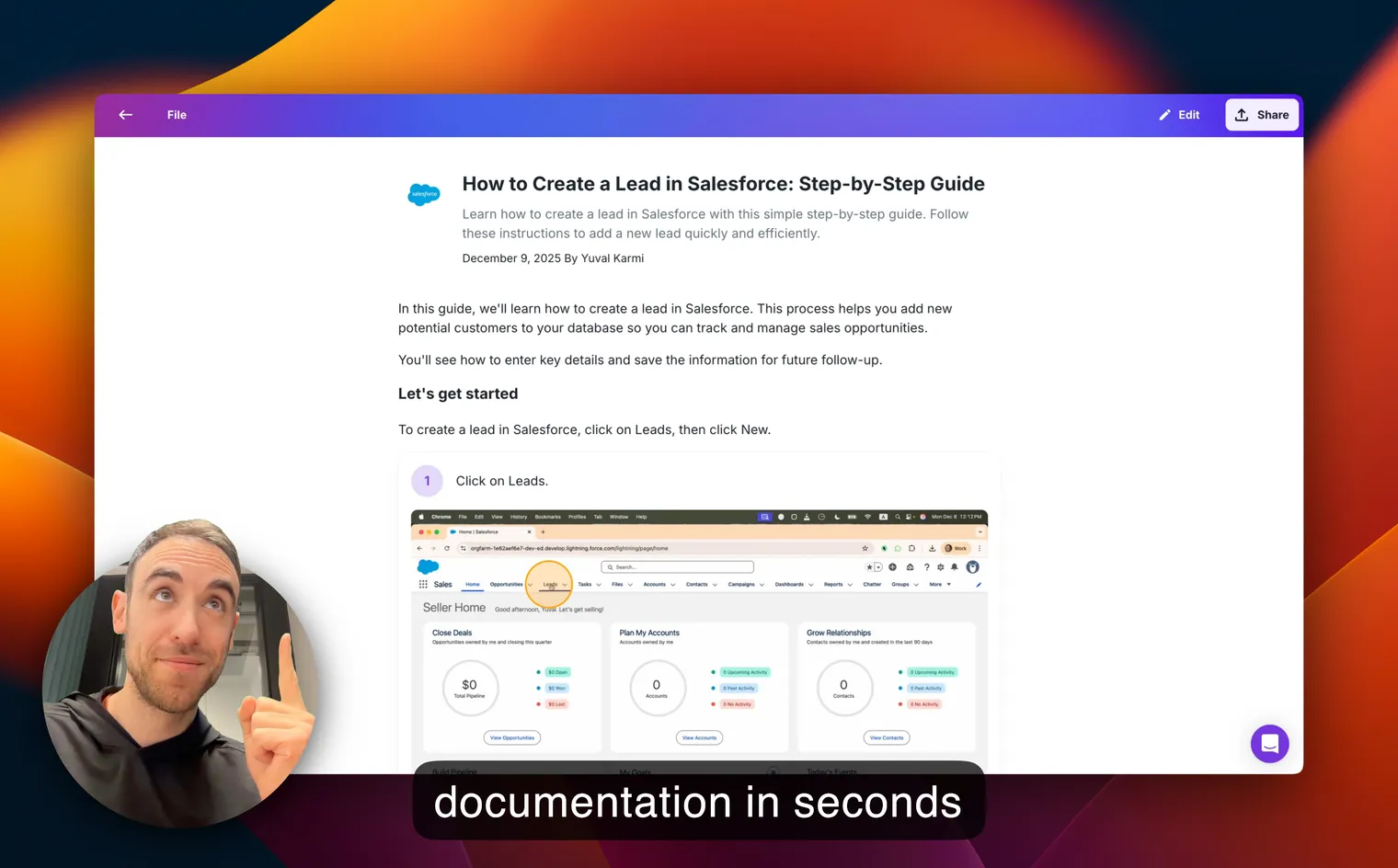
Creating a procedure manual the old-fashioned way takes forever. Glitter AI speeds things up considerably. You record your screen while doing a task, and the AI SOP generator turns that recording into a visual procedure with screenshots, annotations, and step-by-step instructions. What used to take hours now takes minutes.
The tool also keeps your formatting consistent across the whole manual, which matters more than you’d think when people are flipping between sections. And when processes change (which they always do), updating is as simple as recording the new workflow. The mix of visuals and written instructions helps people actually remember what they’ve read, whether a section captures a routine desktop task, an escalation procedure, or maps the difference between procedure vs process. You can build the whole manual from reusable policy and procedure templates and document every internal process the same way, which is exactly what makes it work so well for training new hires during onboarding, too.
Teach your co-workers or customers how to get stuff done – in seconds.

Frequently Asked Questions
What is a procedure manual?
A procedure manual is a document that gathers all the instructions and guidelines for performing tasks and processes in one place. It serves as the go-to reference for how work should get done across your organization.
What is an example of a procedure manual?
A customer service procedure manual might cover handling inquiries, processing returns, escalating complaints, using the CRM, and managing communications. It helps everyone on the team follow the same approach, regardless of experience level.
Why is a procedure manual important?
It keeps things consistent, stops people from doing the same task differently, helps train new employees, and supports regulatory compliance. Basically, it gives everyone a reliable reference to work from.
How do I create a procedure manual?
Identify your key processes first, then document each one with step-by-step instructions in a consistent format. Get input from the people who actually do the work, organize everything logically, and plan for regular reviews. Tools like Glitter AI can speed this up by generating visual procedures from screen recordings.
What's the difference between a procedure manual and a policy manual?
A policy manual states the company's official positions and high-level rules. A procedure manual gets into the details of how to actually carry out those policies through specific, step-by-step instructions.