
Read summarized version with
What is a Publishing Workflow?
A publishing workflow maps out how content travels from that first rough draft to the moment it goes live. It spells out who handles each step, when handoffs happen, and which approvals need to be secured before anything reaches its audience. Blog posts, internal docs, training guides, it doesn’t matter. A publishing workflow keeps things moving without chaos.
Most publishing workflows follow a familiar pattern: drafting, review, approval, release. Simple versions might just involve a writer and someone to give the green light. More complex setups pull in legal teams, translators, and coordinated launches across multiple channels. Today’s content management systems and documentation platforms typically bake workflow features right in, handling notifications, tracking progress, and blocking premature publishing automatically.
With content demands at large enterprises roughly doubling (based on 2025 research), a clear publishing workflow has become table stakes. It’s really the only way teams can maintain quality while ramping up output.
Key Characteristics of Publishing Workflow
- Defined Stages: Content passes through distinct phases like draft, review, approved, and published. Each phase has specific criteria that must be met before moving forward.
- Role Assignment: Every stage has someone accountable for action, whether that means editing, signing off, or hitting publish.
- Version Control: Changes get tracked and edit history is preserved, so you can always trace what changed and roll back if something goes wrong.
- Gating Mechanisms: Content stays put until requirements are satisfied. A sign-off process ensures unfinished or unapproved work simply cannot go live.
- Automation Support: Notifications, reminders, and status changes fire automatically, cutting down on manual back-and-forth.
Publishing Workflow Examples
Example 1: Internal Documentation
An operations team drafts a new SOP. The draft routes to the department manager for review, then over to compliance for final approval. Proper controlled document handling ensures it lands in the internal knowledge base with automatic notifications alerting affected teams. Nothing slips through without proper authorization.
Example 2: Marketing Content
A marketing team’s blog posts travel from writer to editor to legal to SEO specialist before seeing daylight. The workflow handles scheduled publishing so posts drop at optimal times, plus triggers automatic distribution under the team’s social media SOP. Every handoff leaves a trail, and bottlenecks surface immediately.
Publishing Workflow vs Approval Workflow
These terms overlap but aren’t quite the same thing.
| Aspect | Publishing Workflow | Approval Workflow |
|---|---|---|
| Purpose | Manage the full content lifecycle from creation to publication | Focus specifically on getting sign-off from designated approvers |
| Scope | Covers creation, editing, review, approval, scheduling, and release | Primarily concerned with the approval gate before content advances |
| When to use | Managing end-to-end content operations | Implementing control points where authorization is required |
How Glitter AI Helps with Publishing Workflow
Glitter AI simplifies the publishing workflow for documentation and training materials. When you record a process with Glitter, captured content flows through your review and approval stages as a structured step-by-step process before joining your knowledge base. Teams can collaborate on drafts, leave feedback, and approve content under clear editorial oversight rules before employees ever see it.
Built-in version control and change tracking give you a clear view of the content lifecycle. You can see who made edits, when approvals happened, and maintain a complete audit trail. This brings the same rigor to internal documentation workflows that marketing teams apply to external content.
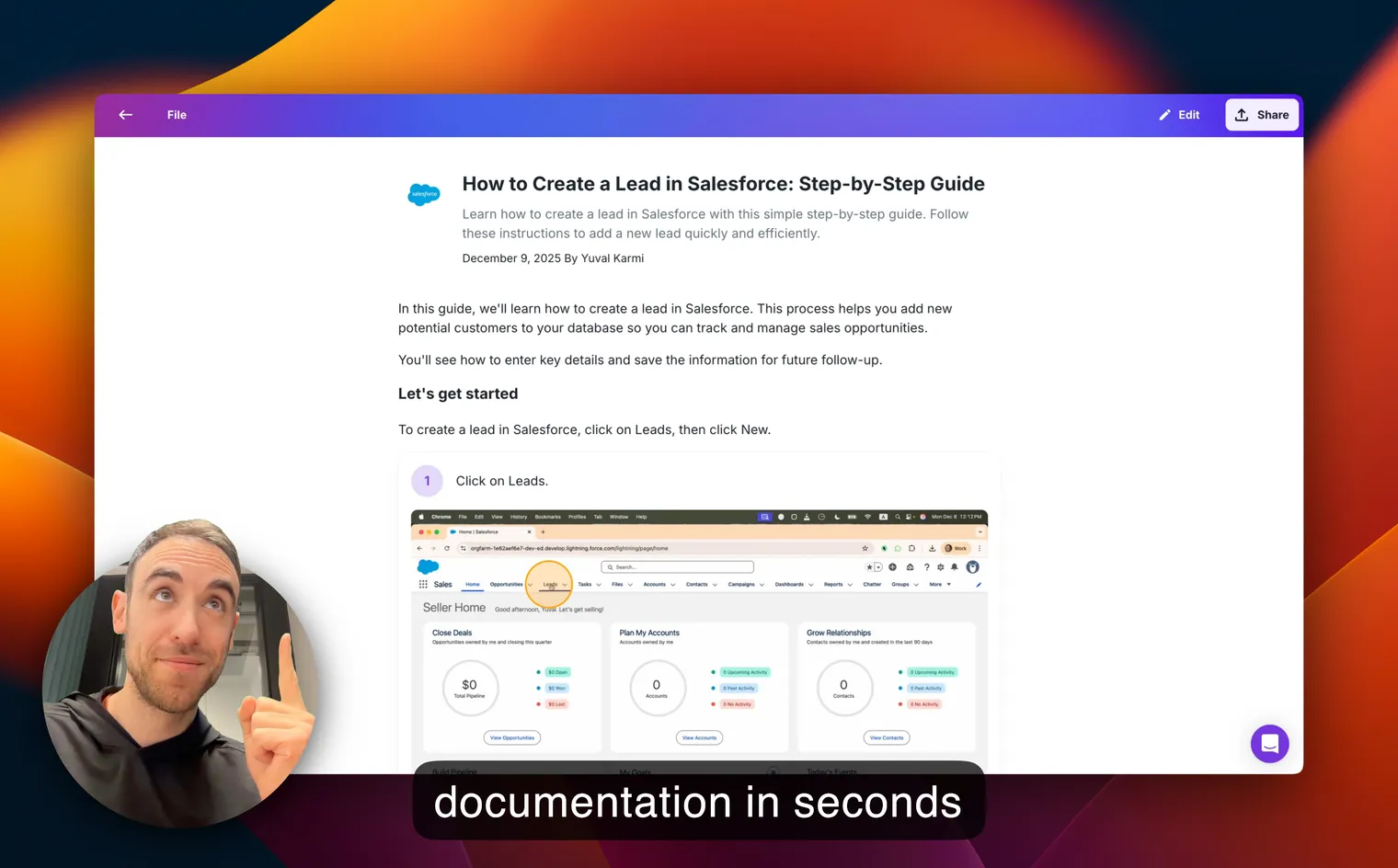
Teach your co-workers or customers how to get stuff done – in seconds.

Frequently Asked Questions
What is a publishing workflow?
A publishing workflow is a structured sequence of steps content follows from creation to final publication, typically including drafting, review, approval, and release stages.
What are the stages of a publishing workflow?
Common stages include drafting, editing, review, approval, scheduling, publication, and archiving. The exact stages vary depending on your content type and what your organization requires.
Why is a publishing workflow important?
A publishing workflow catches errors by requiring review before release, creates accountability through clear ownership, and helps scale content operations by automating repetitive coordination work.
What is the difference between publishing workflow and content workflow?
Content workflow spans the entire content lifecycle including ideation and planning, while publishing workflow zeroes in on the steps from completed draft to final publication.
How do I create a publishing workflow?
Map out your current process first, identify who needs to review or approve content, set clear criteria for each stage, then implement tools that handle notifications and progress tracking.
What tools support publishing workflows?
Content management systems, documentation platforms like Glitter AI, project management tools, and dedicated workflow software all provide publishing workflow features.
What is a document publishing process?
A document publishing process covers the steps needed to move a document from draft to official publication, including review, approval, formatting, and distribution to the right audience.
How does version control relate to publishing workflow?
Version control tracks every change made during the publishing workflow, keeps a history of edits, and lets you roll back to earlier versions if something needs to be undone after publication.
What is a publication workflow in content management?
In content management, a publication workflow is the automated or semi-automated process governing how content moves from creation through review and approval to final publication on a website or platform.
How can I improve my publishing workflow?
Automate repetitive tasks like notifications and status updates, trim unnecessary approval steps, set firm deadlines for each stage, and use tools that show you where content gets stuck.