
Read summarized version with
What is an Approval Workflow?
An approval workflow is a structured process that routes documents, requests, or transactions through predetermined approval stages to ensure proper review, authorization, and compliance before final approval. Think of it as a defined path that items must travel, passing through specific checkpoints where designated people have the authority to approve, reject, or request changes. This type of workflow brings governance and accountability to your business processes.
If you’ve ever submitted a request and watched it disappear into someone’s inbox for days, you understand why approval workflows matter. Instead of letting requests bounce between email threads and scattered Slack conversations, an approval workflow establishes clear routing paths. When someone submits a request, such as an expense report routed for sign-off, the system automatically directs it to the right approvers based on predefined criteria like monetary thresholds, department authority, or risk levels.
The benefits go beyond keeping things organized. Organizations that implement automated approval workflows often see approval cycle times drop by up to 75 percent. They also get consistent application of business rules and complete audit trails for compliance. Without this structure, bottlenecks tend to pile up as requests sit waiting for attention.
Key Characteristics of Approval Workflow
- Predetermined Routing: Requests follow a clear path through designated approvers in a specific sequence. No confusion about who reviews what or when.
- Authorization Hierarchy: Each stage respects organizational authority levels, so decisions get made by people with the right responsibility and expertise for that particular approval.
- Decision Points: At each stage, someone explicitly approves or rejects. Conditional routing handles different scenarios based on those outcomes.
- Audit Trail: Every action, decision, and modification gets tracked and timestamped. This creates a complete record for compliance and accountability.
- Automated Notifications: When action is required, stakeholders receive alerts automatically. The workflow keeps moving without anyone having to chase people down.
Approval Workflow Examples
Example 1: Purchase Order Approval
Say an employee needs to buy new equipment. They submit a purchase request, and the approval workflow kicks in. Their direct manager reviews the business justification first. If approved and the amount exceeds a certain threshold, it routes to the department head for budget verification. Larger purchases might escalate to finance for final approval. Once everyone signs off, procurement issues the purchase order and notifies the vendor. This multi-level structure prevents unauthorized spending while keeping oversight proportional to the dollar amount.
Example 2: Content Publication Approval
A marketing team’s content approval workflow might look like this: a writer finishes a draft and marks it ready for review. The content manager checks brand alignment and messaging, providing feedback or approval. Legal then reviews for compliance issues and regulatory language. Finally, the marketing director gives the go-ahead before scheduling publication. If any reviewer requests changes, the content goes back to the writer for revisions before re-entering the approval queue.
Approval Workflow vs Review Process
These terms get used interchangeably sometimes, but they serve different purposes.
| Aspect | Approval Workflow | Review Process |
|---|---|---|
| Purpose | Obtain formal authorization for decisions | Examine content for quality and accuracy |
| Decision Authority | Approvers have authority to accept or reject | Reviewers provide feedback but may not approve |
| Structure | Automated routing with defined stages | May be informal or part of larger workflow |
| Outcome | Binary approve/reject decision | Suggestions, edits, or quality assessment |
A review process is often just one component within a larger approval workflow. Reviewers examine and evaluate content, but the approval workflow manages the entire sequence of steps needed to get something officially approved, reviews included.
How Glitter AI Helps with Approval Workflow
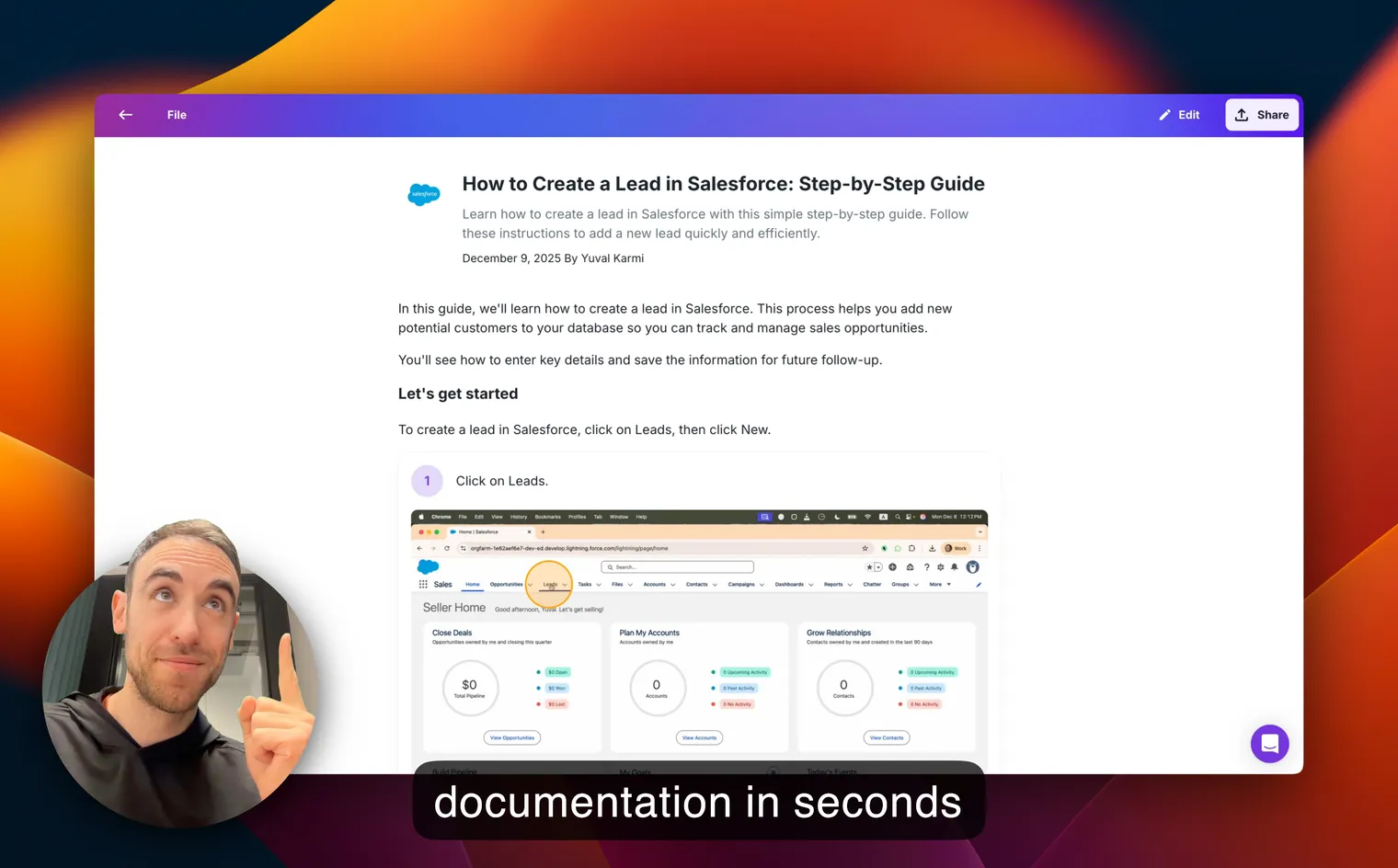
Documenting approval workflows used to mean flowcharts, written procedures, and constant updates whenever processes changed. Glitter AI takes a different approach: it captures approval processes as they happen. You record yourself executing an approval workflow, and Glitter generates visual step-by-step documentation with screenshots and annotations.
This visual documentation maps the full process flow and helps in several ways. New team members can see exactly how requests move through the process flow rather than trying to piece it together from a text document, which matters a lot for approval-heavy processes like an accounts payable workflow. This matters especially for a content publishing workflow, where sign-offs stack up before anything goes live. When approval workflows change because of regulatory updates or restructuring, teams just re-record the process and the documentation updates instantly. And when people can actually see the steps, there are fewer delays caused by confusion about what to do next or what information is required.
Teach your co-workers or customers how to get stuff done – in seconds.

Frequently Asked Questions
What does approval workflow mean?
An approval workflow is a structured process that routes documents, requests, or transactions through predetermined approval stages. It ensures the right people review and authorize items before they receive final approval.
What is an example of an approval workflow?
A purchase order approval workflow starts with an employee submitting a request. It routes through their manager for business justification, then escalates to the department head for budget verification if the amount exceeds a threshold. Larger purchases go to finance for final approval before procurement issues the order.
Why are approval workflows important?
Approval workflows bring governance, compliance, and accountability by routing requests through appropriate authority levels. Organizations using automated approval workflows often see cycle times drop by up to 75 percent while maintaining complete audit trails.
How do I create an approval workflow?
Start by defining the approval stages and identifying who needs to approve at each level. Then establish routing criteria, set up decision points, configure automated notifications, and implement tracking. Most modern tools can automate the routing and show you where requests are in real time.