
Read summarized version with
What is Reskilling?
Reskilling is the process of training employees in entirely new skills so they can move into a different role, whether that’s within their current company or in a new industry altogether. It’s different from upskilling, which focuses on building on what someone already knows to do their current job better. Reskilling is about making a complete pivot to something new. As technology reshapes the workplace and automation takes over certain tasks, this kind of workforce development has become pretty essential for both companies and workers.
Here’s the reality organizations face today: job requirements are changing faster than ever, and some traditional roles are simply disappearing. The World Economic Forum projects that nearly half of core job skills will shift by 2027, with around 60% of the global workforce needing additional training. By 2025, an estimated 85 million jobs could be replaced or significantly altered as the division of labor between humans and machines evolves. At the same time, roughly 97 million new roles may emerge. Reskilling offers employees a way to stay relevant and valuable in this shifting landscape.
From an organizational standpoint, reskilling existing employees often makes more financial sense than hiring externally. Studies suggest cost savings of 70-92% when employers invest in reskilling training for their current staff, since they avoid recruitment fees, onboarding expenses, and the initial learning curve that comes with new hires. Plus, they get to keep the institutional knowledge those employees have built up over the years.
Key Characteristics of Reskilling
- Career Transition Focus: Reskilling prepares employees for roles that are fundamentally different from what they’re doing now. We’re talking about a complete shift in job function or department, not just a promotion.
- Skill Set Replacement: This training replaces or substantially transforms an employee’s primary skill set rather than layering on complementary abilities.
- Strategic Workforce Planning: Reskilling ties into bigger organizational changes, whether that’s restructuring, new technology adoption, or responding to market shifts that demand different capabilities.
- Long-Term Investment: Because of the comprehensive nature of what’s being learned, reskilling programs typically require more time and resources than upskilling efforts. This is a key part of broader employee development strategy.
Reskilling Examples
Example 1: Manufacturing to Technology Transition
Picture a manufacturing company that’s bringing automation to its production line, which means fewer assembly workers are needed. Instead of laying off experienced people, the company launches a reskilling program. Assembly workers learn robot maintenance, quality assurance testing, and production data analysis through a six-month certification program that mixes online coursework with hands-on training. By the end, they’ve transitioned into technical roles that support the very systems that replaced their old jobs.
Example 2: Retail to Digital Marketing
Consider a retail organization pivoting toward e-commerce as consumer habits shift online. The company takes store managers who have strong customer service backgrounds and reskills them in digital marketing, social media management, and online customer engagement. Through structured training and mentorship, these employees go from managing physical storefronts to leading digital customer experience initiatives.
Reskilling vs Upskilling
Both reskilling and upskilling fall under employee development, but they’re solving different problems and addressing different workforce needs.
| Aspect | Reskilling | Upskilling |
|---|---|---|
| Purpose | Prepare employees for different roles | Enhance performance in current or similar roles |
| Scope | Complete skill set transformation | Addition to existing skill set |
| When to use | Facing role elimination, organizational restructuring, or career pivots | Advancing technology, process improvements, or career advancement within same field |
How Glitter AI Helps with Reskilling
Reskilling programs depend on comprehensive, easy-to-access learning materials that employees can reference while learning entirely new skill sets. Glitter AI makes creating these materials much faster by letting subject matter experts capture step-by-step processes and best practices through screen recording with automatic documentation generation. This visual approach works especially well for reskilling initiatives. When someone is transitioning to a completely new role, seeing exactly how tasks are performed tends to be more effective than wading through text-heavy manuals.
Organizations running reskilling programs can use Glitter AI to build extensive training libraries covering new tools, technologies, and workflows. As employees progress through their reskilling journey, they can access documentation that stays up to date with current processes, so their training remains relevant. The platform creates searchable, organized knowledge bases, which means reskilled employees have ongoing support resources even after formal training wraps up. This helps them become productive in their new roles faster.
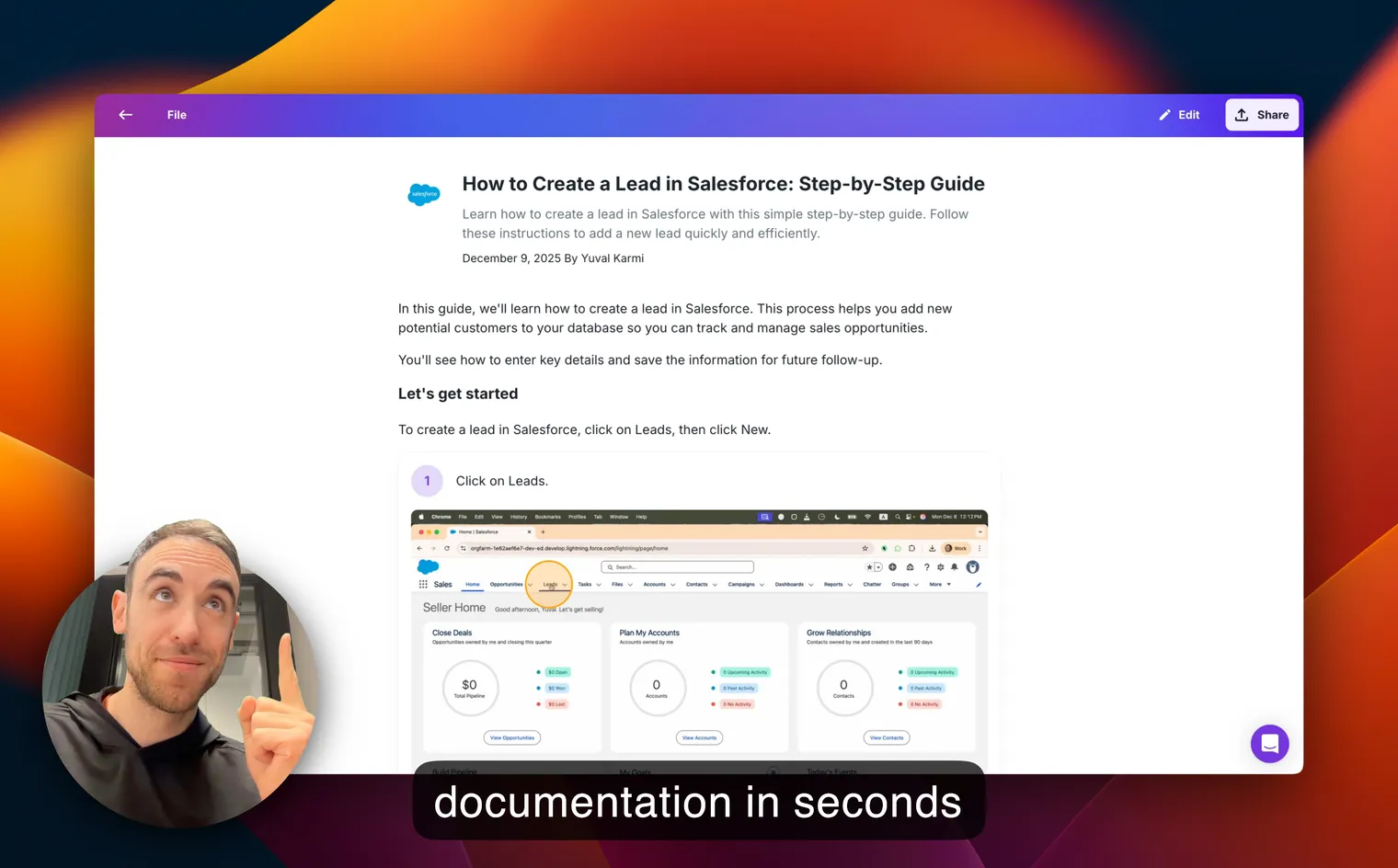
Teach your co-workers or customers how to get stuff done – in seconds.

Frequently Asked Questions
What does reskilling mean?
Reskilling means training employees in entirely new skills to help them transition into different roles within the organization or industry, rather than enhancing their current skill set.
What is an example of reskilling?
A common example is training factory assembly workers to become equipment maintenance technicians or data analysts when automation replaces manual assembly tasks, requiring a complete shift in their skill set.
Why is reskilling important?
Reskilling is important because it helps organizations adapt to technological changes and market shifts while retaining valuable employees, reducing hiring costs, and preserving institutional knowledge during workforce transitions.
How do I create a reskilling program?
Create a reskilling program by identifying roles at risk and emerging opportunities, assessing skill gaps, developing comprehensive training curricula, providing hands-on learning experiences, and offering ongoing support as employees transition to new positions.