
Read summarized version with
What is Upskilling?
Upskilling is the process of learning new competencies to improve performance in a current role and adapt to evolving job requirements. Think of it as leveling up what you already do well rather than starting over in a new direction. When organizations invest in upskilling programs, they’re essentially betting that developing their current people makes more sense than constantly hiring from outside. And the data suggests they’re usually right.
What makes upskilling different from reskilling? The focus stays within your current domain. A marketing professional picking up advanced analytics tools or a software developer getting comfortable with a new framework? That’s upskilling. Preparing someone to switch careers entirely? That’s reskilling. The World Economic Forum’s Future of Jobs Report 2025 paints a pretty stark picture here: 59% of the global workforce will need upskilling or reskilling by 2030 just to stay relevant.
Why has this become such a priority? The pace of change, mostly. Technology evolves faster than job descriptions can keep up. Companies that make upskilling a priority tend to see better retention, which shouldn’t surprise anyone. One survey found 94% of employees would stick around longer if their company invested in their development. And from the business side, 81% of companies report positive ROI on upskilling initiatives. It’s one of those rare situations where what’s good for employees also happens to be good for the bottom line. Effective skills training programs form the foundation of most upskilling initiatives, and they’re typically part of a broader employee development strategy.
Key Characteristics of Upskilling
- Role-Specific Focus: The skills you’re developing tie directly to what you’re already doing or where you’re headed within your field. You’re not training for a completely different career.
- Continuous Learning Approach: This isn’t a one-and-done workshop situation. Upskilling works best as an ongoing habit. Around 91% of L&D professionals now say continuous learning matters more than ever for staying competitive.
- Technology-Driven: Let’s be honest, most upskilling today involves digital skills in some form. New software, emerging tools, automation capabilities. The tech keeps changing, so the learning has to keep pace.
- Performance Enhancement: The goal is pretty straightforward: get better at what you do now while building capacity for bigger responsibilities down the road.
Upskilling Examples
Example 1: Amazon’s Upskilling 2025 Initiative
Amazon put $1.2 billion behind its Upskilling 2025 pledge, aiming to help 300,000 employees build skills in IT, cloud computing, and UX design. The interesting part? This isn’t just for corporate employees. Warehouse workers and fulfillment center staff can access these programs too, developing technical capabilities that help them either excel where they are or move into the company’s technology divisions.
Example 2: Walmart Academy Program
Walmart Academy started back in 2016, then relaunched globally in 2022. The numbers are impressive: over 411,000 employees trained. But what makes it work is the practical focus. Retail associates and managers learn customer service techniques, inventory management systems, and leadership skills they can actually use on the floor the next day.
Example 3: Healthcare Digital Transformation
Consider a hospital training its nursing staff on new electronic health record systems, telehealth platforms, and patient monitoring tech. The nurses aren’t changing careers. They’re still nurses. But they’re now nurses who can navigate the digital tools that modern healthcare requires. That’s upskilling in action.
Upskilling vs Reskilling
People sometimes use these terms interchangeably, but they’re actually quite different approaches to employee development.
| Aspect | Upskilling | Reskilling |
|---|---|---|
| Purpose | Get better at your current role | Prepare for a different role entirely |
| Scope | Build on existing expertise | Learn a whole new skill set |
| When to use | Tech updates, role evolution, advancement within your field | Job displacement, career changes, org restructuring |
| Example | A nurse getting a master’s in nursing | A nurse becoming a mental health counselor |
How Glitter AI Helps with Upskilling
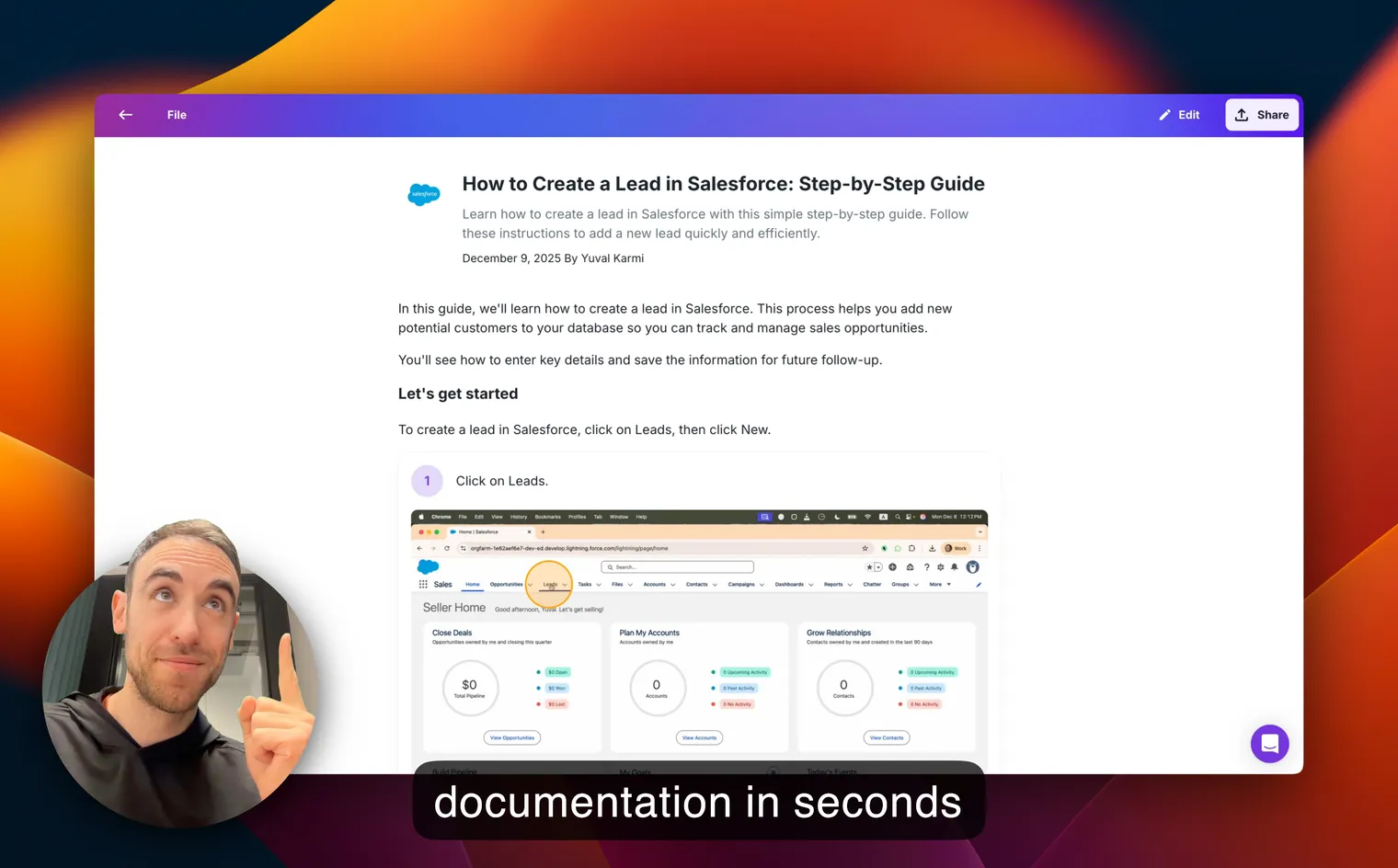
One of the biggest bottlenecks in upskilling? Creating the learning resources. Glitter AI makes this part much faster by letting you record processes and automatically turning those recordings into documented training content, tutorials, and step-by-step guides. When your tech stack changes (and it will), you can update the training content without starting from scratch.
The training platform transforms screen recordings into polished materials with annotations and written explanations. Your subject matter experts can share what they know without needing to be content creation specialists. And because everything lives in an accessible library, employees can learn on their own schedule, exactly when they need specific information.
Teach your co-workers or customers how to get stuff done – in seconds.

Frequently Asked Questions
What does upskilling mean?
Upskilling means developing new competencies that help you perform better in your current job. It's about adapting to changes in your role rather than switching to something entirely different.
What is an example of upskilling?
Common examples include a marketer learning data analytics tools, a developer picking up a new programming language, or a retail manager getting trained on updated inventory systems. The key is that these skills enhance what they're already doing.
Why is upskilling important?
Technology changes faster than most job descriptions. Upskilling helps employees stay current, improves their performance, and makes them more likely to stick around. For companies, it's often more cost-effective than constantly hiring new talent.
How do I create an upskilling program?
Start by figuring out where the skill gaps are. Then define what success looks like, pick training methods that fit your team, make resources easy to access, and track whether people are actually getting better at their jobs.
What is the difference between upskilling and reskilling?
Upskilling builds on what you already do, making you better at your current role. Reskilling is about learning a completely new set of skills for a different job or career path.