
Read summarized version with
What is a Video Tutorial?
A video tutorial is an instructional video that guides viewers through how to accomplish something specific, one step at a time. While general training videos might tackle broad topics or abstract concepts, tutorial videos zero in on a single task or skill. They demonstrate exactly what needs to happen, in sequence, so viewers can follow along and replicate the process on their own.
Video tutorials have become how most people prefer to learn new things these days. Research suggests viewers are about three times more likely to watch a tutorial video than slog through a manual. This probably doesn’t surprise you: actually seeing someone perform a task tends to be faster and clearer than parsing paragraphs of written instructions. The format shines particularly well for software walkthroughs, technical procedures, and really anything where demonstration communicates better than description.
So what makes a video tutorial stick versus one that gets clicked away after 30 seconds? Mostly clarity and structure. The effective ones break complex tasks into manageable steps, layer in helpful visuals and annotations, maintain a steady pace, and stay locked on a single objective. They answer “how do I do this?” directly, without veering off into tangents or drowning viewers in information they don’t need at that moment. This makes video tutorials closely related to how-to guides and step-by-step guides, just delivered through video rather than text.
Key Characteristics of Video Tutorial
- Step-by-Step Structure: Tutorial videos move through a logical sequence. Each step builds on what came before, helping viewers track the flow of a task without getting lost.
- Task-Focused: Unlike broader educational content, a video tutorial aims at one specific outcome. When it’s over, viewers know how to accomplish that particular thing.
- Visual Demonstration: Showing works better than describing. Tutorial videos let people see exactly what they should be doing, which cuts down on confusion and errors.
- Self-Paced Learning: Viewers stay in control of playback. They can pause, rewind, and rewatch tricky sections until things click, moving at whatever speed suits them.
- Accessible Anytime: Once you’ve made a video tutorial, it’s available around the clock. People can pull up the information whenever they need it, without waiting for a trainer’s schedule to open up.
Video Tutorial Examples
Example 1: Software Feature Walkthrough
A SaaS company puts together a 4-minute video tutorial that doubles as a getting-started guide, walking customers through setting up automated email campaigns. The screen recording captures every click, with annotations calling out important buttons and fields. A voiceover explains what each setting controls and when you might prefer one option over another. Customers typically watch it during onboarding from the company’s external knowledge base, though many circle back months later when the details have faded.
Example 2: Internal Process Documentation
An operations team records a tutorial video showing how to process expense reports through the company’s finance system. The video covers where to log in, which fields need filling out, what documents to attach, and how to route everything for approval. New employees watch this during their first week rather than having someone from finance carve out time for a live walkthrough.
Video Tutorial vs Training Video
These terms get used interchangeably sometimes, but there are real differences in how they function:
| Aspect | Video Tutorial | Training Video |
|---|---|---|
| Purpose | Teaches how to complete a specific task | Covers broader skills, concepts, or procedures |
| Scope | Narrow and focused (one task) | Can be comprehensive (entire topic) |
| Length | Usually 2-8 minutes | Often 5-15 minutes or longer |
| When to use | Quick how-tos and feature demos | Full onboarding, compliance, or skill development |
How Glitter AI Helps with Video Tutorial
Glitter AI’s tutorial maker converts screen recordings into polished video tutorials without the usual editing headaches. Rather than spending hours wrestling with video editing software, subject matter experts simply capture their screen while performing a task. Glitter takes care of the rest: adding annotations, generating step-by-step descriptions you can polish in the transcript editor, and even turning that video into a written SOP or instruction manual ready for sharing.
This makes tutorial video creation practical for anyone, even people who have never touched editing tools, unlike the heavier AI video workflows you’ll see in a Clueso vs Guidde comparison. When processes evolve, updating becomes painless too. Just re-record the changed section, and Glitter weaves in the updates without requiring a complete rebuild. The result is accurate, current how-to content that actually matches how things work right now and slots cleanly into your internal wiki.
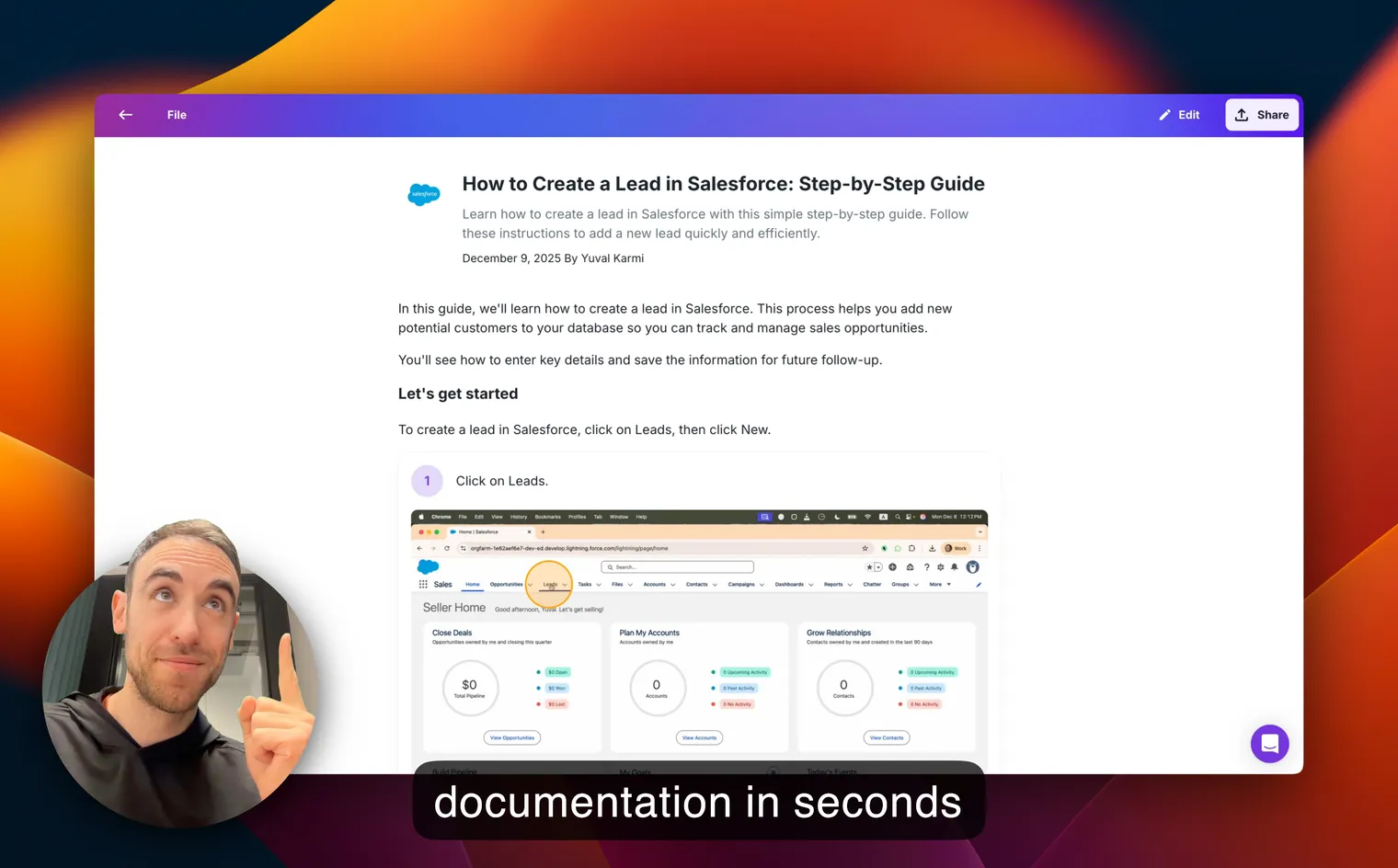
Teach your co-workers or customers how to get stuff done – in seconds.

Frequently Asked Questions
What is a video tutorial?
A video tutorial is a how-to video that walks through step-by-step instructions for completing a specific task or picking up a particular skill. It shows viewers exactly what to do using visual demonstrations paired with narration.
What is an example of a video tutorial?
A typical example would be a software walkthrough showing users how to work with a specific feature. It might demonstrate creating a report in Excel, configuring an email campaign, or adjusting settings in an app, with screen recordings and annotations guiding viewers through each step.
What is the difference between a video tutorial and a training video?
Video tutorials concentrate on teaching one specific task through step-by-step instructions. Training videos cast a wider net, potentially covering entire topics, concepts, or skill sets. A tutorial shows you how to do something; training videos might also get into why, or bundle multiple related processes together.
How long should a video tutorial be?
Most video tutorials work best in the 2-8 minute range. That's enough time to cover a task properly without losing viewers to distraction. For complicated topics, splitting the content into several shorter tutorials usually beats one marathon video.
Why are video tutorials more effective than written instructions?
Studies indicate viewers are roughly three times more likely to watch tutorials than read manuals. Video engages more senses, demonstrates rather than describes, and gives people control over pacing through pause and replay.
What makes a good video tutorial?
Strong video tutorials feature clear step-by-step organization, stay focused on a single task, use visual annotations to flag important elements, include understandable audio narration, and keep the pacing consistent. They address 'how do I do this' without unnecessary detours.
How do I create a video tutorial?
Begin by mapping out the steps you want to cover. Record your screen while performing the task, talking through what you're doing as you go. Layer in annotations to emphasize key actions, trim out any stumbles or dead air, and have someone unfamiliar with the process test-watch it before you publish.
What is another name for video tutorial?
Video tutorials go by several names: tutorial videos, how-to videos, instructional videos, or walkthrough videos. In business settings, you might also hear them called software demos or product tutorials.
Can video tutorials replace live training?
For many tasks, video tutorials can absolutely stand in for live training, particularly for software walkthroughs and standardized procedures. They scale well and deliver consistent instruction every time. That said, interactive training or complex skill-building sometimes still benefits from live sessions or a mix of both approaches.
What tools do I need to create video tutorials?
The basics are screen recording software and a decent microphone. Tools like Glitter AI handle much of the editing automatically, transforming raw screen captures into finished tutorials complete with annotations. More polished productions might add dedicated video editing software and upgraded audio gear.