Read summarized version with
What is Screenshot Annotation?
Screenshot annotation is simply adding visual elements to captured screen images so they actually make sense to the person looking at them. We’re talking arrows, circles, text boxes, highlights, blur effects, that sort of thing. The whole point is taking a static screenshot and turning it into something that tells people exactly where to look and what to do. While recording your screen captures continuous video, annotated screenshots excel at quick references and single-step guidance.
Think about it this way: a plain screenshot of some software interface can leave people scratching their heads. But add an arrow pointing to that one button they need to click, throw in a quick label, and suddenly everything clicks. That’s why screenshot annotation shows up everywhere in technical documentation, customer support, bug reports, and training materials.
Here’s what I’ve noticed: the gap between a raw screenshot and an annotated one often decides whether someone gets your point immediately or has to ping you with questions. For teams doing a lot of visual communication, especially those working async or spread across time zones, annotated screenshots cut down on the back-and-forth considerably.
Key Characteristics of Screenshot Annotation
- Visual Markers: Arrows, circles, rectangles, and similar shapes that pull attention toward specific screen areas
- Text Labels: Callout boxes and text overlays that give context or instructions the image can’t provide on its own
- Highlighting: Color overlays and emphasis tools that help important elements pop against the rest of the interface
- Redaction Tools: Blur effects and solid boxes for hiding sensitive stuff like passwords, personal data, or anything confidential
- Numbering and Sequencing: Numbered steps that walk viewers through multi-step processes in order
Screenshot Annotation Examples
Example 1: Software Bug Reporting
A QA tester spots a display glitch in a web app. Rather than typing out a paragraph trying to describe where the issue lives, they grab a screenshot and circle the broken element in red, draw an arrow to show what it should look like elsewhere on screen, and add a note about the browser and resolution. The developer sees the problem right away, no clarification needed.
Example 2: Customer Support Documentation
A SaaS company puts together help articles walking users through their settings page. Each screenshot has numbered annotations (1, 2, 3) marking exactly where to click and in what order, with short labels explaining what happens at each step. Users follow along without getting lost, and support tickets for routine questions drop off.
Example 3: Employee Training Materials
An operations team documents their inventory management system for people just joining. Screenshots of the interface show highlighted fields where you enter data, arrows tracing the path between screens, and callouts explaining the reasoning behind certain steps. These annotated images become part of the team’s onboarding and training resources and central knowledge base. New hires pick up the process much faster than they would from walls of text.
Screenshot Annotation vs Screen Recording
Both capture what’s happening on your screen, but they’re built for different situations.
| Aspect | Screenshot Annotation | Screen Recording |
|---|---|---|
| Output Format | Static image with visual overlays | Video file showing continuous action |
| Best For | Single-step actions, quick references | Multi-step processes, live demonstrations |
| File Size | Small (KB to a few MB) | Larger (MB to GB) |
| Creation Time | Seconds to minutes | Minutes to hours with editing |
| Searchability | Easy to scan and reference | You have to scrub through video |
| When to Use | Pointing to specific interface elements | Showing workflows with lots of steps |
How Glitter AI Helps with Screenshot Annotation
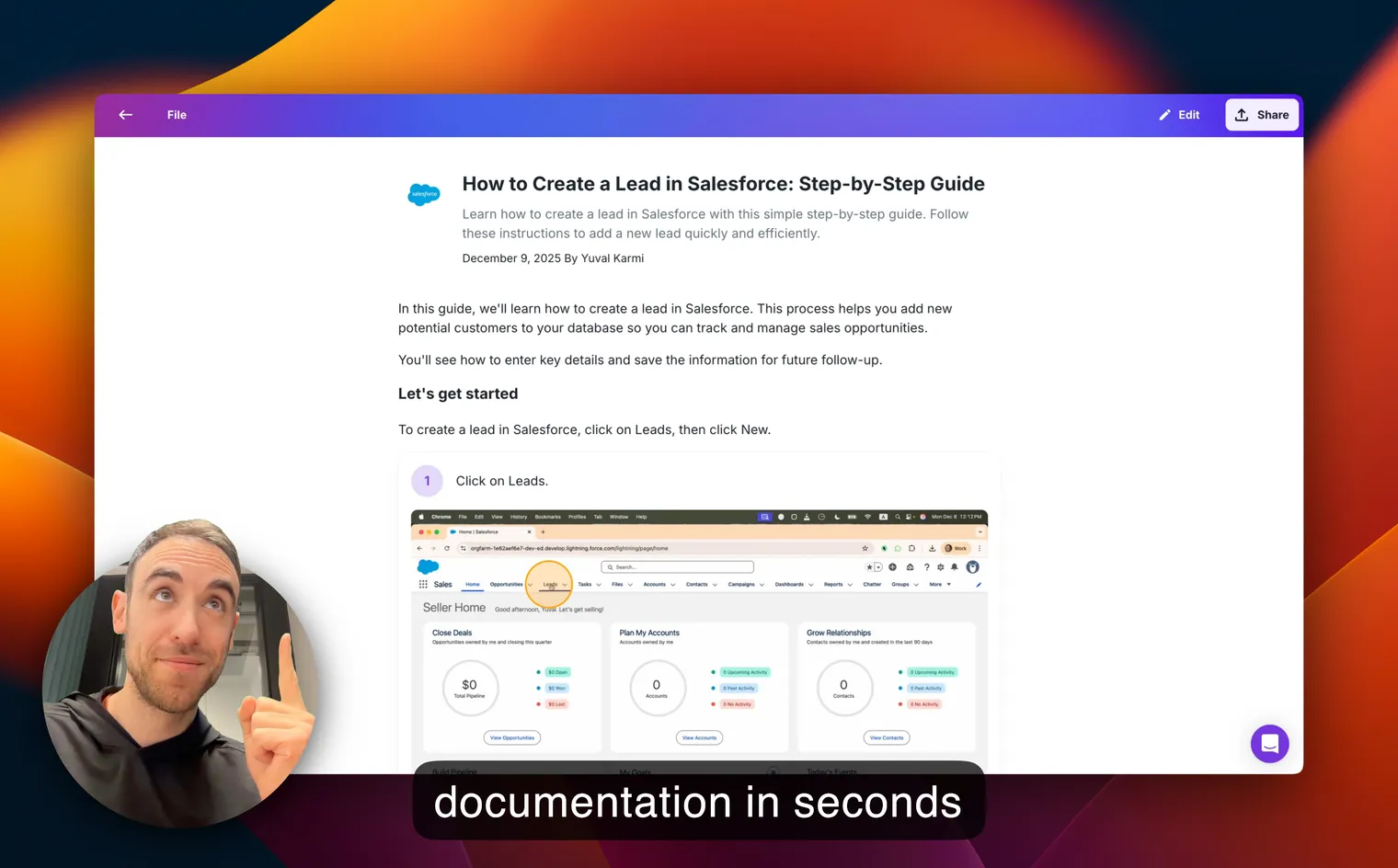
Glitter AI takes care of a lot of the annotation work that people normally do by hand. When you capture a workflow, the platform figures out the key actions and generates annotated screenshots with numbered steps, highlighted elements, and descriptive text automatically. No need to manually add arrows and callouts yourself.
This changes how teams put together visual work instructions and documented procedures. Instead of spending time on manual screenshot markup, you can just focus on capturing what you’re doing while Glitter handles the visual polish. The output looks consistent and professional, and it takes a fraction of the time.
Teach your co-workers or customers how to get stuff done – in seconds.

Frequently Asked Questions
What is screenshot annotation?
Screenshot annotation means adding visual elements like arrows, circles, text boxes, and highlights to screen captures. These additions make the image clearer, point people to specific areas, and make screenshots genuinely useful for documentation, training, and everyday communication.
What are the best screenshot annotation tools?
Some popular screenshot annotation tools are Snagit, Markup Hero, Skitch, Lightshot, and the built-in options like Windows Snipping Tool or macOS Screenshot. If you want automated annotation while creating documentation, Glitter AI can annotate screenshots as part of the capture workflow.
How do I annotate a screenshot?
Capture your screen with a screenshot tool, then open the image in an annotation app. Add arrows pointing to what matters, circles or rectangles to highlight sections, text boxes for explanations, and blur effects over anything sensitive. Save it in a format you can share.
Why is screenshot annotation important for documentation?
Annotated screenshots cut through confusion by showing exactly what users need to see and do. They make documentation way clearer than text alone, help people finish tasks quicker, and reduce support questions. Visual markers remove any guesswork about which button to click or where to focus.
What's the difference between screenshot annotation and screenshot markup?
There's no real difference. Screenshot annotation and screenshot markup both refer to adding visual elements like arrows, text, highlights, and shapes to screen captures. Different tools and platforms just use the terms interchangeably.
Can I annotate screenshots on mobile devices?
Absolutely. Both iOS and Android come with built-in screenshot annotation tools. Right after taking a screenshot, you can add drawings, text, arrows, and highlights using the native markup features. Apps like Annotable and Skitch give you extra options if you need them.
How do I hide sensitive information in screenshots?
Use blur, pixelate, or solid color rectangle tools to cover sensitive data like passwords, personal info, or confidential content. Most annotation tools have redaction features built in for exactly this. Double-check your annotated screenshot before sharing to make sure nothing sensitive is still showing.
What file formats work best for annotated screenshots?
PNG is your best bet because it keeps quality high and supports transparency. JPEG works for simpler images but can blur text and annotations. For documentation platforms, PNG or WebP give you a good balance between quality and file size.
How can teams standardize screenshot annotations?
Put together a style guide that covers consistent colors, arrow styles, text formatting, and where annotations should go. Tools like Glitter AI generate consistent annotations automatically, or you can create templates in your screenshot tool that everyone applies for visual consistency.
Should I use screenshot annotation or screen recording for training?
Go with screenshot annotation for single-step actions, quick references, and static procedures. Screen recording works better for multi-step workflows, processes with lots of transitions, or anything where seeing the motion helps people understand. A lot of training materials mix both depending on what they're explaining.