
Read summarized version with
What is a To-Be Process?
A to-be process is basically a picture of how you want things to work after you’ve fixed what’s broken. It represents the future state of a business workflow, serving as a blueprint that shows how a process should function once you’ve tackled bottlenecks and rolled out changes. An as-is process tells you how things work today. The to-be process? That’s where you’re headed. This kind of visual planning is central to diagramming how a process works.
You might think of it as a working hypothesis about how work should flow. When organizations kick off improvement initiatives, they create to-be process maps to visualize their end goal before actually changing anything. Having that future state design helps teams get on the same page about what they’re building toward, and it becomes much clearer what specific steps will get you there.
That said, a to-be process shouldn’t be pure fantasy. The best to-be process design grows directly out of problems you surfaced during as-is analysis. Real bottlenecks, actual inefficiencies, and the voice of the process gathered from the people doing the work. You design a workflow that addresses those specific issues. And honestly, many companies will sketch out several to-be versions, testing different approaches on paper before betting on one.
Key Characteristics of To-Be Process
- Future-Focused Design: Where current state documentation shows how things are, to-be processes describe how they should be. This forward-looking view is what makes it useful for guiding improvement work.
- Rooted in Analysis: You probably can’t design a better future if you don’t really understand what’s broken now. Good to-be process design always starts with solid as-is analysis, often scoped first with a SIPOC diagram.
- Testable Hypothesis: A to-be process is essentially a prediction. Will this work better? Teams often build multiple versions and weigh which design addresses their actual goals most effectively.
- Stakeholder Alignment: When everyone can look at the same to-be process map, you’ve got a shared vision. Different teams and departments can see what they’re all working toward. Understanding the process flow helps identify where improvements will have the most impact.
To-Be Process Examples
Example 1: Employee Onboarding
One company had an onboarding process that stretched to three weeks. New hires had to physically visit five departments just to fill out paperwork. After mapping out the as-is process, the team designed a to-be process built around a centralized digital portal. No more in-person visits. Document collection happened automatically. Onboarding dropped to five days. Their to-be process map spelled out exactly how information would move between HR, IT, and department managers without all the running around.
Example 2: Order Fulfillment
A warehouse kept running into delays because pickers had to walk across the entire facility multiple times per order. The to-be process they designed reorganized picking into zone-based assignments and introduced a staging area for batch shipments. Looking at their future state process map, you could see reduced travel time and cleaner handoffs between picking and packing.
To-Be Process vs As-Is Process
These two concepts really go hand in hand during process improvement. You need both if you want to make changes that actually stick.
| Aspect | To-Be Process | As-Is Process |
|---|---|---|
| Purpose | Shows the desired future state after improvements | Documents how the process works today |
| Scope | Designed based on goals and problem analysis | Captures reality, including all the workarounds people use |
| When to use | During process redesign and improvement planning | When analyzing current performance and finding bottlenecks |
How Glitter AI Helps with To-Be Process
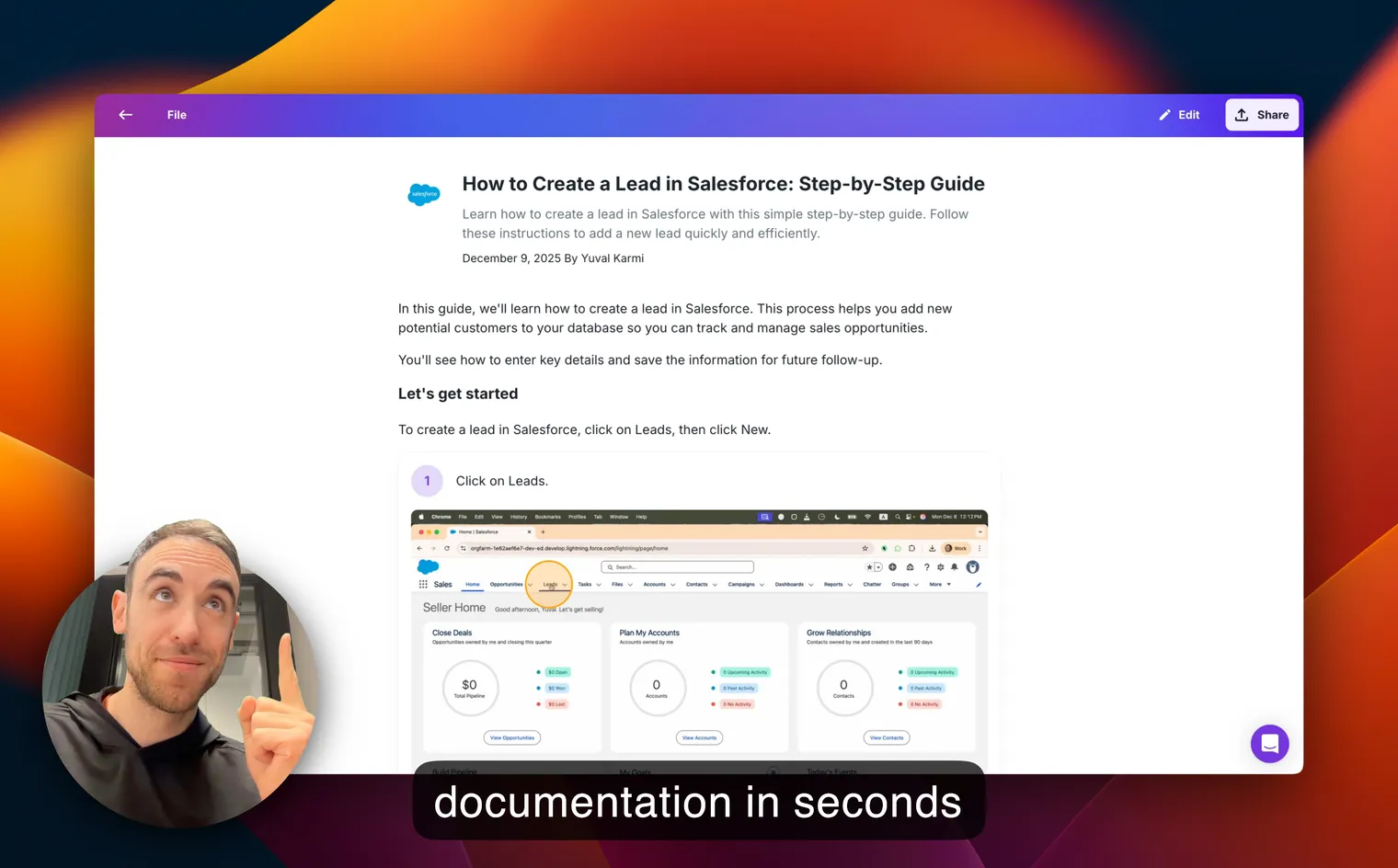
Glitter AI makes documenting both your current workflows and your future state designs a lot less painful. For capturing how things work today, Glitter’s screen recording and step-by-step workflow documentation features let you put together a visual record of your current as-is workflow pretty quickly.
And once you’ve got your to-be process designed, Glitter helps you actually bring it to life. You can build training materials and a clear process map showing people exactly how the new workflow is supposed to function. That’s the part that often gets overlooked. You can plan all you want, but if people don’t know how to follow the new process, they’ll drift back to old habits. Having clear documentation bridges that gap between planning and doing.
Teach your co-workers or customers how to get stuff done – in seconds.

Frequently Asked Questions
What is a to-be process?
A to-be process is the desired future state of a business workflow, designed to show how operations should function after implementing improvements, automation, or restructuring.
What is the difference between as-is and to-be process?
The as-is process documents how a workflow currently operates today, while the to-be process maps the desired future state after improvements are made. Both are used together during process improvement initiatives.
How do you create a to-be process map?
Start by analyzing your as-is process to identify bottlenecks and inefficiencies. Then design a new workflow that eliminates those problems, including improved steps, roles, tools, and handoffs.
What is future state process design?
Future state process design is another term for to-be process mapping. It involves creating a blueprint of how a process should work after changes are implemented.
Why is to-be process mapping important?
To-be process mapping gives teams a shared vision of their improvement goals. It helps align stakeholders, identify specific changes needed, and provides a benchmark for measuring success.
What are examples of to-be process improvements?
Common examples include automating manual steps, eliminating redundant approvals, consolidating handoffs between teams, adding digital tools to replace paper-based workflows, and reorganizing task sequences for efficiency.
How does a to-be process relate to gap analysis?
Gap analysis compares the as-is process to the to-be process to identify the specific changes, resources, and steps needed to move from the current state to the future state.
Can you have multiple to-be process versions?
Yes, organizations often create multiple to-be process designs to evaluate different approaches. This allows teams to compare options and select the design that best addresses their goals and constraints.
What tools are used for to-be process mapping?
Common tools include process mapping software, flowchart applications, BPMN modeling tools, and documentation platforms like Glitter AI that can capture and visualize workflow designs.
How do you implement a to-be process?
Implementation involves creating detailed documentation and training materials, communicating changes to affected teams, updating systems and tools, rolling out changes in phases, and measuring results against your goals.