
Read summarized version with
What Are User Guides?
User guides are concise, task-oriented documents that give people step-by-step instructions for using a product, software, or service to accomplish specific goals. The focus is on what users need to do. Not every feature, just the path to getting a task done without wading through technical detail.
Put another way, a user guide tells people how to actually use something. It’s the difference between reading an encyclopedia about your new software and having someone sit down and show you where to start.
These guides act as practical roadmaps. They cover the common workflows and help users find their way around features without drowning in jargon. The formats vary a lot. You’ll see printed booklets tucked into product boxes, downloadable PDFs, video tutorials, interactive walkthroughs, and help sections built right into apps. Unlike a comprehensive product reference manual, user guides usually stick to specific tasks rather than trying to cover everything. They tend to sit alongside training documentation and quick reference guides, supporting users at different points in their learning.
So what’s the goal? Help people succeed with your product, cut down on confusion, and shrink the pile of “how do I…” support tickets. When someone can work it out on their own, everybody wins.
Key Characteristics of a User Guide
- Task-Oriented: Built around what users actually want to get done, not a laundry list of features
- Concise and Focused: Gets to the point instead of burying readers in technical detail they don’t need
- Step-by-Step Format: Lays out instructions in a logical sequence, so users can follow along without getting lost
- Plain Language: Drops the jargon and writes at a level that matches what readers actually know
- Visual Support: Leans on screenshots, diagrams, or videos to show how things work, not just tell
- Easy to Find: Sits wherever users need it, whether that’s online, surfaced as contextual help inside the app, or offered as a download
Types of User Guides
“User guides” is really an umbrella term. It covers several formats, each one suited to a different audience and a different moment of need:
- Getting-started guides: Help brand-new users complete setup and their first successful task.
- How-to guides: Walk through a single, specific workflow (e.g. “How to export a report”).
- End-user documentation: Customer-facing guides that explain how to use a product day to day.
- Internal process guides: Standard operating procedures and onboarding docs that show employees how to do their jobs consistently.
- Quick reference guides: Short, scannable quick reference guides and cheat sheets for users who already know the basics.
- Troubleshooting guides: Step-by-step fixes for common errors and edge cases.
Formal user documentation often follows recognized standards. One example is ISO/IEC/IEEE 26514, the international standard for designing and developing information for users, which stresses that good user guides are task-oriented, audience-appropriate, and tested with real users.
User Guide Examples
Example 1: Software Application
Picture a project management tool’s user guide built to help new team members create their first project. It walks through adding tasks, assigning people, and tracking progress, with annotated screenshots that point out exactly where to click and what to type at each step.
Example 2: Physical Product
Now think about the assembly guide that ships with a standing desk. It shows you how to unpack everything, fit the pieces together, and get the desk standing. The numbered steps line up with diagrams, and there’s a list of tools and hardware to gather before you start.
Example 3: Business Process
Or take a customer onboarding guide written for account managers. It spells out how to set up new client accounts: which documents to collect, how to grant system access, and which email templates to send at each stage of onboarding.
User Guide vs User Manual
Both help people understand products, but they’re aiming at different things. Here’s how they stack up:
| Aspect | User Guide | User Manual |
|---|---|---|
| Purpose | Help users finish specific tasks | Cover all product features in detail |
| Scope | Targets common use cases and goals | Documents everything the product can do |
| When to use | Getting started, completing quick tasks | Looking up technical specs, troubleshooting |
| Length | Short and focused | Often lengthy and thorough |
| Format | Step-by-step instructions for tasks | Feature-by-feature technical reference |
How Glitter AI Helps with User Guides
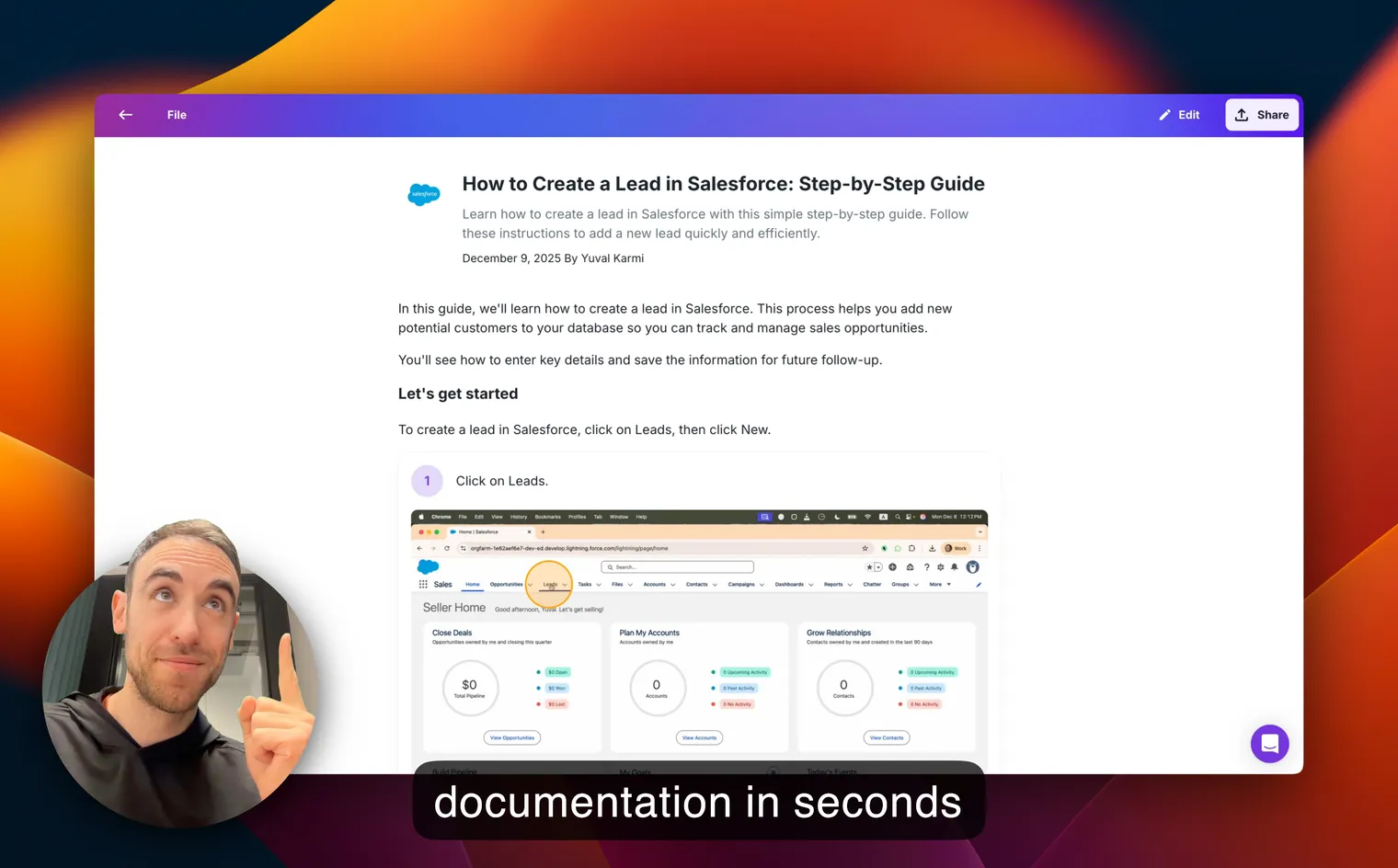
Glitter AI takes the grunt work out of creating user guides. Acting as a screen recorder that writes the guide for you, it captures the task once and turns that recording into a step-by-step guide, complete with screenshots, descriptions, and clear instructions you can tidy up before publishing. No more burning hours on manual documentation, and because the guides come straight from real workflows, they stay accurate.
That same engine also works as a manual creator and a training manual generator. Teams can put together end-user documentation for onboarding, training, customer support, or internal processes without hiring a dedicated technical writer. Export guides as PDFs, HTML web pages, or interactive walkthroughs, whichever format suits your users best.
Teach your co-workers or customers how to get stuff done – in seconds.

Frequently Asked Questions
What does user guide mean?
A user guide is a document with step-by-step instructions that helps people figure out how to use a product, software, or service to get specific things done.
What is an example of a user guide?
A software onboarding doc is a good example. It walks new users through account setup, shows them around the interface, and helps them complete their first tasks using screenshots and clear directions.
Why is a user guide important?
User guides help people get up to speed quickly, cut down on confusion, reduce support tickets, and make sure customers actually get value from what they're using.
How do I create a user guide?
Start by figuring out what tasks users need to do most. Write step-by-step instructions with screenshots, keep the language simple, organize things logically, and test with real users. Tools like Glitter AI can speed this up by generating guides from screen recordings.
What are the different types of user guides?
Common types of user guides include getting-started guides, how-to guides, end-user documentation, internal process guides and SOPs, quick reference guides, and troubleshooting guides. Each targets a different audience and stage of the user's journey.
What is the difference between a user guide and a user manual?
User guides are short and task-focused, helping users accomplish specific goals. User manuals go deeper, covering all product features, technical specs, and detailed reference info.