
Read summarized version with
What is a How-To Guide?
A how-to guide is a practical document that breaks down a task into clear, sequential steps users can follow to get something done. Think of it as the difference between a cookbook and a food science textbook. While manuals and reference docs cover broad topics or theory, how-to guides zero in on teaching one specific skill through actionable instructions, screenshots, and real examples you can apply right away.
These guides are incredibly useful for getting knowledge out of experts’ heads and into a format anyone can use. They take complex or unfamiliar tasks and turn them into manageable sequences that people at any experience level can follow. Instead of vague explanations, how-to guides give you explicit directions, which cuts down on mistakes and speeds up learning. You’ll find them everywhere: software tutorials, business process docs, technical procedures, and operational tasks where clear guidance actually matters.
What makes a how-to guide work? It has to translate what an expert knows into instructions regular people can follow. The best ones anticipate questions, include just enough context without burying readers in details, and give you what you need to succeed without overcomplicating things. This sets them apart from formal step-by-step procedures, which focus more on compliance, or training manuals that try to cover everything. How-to guides fill the gap between understanding something conceptually and actually being able to do it. A quick start guide takes this even further, covering only the bare essentials to get users started fast.
Key Characteristics of How-To Guide
- Task-Focused Structure: A good how-to guide focuses on one specific goal. Every instruction should move the reader closer to completing that task, not wander off into related topics or background info that doesn’t help them finish.
- Sequential Step Format: The steps need to flow in order, numbered or chronological, so users can work through them start to finish. Each step should build on the last, creating a logical path to completion.
- Actionable Instructions: Use direct language that tells people exactly what to do. “Click the Submit button” beats “The submit button may be clicked” every time. Skip the vague descriptions and get specific.
- Visual Documentation: Screenshots, diagrams, and annotated images make a huge difference. Showing users what they should see on screen reinforces your written instructions and helps visual learners who struggle with text-only guides.
- Context and Prerequisites: Let people know what they need before they start. Required permissions, tools, or prior knowledge should be spelled out upfront so nobody gets stuck halfway through because they’re missing something.
How-To Guide Examples
Example 1: Software Feature Tutorial
Say your marketing team just got a new content management platform. Instead of making everyone read through the entire user guide, someone creates a how-to guide specifically for scheduling social media posts. It walks through seven steps from login to confirmation, with annotated screenshots highlighting exactly which buttons to click and what to type in each field. One task, one guide, no fluff.
Example 2: Business Process Documentation
HR puts together a how-to guide showing managers how to submit time-off requests for their team members. The guide covers the eight-step process: getting into the HR system, picking the right request type, entering dates and reasons, and getting the necessary sign-offs. It warns about common mistakes and links to relevant policies, but it doesn’t try to explain every feature in the HR system.
Example 3: Technical Procedure
IT creates a how-to guide for connecting to the company VPN from home. Since Windows and Mac handle this differently, the guide includes separate instructions for each. There’s also a troubleshooting section covering the three connection issues people hit most often, complete with highlighted screenshots showing where to click. Employees can solve their own problems instead of waiting on a support ticket.
How-To Guide vs Work Instruction
Both give you step-by-step directions, but they’re built for different situations.
| Aspect | How-To Guide | Work Instruction |
|---|---|---|
| Purpose | Teach someone how to do something | Make sure everyone does it the same way |
| Scope | One task or goal, with some educational context | Precise procedures, usually part of larger processes |
| When to use | When people need to learn new skills | When exact compliance or quality standards matter |
How Glitter AI Helps with How-To Guide
Creating how-to guides has always been tedious. You have to document every step, write descriptions, grab screenshots, and somehow find time to do it all. Glitter AI changes that by capturing expert knowledge while it happens. Just perform the task you want to document, whether that’s walking through Power BI or any other tool. Glitter generates a clear visual guide with annotations and proper step ordering you can refine in the guide editor. The same recording can seed a new-user getting started guide, a deeper instruction manual, or a searchable knowledge article without redoing the work.
This solves a problem that’s plagued organizations forever: the people who know how to run a specialized platform like FacilityGrid rarely have time to write it all down. With Glitter, they don’t have to.
The platform also keeps guides current. When processes change or software gets updated, you can record the new approach and regenerate guides in minutes, the same way teams build out a fresh onboarding walkthrough, instead of spending hours manually fixing screenshots and rewriting steps. Over time, this helps organizations build real training-documentation libraries, turning tribal knowledge that lives only in certain employees’ heads into something everyone can access. New hires get up to speed faster, a team lead can hand off procedures instead of fielding the same questions, and you stop being dependent on the same three people who know how everything works.
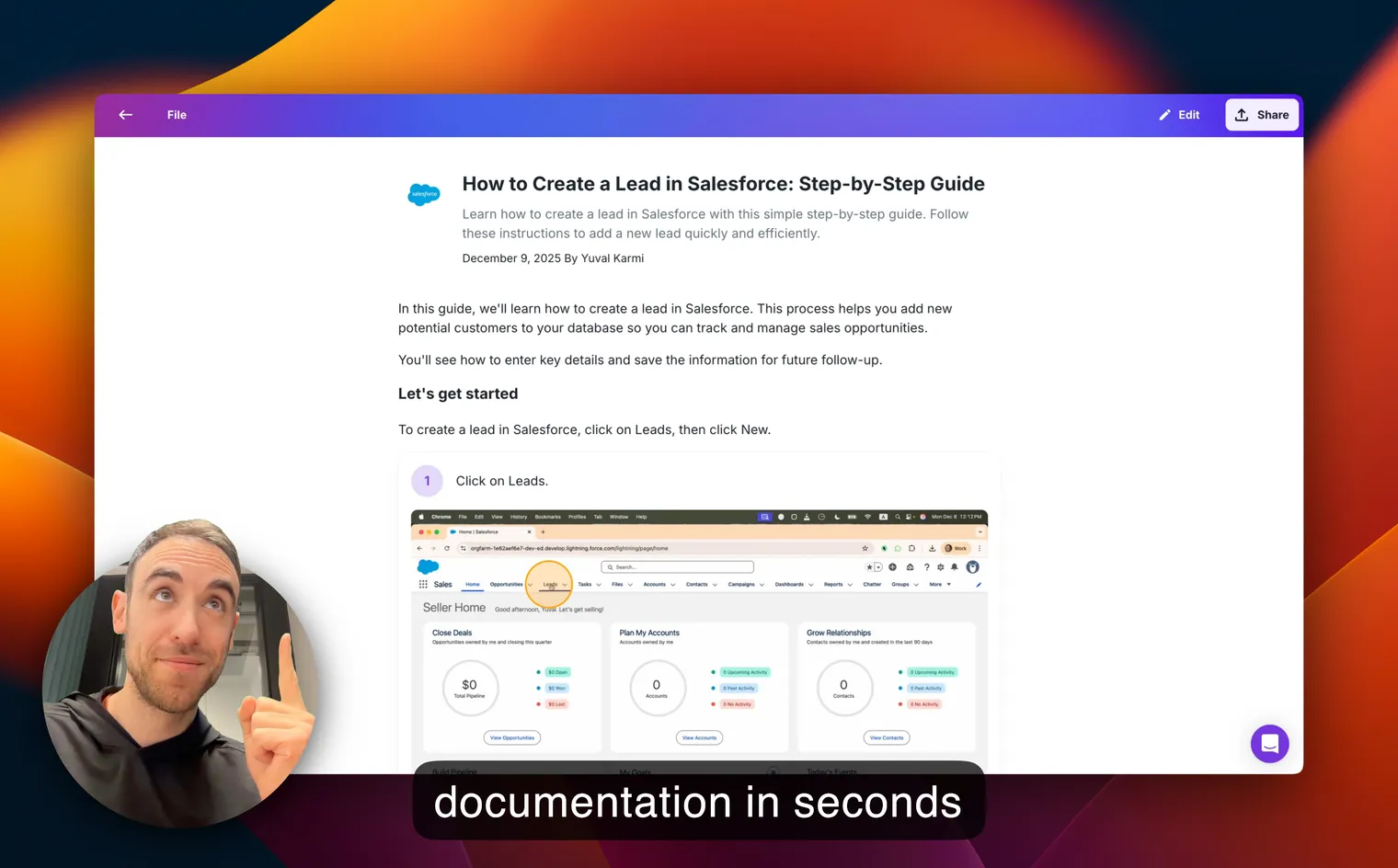
Teach your co-workers or customers how to get stuff done – in seconds.

Frequently Asked Questions
What is a How-To Guide?
A how-to guide is a step-by-step document that teaches you how to complete a specific task. It gives you numbered directions, screenshots or visuals, and practical examples. Unlike a manual that covers everything, a how-to guide focuses on one thing and helps you actually do it.
What is an example of a How-To Guide?
A typical example would be a guide showing employees how to submit expense reports. It walks through each step from logging into the expense system to uploading receipts and hitting submit. The guide sticks to this one task with screenshots and clear directions instead of trying to explain the entire finance system.
Why are How-To Guides important?
They help people learn faster by turning tasks into clear action steps. Good how-to guides cut down on errors, reduce support requests, and let people solve problems on their own. They also make sure tasks get done consistently across teams and capture expert knowledge so you're not always relying on the same few people.
How do I create a How-To Guide?
Start by identifying the task you want to document. Do the task yourself and note each step. Write clear, numbered instructions using action verbs. Add screenshots or visuals for the important steps. Include any prerequisites upfront. Then test it with someone who hasn't done the task before to make sure it actually works. Tools like Glitter AI can automate most of this by recording your screen.
What is the difference between a How-To Guide and a manual?
A manual tries to cover an entire product, system, or topic with reference information and multiple procedures. A how-to guide picks one specific task and gives you just enough information to complete it. Think of it as the focused, practical cousin of the full manual.